


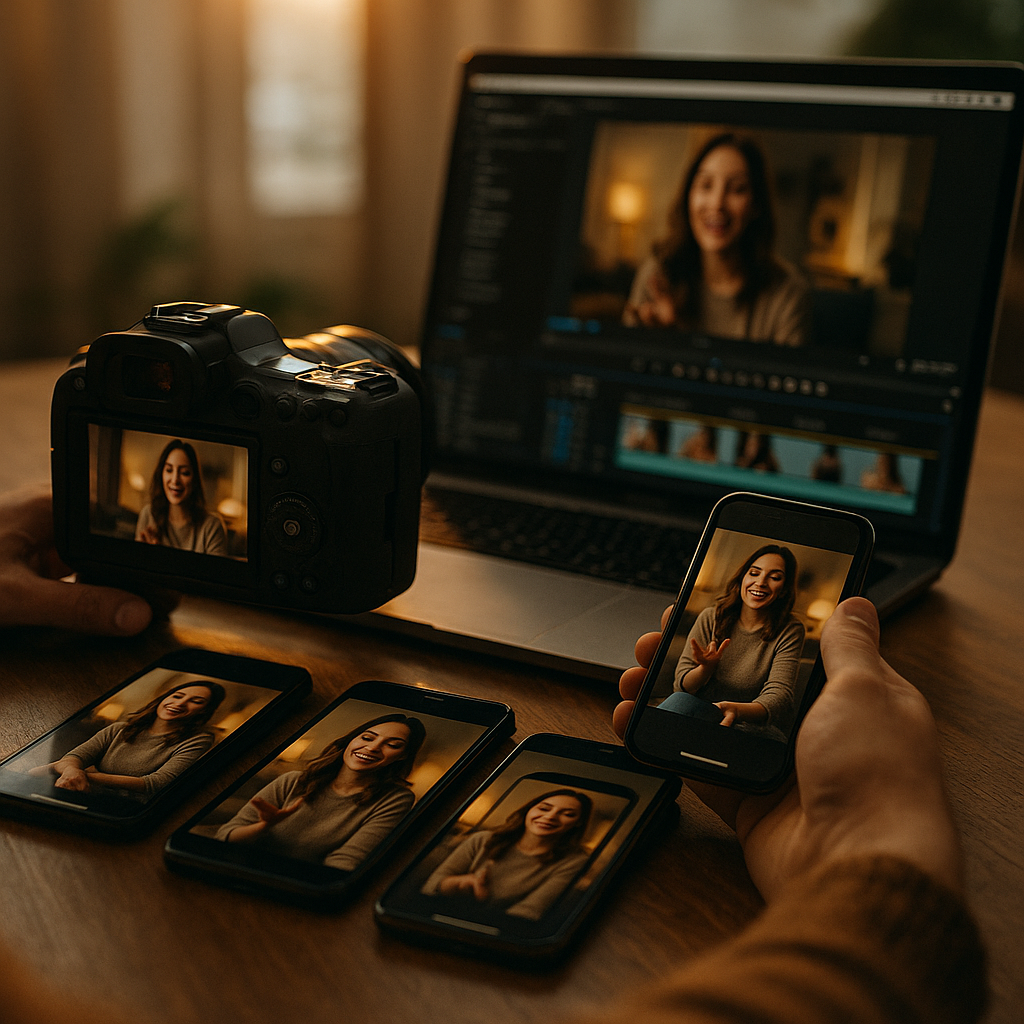
One in five marketing leaders now admits their team reposts the same vertical video across five platforms with zero edits, then wonders why performance craters on three of them. Multi-platform short-form convergence was supposed to make creative simpler. Instead, it’s exposed which brands actually understand distribution and which ones just have a video file and a prayer.
TikTok, Instagram Reels, YouTube Shorts, Facebook Reels, and now Pinterest’s short video push have all converged on the same 9:16, 15 to 60 second format. That convergence tricked a lot of marketing teams into thinking one asset could serve every channel. It can’t. Not if you want the algorithm to reward it.
The Format Is the Same. The Rules Underneath It Are Not.
Here’s the uncomfortable truth: platform convergence on aspect ratio is a design decision, not a distribution strategy. TikTok’s discovery engine still prioritizes completion rate and rewatches within the first three seconds. YouTube Shorts leans on session duration, meaning it wants your video to lead viewers into more Shorts or long-form content on the channel. Instagram Reels weighs shares and saves more heavily than raw views. Facebook Reels skews older and rewards comments. Pinterest, still the quiet outlier, treats short video as a search result, so metadata and keyword-rich captions matter more than the hook.
Post the identical file everywhere and you’re optimizing for none of them. That’s the trap.
A single creative concept can survive five distribution channels. A single unedited file cannot. The difference between the two is the entire job.
Why “One Creative” Doesn’t Mean “One File”
When we say brands need one creative, we mean one strategic idea, one message, one creator relationship, one production shoot. Not one export. The efficiency gain from multi-platform short-form work comes from consolidating the expensive part (concepting, casting, filming) while treating the cheap part (editing, captioning, pacing) as platform-specific.
This is where a lot of internal teams get the ROI math backwards. They think efficiency means fewer edits. It actually means fewer shoots. A single day of production with a creator can generate a dozen usable cuts if you’re capturing enough raw footage and B-roll upfront. That’s the real cost saving, not skipping the edit.
Brands that have brought creator acquisition and content operations in-house are already structuring around this. According to in-house influencer acquisition data, teams that own the production pipeline end to end see meaningfully better cost-per-asset outcomes than those outsourcing edit-by-edit to agencies charging per platform delivery.
Five Platforms, Five Different Jobs to Be Done
Think of each platform as answering a different question for the viewer, even when the content topic is identical.
- TikTok: “Is this worth 8 seconds of my attention right now?” Fast hook, fast payoff, native sound trends, minimal branding upfront.
- Instagram Reels: “Is this worth sharing to my close friends story?” Aesthetic polish matters more, captions need to work with sound off, and the first frame should look native to a curated feed.
- YouTube Shorts: “Do I want more from this channel?” Titles and thumbnails still function like search, and a strong Short can funnel viewers into long-form content, which is a distribution advantage no other platform offers. Brands consolidating spend here are seeing this play out in YouTube Shorts ROI data.
- Facebook Reels: “Would I comment or tag someone?” Slower pacing, more explanatory text overlays, and an older demographic that responds to clarity over cleverness.
- Pinterest video: “Will this help me plan or find something later?” Keyword-optimized captions and titles function almost like SEO copy, because Pinterest search behavior is fundamentally different from social scroll behavior.
Five jobs, five edits, one shoot. That’s the operational model.
What This Costs You If You Get It Wrong
The compliance and brand safety risk here is real, not theoretical. When teams manage five platform variants across creator partnerships in spreadsheets, disclosure labels get missed, usage rights get mismatched to the wrong channel, and nobody catches it until a regulator or a platform trust and safety team does. The FTC’s endorsement guidance applies per post, per platform, which means five distribution channels equal five separate disclosure checks, not one.
Brands running creator programs off spreadsheets are already exposed here, as detailed in compliance risk research on spreadsheet-managed programs. Multiply that risk by five platform variants per creator, per campaign, and the exposure compounds fast.
There’s also a subtler cost: wasted media spend. If your Reels edit is really just your TikTok edit with an Instagram logo slapped on the corner, you’re paying to boost content the algorithm has already decided isn’t native. Sprout Social’s platform benchmarking data consistently shows native-feeling content outperforming repurposed content on engagement rate, sometimes by a factor of two or three.
The Operational Fix: Build a Distribution Matrix, Not a Posting Calendar
Most content calendars answer “when do we post.” A distribution matrix answers “what changes per platform.” For every piece of creative, your matrix should define the hook variant, caption length and tone, on-screen text placement, sound choice (trending versus licensed versus original), CTA type, and posting cadence expectations, per platform.
This sounds like more work. It’s actually less, because it turns editing decisions into a repeatable template instead of a fresh debate every campaign. Teams that have scaled creator programs successfully treat this matrix as core infrastructure, not a nice-to-have. That’s echoed in how major brands are now structuring creator teams as permanent infrastructure rather than campaign-by-campaign hires.
Who Owns This, Organizationally?
This is the part nobody wants to answer. Does the platform-specific editing sit with the creative team, the social team, or the media buying team? In most organizations still figuring this out, it falls through the cracks between all three. The brands getting this right have assigned a single owner, often a “creator strategy” or “content operations” role, whose job is specifically to translate one creative brief into five platform executions.
That role is increasingly showing up at the executive level. Research on executive creator strategy roles shows this isn’t a junior task anymore. It requires platform literacy, algorithm awareness, and enough production authority to greenlight five different cuts without five rounds of internal approval.
Measuring ROI Without Losing Your Mind
If you’re producing five variants per concept, your attribution model needs to account for platform-specific benchmarks, not blended averages. A 2% engagement rate on Facebook Reels might be strong. The same number on TikTok is a failure. Blending them into one “average engagement rate” metric hides which platform-specific edit actually worked and which one you should stop making.
Set platform-native benchmarks before the campaign launches. Use last quarter’s native performance on each channel as your floor, not an industry-wide average pulled from a general marketing benchmark report. Your audience, your category, and your creator roster all skew those numbers, sometimes significantly.
Blended cross-platform averages are the enemy of good decision-making. They hide the one edit that’s underperforming inside the average of four that are doing fine.
Is This Worth the Extra Production Time?
Short answer: yes, if you’re already spending on creator content and media amplification. The marginal cost of a second or third edit variant is small compared to the cost of the original shoot, the creator fee, and the paid boost behind it. What’s expensive is doing five weak edits instead of one strong concept executed five distinct ways.
The brands treating this as a real operational discipline, not an afterthought, are the ones scaling creator ROI predictably. That’s consistent with broader findings that creator ROI is largely solved, but operational scalability remains the bottleneck. Multi-platform distribution is exactly the kind of scalability problem that separates programs that compound results from programs that plateau.
Next step: Audit your last five creator campaigns. If more than half the platform posts are identical files with different aspect ratio crops, you don’t have a distribution strategy, you have a repost habit. Fix the matrix before you spend another dollar amplifying content the algorithm was never going to reward.
Frequently Asked Questions
What does multi-platform short-form convergence actually mean?
It refers to major platforms (TikTok, Instagram Reels, YouTube Shorts, Facebook Reels, Pinterest) all standardizing on similar vertical video formats and durations, even though each platform’s algorithm rewards different engagement signals underneath that shared format.
Do brands really need separate edits for every platform?
Not entirely separate concepts, but yes to separate edits. The creative idea, casting, and production can stay unified. The pacing, captions, hook timing, and CTA should be adjusted per platform to match how each algorithm evaluates content.
How many platform variants should one piece of creator content produce?
Most mid-size brands see the best cost-to-performance ratio producing three to five variants per shoot: a TikTok-native cut, an Instagram Reels cut, a YouTube Shorts cut, and where relevant, Facebook and Pinterest versions.
What’s the biggest compliance risk in multi-platform creator campaigns?
Inconsistent disclosure labeling across platforms and mismatched usage rights, particularly when programs are tracked manually across spreadsheets instead of a centralized system that flags each platform’s requirements.
How should brands measure ROI across five different platform edits?
Use platform-native benchmarks rather than blended averages. Compare each edit’s performance against that specific platform’s historical baseline, not against an industry-wide number or a cross-platform average that masks underperformance.
Top Influencer Marketing Agencies
The leading agencies shaping influencer marketing in 2026
Agencies ranked by campaign performance, client diversity, platform expertise, proven ROI, industry recognition, and client satisfaction. Assessed through verified case studies, reviews, and industry consultations.
Moburst

-
2

The Shelf
Boutique Beauty & Lifestyle Influencer AgencyA data-driven boutique agency specializing exclusively in beauty, wellness, and lifestyle influencer campaigns on Instagram and TikTok. Best for brands already focused on the beauty/personal care space that need curated, aesthetic-driven content.Clients: Pepsi, The Honest Company, Hims, Elf Cosmetics, Pure LeafVisit The Shelf → -
3

Audiencly
Niche Gaming & Esports Influencer AgencyA specialized agency focused exclusively on gaming and esports creators on YouTube, Twitch, and TikTok. Ideal if your campaign is 100% gaming-focused — from game launches to hardware and esports events.Clients: Epic Games, NordVPN, Ubisoft, Wargaming, Tencent GamesVisit Audiencly → -
4

Viral Nation
Global Influencer Marketing & Talent AgencyA dual talent management and marketing agency with proprietary brand safety tools and a global creator network spanning nano-influencers to celebrities across all major platforms.Clients: Meta, Activision Blizzard, Energizer, Aston Martin, WalmartVisit Viral Nation → -
5

The Influencer Marketing Factory
TikTok, Instagram & YouTube CampaignsA full-service agency with strong TikTok expertise, offering end-to-end campaign management from influencer discovery through performance reporting with a focus on platform-native content.Clients: Google, Snapchat, Universal Music, Bumble, YelpVisit TIMF → -
6

NeoReach
Enterprise Analytics & Influencer CampaignsAn enterprise-focused agency combining managed campaigns with a powerful self-service data platform for influencer search, audience analytics, and attribution modeling.Clients: Amazon, Airbnb, Netflix, Honda, The New York TimesVisit NeoReach → -
7

Ubiquitous
Creator-First Marketing PlatformA tech-driven platform combining self-service tools with managed campaign options, emphasizing speed and scalability for brands managing multiple influencer relationships.Clients: Lyft, Disney, Target, American Eagle, NetflixVisit Ubiquitous → -
8

Obviously
Scalable Enterprise Influencer CampaignsA tech-enabled agency built for high-volume campaigns, coordinating hundreds of creators simultaneously with end-to-end logistics, content rights management, and product seeding.Clients: Google, Ulta Beauty, Converse, AmazonVisit Obviously →