


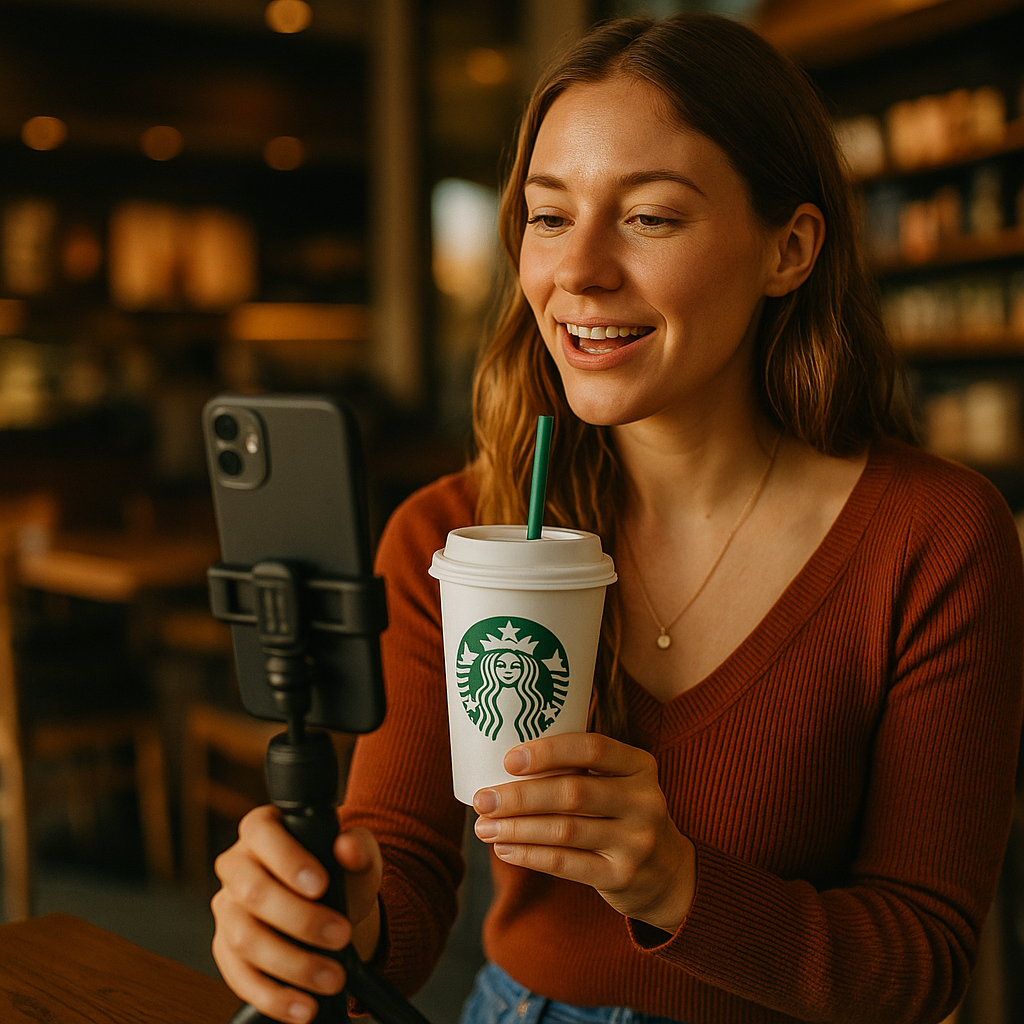
One title change at Starbucks just told you where influencer marketing budgets are heading. The coffee giant recently posted a Group Manager of Influencers role, a senior, permanent seat reporting into brand marketing leadership rather than a rotating agency contract. If you still treat influencer work as a campaign tactic, this hire is a warning shot.
A Coffee Company Just Redefined Who Owns Influencer Strategy
Starbucks isn’t a scrappy DTC startup experimenting with creator partnerships. It’s a legacy enterprise brand with decades of traditional marketing muscle. So when a company that size creates a dedicated, mid-to-senior management role solely for influencer strategy, that’s not an experiment. That’s an admission that influencer spend has grown too large and too complex to manage through an agency retainer or a junior social coordinator’s side project.
The job description (as is typical for these postings) reads like a hybrid of media buyer, brand strategist, and compliance officer. Group managers at this level typically own budget allocation, creator vetting criteria, platform prioritization, and performance reporting up to the CMO’s office. That’s a lot of authority for a title that didn’t exist at most companies three years ago.
When a legacy enterprise brand builds a permanent management layer around influencers, it’s telling you the function has outgrown “marketing tactic” status and become budget infrastructure.
Why This Isn’t Just a Starbucks Story
Starbucks isn’t operating in isolation here. We’ve already covered how creator teams are becoming core infrastructure at companies like Meta and Salesforce, and how those same brands are now bidding on the same creator talent pool. That competitive dynamic matters. When multiple enterprise-scale brands chase the same top-tier creators, price discipline and strategic oversight become survival skills, not nice-to-haves.
The pattern extends beyond these three names. Google, Coty, and TP-Link have all been on hiring sprees that signal permanent creator teams, not seasonal campaign support. And new job titles across the industry are showing a broader shift toward acquisition-focused influencer roles, meaning brands want creators driving measurable purchases, not just impressions.
According to eMarketer, influencer marketing spend in the US has continued climbing well past the ten-billion-dollar mark, and that kind of money doesn’t get managed casually by a freelance coordinator juggling five other responsibilities. It gets a headcount line, a reporting structure, and a performance review cycle.
What the Group Manager Title Actually Signals
Titles matter more than marketers like to admit. A “Group Manager” designation sits above individual contributor level and below director, typically overseeing a small team and owning budget authority within a defined scope. Placing that layer specifically around influencers (rather than folding it into “social media manager” or “content marketing”) tells you three things.
- Influencer work now has its own P&L accountability. Someone is answering for ROI, not just posting cadence.
- The function needs specialized expertise. Vetting creators, negotiating usage rights, and managing platform-specific nuance isn’t a generalist’s job anymore.
- Leadership expects this to be permanent. You don’t create a management layer for something you plan to phase out next fiscal year.
This tracks with what we’ve reported on the broader trend of influencer roles going permanent and reshaping org charts. The days of the “influencer marketing manager” as a junior, tactical role reporting three layers down from the CMO are numbered at brands playing at Starbucks’ scale.
The Budget Math Behind the Org Chart Shift
Here’s the uncomfortable truth for a lot of mid-size brands: your influencer spend has probably already outgrown your team’s ability to manage it well. We covered this exact dynamic in our analysis of budgets outgrowing teams and forcing C-suite ownership. When a single line item in the marketing budget starts rivaling paid search or traditional media spend, it stops being something you can manage with a spreadsheet and a part-time coordinator.
That spreadsheet problem isn’t hypothetical. Plenty of brands are still running creator vetting, contract tracking, and disclosure compliance through shared Google Sheets, and that approach is exposing them to real compliance risk. The FTC’s endorsement guidelines haven’t gotten more lenient, and regulators in other markets, including the UK’s Information Commissioner’s Office, have shown increasing willingness to scrutinize data handling and disclosure practices tied to influencer campaigns.
A dedicated Group Manager role solves for exactly this gap. It centralizes decision-making, standardizes vetting criteria, and creates a single point of accountability when something goes wrong (and something always eventually goes wrong in influencer programs, whether it’s an undisclosed partnership or a brand-safety miss).
What This Means for Your Org Chart
If you’re a VP of marketing or a brand strategist reading this and wondering whether you need your own version of this role, ask yourself a few blunt questions. Is your current influencer spend being tracked with the same rigor as your paid media budget? Does anyone on your team own creator relationships end-to-end, from vetting through contract renewal? Is there a single person who could answer, in a board meeting, exactly what ROI your influencer program delivered last quarter?
If the answer to any of these is no, you’re behind. And you’re not alone. Executive-level attention to creator strategy has been building for a while, as we’ve noted in coverage of executive creator strategy roles rising to the C-suite. Starbucks’ posting is just the latest, most visible data point in a trend that’s been accelerating across enterprise marketing departments.
If you can’t name the person who owns your influencer program’s ROI in one sentence, your org chart is already a liability.
Practically speaking, building this function internally usually means one of two paths. Some brands are pulling acquisition entirely in house, a move supported by ROI data favoring direct ownership over agency intermediation. Others are keeping agency partners but adding an internal owner who sets strategy, approves spend, and holds the agency accountable to specific KPIs. Either way, the fragmented, ad hoc model where three different people touch an influencer contract without any single owner is losing favor fast.
Resources like LinkedIn’s business marketing hub and HubSpot’s marketing research both point to the same conclusion in their broader B2B and creator economy reporting: functions that touch significant budget need named owners with defined KPIs, not shared responsibility across departments that have other priorities.
Don’t Copy the Title, Copy the Logic
A word of caution before you rush to post your own “Group Manager of Influencers” job listing. The title itself doesn’t matter nearly as much as the operational logic behind it. Starbucks didn’t just rename an existing role. It created dedicated headcount, budget authority, and reporting lines specifically for influencer strategy because the function had outgrown its previous home.
Smaller and mid-size brands don’t necessarily need an identical title or org chart position. What they need is the same underlying discipline: someone who owns vetting standards, someone accountable for platform-specific performance (because, as we’ve covered, one video doesn’t work identically across five platforms), and someone tracking compliance risk before it becomes a headline. Whether that’s a full-time hire, a fractional consultant, or a restructured marketing manager role depends on your budget and program maturity. But the accountability gap itself can’t stay open much longer if your competitors are closing theirs.
Frequently Asked Questions
What does a Group Manager of Influencers actually do?
Typically, this role owns influencer budget allocation, creator vetting and contracting standards, platform strategy, and performance reporting to senior marketing leadership. It’s a management-level position with direct accountability for ROI, not a tactical, execution-only role.
Why is Starbucks creating this role now?
Influencer spend at enterprise brands has grown large and complex enough to require dedicated ownership, similar to how paid media and email marketing have their own management structures. Rising creator costs, increasing regulatory scrutiny, and competitive bidding for top talent all push toward centralized, accountable leadership.
Do smaller brands need a dedicated influencer management role?
Not necessarily the same title or org chart position, but smaller brands do need someone who owns vetting standards, compliance oversight, and performance tracking for their influencer program. The function matters more than the formal title.
How does this trend affect influencer marketing agencies?
Brands building internal influencer management roles often shift agency relationships from full-service execution to specialized support, such as creator sourcing or content production, while keeping strategic decision-making in house.
What are the risks of not having a dedicated influencer program owner?
Without clear ownership, brands face compliance exposure around disclosure requirements, inconsistent creator vetting, budget waste from duplicated or poorly tracked spend, and difficulty proving ROI to leadership.
The practical next step: audit who currently owns influencer strategy at your organization, and if the honest answer is “no one, fully,” start building the business case for a dedicated owner before your budget outpaces your accountability.
Top Influencer Marketing Agencies
The leading agencies shaping influencer marketing in 2026
Agencies ranked by campaign performance, client diversity, platform expertise, proven ROI, industry recognition, and client satisfaction. Assessed through verified case studies, reviews, and industry consultations.
Moburst

-
2

The Shelf
Boutique Beauty & Lifestyle Influencer AgencyA data-driven boutique agency specializing exclusively in beauty, wellness, and lifestyle influencer campaigns on Instagram and TikTok. Best for brands already focused on the beauty/personal care space that need curated, aesthetic-driven content.Clients: Pepsi, The Honest Company, Hims, Elf Cosmetics, Pure LeafVisit The Shelf → -
3

Audiencly
Niche Gaming & Esports Influencer AgencyA specialized agency focused exclusively on gaming and esports creators on YouTube, Twitch, and TikTok. Ideal if your campaign is 100% gaming-focused — from game launches to hardware and esports events.Clients: Epic Games, NordVPN, Ubisoft, Wargaming, Tencent GamesVisit Audiencly → -
4

Viral Nation
Global Influencer Marketing & Talent AgencyA dual talent management and marketing agency with proprietary brand safety tools and a global creator network spanning nano-influencers to celebrities across all major platforms.Clients: Meta, Activision Blizzard, Energizer, Aston Martin, WalmartVisit Viral Nation → -
5

The Influencer Marketing Factory
TikTok, Instagram & YouTube CampaignsA full-service agency with strong TikTok expertise, offering end-to-end campaign management from influencer discovery through performance reporting with a focus on platform-native content.Clients: Google, Snapchat, Universal Music, Bumble, YelpVisit TIMF → -
6

NeoReach
Enterprise Analytics & Influencer CampaignsAn enterprise-focused agency combining managed campaigns with a powerful self-service data platform for influencer search, audience analytics, and attribution modeling.Clients: Amazon, Airbnb, Netflix, Honda, The New York TimesVisit NeoReach → -
7

Ubiquitous
Creator-First Marketing PlatformA tech-driven platform combining self-service tools with managed campaign options, emphasizing speed and scalability for brands managing multiple influencer relationships.Clients: Lyft, Disney, Target, American Eagle, NetflixVisit Ubiquitous → -
8

Obviously
Scalable Enterprise Influencer CampaignsA tech-enabled agency built for high-volume campaigns, coordinating hundreds of creators simultaneously with end-to-end logistics, content rights management, and product seeding.Clients: Google, Ulta Beauty, Converse, AmazonVisit Obviously →