


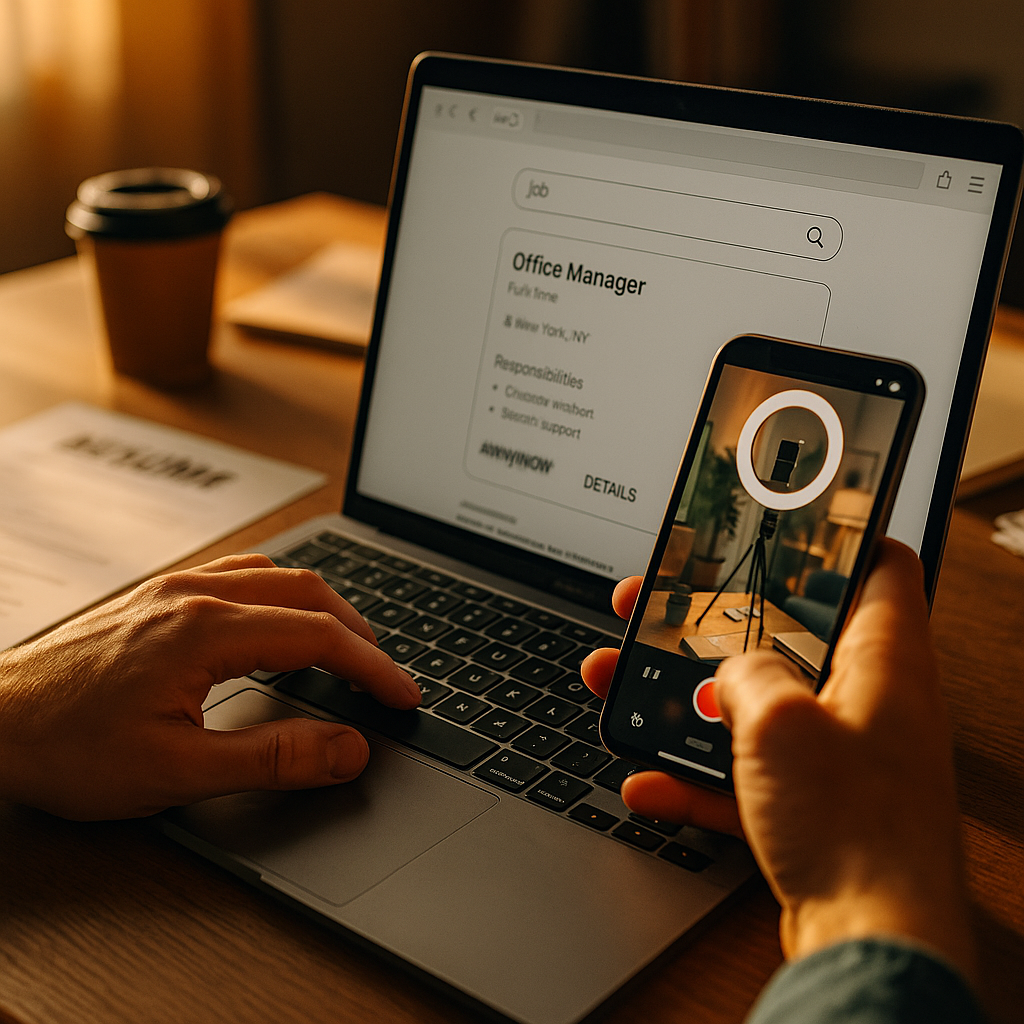
Scroll through marketing job postings on LinkedIn right now and count how many mention “short form video” before you hit the word “Excel.” That is not an accident. Short form video skills have quietly moved from a nice-to-have on a creative team’s resume to a baseline hiring requirement across brand marketing, social, and even product marketing roles. If your team cannot shoot, cut, and caption a nine-second vertical clip without outsourcing it, you are already behind on cost and speed.
The Hiring Signal Nobody Can Ignore Anymore
Job descriptions have changed shape. A brand marketing manager role that once required “strong writing skills and campaign experience” now lists “proficiency with CapCut, Adobe Premiere Rush, or similar mobile editing tools” as a core qualification, not a bonus. Sprout Social and other listening platforms have tracked a steady climb in short form video engagement relative to static posts, and hiring managers have taken notice of what that means operationally.
This shift tracks closely with a broader move we covered when campaign teams gave way to permanent creator growth units. Once brands stopped treating creator content as a seasonal campaign line item and started treating it as always-on infrastructure, the skills needed to staff that infrastructure changed too. You cannot run always-on content with a team that only knows how to brief agencies.
Brands that once outsourced every short form asset are now discovering that the editing skill itself has become the bottleneck, not the creative concept.
Why Editing Fluency Became a Business Requirement
Here is the uncomfortable math. Agencies charge anywhere from $500 to $3,000 per polished short form video, depending on complexity and turnaround. Multiply that across the volume needed to feed TikTok, Instagram Reels, and YouTube Shorts simultaneously, and the budget disappears fast. Brands that build in-house editing capability cut per-asset cost dramatically, and they cut the lag time between “trend appears” and “brand responds” from days to hours.
We wrote about this exact dynamic when covering how electronics brands ditched agencies to cut costs and own data. The pattern repeats across categories: beauty, CPG, fintech, even B2B SaaS. Once a brand realizes it can produce serviceable short form content in-house for a fraction of agency rates, the question stops being “should we hire for this skill” and becomes “why didn’t we hire for this sooner.”
There’s also a format problem most teams underestimate. A single piece of content rarely works as-is across platforms. As we detailed in one video, five platforms demands five distinct edits, TikTok’s pacing, Instagram’s aspect ratio quirks, and YouTube Shorts’ discovery algorithm all reward slightly different cuts of the same core footage. That is not a job you can hand to a generalist who “knows social media.” It requires someone who understands editing software at a technical level and platform mechanics at a strategic level simultaneously.
What Recruiters Are Actually Screening For
- Working knowledge of CapCut, Premiere Rush, or InShot at a level beyond basic trims and text overlays
- Understanding of platform-native pacing: hook timing, caption placement, sound selection
- Ability to repurpose one shoot into multiple platform-specific cuts without reshooting
- Comfort being on camera or directing UGC-style talent, not just editing after the fact
- Basic performance literacy: reading watch-through rates and knowing what a drop-off at the three-second mark actually signals
This last point matters more than most hiring managers admit. Editing skill without performance literacy just produces prettier content that still underperforms. The candidates getting hired fastest are the ones who can explain why a cut worked, not just execute the cut itself.
The CapCut Filter Problem
Not everyone agrees this hiring shift is healthy. Screening candidates primarily on tool fluency has a real downside, and we explored this tension in CapCut fluency hiring filter risks fragile creator teams. When a job requirement reduces to “knows this specific app,” you build a team that is brittle the moment the app changes its interface or a competitor tool takes over. Software fluency is trainable in weeks. Strategic instinct, understanding why a hook works or why a trend has staying power, takes longer to develop and is harder to screen for in a 30-minute interview.
The smarter hiring approach separates the two. Test for adaptability and creative judgment first. Treat tool-specific skills as a fast onboarding item, not a gatekeeping requirement. Teams that hire this way tend to survive platform algorithm shifts and tool migrations far better than teams built entirely around one editing app’s specific workflow.
Where This Shows Up Beyond the Social Team
Short form video literacy is no longer confined to social media managers. Product marketers are expected to storyboard launch videos. Sales enablement teams are producing short vertical explainers for LinkedIn. Even PR teams are being asked to shoot reactive content during news cycles because a well-timed 15-second clip now outperforms a press release in terms of reach.
This mirrors what happened when new job titles revealed the influencer shift to acquisition. Once a discipline proves it drives measurable pipeline or revenue, it stops being siloed in one department and starts becoming a baseline expectation across the org chart. Short form video is following the same trajectory. What began as a TikTok specialist’s job is becoming everyone’s job, at least at a foundational level.
Executive teams have noticed too. As creator strategy roles rise to the C-suite, the expectation cascades downward. If a CMO is expected to understand short form performance metrics well enough to defend budget in a board meeting, every layer of the team underneath that CMO needs to speak the same language fluently.
The ROI Case, in Plain Numbers
According to eMarketer, short form video continues to capture a disproportionate share of social ad spend growth relative to other formats, and brands that produce it internally report faster iteration cycles than those relying solely on external production. Speed compounds. A brand that can test five hook variations in a week learns faster than one waiting on agency turnaround for a single asset.
Sprout Social’s research on platform engagement consistently shows that native, quickly-produced content outperforms overly polished, slow-to-produce alternatives on almost every short form platform. That finding alone justifies the hiring shift. Why pay premium agency rates for polish that the algorithm does not reward as highly as speed and authenticity?
Teams that treat short form editing as a specialist’s job rather than a team-wide competency are paying agency rates for a skill their own staff could learn in a single onboarding sprint.
What Brands Should Actually Do About It
Stop writing job descriptions that bury short form video skill three bullet points down under “nice to have.” Put it where it belongs: as a core requirement for any role touching brand content, social strategy, or creator partnerships. Then build a lightweight internal training track so existing staff can catch up rather than forcing a full team replacement.
Pair that with the vetting rigor you’d apply to any other core competency. Compliance and quality control still matter here, and brands managing this at scale without structured processes are exposing themselves to the same risks we flagged in creator program spreadsheets that expose brands to compliance risk. A skilled editor without oversight is just as risky as an unskilled one, maybe more so, because the output looks credible enough to publish without a second look.
Consider the FTC’s endorsement guidelines here too. As more in-house staff produce creator-style content, disclosure requirements do not disappear just because the person editing the video works on your payroll instead of an agency’s.
Frequently Asked Questions
Why are marketing teams suddenly requiring short form video skills?
Because short form video now drives a disproportionate share of engagement and conversion on platforms like TikTok, Instagram, and YouTube Shorts, and producing it externally through agencies is slower and more expensive than building the skill in-house.
What specific tools should marketing candidates know?
CapCut, Adobe Premiere Rush, and InShot are the most commonly requested tools, though hiring managers increasingly care more about platform-native pacing and hook construction than mastery of any single app.
Is it risky to hire based only on editing software fluency?
Yes. Screening solely on tool knowledge can produce a team that struggles when platforms change interfaces or new tools emerge. Strategic judgment and adaptability matter more long-term than fluency in one specific app.
Which roles beyond social media managers now need this skill?
Product marketers, sales enablement staff, PR teams, and even some customer success roles are increasingly expected to produce or direct short form video content as part of standard responsibilities.
How can a brand build this capability without a full hiring overhaul?
Most brands start with a short internal training track for existing staff, paired with updated job descriptions for new hires, rather than replacing an entire team at once.
Next step: Audit your current job descriptions this week. If short form video skill isn’t listed as a core requirement for at least three roles on your team, you’re still hiring for a market that no longer exists.
Top Influencer Marketing Agencies
The leading agencies shaping influencer marketing in 2026
Agencies ranked by campaign performance, client diversity, platform expertise, proven ROI, industry recognition, and client satisfaction. Assessed through verified case studies, reviews, and industry consultations.
Moburst

-
2

The Shelf
Boutique Beauty & Lifestyle Influencer AgencyA data-driven boutique agency specializing exclusively in beauty, wellness, and lifestyle influencer campaigns on Instagram and TikTok. Best for brands already focused on the beauty/personal care space that need curated, aesthetic-driven content.Clients: Pepsi, The Honest Company, Hims, Elf Cosmetics, Pure LeafVisit The Shelf → -
3

Audiencly
Niche Gaming & Esports Influencer AgencyA specialized agency focused exclusively on gaming and esports creators on YouTube, Twitch, and TikTok. Ideal if your campaign is 100% gaming-focused — from game launches to hardware and esports events.Clients: Epic Games, NordVPN, Ubisoft, Wargaming, Tencent GamesVisit Audiencly → -
4

Viral Nation
Global Influencer Marketing & Talent AgencyA dual talent management and marketing agency with proprietary brand safety tools and a global creator network spanning nano-influencers to celebrities across all major platforms.Clients: Meta, Activision Blizzard, Energizer, Aston Martin, WalmartVisit Viral Nation → -
5

The Influencer Marketing Factory
TikTok, Instagram & YouTube CampaignsA full-service agency with strong TikTok expertise, offering end-to-end campaign management from influencer discovery through performance reporting with a focus on platform-native content.Clients: Google, Snapchat, Universal Music, Bumble, YelpVisit TIMF → -
6

NeoReach
Enterprise Analytics & Influencer CampaignsAn enterprise-focused agency combining managed campaigns with a powerful self-service data platform for influencer search, audience analytics, and attribution modeling.Clients: Amazon, Airbnb, Netflix, Honda, The New York TimesVisit NeoReach → -
7

Ubiquitous
Creator-First Marketing PlatformA tech-driven platform combining self-service tools with managed campaign options, emphasizing speed and scalability for brands managing multiple influencer relationships.Clients: Lyft, Disney, Target, American Eagle, NetflixVisit Ubiquitous → -
8

Obviously
Scalable Enterprise Influencer CampaignsA tech-enabled agency built for high-volume campaigns, coordinating hundreds of creators simultaneously with end-to-end logistics, content rights management, and product seeding.Clients: Google, Ulta Beauty, Converse, AmazonVisit Obviously →