


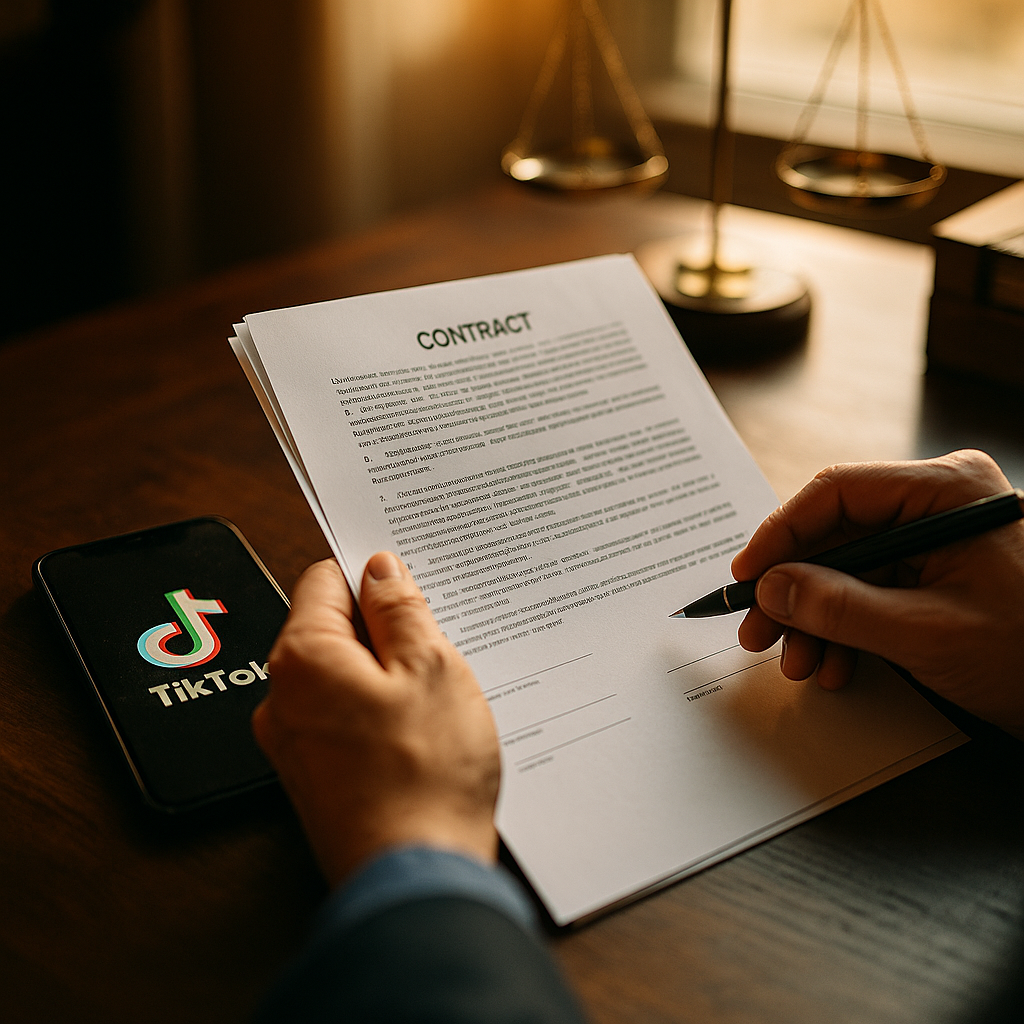
TikTok’s Canvas tool lets brands generate polished, creator-style UGC ads in minutes without ever hiring a creator. Sounds efficient, right? Except most brands are running these assets through paid media with contracts that were never built for AI-assisted content licensing. Licensing Canvas UGC as paid ad assets without updated clauses is a fast track to disclosure violations, ownership disputes, and indemnification gaps you won’t discover until a regulator or a rights holder comes knocking.
This isn’t a hypothetical risk. It’s already showing up in FTC complaints and platform audits tied to AI-generated ad creative.
Why Canvas UGC Breaks Traditional Licensing Templates
Most brand legal teams still use licensing language written for human creators: a person films content, signs a release, grants usage rights, done. Canvas UGC doesn’t work that way. TikTok’s Canvas tool blends AI voice synthesis, stock-style avatars, and algorithmically generated scripts to produce content that looks like organic creator UGC but has no single accountable human behind it.
That distinction matters legally. When you license traditional UGC, you’re licensing a specific person’s likeness, voice, and creative labor. When you license Canvas output, you’re licensing an output of a generative system, and the chain of ownership, consent, and liability is murkier. Who owns the underlying voice model? Did the synthetic avatar draw from a real person’s likeness without full consent? These aren’t edge cases anymore. We’ve already covered how Canvas actor UGC creates disclosure gaps, and the licensing side of that problem is just as unresolved.
If your ad licensing agreement doesn’t name who owns the AI-generated voice, likeness, or script inside a Canvas asset, you don’t actually have a license. You have an assumption.
The Five Clauses You’re Probably Missing
Legal teams reviewing Canvas licensing deals in 2026 need to move past boilerplate UGC releases. Here’s what actually needs to be in the contract before that asset touches a paid media buy.
1. Explicit AI-Generation Disclosure Warranty
The agreement must include a warranty from whoever supplies the Canvas asset (agency, in-house team, or platform partner) stating clearly that the content is AI-generated or AI-assisted, and that this fact has been disclosed per FTC endorsement guidelines. Don’t assume the platform handles this. TikTok’s Canvas terms put disclosure obligations back on the advertiser, not the platform. Review the FTC’s endorsement guidance directly rather than relying on secondhand summaries from your media buying team.
2. Underlying Rights Chain of Title
If Canvas pulls from a voice model or synthetic likeness library, your contract needs a clause requiring the supplier to warrant that all underlying training data and likeness rights were properly licensed. This is the clause most brands skip, and it’s the one that exposes you if a real performer’s voice was used to train a synthetic model without consent. Ask directly: was any component of this asset trained on identifiable human data, and can you produce the licensing chain on request?
3. Indemnification Scoped to AI Outputs Specifically
Generic indemnification language written for human-created UGC often doesn’t extend to claims arising from AI training data, deepfake-adjacent likeness disputes, or algorithmic script generation. You need a clause that explicitly names AI-generated content as an indemnified category, with defined caps and carve-outs. Without this, you’re relying on a court’s interpretation of an old clause never written with generative tools in mind.
4. Usage Rights Duration and Platform Scope
Canvas assets are often licensed for narrow use, say, TikTok in-feed ads only, for a fixed window. But brands routinely repurpose winning creative across Meta, YouTube, and connected TV without renegotiating rights. Your contract needs a hard clause defining exactly which platforms and formats the license covers, and an automatic expiration or renewal trigger. This mirrors the same gap we flagged in UGC rights audit frameworks: rights that aren’t scoped precisely get assumed to be broader than they are, until someone gets sued.
5. Revocation and Takedown Obligations
If a Canvas asset is later found to use improperly licensed underlying data (a voice model pulled from a creator who never consented, for example), your contract needs a clause obligating immediate takedown across all active ad placements, plus a defined notification window. This is standard in the software licensing world. It’s still rare in UGC licensing, and that gap is exactly what plaintiffs’ attorneys are starting to probe.
Scripted Hooks Add Another Layer of Exposure
Canvas doesn’t just generate visuals. It generates scripts, often built from hook formulas scraped or trained on real creator content patterns. That raises a separate but related question: did the scripted hook itself borrow language, structure, or comedic timing from an identifiable creator’s original work? We’ve written before about how scripted hook liability creates exposure even when the visual talent is fully synthetic. Your licensing contract should address script originality separately from likeness and voice rights, because these are legally distinct issues that a single blanket clause won’t cover.
Treating script rights, voice rights, and likeness rights as one bundled clause is the single most common mistake in Canvas licensing agreements right now.
What Auditors Are Actually Checking Now
If your brand runs ESG reporting or has been through a creator program audit recently, you already know auditors have started asking pointed questions about AI-generated ad content provenance. This isn’t limited to influencer contracts anymore. Auditors reviewing creator program disclosures increasingly want documentation showing that AI-assisted UGC assets were licensed with full chain-of-title records, disclosure compliance, and indemnification specific to generative content. If you can’t produce that paper trail during an audit, expect it to show up as a flagged finding, and potentially a material one if the asset ran at scale.
Data from eMarketer shows AI-generated ad creative spend climbing sharply across social platforms, which means the volume of unresolved licensing exposure is climbing right alongside it. Brands running Canvas at scale without updated contracts aren’t managing risk anymore. They’re accumulating it.
Building the Clause Checklist Into Your Procurement Process
The fix isn’t complicated, but it does require discipline. Before any Canvas UGC asset moves into a paid media buy, run it through a checklist:
- Does the contract name AI generation explicitly, with a disclosure warranty attached?
- Is there a documented chain of title for any underlying voice or likeness data?
- Does indemnification language specifically cover AI-output claims, not just generic UGC disputes?
- Is platform and format scope defined precisely, with expiration terms?
- Is there a revocation and takedown clause with a defined response window?
Bake this into your procurement workflow the same way you’d bake in a standard rights audit. Legal, media buying, and brand safety teams should all sign off before a Canvas asset gets budget behind it. Platforms like TikTok’s ad platform and Meta’s business tools are only going to lean further into AI-assisted creative generation, so the brands that build this checklist now will have a real operational advantage over competitors scrambling to retrofit contracts after a dispute.
This also connects to a broader ownership question that’s tripping up publishers and brands alike: when AI systems scrape or repurpose UGC for training or generation, who actually inherits the copyright risk? That question is playing out right now in disputes over AI scraping of UGC content, and Canvas licensing sits squarely inside that same legal gray zone.
The Real Cost of Getting This Wrong
Skip these clauses and the downside isn’t abstract. It’s a media buy pulled mid-flight because a takedown notice hit your legal team. It’s an ESG audit finding that delays a funding round. It’s an FTC inquiry that starts with one complaint and ends with a consent decree covering your entire creator program. Compare that to the cost of updating a contract template: a few billable hours from outside counsel, maybe a week of internal review. The math isn’t close.
Brands serious about scaling AI-assisted UGC into paid media need contracts that match the complexity of the technology generating the content, not templates written for a pre-generative-AI world.
Next Step
Pull your current Canvas or AI-UGC licensing template today and run it against the five clauses above. If even one is missing, hold new campaigns until legal closes the gap, because the cost of retrofitting after a dispute is always higher than the cost of fixing the paperwork now.
FAQs
What makes Canvas UGC different from traditional influencer UGC for licensing purposes?
Canvas UGC is generated using AI voice synthesis and synthetic avatars rather than a real creator’s original performance, which means licensing agreements need to address underlying training data rights, script originality, and AI disclosure obligations that traditional creator releases don’t cover.
Does TikTok’s Canvas tool handle FTC disclosure compliance automatically?
No. Canvas’s terms place disclosure obligations back on the advertiser, so brands must independently confirm AI-generated content is properly labeled and disclosed per FTC endorsement guidelines rather than assuming the platform manages compliance.
What happens if a Canvas asset’s underlying voice model used unlicensed likeness data?
The brand running the ad could face takedown demands, indemnification claims, and reputational fallout, which is why licensing contracts need explicit chain-of-title warranties and revocation clauses covering this exact scenario.
Should indemnification language for Canvas UGC differ from standard influencer contracts?
Yes. Standard indemnification clauses often don’t extend to claims arising from AI training data or synthetic likeness disputes, so contracts need language that specifically names AI-generated content as an indemnified category with defined scope and caps.
How long should a Canvas UGC license remain valid for paid media use?
Licenses should specify an exact duration and platform scope, since brands frequently repurpose winning Canvas creative across additional platforms without renegotiating rights, which creates unlicensed usage exposure.
Top Influencer Marketing Agencies
The leading agencies shaping influencer marketing in 2026
Agencies ranked by campaign performance, client diversity, platform expertise, proven ROI, industry recognition, and client satisfaction. Assessed through verified case studies, reviews, and industry consultations.
Moburst

-
2

The Shelf
Boutique Beauty & Lifestyle Influencer AgencyA data-driven boutique agency specializing exclusively in beauty, wellness, and lifestyle influencer campaigns on Instagram and TikTok. Best for brands already focused on the beauty/personal care space that need curated, aesthetic-driven content.Clients: Pepsi, The Honest Company, Hims, Elf Cosmetics, Pure LeafVisit The Shelf → -
3

Audiencly
Niche Gaming & Esports Influencer AgencyA specialized agency focused exclusively on gaming and esports creators on YouTube, Twitch, and TikTok. Ideal if your campaign is 100% gaming-focused — from game launches to hardware and esports events.Clients: Epic Games, NordVPN, Ubisoft, Wargaming, Tencent GamesVisit Audiencly → -
4

Viral Nation
Global Influencer Marketing & Talent AgencyA dual talent management and marketing agency with proprietary brand safety tools and a global creator network spanning nano-influencers to celebrities across all major platforms.Clients: Meta, Activision Blizzard, Energizer, Aston Martin, WalmartVisit Viral Nation → -
5

The Influencer Marketing Factory
TikTok, Instagram & YouTube CampaignsA full-service agency with strong TikTok expertise, offering end-to-end campaign management from influencer discovery through performance reporting with a focus on platform-native content.Clients: Google, Snapchat, Universal Music, Bumble, YelpVisit TIMF → -
6

NeoReach
Enterprise Analytics & Influencer CampaignsAn enterprise-focused agency combining managed campaigns with a powerful self-service data platform for influencer search, audience analytics, and attribution modeling.Clients: Amazon, Airbnb, Netflix, Honda, The New York TimesVisit NeoReach → -
7

Ubiquitous
Creator-First Marketing PlatformA tech-driven platform combining self-service tools with managed campaign options, emphasizing speed and scalability for brands managing multiple influencer relationships.Clients: Lyft, Disney, Target, American Eagle, NetflixVisit Ubiquitous → -
8

Obviously
Scalable Enterprise Influencer CampaignsA tech-enabled agency built for high-volume campaigns, coordinating hundreds of creators simultaneously with end-to-end logistics, content rights management, and product seeding.Clients: Google, Ulta Beauty, Converse, AmazonVisit Obviously →