


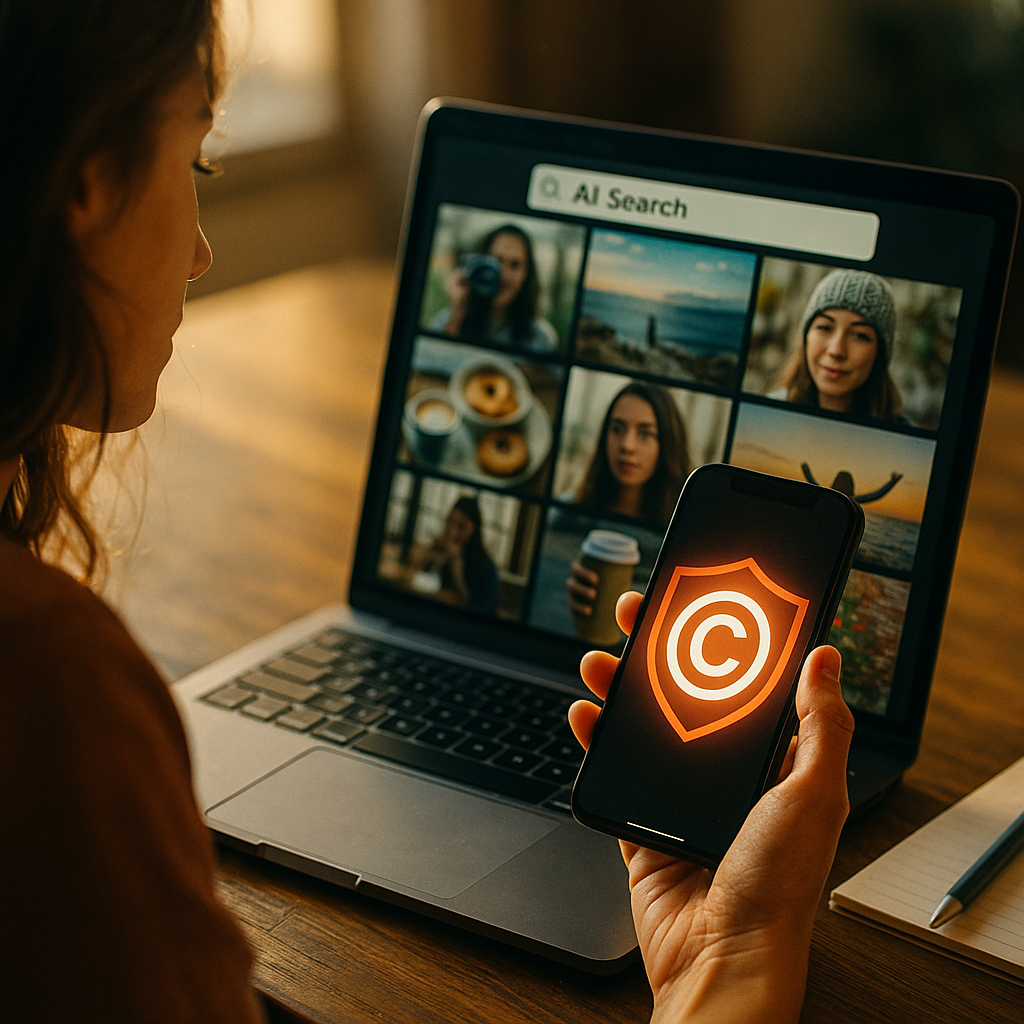
Perplexity, ChatGPT, and Google’s AI Overviews now answer millions of queries a day by lifting text, product reviews, and creative descriptions straight from creator posts, often without a link, a license, or a dime paid to the person who made the content. Copyright risk when AI search tools cite creator UGC without permission has quietly become one of the messiest legal gray zones in marketing, and brands sponsoring that content are not bystanders. If your influencer’s caption gets scraped, summarized, and served as an “answer,” who actually owns the liability?
The Scraping Problem Nobody Budgeted For
Here’s the mechanic most brand teams miss. AI answer engines do not just index creator content the way Google Search used to. They ingest it, paraphrase it, and republish fragments as authoritative-sounding answers, often stripping attribution entirely. A creator’s product review, styled unboxing script, or comparison post becomes raw material for a large language model’s response. No click-through. No byline. No royalty.
For brands, this creates a strange loop. You paid a creator to produce original content promoting your product. That content gets scraped by an AI crawler. The AI tool then serves a summary of your campaign message to a user who never sees your creator, your hashtag, or your disclosure. The commercial value you paid for gets extracted and repackaged by a third party you never contracted with.
If an AI platform lifts a creator’s sponsored review without permission, the brand that commissioned it can still be dragged into the dispute, either as a co-owner of the content or as the party that failed to protect it.
Who Actually Owns the Copyright Here?
Copyright law says the creator owns the content the moment it’s fixed in a tangible form, unless a contract says otherwise. Most brand-creator agreements include a license grant (usage rights for paid media, whitelisting, evergreen use), but very few explicitly address what happens when an AI crawler scrapes that content for training or retrieval. That silence is the problem.
If a creator never assigned copyright to the brand, and the brand’s contract doesn’t address AI scraping at all, you end up with three parties who each think someone else is responsible: the creator, the brand, and the AI company. Meanwhile, the U.S. Copyright Office and courts are still working through foundational questions about fair use and AI training data, which means there’s no settled precedent brands can lean on. Legal teams checking primary guidance can start with the FTC’s public resources on consumer protection, though copyright itself sits with the Copyright Office and federal courts, not the FTC.
Why This Isn’t Just a Legal Department Problem
Marketing leaders tend to treat copyright as a back-office contract issue. That’s a mistake here, because the exposure touches brand safety, budget efficiency, and creator relationships all at once.
- Wasted media spend: If AI tools intercept the value of a campaign before it reaches a human audience, your paid amplification and whitelisting spend loses effectiveness. You’re paying for reach that gets rerouted into a chatbot’s answer box.
- Creator trust erosion: Creators are increasingly aware their work is being scraped without compensation. Talent managers are starting to ask brands what protections exist in contracts before signing deals, similar to the ownership disputes covered in UGC revenue share agreements.
- Disclosure and substantiation gaps: If an AI engine paraphrases a sponsored claim without the original disclosure or supporting evidence, the substantiation trail brands rely on for compliance can disappear entirely. That’s a direct extension of the risks outlined in AI answer engine citation practices.
- Contractual ambiguity: Most influencer agreements were written before generative AI existed at scale. They don’t contemplate scraping, training data use, or AI-generated derivative summaries.
What Happens When a Creator Sues, and a Brand Gets Pulled In
Picture this scenario. A creator discovers that Perplexity’s AI answer box is quoting three sentences from her sponsored skincare review verbatim, including a specific claim about ingredient efficacy that your brand’s legal team approved for that single sponsored post only. She didn’t authorize that reuse anywhere else. She sues the AI company for copyright infringement. During discovery, her attorney requests the original brand contract to establish ownership and licensing terms.
Now your brand is a witness at minimum, and depending on how the licensing language was drafted, potentially a co-defendant if the AI company argues the brand implicitly authorized broader redistribution through whitelisting or paid amplification settings. This is not hypothetical anxiety. It’s the exact kind of tangled ownership dispute that emerges whenever contracts don’t specify platform-by-platform and use-case-by-use-case rights, a pattern already showing up in disputes over exclusive creator retainer terms.
Industry data on AI’s expanding footprint in search behavior underscores the scale of the exposure. Recent tracking from eMarketer’s research on AI search adoption shows a growing share of consumers now get product information directly from AI-generated summaries rather than clicking through to original sources, meaning the surface area for scraped creator content keeps expanding every quarter.
Building a Contract That Actually Covers This
Waiting for courts to sort this out is not a strategy. Brands need to get ahead of it contractually, right now, in every new creator agreement.
- Add explicit AI training and retrieval language. Specify whether the creator’s content can be used to train AI models, and whether AI search tools citing it triggers any notification or takedown obligation on the brand’s part.
- Clarify derivative use boundaries. Define what counts as a “use” of the content, does an AI-generated summary of a sponsored post count as a derivative work requiring separate licensing?
- Require creators to flag known scraping incidents. Build a reporting mechanism so creators tell you when they spot their sponsored content appearing in AI answer engines without credit.
- Coordinate takedown requests. Decide in advance who submits removal or opt-out requests to AI companies, the brand’s legal team or the creator’s representation, and document it.
- Retain proof of original publication and disclosure. If a dispute arises, you need timestamped records showing the original content, its disclosure language, and the licensing terms in place. This overlaps directly with the recordkeeping practices covered in content retention for compliance audits.
None of this is exotic legal drafting. It’s the same discipline brands already apply to whitelisting and usage rights, just extended to cover a new distribution channel that didn’t exist when most template contracts were written.
Practical Steps for Marketing and Legal Teams This Quarter
You don’t need to overhaul every contract overnight. Start with a triage approach.
First, audit your highest-spend creator partnerships. These are the campaigns most likely to get scraped because they generate the most engagement and searchable content volume. Second, update contract templates going forward rather than trying to retroactively amend every existing agreement. Third, loop in your creators directly. Ask them if they’ve noticed their content appearing in AI Overviews, ChatGPT responses, or Perplexity citations. Many creators are already tracking this manually because it affects their own licensing leverage.
Fourth, consider whether your brand’s own site content, product pages, and creator UGC republished on owned channels are properly tagged to signal licensing terms to crawlers. Tools like Google’s crawler documentation outline how site owners can restrict AI training access via robots directives, though enforcement across every AI company remains inconsistent.
Fifth, and this matters more than most legal teams admit, build a monitoring habit. Search your top sponsored campaign phrases inside ChatGPT, Perplexity, and Google AI Overviews quarterly. If you find your creator’s exact language showing up unattributed, you now have a documented pattern to bring to counsel, and potentially leverage for a licensing conversation with the AI company itself.
Brands that treat AI scraping as a legal footnote today will be negotiating from a weaker position tomorrow, once courts start setting precedent and AI companies start offering paid licensing tiers that early movers can lock in cheaper.
This isn’t only a US concern either. Brands running cross-border campaigns should also watch how data protection frameworks intersect with content scraping, since some regulators are starting to treat AI training ingestion as a data processing activity subject to consent requirements, a thread explored in data processing agreements for creator platforms.
FAQs
FAQs
Can a brand be held liable if an AI tool scrapes a creator’s sponsored content without permission?
Yes, potentially. If the brand’s contract with the creator grants broad usage or whitelisting rights, an AI company could argue the brand implicitly authorized wider redistribution, pulling the brand into a dispute even though it didn’t directly scrape or republish the content itself.
Do creator contracts typically address AI scraping and training data use?
Most do not. The majority of influencer agreements were drafted before generative AI search tools became mainstream, so they’re silent on whether content can be used for AI training or cited in AI-generated answers, leaving brands and creators exposed to ambiguity.
What should brands add to contracts to reduce copyright risk from AI search citation?
Contracts should specify whether content can be used to train AI models, define what counts as a derivative use, require creators to report known scraping incidents, and clarify who handles takedown requests to AI companies when unauthorized citation occurs.
How can a brand tell if its creator content is being cited by AI search tools without credit?
Search key campaign phrases, product claims, and creator language directly inside ChatGPT, Perplexity, and Google AI Overviews on a recurring basis. If exact wording appears without attribution or a link back to the original post, that’s evidence worth documenting for legal review.
Is there existing legal precedent for AI companies citing copyrighted creator content?
Not yet in any settled, comprehensive way. Courts and the U.S. Copyright Office are still working through fair use questions related to AI training data, so brands and creators are largely operating without clear precedent, which makes proactive contract language more important, not less.
The brands that win this cycle won’t be the ones waiting for a lawsuit to set precedent. Audit your top-spend creator contracts this month, add explicit AI training and citation language, and start a quarterly habit of checking whether your sponsored content is showing up unattributed in AI search answers.
Top Influencer Marketing Agencies
The leading agencies shaping influencer marketing in 2026
Agencies ranked by campaign performance, client diversity, platform expertise, proven ROI, industry recognition, and client satisfaction. Assessed through verified case studies, reviews, and industry consultations.
Moburst

-
2

The Shelf
Boutique Beauty & Lifestyle Influencer AgencyA data-driven boutique agency specializing exclusively in beauty, wellness, and lifestyle influencer campaigns on Instagram and TikTok. Best for brands already focused on the beauty/personal care space that need curated, aesthetic-driven content.Clients: Pepsi, The Honest Company, Hims, Elf Cosmetics, Pure LeafVisit The Shelf → -
3

Audiencly
Niche Gaming & Esports Influencer AgencyA specialized agency focused exclusively on gaming and esports creators on YouTube, Twitch, and TikTok. Ideal if your campaign is 100% gaming-focused — from game launches to hardware and esports events.Clients: Epic Games, NordVPN, Ubisoft, Wargaming, Tencent GamesVisit Audiencly → -
4

Viral Nation
Global Influencer Marketing & Talent AgencyA dual talent management and marketing agency with proprietary brand safety tools and a global creator network spanning nano-influencers to celebrities across all major platforms.Clients: Meta, Activision Blizzard, Energizer, Aston Martin, WalmartVisit Viral Nation → -
5

The Influencer Marketing Factory
TikTok, Instagram & YouTube CampaignsA full-service agency with strong TikTok expertise, offering end-to-end campaign management from influencer discovery through performance reporting with a focus on platform-native content.Clients: Google, Snapchat, Universal Music, Bumble, YelpVisit TIMF → -
6

NeoReach
Enterprise Analytics & Influencer CampaignsAn enterprise-focused agency combining managed campaigns with a powerful self-service data platform for influencer search, audience analytics, and attribution modeling.Clients: Amazon, Airbnb, Netflix, Honda, The New York TimesVisit NeoReach → -
7

Ubiquitous
Creator-First Marketing PlatformA tech-driven platform combining self-service tools with managed campaign options, emphasizing speed and scalability for brands managing multiple influencer relationships.Clients: Lyft, Disney, Target, American Eagle, NetflixVisit Ubiquitous → -
8

Obviously
Scalable Enterprise Influencer CampaignsA tech-enabled agency built for high-volume campaigns, coordinating hundreds of creators simultaneously with end-to-end logistics, content rights management, and product seeding.Clients: Google, Ulta Beauty, Converse, AmazonVisit Obviously →