


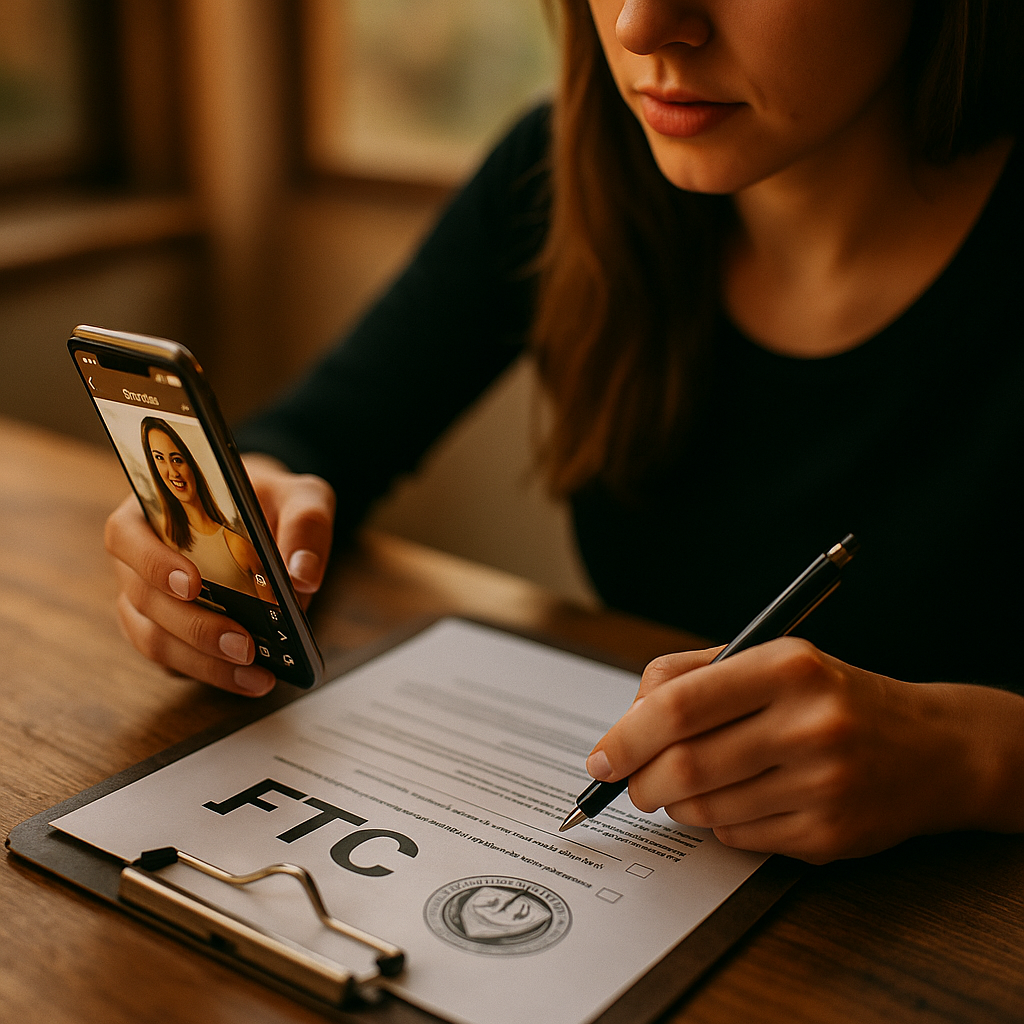
The FTC’s disclosure enforcement window doesn’t close when a campaign ends, it can reach back years. If your brand can’t produce the exact version of a sponsored post, the disclosure language used, and proof of when it went live, you’re exposed no matter how compliant the campaign felt at launch. Record retention for influencer content isn’t a back office chore. It’s the difference between a five minute response to a regulator’s letter and a six figure legal scramble.
Why “It’s Still on the Platform” Is Not a Retention Strategy
Plenty of brand teams assume the content is fine because it’s still live on Instagram or TikTok. That assumption falls apart fast. Creators delete posts. Accounts get deactivated. Platforms redesign disclosure tools and old posts render differently or lose metadata entirely. TikTok in particular has changed its native disclosure toggle behavior more than once, which means a post that looked compliant in 2023 might display no disclosure at all today if you’re relying on the live version.
Then there’s the platform itself. Meta, TikTok, and YouTube are not obligated to preserve content on your behalf, and none of them guarantee indefinite access to deleted or archived posts. If a creator’s account gets suspended mid campaign, your only proof that the content ever existed might be a screenshot someone took on their phone. That’s not an audit trail, that’s a liability.
If your only record of a sponsored post is “it’s still up,” you have no record at all. Platforms change, creators delete, and accounts disappear, but a regulatory inquiry doesn’t care whose fault that was.
What Actually Needs to Be Retained
An audit ready archive isn’t just a folder of screenshots. Regulators and litigators want context, not just images. At minimum, your retention system should capture:
- A time stamped screenshot or screen recording of the live post, including the disclosure as it actually appeared to viewers (not just the caption text pasted into a spreadsheet)
- The underlying creative file (video, image, carousel) at original resolution
- The signed contract or brand agreement governing that specific post, including disclosure and FTC compliance clauses
- Platform level metadata: post URL, publish date, account handle, and where possible the platform’s own paid partnership label data
- Correspondence with the creator or their agent confirming approval of the final content before it went live
- Any revisions, if the post was edited or reposted after initial publication
Notice what’s missing from most brands’ current process: almost none of them capture disclosure as it visually rendered. They store the caption text, which tells you nothing about whether “#ad” was buried under six other hashtags or whether TikTok’s disclosure label actually displayed. This gap is exactly what shows up in disclosure detection audits when brands try to reconstruct campaigns after the fact.
How Long Do You Actually Need to Keep This Stuff?
There’s no single federal statute that says “retain influencer content for X years.” That ambiguity is precisely why most brands under-retain. Instead, retention periods should be built around the overlapping exposure windows that actually apply to your content:
- FTC enforcement lookback: The FTC’s own guidance and past consent orders suggest practical exposure windows of three to five years, though there’s no hard statutory cap on when they can act. Treat five years as a conservative floor, not a ceiling.
- State consumer protection statutes: Many states allow private rights of action with longer limitations periods than federal rules, sometimes stretching to six years depending on jurisdiction.
- Contract dispute exposure: Standard contract statutes of limitations run four to six years in most US states, meaning your creator agreements and the content tied to them need matching retention.
- Litigation holds: Anything connected to an active or reasonably anticipated dispute overrides your default schedule entirely. Once a hold is issued, deletion stops, full stop.
Most legal teams land on a seven year default retention period for influencer content and contracts, which comfortably covers FTC, state, and contract exposure with margin. If your program includes health, finance, or children’s products, extend that further. Those categories draw more regulatory attention and carry longer practical risk tails.
Building the Archive: Structure Beats Volume
A pile of files isn’t an archive, it’s a liability with extra steps. When outside counsel or an FTC investigator asks for records, they want it produced fast and organized by campaign, creator, and date. If your team spends three weeks hunting through Slack threads and old Dropbox folders, that delay itself signals a compliance gap.
Build your archive around a consistent taxonomy: campaign name, creator handle, platform, publish date, and content ID. Every asset, contract, and disclosure record should be tagged the same way so a single search pulls the complete file for any post. Tools like Airtable, Notion, or dedicated influencer platforms with built in compliance modules can handle this, but the tool matters less than the discipline. A messy Google Drive with consistent naming conventions beats an expensive platform nobody maintains.
Automated capture matters more than most teams realize. Waiting until a campaign wraps to manually screenshot everything guarantees gaps, because by then half the posts have been edited or deleted. Automated monitoring tools that capture disclosure state at publish time, and again at set intervals afterward, close that gap. This connects directly to the broader data retention audit process brands should be running across their entire creator program, not just individual campaigns.
Who Owns This Inside the Organization?
Retention fails when it’s nobody’s explicit job. Marketing assumes legal is archiving contracts. Legal assumes the agency is archiving creative. The agency assumes the platform is archiving posts. Everybody assumes, nobody owns, and six months later there’s a gap nobody can explain.
The fix is a named owner, usually someone in compliance, legal ops, or brand marketing operations, with a documented retention policy that survives personnel turnover. That policy should specify: what gets captured, when, by whom, where it’s stored, who has access, and how long it stays before scheduled disposition. Write it down. Verbal agreements about “we’ll handle it” don’t hold up when someone leaves the company and takes institutional knowledge with them.
This ownership question gets more complicated with in-house creator teams, where the line between employee and contractor content blurs retention responsibility further. If your organization is navigating that structure, it’s worth reviewing how worker classification risk intersects with your record keeping obligations, since misclassified creators can trigger entirely different retention and reporting rules.
Contracts Need to Say This Explicitly
Most influencer agreements say almost nothing about retention. They cover usage rights, payment terms, and exclusivity, then go silent on what happens to the content record after the campaign ends. That silence is expensive when a dispute arises and the creator has deleted their copy of everything.
A contract that doesn’t specify who retains proof of disclosure is a contract that assumes nothing will ever go wrong. That assumption doesn’t survive contact with a regulator.
Every influencer contract should include a clause requiring the creator to preserve, or grant the brand rights to capture and store, the final published content and any pre-publication drafts for a defined period. It should also require notification if the creator deletes or edits the post before that retention period ends. Brands already building strong contract language around liability coverage should extend that same rigor to retention terms, since the two protections work together: insurance covers the financial exposure, but you still need the record to prove what actually happened.
Auditing Your Own Archive Before Someone Else Does
The best time to discover your archive has gaps is during a quarterly internal review, not during discovery in a lawsuit. Run a sample audit every quarter: pull ten campaigns at random, spanning different creators and platforms, and try to reconstruct the full record for each. Can you produce the disclosure as it appeared, the signed agreement, and the approval trail within an hour? If not, you’ve found your gap before a regulator did.
This kind of proactive review pairs naturally with broader renewal audits, similar to what’s outlined in renewal audit frameworks, where brands reassess creator performance and compliance history before recommitting budget. Retention gaps often surface as part of that same review cycle, so build them into the same checklist rather than treating them as separate exercises.
According to eMarketer’s ongoing tracking of influencer marketing spend, brand investment in creator partnerships keeps climbing year over year, which means the volume of content requiring retention is only growing. The FTC’s endorsement guidance hasn’t gotten more lenient in that time, either. Scale without a retention system just means a bigger mess to untangle later.
Tools like Sprout Social and native platform archiving features through Meta Business Suite offer partial solutions, but none of them were built specifically for legal defensibility. Treat platform tools as a supplement to your own archive, never as the archive itself.
Frequently Asked Questions
How long should brands retain influencer content for compliance purposes?
Most legal teams recommend a seven year default retention period for influencer content, contracts, and disclosure records. This covers typical FTC enforcement windows, state consumer protection statutes, and contract dispute limitations periods with reasonable margin. Regulated categories like health or financial products often warrant longer retention.
What happens if a creator deletes a sponsored post before the brand archives it?
If the brand has no independent record, it loses its ability to prove the post ever existed or what disclosure language it used. This is why contracts should require creators to notify brands before deleting sponsored content, and why automated monitoring at publish time matters more than relying on the creator’s own copy.
Does the FTC actually request old influencer content during investigations?
Yes. FTC enforcement actions have relied on archived posts, contracts, and correspondence to establish disclosure patterns across a brand’s influencer program, not just a single flagged post. Investigators typically ask for the full campaign record, not isolated examples.
Who should own influencer content retention inside a brand or agency?
A named owner in compliance, legal ops, or marketing operations should hold responsibility, supported by a written retention policy specifying what gets captured, stored, and for how long. Without explicit ownership, retention tasks fall through the cracks between marketing, legal, and agency partners.
Is screenshotting a live post enough to satisfy audit requirements?
A basic screenshot is a starting point but usually insufficient on its own. Auditors want time stamped captures showing the disclosure as it actually rendered, alongside the underlying contract, approval correspondence, and platform metadata like post URL and publish date.
Frequently Asked Questions
How long should brands retain influencer content for compliance purposes?
Most legal teams recommend a seven year default retention period for influencer content, contracts, and disclosure records. This covers typical FTC enforcement windows, state consumer protection statutes, and contract dispute limitations periods with reasonable margin. Regulated categories like health or financial products often warrant longer retention.
What happens if a creator deletes a sponsored post before the brand archives it?
If the brand has no independent record, it loses its ability to prove the post ever existed or what disclosure language it used. This is why contracts should require creators to notify brands before deleting sponsored content, and why automated monitoring at publish time matters more than relying on the creator’s own copy.
Does the FTC actually request old influencer content during investigations?
Yes. FTC enforcement actions have relied on archived posts, contracts, and correspondence to establish disclosure patterns across a brand’s influencer program, not just a single flagged post. Investigators typically ask for the full campaign record, not isolated examples.
Who should own influencer content retention inside a brand or agency?
A named owner in compliance, legal ops, or marketing operations should hold responsibility, supported by a written retention policy specifying what gets captured, stored, and for how long. Without explicit ownership, retention tasks fall through the cracks between marketing, legal, and agency partners.
Is screenshotting a live post enough to satisfy audit requirements?
A basic screenshot is a starting point but usually insufficient on its own. Auditors want time stamped captures showing the disclosure as it actually rendered, alongside the underlying contract, approval correspondence, and platform metadata like post URL and publish date.
Start with a single quarter’s worth of campaigns. Try to produce the full audit file for each within an hour. Wherever you can’t, that’s your retention policy’s next fix, not a hypothetical problem.
Top Influencer Marketing Agencies
The leading agencies shaping influencer marketing in 2026
Agencies ranked by campaign performance, client diversity, platform expertise, proven ROI, industry recognition, and client satisfaction. Assessed through verified case studies, reviews, and industry consultations.
Moburst

-
2

The Shelf
Boutique Beauty & Lifestyle Influencer AgencyA data-driven boutique agency specializing exclusively in beauty, wellness, and lifestyle influencer campaigns on Instagram and TikTok. Best for brands already focused on the beauty/personal care space that need curated, aesthetic-driven content.Clients: Pepsi, The Honest Company, Hims, Elf Cosmetics, Pure LeafVisit The Shelf → -
3

Audiencly
Niche Gaming & Esports Influencer AgencyA specialized agency focused exclusively on gaming and esports creators on YouTube, Twitch, and TikTok. Ideal if your campaign is 100% gaming-focused — from game launches to hardware and esports events.Clients: Epic Games, NordVPN, Ubisoft, Wargaming, Tencent GamesVisit Audiencly → -
4

Viral Nation
Global Influencer Marketing & Talent AgencyA dual talent management and marketing agency with proprietary brand safety tools and a global creator network spanning nano-influencers to celebrities across all major platforms.Clients: Meta, Activision Blizzard, Energizer, Aston Martin, WalmartVisit Viral Nation → -
5

The Influencer Marketing Factory
TikTok, Instagram & YouTube CampaignsA full-service agency with strong TikTok expertise, offering end-to-end campaign management from influencer discovery through performance reporting with a focus on platform-native content.Clients: Google, Snapchat, Universal Music, Bumble, YelpVisit TIMF → -
6

NeoReach
Enterprise Analytics & Influencer CampaignsAn enterprise-focused agency combining managed campaigns with a powerful self-service data platform for influencer search, audience analytics, and attribution modeling.Clients: Amazon, Airbnb, Netflix, Honda, The New York TimesVisit NeoReach → -
7

Ubiquitous
Creator-First Marketing PlatformA tech-driven platform combining self-service tools with managed campaign options, emphasizing speed and scalability for brands managing multiple influencer relationships.Clients: Lyft, Disney, Target, American Eagle, NetflixVisit Ubiquitous → -
8

Obviously
Scalable Enterprise Influencer CampaignsA tech-enabled agency built for high-volume campaigns, coordinating hundreds of creators simultaneously with end-to-end logistics, content rights management, and product seeding.Clients: Google, Ulta Beauty, Converse, AmazonVisit Obviously →