


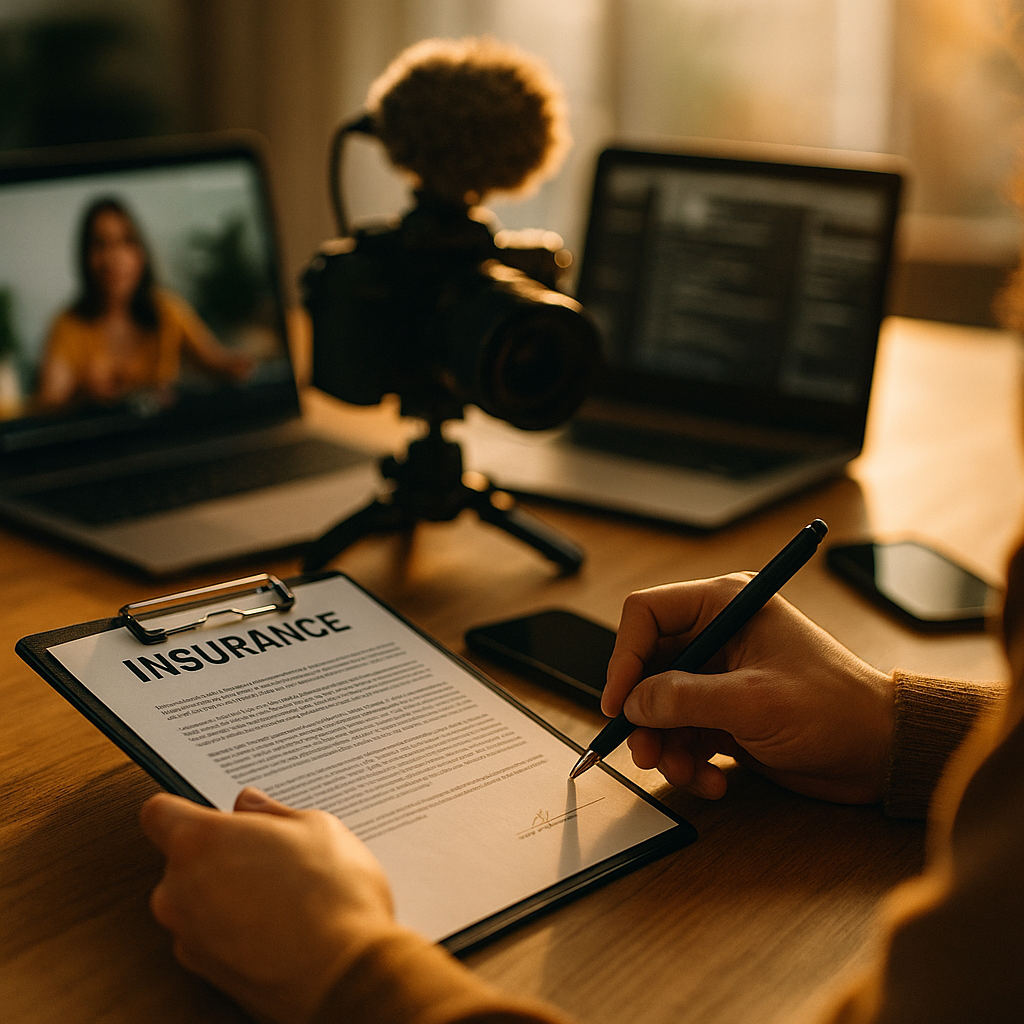
73% of consumers say they’d stop buying from a brand after a data breach, yet most influencer contracts still treat cyber liability as an afterthought. Cyber liability insurance for creator campaigns has quietly become one of the biggest coverage gaps in influencer marketing. Giveaways, quizzes, and shoppable livestreams routinely funnel names, emails, and payment details through creator-controlled links. When something goes wrong, brands often discover their policies never contemplated a creator as the point of failure.
What Counts as a “Data Collecting” Creator Campaign?
Not every partnership touches personal data. But more do than most brand teams realize. If a creator runs a landing page, a lead magnet, a discount code redemption flow, a text-to-join SMS list, or a livestream checkout, that campaign is collecting personally identifiable information (PII). So is any affiliate link that routes through a third-party tracking tool the creator controls rather than the brand.
The distinction matters because insurance carriers price risk based on data flow, not follower count. A nano creator running a “text us your email for 15% off” campaign carries the same PII exposure as a celebrity endorsement, sometimes more, because nano creators are less likely to have secure infrastructure. If you’re already vetting smaller accounts, this ties directly into the coverage gaps flagged in our nano creator insurance requirements coverage.
A creator’s phone, a shared spreadsheet, or an unsecured form builder is now part of your brand’s attack surface, whether legal has acknowledged it or not.
Why General Liability and E&O Don’t Cover This
Here’s the uncomfortable truth: standard commercial general liability policies exclude data breach costs almost entirely. They’re built for bodily injury and property damage, not a leaked CSV of customer emails. Errors and omissions (E&O) coverage is closer, but it typically protects against professional negligence claims like missed deliverables or breach of contract, not the forensic, notification, and regulatory costs tied to a data incident.
We’ve written before about how creator E&O insurance falls short on its own, and cyber liability is the natural extension of that argument. A creator’s E&O policy, if they even carry one, rarely includes a cyber endorsement. Brands assume “insured” means “covered for everything.” It doesn’t. Ask any carrier and they’ll tell you cyber and E&O are underwritten as separate risk categories for a reason.
This is also why E&O insurance riders have become a standard negotiating point in higher-value creator deals. A rider can extend cyber-specific protections without forcing the creator to buy an entirely separate policy, which is often the fastest way to close the gap without derailing contract timelines.
The Real Cost of a Creator-Side Breach
Breach costs aren’t hypothetical anymore. Industry estimates from Statista put the average cost of a data breach well into the millions when you factor in notification, credit monitoring, legal defense, and regulatory fines. Now shrink that scenario down to a single creator’s giveaway form that exposed 40,000 email addresses and phone numbers. The brand’s name is on the campaign creative. The brand’s name is what gets reported first.
State breach notification laws don’t care who technically “owned” the server. If a creator’s third-party tool leaks customer data collected on your behalf, you likely still owe notification obligations under laws like the CCPA or various state statutes. Our breakdown of data breach notification requirements walks through exactly how those obligations attach even when the brand didn’t directly control the data pipeline.
And then there’s reputational damage, which is harder to quantify but easier to feel. A creator campaign is supposed to build trust through a familiar face. A breach flips that trust into a liability multiplier. Customers don’t distinguish between “the brand’s server” and “the influencer’s spreadsheet.” They just see the logo.
What a Cyber Liability Policy Should Actually Cover
Not all cyber policies are created equal, and creator campaigns need specific provisions most off-the-shelf policies don’t include by default. When evaluating a policy for creator-driven data collection, look for:
- Third-party data breach coverage that explicitly extends to contracted creators and their subcontracted tools, not just the brand’s owned systems.
- Regulatory fine and penalty coverage for state-level privacy law violations, since fines vary widely and stack quickly across multiple jurisdictions.
- Notification and credit monitoring cost coverage, which is often the single largest line item after a breach.
- Media liability coverage for claims tied to content itself, such as unauthorized use of a customer’s likeness collected through a campaign.
- Vendor and platform coverage that accounts for the SaaS tools creators actually use, like form builders, CRM plugins, and link-in-bio platforms.
Ask your broker directly whether the policy language includes “contracted influencer” or “brand ambassador” as a covered party. If it only says “employees and subcontractors,” you may need an endorsement to make sure creators are explicitly named. This single clarification has saved more than a few marketing teams from a denied claim.
Building It Into Creator Contracts
Insurance only works if the contract requires it before the campaign launches, not after something goes wrong. Standard practice now includes a clause requiring creators handling customer data to either carry their own cyber liability coverage or operate under the brand’s policy as a named additional insured. Smaller creators rarely carry standalone cyber coverage, which is exactly why brands are increasingly building it into the master services agreement instead.
This pairs naturally with data handling requirements. If you haven’t formalized how creators are permitted to collect, store, and transfer customer information, start with a proper data processing agreement. It’s the contractual backbone that cyber insurance sits on top of, defining who’s responsible for what before a claim ever gets filed.
Retention policies matter here too. A creator sitting on a spreadsheet of customer emails from a campaign that ended eighteen months ago is a liability with a long fuse. Our piece on creator data retention audits outlines how brands are auditing exactly this kind of exposure before it becomes a headline.
The cheapest cyber liability claim is the one that never happens because the contract required deletion of customer data within 30 days of campaign end.
Quick Checklist Before Launch
Marketing ops teams juggling dozens of live creator campaigns don’t need a legal treatise, they need a fast pre-launch check. Before any campaign that touches customer PII goes live, confirm:
- The creator’s tools (forms, CRMs, link platforms) are named in your policy or covered under a rider.
- A data processing agreement is signed and specifies retention timelines.
- The creator is listed as an additional insured or carries proof of their own cyber coverage.
- Breach notification responsibilities are assigned in writing, including who pays for what.
- Data collected through the campaign is stored on brand-approved infrastructure, not a personal device or free-tier SaaS account.
None of this eliminates risk entirely. It does mean that when something goes wrong, and eventually something will, you’re negotiating from a position where the contract and the coverage actually match reality. For a broader view on how compliance gaps compound across a creator roster, the FTC’s guidance on endorsements and general data practices is worth bookmarking alongside your insurance review cycle. Marketing benchmarking resources from HubSpot and social platform performance data from Sprout Social can also help quantify what a campaign pause actually costs you if a breach forces a shutdown mid-flight.
FAQs
Does standard influencer E&O insurance cover data breaches?
Generally, no. E&O policies cover professional negligence and contract disputes, not the forensic investigation, notification, and regulatory costs associated with a data breach. Cyber liability coverage needs to be added separately or through a specific endorsement.
Who is liable if a creator’s landing page leaks customer data?
Liability typically falls on whoever’s brand is attached to the campaign, regardless of which party’s tools technically failed. Contracts should explicitly assign notification duties and cost-sharing before launch to avoid disputes after a breach.
Do micro and nano creators need their own cyber liability policy?
Most don’t carry one on their own. Brands increasingly solve this by naming the creator as an additional insured under the brand’s policy rather than requiring every creator to purchase separate coverage.
What triggers breach notification laws in a creator campaign?
Any unauthorized access or disclosure of personal information collected through the campaign, such as names, emails, or payment details, can trigger state notification requirements, even if the brand didn’t directly manage the data collection tool.
How much does cyber liability coverage typically cost for creator campaigns?
Premiums vary based on data volume, campaign duration, and the number of creators covered, but adding a creator-specific rider to an existing cyber policy is usually far less expensive than purchasing standalone coverage for each individual campaign.
Next step: audit your three highest-reach active creator campaigns this week, confirm whether their data collection tools are named in your cyber policy, and close the gap with a rider before your next launch, not after an incident forces the conversation.
Top Influencer Marketing Agencies
The leading agencies shaping influencer marketing in 2026
Agencies ranked by campaign performance, client diversity, platform expertise, proven ROI, industry recognition, and client satisfaction. Assessed through verified case studies, reviews, and industry consultations.
Moburst

-
2

The Shelf
Boutique Beauty & Lifestyle Influencer AgencyA data-driven boutique agency specializing exclusively in beauty, wellness, and lifestyle influencer campaigns on Instagram and TikTok. Best for brands already focused on the beauty/personal care space that need curated, aesthetic-driven content.Clients: Pepsi, The Honest Company, Hims, Elf Cosmetics, Pure LeafVisit The Shelf → -
3

Audiencly
Niche Gaming & Esports Influencer AgencyA specialized agency focused exclusively on gaming and esports creators on YouTube, Twitch, and TikTok. Ideal if your campaign is 100% gaming-focused — from game launches to hardware and esports events.Clients: Epic Games, NordVPN, Ubisoft, Wargaming, Tencent GamesVisit Audiencly → -
4

Viral Nation
Global Influencer Marketing & Talent AgencyA dual talent management and marketing agency with proprietary brand safety tools and a global creator network spanning nano-influencers to celebrities across all major platforms.Clients: Meta, Activision Blizzard, Energizer, Aston Martin, WalmartVisit Viral Nation → -
5

The Influencer Marketing Factory
TikTok, Instagram & YouTube CampaignsA full-service agency with strong TikTok expertise, offering end-to-end campaign management from influencer discovery through performance reporting with a focus on platform-native content.Clients: Google, Snapchat, Universal Music, Bumble, YelpVisit TIMF → -
6

NeoReach
Enterprise Analytics & Influencer CampaignsAn enterprise-focused agency combining managed campaigns with a powerful self-service data platform for influencer search, audience analytics, and attribution modeling.Clients: Amazon, Airbnb, Netflix, Honda, The New York TimesVisit NeoReach → -
7

Ubiquitous
Creator-First Marketing PlatformA tech-driven platform combining self-service tools with managed campaign options, emphasizing speed and scalability for brands managing multiple influencer relationships.Clients: Lyft, Disney, Target, American Eagle, NetflixVisit Ubiquitous → -
8

Obviously
Scalable Enterprise Influencer CampaignsA tech-enabled agency built for high-volume campaigns, coordinating hundreds of creators simultaneously with end-to-end logistics, content rights management, and product seeding.Clients: Google, Ulta Beauty, Converse, AmazonVisit Obviously →