


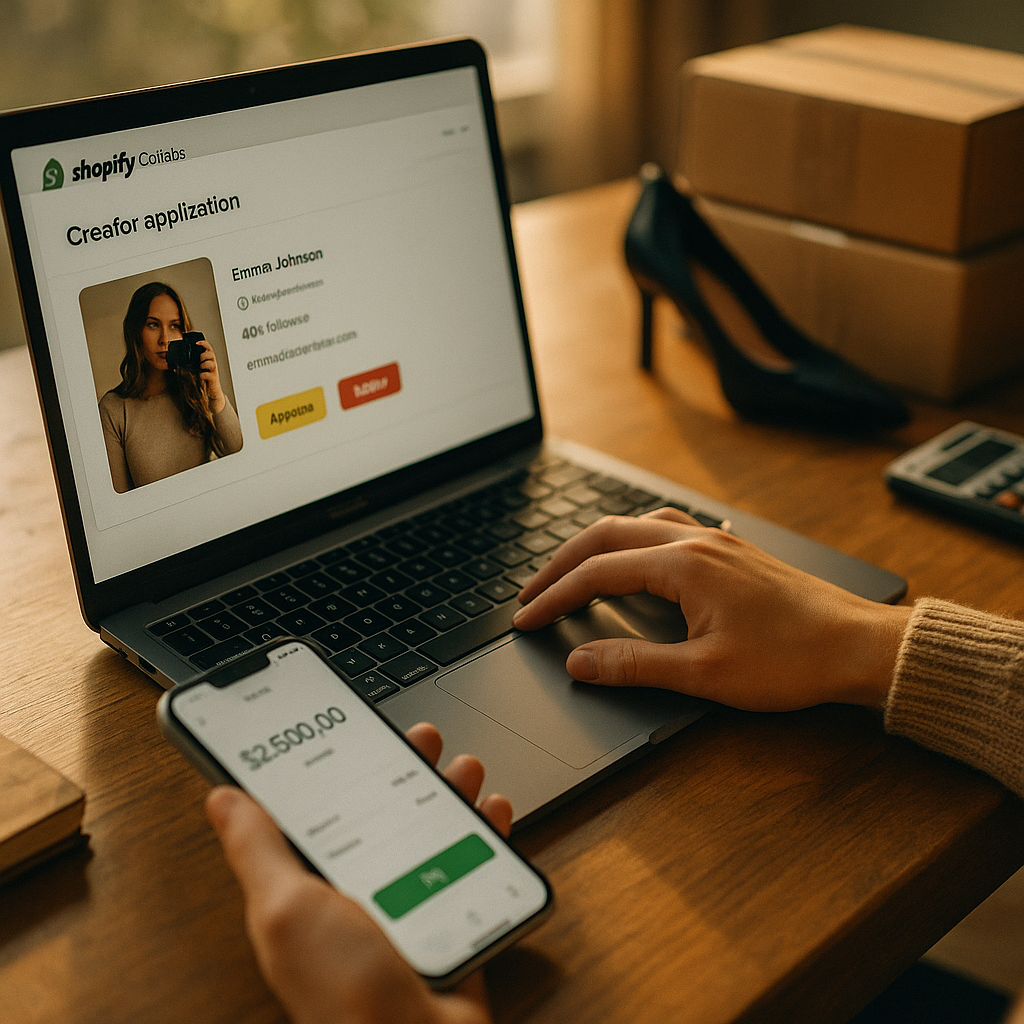
Shopify merchants gave away an estimated $1 billion plus in commissions through creator affiliate programs last year, and a growing share of that flowed through one dashboard: Shopify Collabs. If your brand still treats influencer gifting as a spreadsheet-and-DM operation, you’re leaving conversion data, tax compliance, and creator quality control on the table. The Shopify Collabs marketplace is no longer a nice-to-have side channel. It’s becoming the default infrastructure layer for merchant-creator relationships.
What Shopify Collabs Actually Solves
Before Collabs, running an affiliate program on Shopify meant stitching together a discount code spreadsheet, a PayPal payout process, and a lot of hoping creators actually posted what they promised. Collabs consolidates product seeding, unique tracking links, commission payouts, and creator discovery into one native app. For brands already on Shopify Plus or standard plans, that’s a meaningful reduction in operational overhead.
The marketplace works two ways. Brands can browse and invite creators directly, or creators can apply to a brand’s public storefront listing. Either path routes through the same backend: product gifting requests, commission tiers, and automated 1099 generation for U.S.-based creators earning above IRS thresholds. That last piece matters more than most marketing teams realize. Tax compliance failures in creator payouts are a quiet but growing liability, and Collabs handles the paperwork so your finance team doesn’t have to chase it manually.
Setting Up Your Brand Storefront: The Non-Negotiables
Your Collabs storefront is effectively a job listing that thousands of creators will scan in seconds. Treat it like one.
- Commission structure clarity. Flat percentage, tiered by sales volume, or hybrid with a flat fee plus percentage. Ambiguity here kills applications before they start.
- Product catalog curation. Don’t list your entire SKU range. Curate a “creator-ready” subset that photographs well and has healthy margin to absorb commission costs.
- Brand guidelines upfront. Upload your do’s and don’ts, FTC disclosure requirements, and content style references directly into the application flow.
- Application questions that filter, not just collect. Ask about audience demographics, past brand partnerships, and content style, not just follower count.
Most brands underestimate how much the storefront copy itself acts as a filter. A vague listing attracts vague creators. A specific one, with clear expectations and real commission numbers, attracts people who’ve actually read it.
A well-configured Collabs storefront should function like a job posting: specific enough to repel mismatched applicants and attract creators who already understand your margin structure before they ever DM you.
The Vetting Problem Nobody Talks About
Here’s the uncomfortable truth: Shopify Collabs makes it easy to approve creators, but it does almost nothing to help you vet them. The platform surfaces follower counts and past commission history if a creator has worked with other Collabs brands, but engagement authenticity, audience quality, and content-market fit are still your job.
Brands that skip vetting tend to learn the hard way. A creator with 80,000 followers and a 0.3% engagement rate isn’t an oversight, it’s often a red flag for purchased followers or engagement pods. Before approving anyone into your gifting queue, pull their last ten posts and check for consistency: does engagement scale proportionally with follower count, or does it spike oddly on sponsored content and flatline elsewhere?
A basic vetting checklist worth building into your approval workflow:
- Cross-reference their content niche against your product category. A home decor creator promoting supplements rarely converts.
- Check comment quality, not just comment count. Generic emoji spam signals bot activity or engagement farming.
- Review posting frequency and consistency over the last 90 days. Dormant accounts that suddenly reactivate for gifting campaigns are a known gaming tactic.
- Verify FTC disclosure compliance on past sponsored posts. If they’ve been sloppy with #ad tags before, they’ll be sloppy with yours.
For deeper due diligence, cross-check FTC guidance directly. The FTC’s endorsement guidelines spell out exactly what counts as adequate disclosure, and brands are increasingly held liable alongside creators for violations.
Gifting Tiers vs. Paid Commission: Choosing Your Entry Point
Not every creator relationship needs to start with cash. Collabs supports a tiered approach that most brands underuse.
Tier one: product gifting only. Low-risk entry point for micro and nano creators. You’re testing content quality and audience response before committing budget.
Tier two: gifting plus commission. Once a creator proves they can drive traffic (measured via their unique Collabs link), layer in a percentage commission, typically 10 to 20 percent depending on category margin.
Tier three: flat fee plus commission hybrid. Reserved for creators with proven conversion history, either from your own data or verifiable past brand results.
This tiered structure protects budget while still giving you a scalable path to formalize relationships with top performers. It also mirrors how smart TikTok Shop and Amazon Live programs structure creator tiers. If you’re running parallel programs across platforms, the creator to paid CAC playbook for TikTok Shop offers a useful comparison model for when to graduate creators from organic to paid spend.
Tracking Attribution Without Losing Your Mind
Collabs generates unique affiliate links and discount codes automatically, which solves the basic attribution problem. But here’s where brands trip up: Collabs data lives in its own silo unless you actively connect it to your broader analytics stack. If a creator’s link drives someone to your site who then converts three days later through a retargeting ad, standard Collabs reporting won’t always give you that full picture cleanly.
Set up UTM parameters alongside Collabs links where possible, and pipe conversion data into Google Analytics or your preferred BI tool for cross-channel visibility. Brands running Instagram and TikTok Shop simultaneously often find gaps here, since Collabs was built primarily for Shopify-native attribution, not multi-platform reconciliation. Tools built specifically to bridge this gap, like the systems covered in closing Instagram’s attribution gap, are worth evaluating if your creator program spans more than one storefront or platform.
For payout reconciliation across multiple channels, the same attribution logic applies whether you’re managing YouTube affiliate links or Shopify Collabs codes. See the cross platform payout reconciliation guide for a framework that generalizes well.
Common Setup Mistakes That Tank Program ROI
A few patterns show up repeatedly across brands new to Collabs:
- Approving too fast. The dopamine hit of application volume leads to rubber-stamp approvals. Slow down. A smaller, vetted roster outperforms a bloated unvetted one every time.
- No content usage rights clause. If you want to repurpose creator content for paid ads later, you need that permission baked into your onboarding terms from day one, not requested retroactively.
- Ignoring seasonality in commission structure. A flat 15 percent commission that works in Q2 might destroy margin during a Q4 promotional period. Build flexibility in.
- Treating Collabs as standalone instead of integrated. Your best creators should eventually cross-pollinate into paid social campaigns. Brands that keep Collabs siloed from their broader influencer strategy waste the compounding value of proven performers.
According to data referenced by eMarketer, affiliate and creator-driven commerce continues to outpace traditional display advertising in ROI for direct-to-consumer brands, which makes the setup discipline here worth the time investment.
How Vetting Fits Into a Broader Creator Compliance Framework
Shopify Collabs doesn’t exist in a vacuum. If you’re running affiliate programs alongside TikTok Shop, Amazon Live, or YouTube Shopping, your vetting standards need to stay consistent across platforms, or you risk creating loopholes where a rejected creator on one channel simply pivots to another. Brands managing multi-platform vendor governance, similar to the frameworks outlined in vendor governance playbooks for retail TikTok Shop programs, tend to catch these gaps before they become brand safety incidents.
Documentation matters here too. Keep a centralized record of every creator’s disclosure history, past commission performance, and any content flags, regardless of which platform originated the relationship. When (not if) a creator relationship goes sideways publicly, having that paper trail protects your brand’s position.
For teams building out formal marketing operations around influencer discovery more broadly, resources like Sprout Social’s creator marketing research and HubSpot’s marketing benchmarks offer useful external validation points when building internal vetting scorecards.
FAQs
Frequently Asked Questions
Is Shopify Collabs free to use for brands?
Shopify Collabs is included with most Shopify plans at no additional software fee, though brands still cover product costs for gifting and commission payouts to creators. There’s no separate marketplace access charge.
How do I vet creators if Shopify Collabs doesn’t show engagement rate directly?
Pull creator profiles manually from Instagram, TikTok, or YouTube and calculate engagement rate against follower count. Cross-reference their last 90 days of posts for consistency, and check comment quality rather than relying on follower totals alone.
What commission rate is standard for Shopify Collabs programs?
Commission rates typically range from 10 to 25 percent depending on product category and margin structure, with beauty and apparel often at the higher end and lower-margin categories like electronics or food at the lower end.
Can creators apply to my brand without an invitation?
Yes, if your storefront listing is public, creators can browse and apply directly. Brands can also proactively invite creators they discover through the marketplace search function.
Does Shopify Collabs handle tax documentation for creators?
Shopify Collabs automates 1099 generation for U.S.-based creators who cross IRS earning thresholds, reducing the manual tax compliance burden on brand finance teams.
How is Shopify Collabs different from running affiliate links through TikTok Shop?
Shopify Collabs attributes purchases directly on your owned storefront, giving you first-party data control, while TikTok Shop attribution lives within TikTok’s ecosystem. Brands running both often need separate tracking and reconciliation processes for each.
Start with a narrow storefront listing, a strict tier-one gifting policy, and a manual vetting checklist before you scale invites. The brands winning with Shopify Collabs right now aren’t the ones approving the most creators, they’re the ones saying no the fastest to the wrong ones.
Top Influencer Marketing Agencies
The leading agencies shaping influencer marketing in 2026
Agencies ranked by campaign performance, client diversity, platform expertise, proven ROI, industry recognition, and client satisfaction. Assessed through verified case studies, reviews, and industry consultations.
Moburst

-
2

The Shelf
Boutique Beauty & Lifestyle Influencer AgencyA data-driven boutique agency specializing exclusively in beauty, wellness, and lifestyle influencer campaigns on Instagram and TikTok. Best for brands already focused on the beauty/personal care space that need curated, aesthetic-driven content.Clients: Pepsi, The Honest Company, Hims, Elf Cosmetics, Pure LeafVisit The Shelf → -
3

Audiencly
Niche Gaming & Esports Influencer AgencyA specialized agency focused exclusively on gaming and esports creators on YouTube, Twitch, and TikTok. Ideal if your campaign is 100% gaming-focused — from game launches to hardware and esports events.Clients: Epic Games, NordVPN, Ubisoft, Wargaming, Tencent GamesVisit Audiencly → -
4

Viral Nation
Global Influencer Marketing & Talent AgencyA dual talent management and marketing agency with proprietary brand safety tools and a global creator network spanning nano-influencers to celebrities across all major platforms.Clients: Meta, Activision Blizzard, Energizer, Aston Martin, WalmartVisit Viral Nation → -
5

The Influencer Marketing Factory
TikTok, Instagram & YouTube CampaignsA full-service agency with strong TikTok expertise, offering end-to-end campaign management from influencer discovery through performance reporting with a focus on platform-native content.Clients: Google, Snapchat, Universal Music, Bumble, YelpVisit TIMF → -
6

NeoReach
Enterprise Analytics & Influencer CampaignsAn enterprise-focused agency combining managed campaigns with a powerful self-service data platform for influencer search, audience analytics, and attribution modeling.Clients: Amazon, Airbnb, Netflix, Honda, The New York TimesVisit NeoReach → -
7

Ubiquitous
Creator-First Marketing PlatformA tech-driven platform combining self-service tools with managed campaign options, emphasizing speed and scalability for brands managing multiple influencer relationships.Clients: Lyft, Disney, Target, American Eagle, NetflixVisit Ubiquitous → -
8

Obviously
Scalable Enterprise Influencer CampaignsA tech-enabled agency built for high-volume campaigns, coordinating hundreds of creators simultaneously with end-to-end logistics, content rights management, and product seeding.Clients: Google, Ulta Beauty, Converse, AmazonVisit Obviously →