


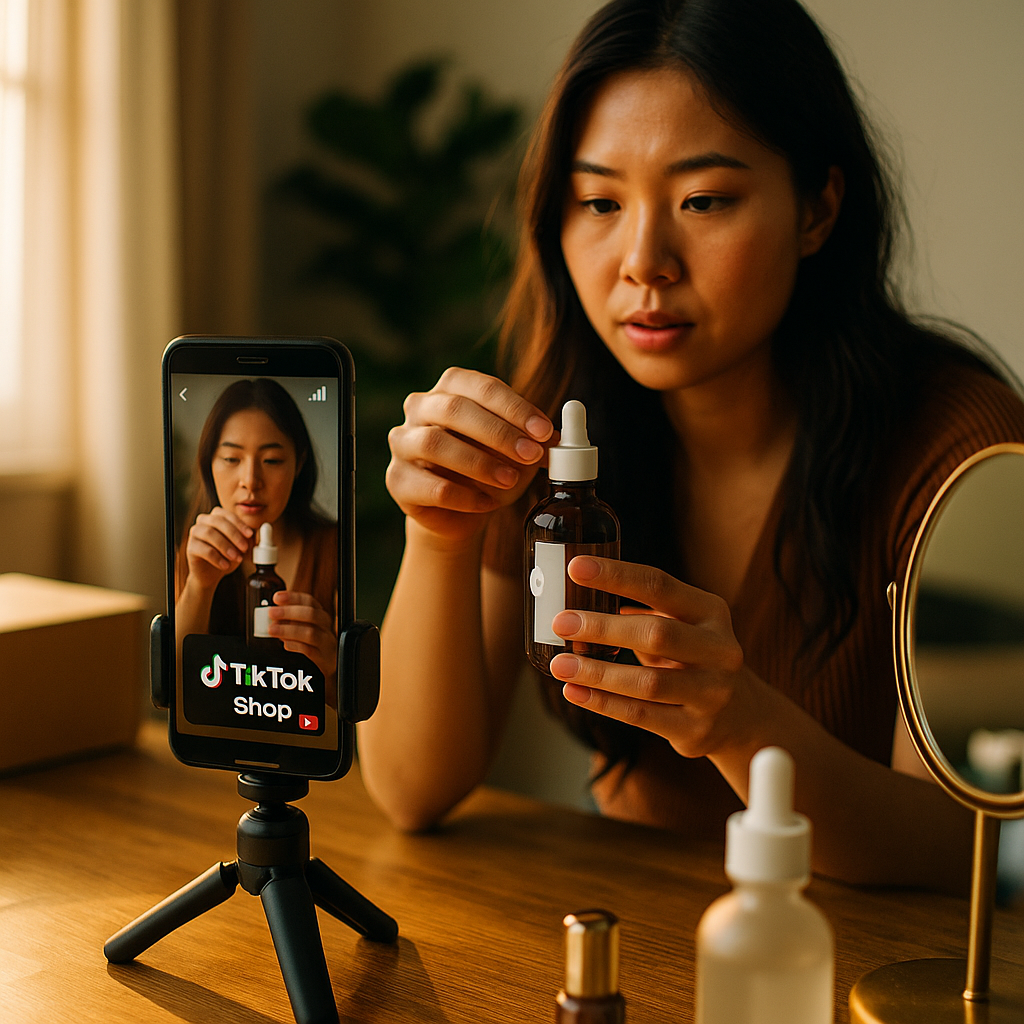
TikTok’s own commerce data has shown that ads built from organic creator videos can outperform brand-made spots on click-through rate by wide margins. If your team is still building TikTok Shop Video Shopping Ads from scratch in a studio, you’re leaving performance on the table. The winning move in 2026 is simpler: find what’s already converting organically, then pay to amplify it.
Why Organic-to-Paid Beats Brief-First Creative
Here’s the uncomfortable truth most brand teams don’t want to hear: your creative team’s best guess rarely beats what a creator already proved works. Organic content has a head start. It’s been tested by an algorithm and a real audience before a single dollar of media spend touches it. When a video earns strong watch-through and saves organically, that’s a signal, not a coincidence.
TikTok Shop’s Video Shopping Ads format takes an existing organic or affiliate video and turns it into a paid unit with a product card attached, driving viewers straight into checkout without leaving the app. The mechanics matter less than the sourcing strategy. Pick the wrong video and you’re just paying to accelerate mediocrity.
The best-performing Video Shopping Ads are rarely the ones brands commissioned. They’re the ones a creator made for free, that already had proof of demand baked in before a media dollar was spent.
Building the Organic-to-Paid Pipeline
Turning creator content into paid media isn’t a one-off task, it’s a repeatable operation. Most brands that get this right have built a lightweight weekly workflow rather than a quarterly scramble. Here’s the structure that tends to hold up:
- Source broadly. Run an active affiliate or seeding program so there’s enough organic volume to choose from. If you only have five creator videos a month, you don’t have a pipeline, you have a lottery.
- Screen on early signals. Watch time, completion rate, and comment sentiment in the first 48 hours tell you more than follower count ever will.
- Get usage rights locked at seeding. Retroactively chasing rights after a video pops is a legal headache and a slow one. Build paid usage terms into your affiliate agreement upfront.
- Test small, scale fast. Push a modest budget behind a shortlist, then double down hard on the one or two that hold CPA under target after 48-72 hours of spend.
Brands running high-volume affiliate programs will recognize this as an extension of recruiting strategy. If you haven’t nailed sourcing at scale yet, our affiliate recruiting playbook is the logical starting point before you even think about paid amplification.
What Actually Qualifies as “Ad Ready” Organic Content?
Not every viral video is fit for paid. Some of the best organic content is too messy, too niche, or too legally ambiguous to survive a media budget review. Before you greenlight spend, run each candidate through a short checklist.
- Does the disclosure meet FTC standards, clearly and unambiguously, not buried in a caption? Get this wrong and you’re not just risking a rejected ad, you’re risking regulatory exposure. The FTC’s endorsement guidance is unambiguous on this point.
- Is the product shown accurately, with claims that match your actual spec sheet? Paid amplification of an overstated claim is a bigger liability than the organic version ever was.
- Does the video have a natural hook in the first two to three seconds? Paid distribution punishes slow starts far more harshly than organic feeds do.
- Is the creator brand-safe today, not just at the time of posting? A quick re-check of recent content history before you spend media dollars behind someone is just good practice.
This is also where disclosure discipline pays off structurally, not just legally. TikTok has gotten more aggressive about auto-flagging undisclosed commercial content, and a flagged video makes a poor foundation for a paid campaign. If your team needs a refresher on how the platform’s detection systems work, our disclosure compliance guide breaks down what triggers review.
Budget Allocation: How Much Should Go to Amplification?
There’s no universal rule here, but a workable starting ratio for mid-size DTC brands is roughly 60% of Shop media budget on amplifying proven organic and affiliate content, with the remaining 40% split between live shopping placements and always-on catalog ads. That ratio shifts as your organic volume matures. Early-stage programs with thin organic pipelines might need to lean more on brand-produced Spark Ads until affiliate volume catches up.
One thing that trips up finance teams: Video Shopping Ads spend needs to be tracked separately from standard TikTok Ads Manager campaigns if you want clean attribution back to specific creators, since commission payouts and ad spend are two different line items that both touch the same piece of content. Build that reconciliation into your reporting cadence from day one, not after your CFO asks why the numbers don’t tie out.
If a video is already converting organically at a 2% or better click-to-purchase rate on TikTok Shop, that’s your amplification shortlist. Everything else is a guess.
Pairing Amplification With Live Commerce
Video Shopping Ads work best as part of a bigger commerce motion, not a standalone tactic. Brands seeing the strongest blended ROAS are running amplified organic clips as top-of-funnel discovery, then routing engaged viewers toward scheduled live shopping events where the same creator (or a similarly positioned one) closes the sale in real time. The video builds trust and curiosity in fifteen seconds. The live stream does the conversion heavy lifting with real-time Q&A and urgency mechanics like flash discounts.
If your live shopping cadence is inconsistent, none of this compounds. Hosts need a predictable schedule so paid traffic from Video Shopping Ads has somewhere reliable to land. Our live cadence scheduling playbook covers how to build that rhythm without burning out your host roster.
Measurement: The Metrics That Actually Predict Scale
Vanity metrics from the organic phase (views, likes) don’t reliably predict paid performance. What does correlate more consistently is a combination of hook retention (viewers still watching at three seconds), add-to-cart rate from the organic post if it was already shoppable, and comment quality (questions about price or shipping outperform generic praise as a buying-intent signal).
Once a video is in paid rotation, watch cost-per-purchase against your organic baseline daily for the first week. Content that was clearly winning organically but stalls in paid usually points to one of two problems: audience mismatch in targeting, or a creative that was riding a trending sound rather than genuine product interest. Both are fixable, but neither is worth chasing past a week of flat performance.
Third-party benchmarking helps here too. eMarketer’s ongoing coverage of social commerce trends and Sprout Social’s platform benchmark reports are both useful for sanity-checking whether your CPA is competitive or whether the whole category is seeing cost inflation that quarter.
Where This Fits Against Other Shoppable Formats
Video Shopping Ads aren’t the only shoppable unit worth testing, and TikTok isn’t the only platform doing organic-to-paid conversion well. If you’re weighing budget across formats and platforms, it’s worth benchmarking Shop performance against Instagram Reels, YouTube Shorts, and Pinterest’s creator-paired units to see where your specific audience actually transacts. Our shoppable tags comparison lays out the tradeoffs by format, and the Shorts versus TikTok CAC guide is useful if you’re deciding where to concentrate spend for a specific launch. For deeper platform mechanics on TikTok Ads Manager itself, TikTok’s ads platform documentation is the primary source worth bookmarking.
Bottom line for the next planning cycle: stop briefing new creative from zero and start building a weekly review of your top organic and affiliate performers, then put media dollars behind whatever’s already proving itself with real viewers. That single process change, done consistently, will move your Shop CPA more than any new creative concept will.
Frequently Asked Questions
What is a TikTok Shop Video Shopping Ad?
It’s a paid ad format that takes an existing organic or affiliate TikTok video and adds a shoppable product card, letting viewers purchase without leaving the app while the creative itself stays native to the platform’s feed.
How do I get usage rights to run a creator’s organic video as a paid ad?
Usage rights should be negotiated at the seeding or affiliate agreement stage, before content is even posted. Retroactively securing paid usage rights after a video performs well is slower, more expensive, and creates unnecessary legal risk.
How much budget should go toward amplifying organic content versus new creative?
A common starting point for mid-size brands is around 60% of Shop media budget on amplifying proven organic and affiliate content, adjusting based on how much qualified organic volume the brand’s affiliate program is generating.
What early signals predict whether an organic video will perform well as a paid ad?
Three-second hook retention, comment sentiment indicating buying intent (price and shipping questions), and any existing add-to-cart data from the organic post are stronger predictors than raw view counts or likes.
Do Video Shopping Ads require separate disclosure from standard influencer content?
Disclosure requirements under FTC guidance apply regardless of whether content is running organically or as paid media, and paid amplification of undisclosed content increases both compliance risk and the chance of platform flagging.
Top Influencer Marketing Agencies
The leading agencies shaping influencer marketing in 2026
Agencies ranked by campaign performance, client diversity, platform expertise, proven ROI, industry recognition, and client satisfaction. Assessed through verified case studies, reviews, and industry consultations.
Moburst

-
2

The Shelf
Boutique Beauty & Lifestyle Influencer AgencyA data-driven boutique agency specializing exclusively in beauty, wellness, and lifestyle influencer campaigns on Instagram and TikTok. Best for brands already focused on the beauty/personal care space that need curated, aesthetic-driven content.Clients: Pepsi, The Honest Company, Hims, Elf Cosmetics, Pure LeafVisit The Shelf → -
3

Audiencly
Niche Gaming & Esports Influencer AgencyA specialized agency focused exclusively on gaming and esports creators on YouTube, Twitch, and TikTok. Ideal if your campaign is 100% gaming-focused — from game launches to hardware and esports events.Clients: Epic Games, NordVPN, Ubisoft, Wargaming, Tencent GamesVisit Audiencly → -
4

Viral Nation
Global Influencer Marketing & Talent AgencyA dual talent management and marketing agency with proprietary brand safety tools and a global creator network spanning nano-influencers to celebrities across all major platforms.Clients: Meta, Activision Blizzard, Energizer, Aston Martin, WalmartVisit Viral Nation → -
5

The Influencer Marketing Factory
TikTok, Instagram & YouTube CampaignsA full-service agency with strong TikTok expertise, offering end-to-end campaign management from influencer discovery through performance reporting with a focus on platform-native content.Clients: Google, Snapchat, Universal Music, Bumble, YelpVisit TIMF → -
6

NeoReach
Enterprise Analytics & Influencer CampaignsAn enterprise-focused agency combining managed campaigns with a powerful self-service data platform for influencer search, audience analytics, and attribution modeling.Clients: Amazon, Airbnb, Netflix, Honda, The New York TimesVisit NeoReach → -
7

Ubiquitous
Creator-First Marketing PlatformA tech-driven platform combining self-service tools with managed campaign options, emphasizing speed and scalability for brands managing multiple influencer relationships.Clients: Lyft, Disney, Target, American Eagle, NetflixVisit Ubiquitous → -
8

Obviously
Scalable Enterprise Influencer CampaignsA tech-enabled agency built for high-volume campaigns, coordinating hundreds of creators simultaneously with end-to-end logistics, content rights management, and product seeding.Clients: Google, Ulta Beauty, Converse, AmazonVisit Obviously →