


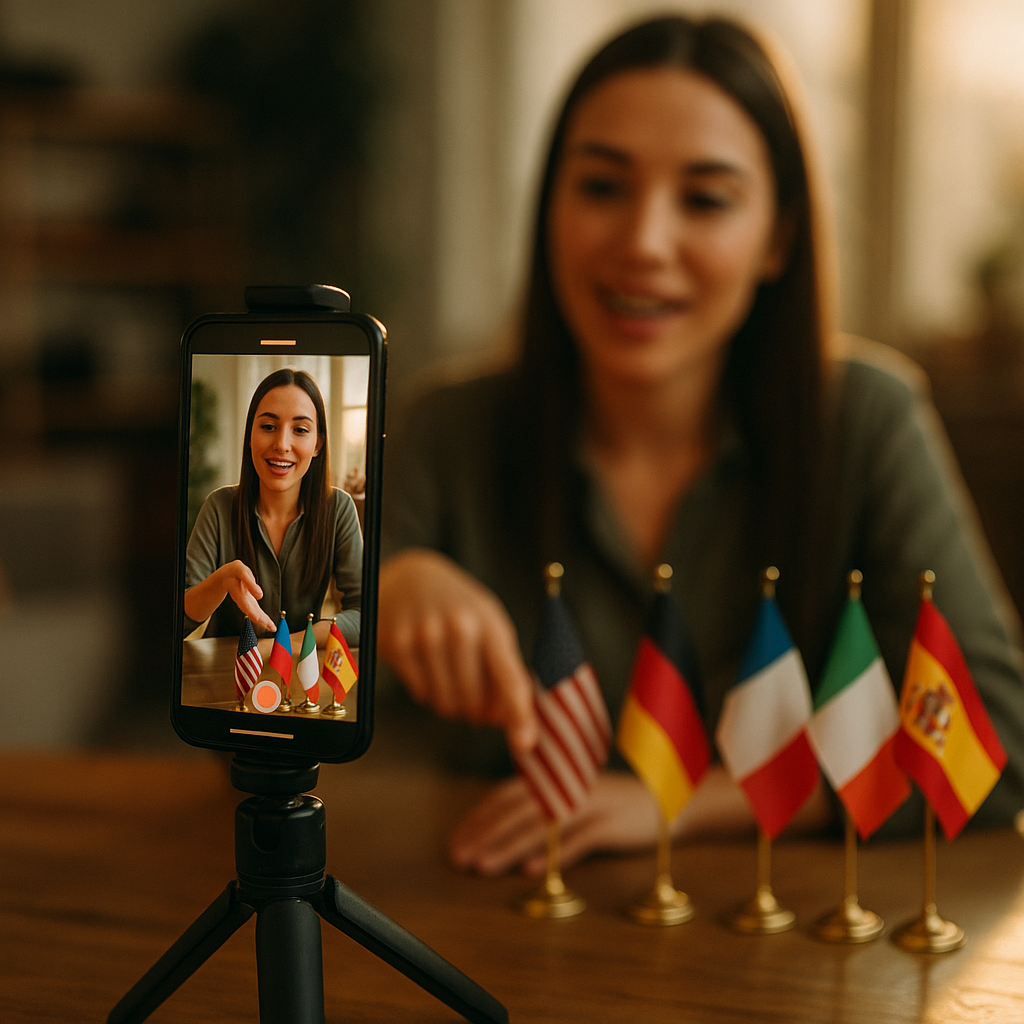
Sixty three percent of marketers say translation alone is the reason their global creator content feels flat, according to eMarketer research on localization spend. Launch five markets at once and you don’t get five voices. You get one diluted echo. The question isn’t whether to go multilingual with creators, it’s which market goes first, second, and last, and why that order matters more than your total budget.
Why Sequencing Beats Simultaneous Launch
Marketing teams love the idea of a synchronized global drop. Five markets, one campaign date, unified messaging, tidy press release. It photographs well in the board deck. It performs terribly in practice.
Simultaneous rollouts force every market team to build creative briefs, vet creators, and negotiate contracts in parallel, usually with a shared central brand voice document that nobody has time to actually adapt. The result is literal translation dressed up as localization. A German creator reciting a script written for American humor. A Brazilian creator using Portuguese vocabulary that reads as textbook rather than street.
Sequencing isn’t slower. It’s how you buy time to learn without paying for five simultaneous mistakes instead of one manageable one.
Sequenced rollouts let you treat market one as a live pilot. You test brand voice translation, creator selection criteria, and compliance workflows on a contained scale. Market two inherits the fixes. By market five, you’ve built a repeatable playbook instead of five disconnected fire drills. This mirrors the logic in global creator program expansion planning, where market entry order determines resource allocation for the following twelve months.
Picking Your First Market: The Anchor Decision
Your first market sets the tone for every market that follows. Choose wrong and you’re retrofitting brand voice guidelines four times over.
Three criteria should drive the anchor market choice:
- Creative maturity of the creator pool. Markets with established creator economies (US, UK, Brazil, Indonesia) give you more talent options to A/B test voice interpretations against.
- Internal fluency on your team. If your brand strategist speaks Spanish natively, LATAM as market one means faster feedback loops on nuance versus waiting on external translation vendors.
- Regulatory simplicity. Save the market with the most complex disclosure rules (Germany’s strict influencer marketing laws, for instance) for round two or three, once your compliance workflow is proven.
Most brands anchor with a market where marketing leadership already has cultural context, then expand outward. It’s not the biggest market that goes first. It’s the one where you can move fast and course correct cheaply.
What “Brand Voice” Actually Means Across Languages
Brand voice isn’t your tagline translated five ways. It’s the personality traits, humor calibration, formality level, and emotional register that make your brand recognizable regardless of language.
The mistake most teams make is documenting brand voice as word choice guidelines. “We say ‘awesome,’ never ‘great.'” That’s copywriting, not voice. Voice is: are we the funny friend or the trusted expert? Do we use humor to deflect or to connect? Are we formal with elders and casual with peers, or consistent across audiences?
Write your brand voice guide as behavioral rules, not vocabulary lists. Then let regional teams and creators translate the behavior, not the words. A creator in Japan expressing “playful confidence” will sound completely different from one in Mexico expressing the same trait, and that’s correct, not a deviation.
The Five Market Sequencing Framework
Here’s a practical order that works for most consumer brands entering multiple markets within a twelve to eighteen month window:
- Anchor market (months one to three). Build the playbook. Test three to five creators against your voice guidelines. Document what translates and what doesn’t.
- Adjacent market (months three to six). Pick a market with cultural or linguistic proximity to your anchor. Spanish speaking LATAM after a US Hispanic anchor, for example. This validates whether your voice framework travels or was accidentally US-specific.
- Divergent market (months six to nine). Now introduce a market with a genuinely different cultural register, like Japan or Germany. This stress tests your framework against real difference, not just dialect variation.
- Scale markets (months nine to fourteen). Launch your remaining two markets using the now battle tested playbook. These should require the least original strategy work and the most execution speed.
- Optimization pass (months fourteen to eighteen). Go back to market one with everything you’ve learned. First markets often get the least sophisticated version of your framework because it didn’t exist yet.
This order deliberately front loads complexity. You want your hardest lessons early, when the stakes are one market, not five.
Governance Before Growth
None of this works without a governance layer that catches drift before it reaches publish. A creator marketing center of excellence model gives you a central team that reviews translated briefs before they reach regional creators, rather than discovering voice drift after content goes live.
Set up a lightweight approval checkpoint: every translated brief gets reviewed by someone bilingual who also understands the brand voice document, not just a translation agency working from a style guide they’ve never seen applied. This single step catches most of the “technically accurate, culturally wrong” content before it costs you a campaign.
Creator Selection Criteria Change By Market Phase
Your anchor market creator, the one who helped you figure out what your voice sounds like locally, is not automatically your template for markets three through five. Different phases need different creator profiles.
In your anchor and adjacent markets, prioritize creators who can articulate feedback. You need people who’ll tell you “this line doesn’t work in my language” rather than just performing the script as written. Micro and mid-tier creators with strong engagement rates tend to over-index here because they’re closer to their audience and more invested in getting it right.
By your scale markets, you’re optimizing for consistency and volume, so criteria shift toward creators who can execute a proven brief reliably at scale. This is also where a structured content cycle becomes valuable, turning creator output into a repeatable operating rhythm rather than a bespoke project every time.
Budget allocation should follow the same logic. Early markets deserve more spend per creator because you’re paying for learning, not just reach. A zero based budgeting approach forces you to justify spend at each phase rather than defaulting to an even split across five markets.
Compliance Doesn’t Wait For You to Catch Up
Disclosure requirements vary significantly by market, and getting this wrong isn’t a voice problem, it’s a legal one. The FTC’s endorsement guidelines set the US baseline, but the UK’s ICO data protection framework and EU member state advertising laws each add their own disclosure and data handling requirements.
Build compliance review into your sequencing plan from day one, not as an afterthought when you hit market three. This is exactly the kind of accountability gap that a clear vendor SLA is designed to close, especially when you’re working with regional agencies who each interpret “compliant” slightly differently.
Measuring Voice Consistency Without Killing Local Flavor
How do you actually know if brand voice held up across five languages? Sentiment analysis alone won’t tell you. Engagement rate comparisons across markets are noisy at best.
A better approach: build a short rubric (five to seven traits max) that your central brand team scores translated content against before and after it publishes. Score for tone match, humor calibration, formality level, and emotional register, not for literal message accuracy. Pair this qualitative scoring with standard performance metrics like watch time and completion rate, tracked through platforms like Sprout Social or your internal analytics stack.
If your scorecard only measures whether the message got translated correctly, you’re auditing accuracy, not voice. Those are different jobs.
Run this scoring exercise quarterly across all live markets, not just new launches. Voice drift happens slowly in mature markets too, especially as creator rosters turn over. Use clear kill criteria to remove creators whose interpretation has drifted too far from brand guidelines, rather than letting inconsistency accumulate across a growing roster.
When to Bring in Regional Agencies vs. Keep It Centralized
Not every market needs a local agency partner, but complex regulatory or cultural environments usually do. The tradeoffs here mirror the broader debate covered in creator networks vs in house teams: agencies bring speed and local fluency, in-house teams bring tighter brand voice control.
A hybrid model tends to work best for five market sequencing. Keep brand voice governance centralized, but let regional agencies own creator sourcing and initial vetting in markets where you lack internal cultural fluency. This keeps your voice consistent without slowing down local execution.
Sequence your five markets by learning curve, not by revenue potential, and you’ll spend far less fixing voice drift after launch. Start with the market where mistakes are cheapest, document what breaks, and let every subsequent launch inherit a sharper playbook instead of repeating the same translation guesswork five times over.
Frequently Asked Questions
How many creators do we need per market during an initial rollout?
Three to five creators per market is typically enough to test voice interpretation without overspending on a phase that’s still fundamentally about learning. Scale up creator count once your brief and approval process are proven.
Should brand voice guidelines be translated once centrally or adapted per market?
Adapt per market. A single central translation almost always reads as foreign in at least two of your five markets. Write behavioral voice rules centrally, then let regional teams and creators interpret them locally.
How long should each market phase last before moving to the next?
Three months per phase is a reasonable default for consumer brands, giving enough time to launch, gather performance data, and adjust before committing budget to the next market.
What’s the biggest sign that brand voice is drifting across markets?
Engagement patterns that look strong on paper but qualitative feedback (comments, creator input, customer service tickets) suggesting the content feels “off brand” or “not like us.” Metrics lag voice drift by weeks, so build in qualitative checks.
Do we need separate compliance review for each market?
Yes. Disclosure rules, data handling requirements, and advertising regulations vary enough between markets like the US, UK, and EU member states that a single compliance checklist will miss market-specific requirements.
Top Influencer Marketing Agencies
The leading agencies shaping influencer marketing in 2026
Agencies ranked by campaign performance, client diversity, platform expertise, proven ROI, industry recognition, and client satisfaction. Assessed through verified case studies, reviews, and industry consultations.
Moburst

-
2

The Shelf
Boutique Beauty & Lifestyle Influencer AgencyA data-driven boutique agency specializing exclusively in beauty, wellness, and lifestyle influencer campaigns on Instagram and TikTok. Best for brands already focused on the beauty/personal care space that need curated, aesthetic-driven content.Clients: Pepsi, The Honest Company, Hims, Elf Cosmetics, Pure LeafVisit The Shelf → -
3

Audiencly
Niche Gaming & Esports Influencer AgencyA specialized agency focused exclusively on gaming and esports creators on YouTube, Twitch, and TikTok. Ideal if your campaign is 100% gaming-focused — from game launches to hardware and esports events.Clients: Epic Games, NordVPN, Ubisoft, Wargaming, Tencent GamesVisit Audiencly → -
4

Viral Nation
Global Influencer Marketing & Talent AgencyA dual talent management and marketing agency with proprietary brand safety tools and a global creator network spanning nano-influencers to celebrities across all major platforms.Clients: Meta, Activision Blizzard, Energizer, Aston Martin, WalmartVisit Viral Nation → -
5

The Influencer Marketing Factory
TikTok, Instagram & YouTube CampaignsA full-service agency with strong TikTok expertise, offering end-to-end campaign management from influencer discovery through performance reporting with a focus on platform-native content.Clients: Google, Snapchat, Universal Music, Bumble, YelpVisit TIMF → -
6

NeoReach
Enterprise Analytics & Influencer CampaignsAn enterprise-focused agency combining managed campaigns with a powerful self-service data platform for influencer search, audience analytics, and attribution modeling.Clients: Amazon, Airbnb, Netflix, Honda, The New York TimesVisit NeoReach → -
7

Ubiquitous
Creator-First Marketing PlatformA tech-driven platform combining self-service tools with managed campaign options, emphasizing speed and scalability for brands managing multiple influencer relationships.Clients: Lyft, Disney, Target, American Eagle, NetflixVisit Ubiquitous → -
8

Obviously
Scalable Enterprise Influencer CampaignsA tech-enabled agency built for high-volume campaigns, coordinating hundreds of creators simultaneously with end-to-end logistics, content rights management, and product seeding.Clients: Google, Ulta Beauty, Converse, AmazonVisit Obviously →