


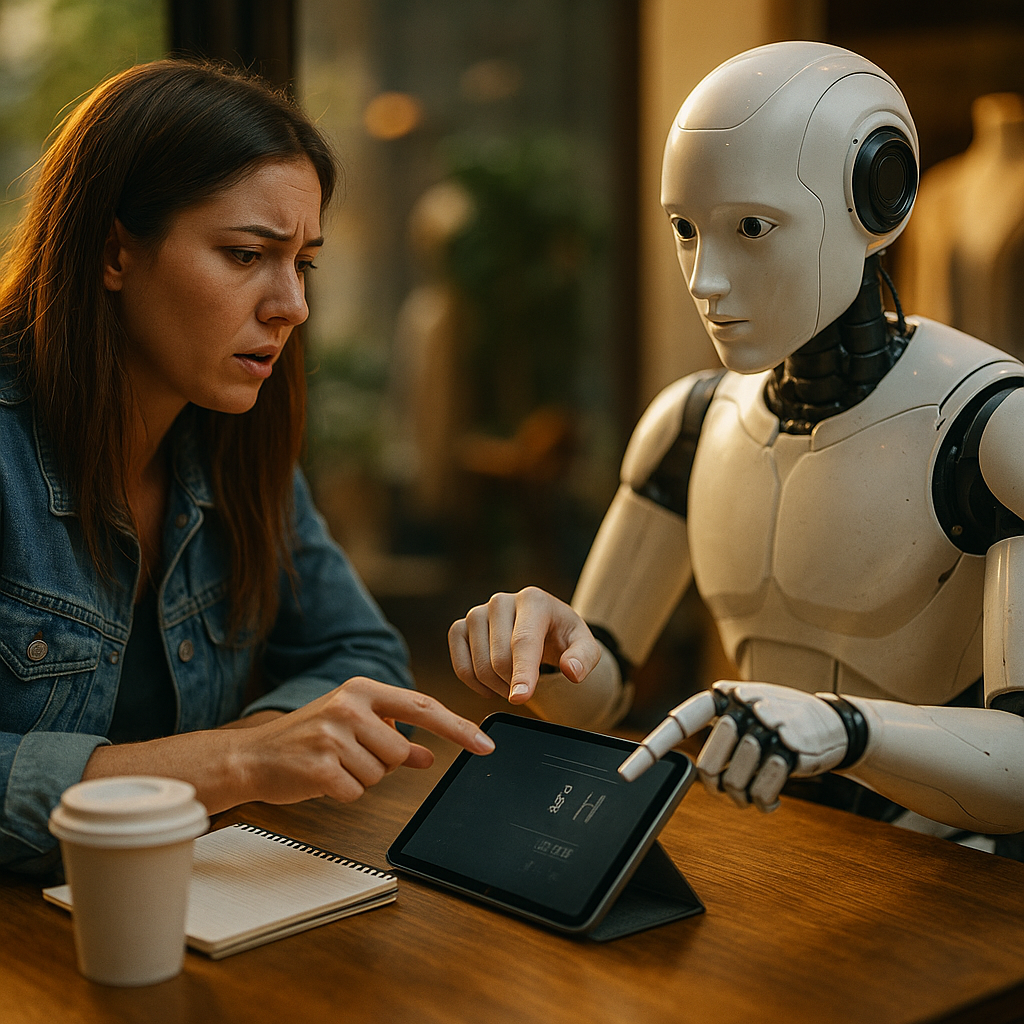
Sixty-three percent of talent managers say they have already fielded an outreach message from a bot pretending to be human. That is not a hypothetical from some future-of-work panel. It is the current state of AI agents for creator outreach negotiation, and it is reshaping how brands source, price, and close creator deals. The question is no longer whether to automate outreach. It is how much of the negotiation you can hand off before it costs you the relationship, or the margin.
The New Automation Layer, Explained
For the last three years, “AI in influencer marketing” mostly meant discovery tools that scraped follower counts and engagement rates. Useful, but passive. What is happening now is different. A new class of agentic tools, built on large language models with tool-calling capabilities, can initiate outreach, respond to creator questions, counter rate proposals, and in some cases draft the deal terms, all without a human touching the thread until final sign-off.
Platforms like Grin, CreatorIQ, and a wave of smaller startups have quietly rolled out negotiation copilots that sit inside the DM or email thread. The agent reads a creator’s public rate card (if one exists), cross-references your campaign budget bands, and generates an opening offer. If the creator counters, the agent evaluates the counter against your approved flexibility range and either accepts, counters again, or escalates to a human. This is the same logic pattern we have already seen in AI contract negotiation assistants, just moved upstream to the earlier, messier part of the funnel.
Why Brands Are Testing This Now
Three pressures are converging. Budgets are flat or shrinking while creator volume expectations keep climbing (more nano and micro creators, more markets, more languages). Procurement teams want auditable, repeatable negotiation logic instead of relying on one media buyer’s gut feel. And creator supply has ballooned to the point where manual outreach at scale is simply not viable for programs running 200+ creator relationships a quarter.
According to eMarketer, brands running always-on creator programs are now managing partner rosters that would have required a team triple the size five years ago. Automation is not optional at that volume. It is survival.
Agencies testing negotiation agents report a 40 to 60 percent reduction in time-to-first-offer, but only a modest gain in overall deal closure speed once creator pushback enters the thread.
What the Testing Actually Shows
Influencers Time spoke with three mid-market agencies and one in-house brand team running pilots over the past two quarters. The pattern was consistent: agents excel at the opening move and stumble on the close.
- Speed to first contact: Agents cut outreach drafting and sending time by more than half, particularly for high-volume nano and micro campaigns where personalization at scale used to be a bottleneck.
- Rate negotiation accuracy: When creators had clear published rate cards, agents landed within acceptable budget ranges roughly 80 percent of the time. When rates were ambiguous or negotiated verbally in past deals, accuracy dropped sharply.
- Relationship damage: Two of the four testers reported creator complaints about “robotic” or “tone-deaf” negotiation messages, especially when the agent failed to acknowledge context like exclusivity requests or usage rights concerns.
- Legal and usage rights gaps: Agents were consistently weaker at handling nuanced terms like whitelisting duration, paid amplification rights, and exclusivity windows, areas where a poorly worded auto-generated clause can create real downstream liability.
That last point matters more than it might seem. Usage rights and exclusivity are exactly where deals go sideways months later, when a creator discovers their content is running in paid social six months past the agreed window. An agent that treats these terms as boilerplate is building risk into every contract it touches.
Where the Automation Breaks
The failure mode is not that the AI negotiates badly. It is that it negotiates confidently, even when it is wrong. Creators, especially mid-tier ones who have been burned before, can smell a template from three messages away. One agency lead we spoke with put it bluntly: “The agent doesn’t know when to go quiet and let a human take over. It just keeps countering because that’s what it’s optimized to do.” This is the same bias-and-blind-trust problem we flagged in agentic AI creator selection without sign-off, and it is showing up again here, just later in the funnel.
There is also an identity problem. If your outreach agent is negotiating with a creator’s own AI-powered inbox assistant (and this is already happening on the creator side), you get bot-to-bot negotiation with no human context checking either side. That is efficient in theory. In practice, it strips out the relationship-building that makes creator partnerships renew year over year instead of becoming one-off transactional buys.
Building Guardrails Before You Scale
None of this means brands should avoid the technology. It means deploying it with clear boundaries. Here is what the pilots that worked well had in common:
- Hard budget ceilings, not suggestions. The agent gets a floor and ceiling per creator tier and cannot exceed it without human approval, full stop.
- Escalation triggers on specific terms. Any mention of exclusivity, usage rights beyond 90 days, or whitelisting automatically routes to a human negotiator.
- Tone and brand voice review. Message templates get a human pass before deployment, and agents are retrained quarterly on real creator feedback, not just historical deal data.
- Disclosure to creators. Some agencies now flag in the first message that a portion of outreach is AI-assisted. Counterintuitively, this built more trust than pretending otherwise once creators found out anyway.
- Attribution tracking tied to the negotiation record. If you cannot trace which agent made which offer and why, you cannot audit performance or defend a deal if a dispute arises later.
This last point connects directly to a broader identity and attribution problem brands are dealing with across the creator stack. If your negotiation layer and your attribution layer do not talk to each other, you end up with deal terms that do not match what your reporting dashboard says was agreed. The teams solving this well are the same ones investing in unified attribution data so that negotiation history, contract terms, and performance data live in one auditable trail.
The ROI Math, Honestly
Is it worth it? For high-volume nano and micro creator programs, almost certainly yes. The labor cost of manually drafting and following up on 500 outreach messages a quarter is real money, and an agent that handles first-touch and simple rate confirmation frees up your team for the deals that actually need judgment.
For mid-tier and celebrity-tier creator relationships, the calculus flips. These deals involve fewer creators, higher dollar amounts, and far more nuance in terms. The cost of a botched negotiation (a creator who walks, or worse, posts publicly about a tone-deaf brand DM) dwarfs any efficiency gain. Several teams we spoke with have settled on a tiered model: full automation for nano/micro, agent-assisted drafting with mandatory human review for mid-tier, and no automation at all above a certain follower or fee threshold.
That tiering approach mirrors what is happening elsewhere in the AI marketing stack, where agents handle volume and speed while humans retain control of anything with brand or legal exposure. The same logic shows up in scheduling automation guardrails and in creative testing risk controls. Negotiation is just the latest function to get the agentic treatment, and it will not be the last.
What About Compliance and FTC Exposure?
Automated negotiation does not change your disclosure obligations. If anything, it raises the compliance bar, because deal terms need to be captured cleanly enough to prove what was agreed if a dispute or an FTC inquiry arises. Brands running agent-assisted negotiation should keep a full message log and a clear record of who (or what) approved final terms. Treat the audit trail as part of the deliverable, not an afterthought.
FAQs
Frequently Asked Questions
What are AI agents for creator outreach negotiation?
They are software tools that use large language models to initiate contact with creators, propose rates, respond to counteroffers, and in some cases draft contract terms, operating with limited or no human involvement until final approval.
Are AI negotiation agents actually saving brands money?
They save time more reliably than they save money. Speed to first contact improves significantly, but rate negotiation accuracy depends heavily on whether creators have clear, published pricing. Savings are strongest at high volume, nano and micro creator tiers.
Can creators tell when they are negotiating with a bot?
Often, yes. Experienced creators and their managers recognize templated language quickly, and some report frustration when an agent fails to acknowledge specific requests like exclusivity or usage rights. Disclosure tends to build more trust than concealment.
What deal terms should never be fully automated?
Exclusivity windows, usage and whitelisting rights, and long-term retainer structures are the highest-risk areas. These require nuanced judgment and should trigger human review rather than automatic agent resolution.
How do brands stay compliant when using negotiation agents?
Keep a complete, auditable record of every message and offer, ensure a human approves final terms, and maintain disclosure practices consistent with FTC guidance regardless of who or what initiated the negotiation.
Should every brand adopt negotiation agents right now?
Not uniformly. A tiered approach works best: automate outreach and simple negotiation for nano and micro creators, use agent-assisted drafting with human review for mid-tier partners, and keep negotiation fully human for high-value or celebrity-tier deals.
Next step: audit your current creator negotiation workflow, flag every deal term that has caused a dispute in the last year, and build your escalation rules around those exact triggers before you let an agent anywhere near the thread.
Top Influencer Marketing Agencies
The leading agencies shaping influencer marketing in 2026
Agencies ranked by campaign performance, client diversity, platform expertise, proven ROI, industry recognition, and client satisfaction. Assessed through verified case studies, reviews, and industry consultations.
Moburst

-
2

The Shelf
Boutique Beauty & Lifestyle Influencer AgencyA data-driven boutique agency specializing exclusively in beauty, wellness, and lifestyle influencer campaigns on Instagram and TikTok. Best for brands already focused on the beauty/personal care space that need curated, aesthetic-driven content.Clients: Pepsi, The Honest Company, Hims, Elf Cosmetics, Pure LeafVisit The Shelf → -
3

Audiencly
Niche Gaming & Esports Influencer AgencyA specialized agency focused exclusively on gaming and esports creators on YouTube, Twitch, and TikTok. Ideal if your campaign is 100% gaming-focused — from game launches to hardware and esports events.Clients: Epic Games, NordVPN, Ubisoft, Wargaming, Tencent GamesVisit Audiencly → -
4

Viral Nation
Global Influencer Marketing & Talent AgencyA dual talent management and marketing agency with proprietary brand safety tools and a global creator network spanning nano-influencers to celebrities across all major platforms.Clients: Meta, Activision Blizzard, Energizer, Aston Martin, WalmartVisit Viral Nation → -
5

The Influencer Marketing Factory
TikTok, Instagram & YouTube CampaignsA full-service agency with strong TikTok expertise, offering end-to-end campaign management from influencer discovery through performance reporting with a focus on platform-native content.Clients: Google, Snapchat, Universal Music, Bumble, YelpVisit TIMF → -
6

NeoReach
Enterprise Analytics & Influencer CampaignsAn enterprise-focused agency combining managed campaigns with a powerful self-service data platform for influencer search, audience analytics, and attribution modeling.Clients: Amazon, Airbnb, Netflix, Honda, The New York TimesVisit NeoReach → -
7

Ubiquitous
Creator-First Marketing PlatformA tech-driven platform combining self-service tools with managed campaign options, emphasizing speed and scalability for brands managing multiple influencer relationships.Clients: Lyft, Disney, Target, American Eagle, NetflixVisit Ubiquitous → -
8

Obviously
Scalable Enterprise Influencer CampaignsA tech-enabled agency built for high-volume campaigns, coordinating hundreds of creators simultaneously with end-to-end logistics, content rights management, and product seeding.Clients: Google, Ulta Beauty, Converse, AmazonVisit Obviously →