


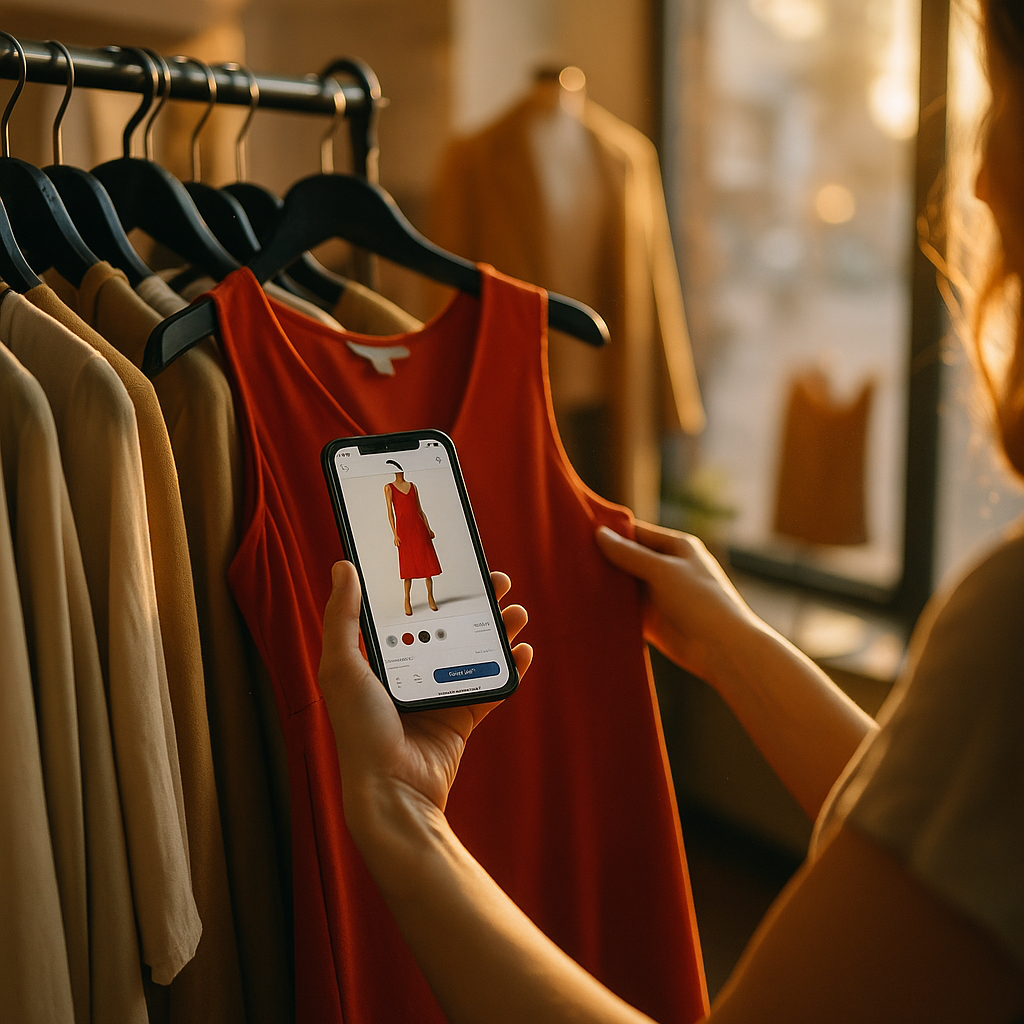
Walmart says shoppers who discover a product through a creator video are 2.3 times more likely to buy it in a physical store within a week. That single stat should reframe how every brand thinks about the phygital shift: the blending of online influence with offline purchase behavior. If your attribution model still stops at “link in bio,” you’re measuring half the picture.
What Exactly Is the Phygital Shift?
Phygital isn’t a buzzword invented to fill a conference slide. It describes the collapsing distance between a creator’s post and a customer’s trip to the register, whether that register is at Target, Sephora, or a regional grocery chain. For years, influencer marketing lived in a tidy digital silo: impressions, clicks, swipe-ups, maybe a discount code. Retail lived somewhere else entirely, tracked by point-of-sale systems that had no idea a TikTok video existed.
That separation is breaking down fast. Retailers are building creator partnerships directly into merchandising plans. Brands are briefing influencers specifically for in-store discovery, not just online conversion. And shoppers, especially Gen Z and millennial consumers, are treating creator content as a pre-shopping ritual before they ever enter a store.
Why Retailers Started Caring About Creators
Retail media networks changed the math. Walmart Connect, Target Roundel, and Kroger Precision Marketing all now offer ways to tie creator content to actual basket data, not just vague brand lift surveys. That’s a massive shift from five years ago, when “influencer impact on retail” was basically a guess dressed up as a case study.
Here’s the practical version: a beauty brand runs a creator campaign on Instagram Reels, the retail partner matches purchase data from loyalty cards to viewers who were served that content, and suddenly the brand has a real number showing in-store lift. No more hand-waving about “brand awareness.” This is the same accountability pressure driving budget conversations across the industry, as covered in our look at how the budget surge forces spend justification internally.
Creator content that drives in-store visits is no longer a nice anecdote. It’s a measurable line item that retail media networks can now attach dollar figures to.
QR Codes, Shelf Tags, and the Return of Physical Triggers
It’s almost funny how the “old” tech made a comeback. QR codes on shelf talkers now link directly to the exact creator video that featured the product, letting shoppers watch a three-second demo while standing in the aisle. Sephora has used this in select stores for skincare launches, tying influencer-created tutorials to end-cap displays. Ulta has experimented with similar tactics for its creator collaborations.
This matters because it closes the loop in both directions. Online content drives offline visits, and offline moments can pull shoppers back into a creator’s digital ecosystem (think: scan the code, follow the creator, get notified about the next drop). Brands that ignore this bidirectional flow are leaving attribution data, and sales, on the table.
The Attribution Problem Nobody Wants to Admit
Let’s be honest: most brands still can’t prove in-store lift from creator campaigns with any rigor. Loyalty card matching requires retailer cooperation and clean data pipelines. Many mid-market brands don’t have the martech stack or the retailer relationships to pull it off. This is part of a broader trust issue, as we explored in our piece on how marketing leaders distrust their own data.
So what’s the workaround? Smart brands are building hybrid measurement frameworks that combine:
- Unique promo codes tied to specific creators, redeemable both online and in-store
- Geofenced mobile ad IDs that track foot traffic lift near retail locations after a campaign flight
- Retailer-partnered loyalty data matching, where available
- Post-purchase surveys asking “where did you first hear about this product,” a blunt instrument but still useful directionally
None of these are perfect. Together, they paint a far more honest picture than impression counts ever did, which is why the industry’s broader push toward verified data over inflated impressions applies just as much to retail attribution as it does to digital campaigns.
TikTok Shop Changed the Conversation, But Not the Way You’d Think
TikTok Shop crossing the $50 billion GMV milestone proved that creators can drive direct commerce at scale, as we detailed in our coverage of the TikTok Shop GMV milestone. But here’s the twist: that same commerce behavior is spilling into physical retail expectations. Shoppers who buy on TikTok Shop are increasingly checking whether the same product is available at Target or Walmart, sometimes preferring the in-store pickup option over waiting for shipping.
Brands that treat TikTok Shop and physical retail as separate channels are missing the point. The consumer doesn’t see a channel. They see a product they trust because a creator showed them it works. Where they buy it is a convenience decision, not a loyalty decision, and retailers who make that convenience frictionless win the sale regardless of platform.
Fashion and Electronics Are Writing Different Playbooks
Not every category behaves the same way in the phygital world. Our analysis of how fashion and electronics split social commerce GMV showed that fashion shoppers tend to browse online and buy online too, favoring try-on content and size guides. Electronics buyers, by contrast, often use creator reviews as research before making a bigger-ticket purchase in-store where they can see the product physically before committing.
That distinction should shape briefs. A fashion creator partnership might lean hard into shoppable video and direct checkout links. An electronics partnership might be better served by content that drives store locator traffic and in-person demo requests, with the creator explicitly directing viewers to “go see it for yourself.”
What This Means for Creator Briefs and Contracts
If in-store lift is now a KPI, briefs need to change. Brands are starting to ask creators to:
- Mention specific retail partners by name, not just “available now”
- Include store locator calls-to-action, not just swipe-up links
- Film content that works as in-store digital signage or shelf-edge video, reusable across channels
- Coordinate posting windows with retail promotional calendars, not just platform algorithm timing
This level of coordination requires longer-term thinking, which tracks with the industry’s broader move away from one-off deals. Our coverage of how multi-year retainers replace one-off campaigns applies directly here: a creator who’s building retail-aware content needs to understand a brand’s shelf placement, seasonal resets, and regional distribution, none of which fits a single-post transaction.
Canon’s recent move to bring creator hires directly into its EMEA supply chain, as we covered in our piece on camera brands entering the supply chain, is an early signal of where this is headed. Brands aren’t just hiring creators to post content anymore. They’re hiring them to think about product discovery end to end, including the physical retail moment.
Risk and Compliance Don’t Disappear Offline
Here’s a wrinkle brands often overlook: disclosure rules don’t pause when the conversation moves from screen to shelf. If a creator is compensated to drive in-store traffic, that relationship still needs clear disclosure under FTC guidelines, and UK brands need to keep ICO data handling rules in mind when matching loyalty data to campaign exposure. Retail media partnerships that blend creator content with loyalty program data also raise privacy questions that legal teams should review before launch, not after.
There’s also a brand safety angle. A creator’s online reputation now extends to how their content performs in a physical retail environment, on an in-store screen, next to a product display, in front of a customer who didn’t choose to follow that creator online. Vetting needs to account for that broader exposure, not just social feed context.
Where Budgets Are Actually Moving
UK influencer spend hit £1.217 billion with a heavy emphasis on verified ROI, as reported in our coverage of the UK spend and ROI push. A growing slice of that spend is earmarked specifically for retail-integrated campaigns, not pure digital plays. Brands are asking agencies for case studies showing in-store lift, not just engagement rate screenshots.
This is pushing agencies and platforms to build new measurement products. Expect more retail media networks to open up creator-specific reporting dashboards over the next year, and expect brands to demand it as a baseline requirement before signing bigger retainers. If your agency can’t show you foot traffic data or basket-level attribution, ask why not. According to research from eMarketer, retail media is one of the fastest-growing ad categories specifically because it closes this exact measurement gap.
Practical Next Steps for Brand Teams
Start small but start now. Pick one retail partner with a loyalty program willing to share aggregated data, run a single creator campaign with a dedicated promo code, and measure both online conversion and in-store redemption over a 30-day window. Don’t try to boil the ocean with a multi-retailer, multi-market rollout before you’ve proven the model works at a small scale. Brands that wait for perfect attribution tools will be outpaced by competitors willing to test imperfect ones now.
Frequently Asked Questions
What does phygital mean in influencer marketing?
Phygital refers to the blending of physical and digital shopping experiences, specifically how creator content online influences purchase decisions made in physical retail stores. It covers everything from QR-coded shelf tags linked to creator videos to loyalty data matching that proves in-store lift from a digital campaign.
How do brands measure in-store sales from influencer campaigns?
Brands typically use a combination of unique promo codes redeemable in-store, geofenced mobile data to track foot traffic near retail locations, retailer loyalty card matching where partnerships allow it, and post-purchase surveys asking customers where they first discovered a product.
Which retailers are leading the phygital creator trend?
Walmart, Target, Sephora, and Ulta have all run creator-integrated retail media programs, using QR codes, in-store screens, and loyalty data to connect online creator content with offline purchase behavior.
Do FTC disclosure rules apply to creators driving in-store sales?
Yes. Disclosure requirements apply regardless of whether the final purchase happens online or in a physical store. Any compensated relationship between a brand and a creator still needs clear disclosure under FTC guidelines.
Is the phygital shift relevant to small and mid-size brands, or just major retailers?
It’s relevant to any brand with physical retail distribution. Smaller brands can start with simpler tactics like dedicated promo codes and store locator calls-to-action before investing in more complex loyalty data partnerships.
Top Influencer Marketing Agencies
The leading agencies shaping influencer marketing in 2026
Agencies ranked by campaign performance, client diversity, platform expertise, proven ROI, industry recognition, and client satisfaction. Assessed through verified case studies, reviews, and industry consultations.
Moburst

-
2

The Shelf
Boutique Beauty & Lifestyle Influencer AgencyA data-driven boutique agency specializing exclusively in beauty, wellness, and lifestyle influencer campaigns on Instagram and TikTok. Best for brands already focused on the beauty/personal care space that need curated, aesthetic-driven content.Clients: Pepsi, The Honest Company, Hims, Elf Cosmetics, Pure LeafVisit The Shelf → -
3

Audiencly
Niche Gaming & Esports Influencer AgencyA specialized agency focused exclusively on gaming and esports creators on YouTube, Twitch, and TikTok. Ideal if your campaign is 100% gaming-focused — from game launches to hardware and esports events.Clients: Epic Games, NordVPN, Ubisoft, Wargaming, Tencent GamesVisit Audiencly → -
4

Viral Nation
Global Influencer Marketing & Talent AgencyA dual talent management and marketing agency with proprietary brand safety tools and a global creator network spanning nano-influencers to celebrities across all major platforms.Clients: Meta, Activision Blizzard, Energizer, Aston Martin, WalmartVisit Viral Nation → -
5

The Influencer Marketing Factory
TikTok, Instagram & YouTube CampaignsA full-service agency with strong TikTok expertise, offering end-to-end campaign management from influencer discovery through performance reporting with a focus on platform-native content.Clients: Google, Snapchat, Universal Music, Bumble, YelpVisit TIMF → -
6

NeoReach
Enterprise Analytics & Influencer CampaignsAn enterprise-focused agency combining managed campaigns with a powerful self-service data platform for influencer search, audience analytics, and attribution modeling.Clients: Amazon, Airbnb, Netflix, Honda, The New York TimesVisit NeoReach → -
7

Ubiquitous
Creator-First Marketing PlatformA tech-driven platform combining self-service tools with managed campaign options, emphasizing speed and scalability for brands managing multiple influencer relationships.Clients: Lyft, Disney, Target, American Eagle, NetflixVisit Ubiquitous → -
8

Obviously
Scalable Enterprise Influencer CampaignsA tech-enabled agency built for high-volume campaigns, coordinating hundreds of creators simultaneously with end-to-end logistics, content rights management, and product seeding.Clients: Google, Ulta Beauty, Converse, AmazonVisit Obviously →