


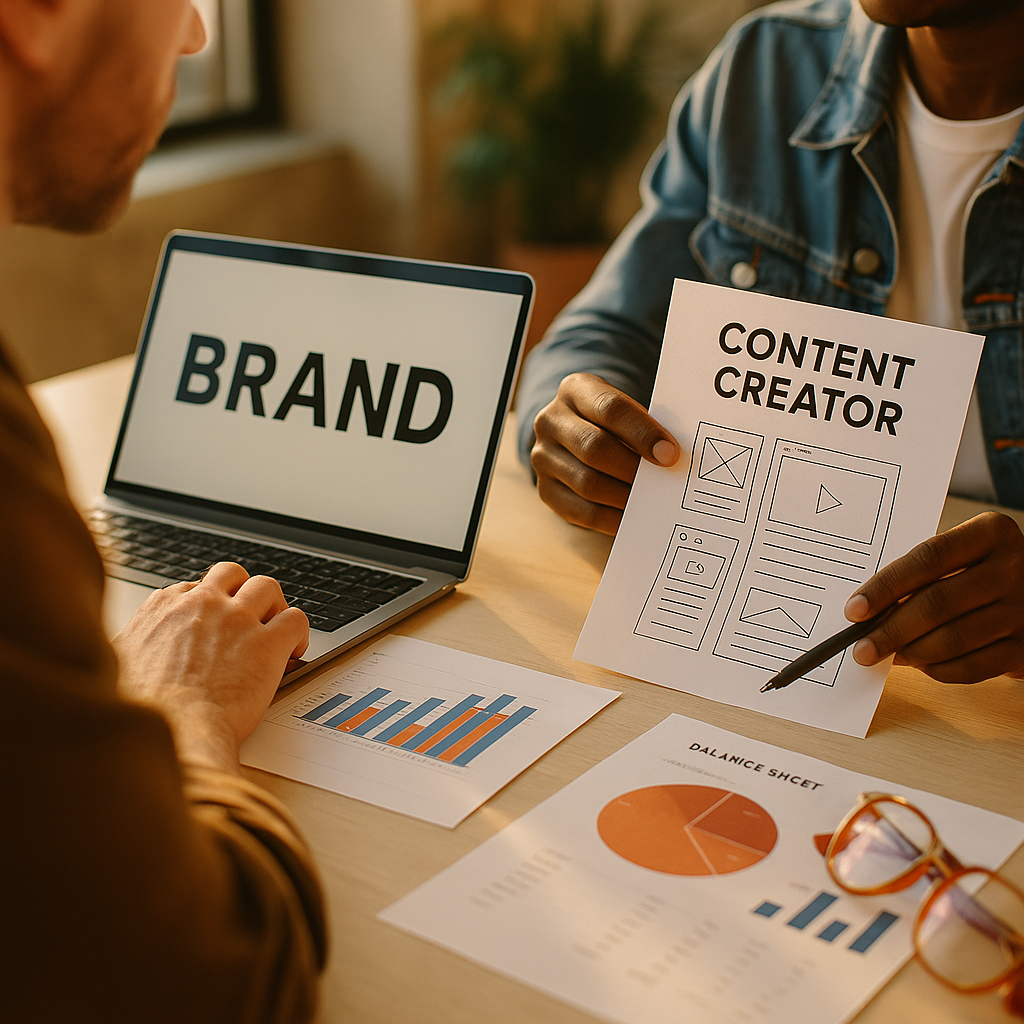
Brands poured record sums into creator partnerships last year, yet most marketing leaders still can’t draw a straight line from spend to revenue. Here’s the uncomfortable truth: brand-creator misalignment, not budget size, is the actual ROI barrier heading into the new year. You can double a creator budget and still get flat results if the brand and the creator are pursuing different goals from day one.
The Budget Myth Marketers Keep Repeating
Ask any CMO why influencer ROI underperforms and the reflex answer is “we need more budget.” It’s the easy excuse. It avoids harder questions about strategy, vetting, and briefs. But the data tells a different story.
Spend on creator marketing has climbed steadily, with eMarketer tracking continued double-digit growth in influencer ad investment across major markets. If money were the bottleneck, that growth curve should map directly onto improved performance metrics. It doesn’t. Plenty of brands running seven-figure creator programs still can’t answer basic questions about incremental sales lift or brand recall.
What’s actually happening is simpler and more fixable: brands hire creators for reach, creators optimize for engagement or personal brand growth, and nobody reconciles the two objectives before the contract gets signed. That gap shows up later as wasted spend, disappointing conversion numbers, and a lot of finger-pointing between brand and agency teams.
A bigger budget spent on a misaligned creator doesn’t buy better results. It just buys a louder version of the wrong message.
What Misalignment Actually Looks Like in Practice
Misalignment isn’t abstract. It shows up in specific, recurring patterns that marketers will recognize immediately.
- Audience mismatch dressed up as reach. A creator has a million followers, but only a fraction overlap with the brand’s actual buyer. Vanity metrics mask the problem until conversion data comes in weeks later.
- Values drift. A creator’s content tone, politics, or lifestyle messaging contradicts brand positioning, creating friction that audiences pick up on instantly.
- Incentive mismatch. The creator is paid a flat fee regardless of performance, so there’s little reason to optimize for the brand’s KPIs over their own engagement algorithms.
- Briefing failure. Brands hand over a generic deck instead of a clear, measurable objective, leaving the creator to guess what success looks like.
Each of these is a strategic failure, not a financial one. Our earlier coverage of mega creator rosters without vetting showed exactly how scale without alignment creates brand risk rather than brand value. The same logic applies at any budget tier, from a $5,000 micro-influencer campaign to a seven-figure celebrity endorsement.
Why Boards Are Already Moving Past Follower Count
Smart brands have started reframing the conversation entirely. Instead of asking “how many followers does this creator have,” boards are asking “how long does this creator stay aligned with our brand, and how well do they retain our audience.” That shift was documented in our piece on how boards ditch follower count for retention rate, and it’s a direct response to the misalignment problem. Retention rate is a proxy for fit. A creator who keeps an audience engaged with a brand message over multiple campaigns is, by definition, more aligned than one who delivers a single viral spike and disappears.
This matters for budget planning too. If retention and alignment are the real performance levers, then pouring more dollars into a poorly matched creator roster just accelerates the waste. Boards that have made this shift are reallocating spend toward fewer, better-matched creators rather than spreading budget across a wide, loosely vetted list.
Where the Brief Breaks Down
Most misalignment traces back to the brief, or the lack of one. Brands that treat creator partnerships like a media buy (send assets, set a posting date, measure impressions) are setting themselves up for mismatch. Creators aren’t billboards. They’re editorial voices with their own audience relationships, and a brief that doesn’t account for that dynamic will produce content that technically fulfills the contract while failing the actual business objective.
Compare that to how creator deals now bundle media, creative, and endorsement into a single negotiated package. That structure forces both sides to agree on outcomes upfront: what the content needs to achieve, how success is measured, and what happens if it underperforms. It’s a more complex negotiation, but it closes the alignment gap before production even starts.
A good brief answers four questions before anyone shoots a single frame: What business outcome are we buying? Who is the real target audience, not just the creator’s audience? What does the creator get out of this beyond the check? And how will both sides know, concretely, whether it worked?
Attribution Gaps Make Misalignment Worse
Even a well-matched creator partnership can look like a failure if the brand can’t measure it properly. This is where misalignment and measurement problems compound each other. Advertising Week sessions this year put creator attribution front and center, and for good reason. Brands still struggle to connect a creator post to a downstream sale, which makes it nearly impossible to tell whether underperformance is a targeting problem, a creative problem, or a tracking problem.
The event coverage on how creator attribution took center stage made the point clearly: without clean attribution, brands default to blaming budget because it’s the only lever they feel they can pull. Fix the attribution layer first, using tools like UTM-tagged links, platform-native conversion APIs, or dedicated affiliate tracking from the creator deal itself, and the real cause of underperformance usually surfaces fast. More often than not, it’s not a reach problem. It’s a fit problem.
The Case for Fewer, Longer, Better-Matched Partnerships
If alignment is the fix, then the operational shift that follows is obvious: fewer creators, longer contracts, tighter vetting. This is exactly what’s happening with the rise of multi-year retainers replacing one-off campaigns. A retainer structure gives both the brand and the creator time to actually learn what works. One-off campaigns don’t allow for that kind of iteration. You get one shot, and if the fit is slightly off, there’s no opportunity to recalibrate.
Retainers also change the incentive structure in a healthy way. A creator locked into a 12-month deal has a reason to care about the brand’s actual performance, not just the engagement rate on a single post. That’s alignment built into the contract, not bolted on after the fact.
The brands winning in the current market aren’t the ones with the biggest creator budgets. They’re the ones who said no to more creators and yes to better-fitted ones.
This also connects to retention benchmarks brands are now tracking internally. Our analysis of the 34 percent retention benchmark forcing brands to cut churn showed that creator churn is often a symptom of poor initial matching, not creator flakiness. When a brand picks creators based on surface-level reach rather than demonstrated audience and values fit, churn goes up and retention drops, regardless of how much money was on the table.
What Vetting Actually Needs to Cover
Proper creator vetting goes well beyond follower counts and engagement rates. It should include:
- Audience overlap analysis against the brand’s actual customer data, not just demographic guesses
- Content history review for tone, values, and past brand partnerships that might create conflict
- Past campaign performance with comparable brands, including any disclosed underperformance
- Compliance history with disclosure rules under FTC endorsement guidelines and, for UK-facing campaigns, ICO guidance on data and advertising practices
- Direct conversation about incentives: what does the creator actually want from this partnership beyond payment
Skipping any of these steps to move faster is exactly how misalignment creeps back in, no matter how generous the budget is.
Fixing the Problem Without Blowing Up the Budget
None of this requires a bigger line item. It requires a different allocation of the budget that already exists. Shift spend from volume (more creators, more posts) to depth (fewer creators, longer engagement, better measurement). Use platforms like Sprout Social or Meta Business Suite for audience overlap and performance tracking before signing anyone. Build attribution into the contract from the start rather than trying to retrofit it after the campaign launches.
And treat the brief as a strategic document, not a formality. The HubSpot content planning frameworks many marketing teams already use for owned content work just as well applied to creator briefs: clear objective, clear audience, clear success metric. The tools and the budget are already there. What’s usually missing is the discipline to match the creator to the actual business problem instead of the biggest available audience.
Next step: Before approving any new creator budget increase, audit your last three campaigns for audience overlap and attribution clarity. If misalignment shows up there, more money won’t fix it. Better matching will.
FAQs
What does brand-creator misalignment actually mean?
It means the creator’s audience, content style, or incentives don’t match what the brand actually needs to achieve its business goals, even if the creator has strong reach or engagement on paper.
How can brands tell if misalignment is the real problem, not budget?
Check attribution data first. If spend has increased but conversion, recall, or retention metrics stay flat or decline, the issue is usually fit and measurement, not the size of the budget.
Does a bigger creator budget ever fix misalignment?
No. A bigger budget amplifies whatever is already happening. If the creator and brand are misaligned, more spend just produces more wasted impressions at a higher cost.
What’s the fastest way to improve alignment without increasing spend?
Tighten the vetting process, build clear success metrics into the brief, and shift toward longer retainer-based partnerships instead of one-off campaigns with unclear objectives.
Is follower count still a useful metric for selecting creators?
It’s a weak proxy at best. Retention rate, audience overlap, and past campaign performance with comparable brands are far stronger indicators of fit and expected ROI.
FAQs
What does brand-creator misalignment actually mean?
It means the creator’s audience, content style, or incentives don’t match what the brand actually needs to achieve its business goals, even if the creator has strong reach or engagement on paper.
How can brands tell if misalignment is the real problem, not budget?
Check attribution data first. If spend has increased but conversion, recall, or retention metrics stay flat or decline, the issue is usually fit and measurement, not the size of the budget.
Does a bigger creator budget ever fix misalignment?
No. A bigger budget amplifies whatever is already happening. If the creator and brand are misaligned, more spend just produces more wasted impressions at a higher cost.
What’s the fastest way to improve alignment without increasing spend?
Tighten the vetting process, build clear success metrics into the brief, and shift toward longer retainer-based partnerships instead of one-off campaigns with unclear objectives.
Is follower count still a useful metric for selecting creators?
It’s a weak proxy at best. Retention rate, audience overlap, and past campaign performance with comparable brands are far stronger indicators of fit and expected ROI.
Top Influencer Marketing Agencies
The leading agencies shaping influencer marketing in 2026
Agencies ranked by campaign performance, client diversity, platform expertise, proven ROI, industry recognition, and client satisfaction. Assessed through verified case studies, reviews, and industry consultations.
Moburst

-
2

The Shelf
Boutique Beauty & Lifestyle Influencer AgencyA data-driven boutique agency specializing exclusively in beauty, wellness, and lifestyle influencer campaigns on Instagram and TikTok. Best for brands already focused on the beauty/personal care space that need curated, aesthetic-driven content.Clients: Pepsi, The Honest Company, Hims, Elf Cosmetics, Pure LeafVisit The Shelf → -
3

Audiencly
Niche Gaming & Esports Influencer AgencyA specialized agency focused exclusively on gaming and esports creators on YouTube, Twitch, and TikTok. Ideal if your campaign is 100% gaming-focused — from game launches to hardware and esports events.Clients: Epic Games, NordVPN, Ubisoft, Wargaming, Tencent GamesVisit Audiencly → -
4

Viral Nation
Global Influencer Marketing & Talent AgencyA dual talent management and marketing agency with proprietary brand safety tools and a global creator network spanning nano-influencers to celebrities across all major platforms.Clients: Meta, Activision Blizzard, Energizer, Aston Martin, WalmartVisit Viral Nation → -
5

The Influencer Marketing Factory
TikTok, Instagram & YouTube CampaignsA full-service agency with strong TikTok expertise, offering end-to-end campaign management from influencer discovery through performance reporting with a focus on platform-native content.Clients: Google, Snapchat, Universal Music, Bumble, YelpVisit TIMF → -
6

NeoReach
Enterprise Analytics & Influencer CampaignsAn enterprise-focused agency combining managed campaigns with a powerful self-service data platform for influencer search, audience analytics, and attribution modeling.Clients: Amazon, Airbnb, Netflix, Honda, The New York TimesVisit NeoReach → -
7

Ubiquitous
Creator-First Marketing PlatformA tech-driven platform combining self-service tools with managed campaign options, emphasizing speed and scalability for brands managing multiple influencer relationships.Clients: Lyft, Disney, Target, American Eagle, NetflixVisit Ubiquitous → -
8

Obviously
Scalable Enterprise Influencer CampaignsA tech-enabled agency built for high-volume campaigns, coordinating hundreds of creators simultaneously with end-to-end logistics, content rights management, and product seeding.Clients: Google, Ulta Beauty, Converse, AmazonVisit Obviously →