


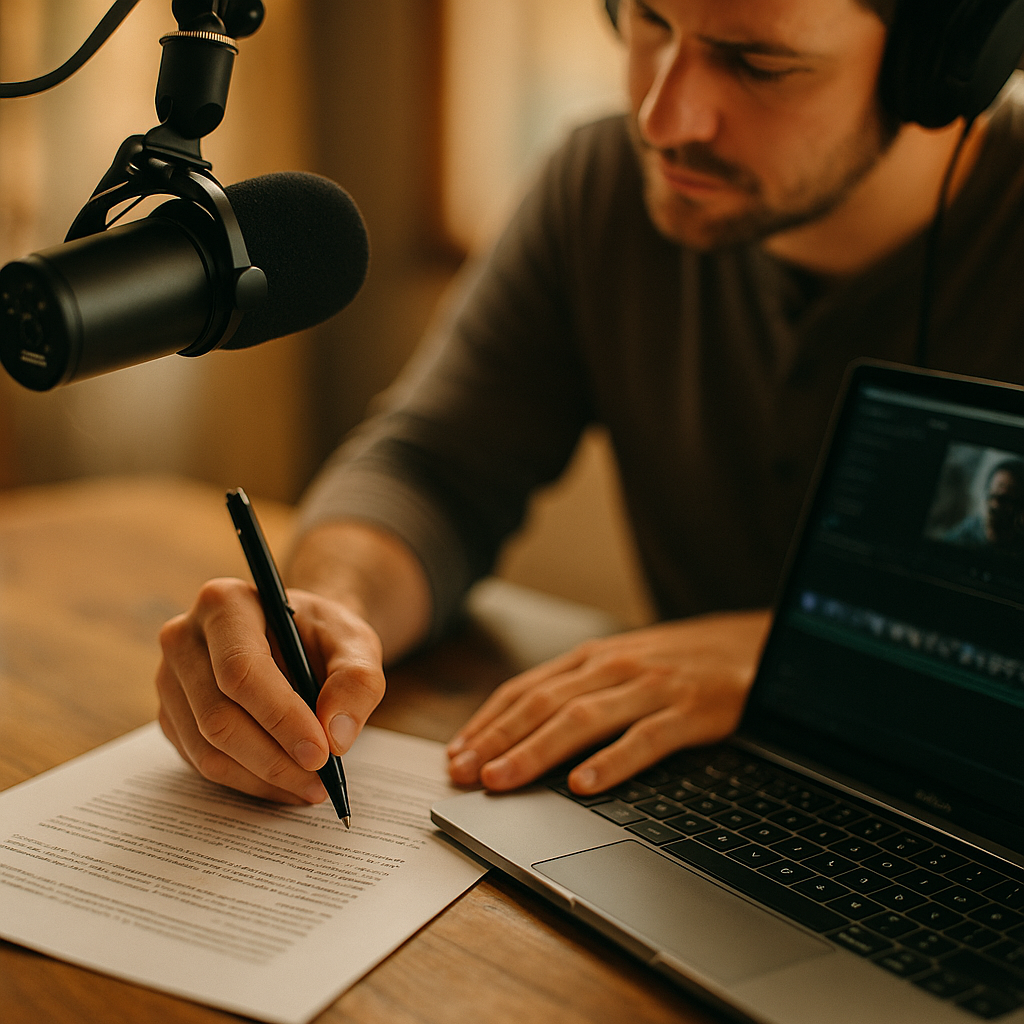
Podcast ad revenue in the U.S. is projected to top $2.6 billion, and radio still reaches more weekly adults than any single streaming platform. Yet most brands still hand podcast hosts a script built for TikTok. The result? Dead air, awkward pauses where a visual demo should be, and a read that sounds like someone translating a foreign language badly. Audio first creator spots need their own script logic, not a stripped-down version of your video brief.
Why Audio Budgets Are Suddenly Back on the Media Plan
Marketers spent the last five years chasing vertical video. Fair enough, that’s where the eyeballs went. But CPMs on video platforms have climbed, attention is fragmenting across six apps instead of two, and procurement teams are asking uncomfortable questions about blended CAC. Audio is quietly becoming the pressure valve.
Podcast listeners skew toward higher household income and longer session times than most social video consumers. A host read during a 45 minute episode gets more uninterrupted attention than a 9 second Reel skip test ever will. Radio, meanwhile, still delivers reach at a cost per thousand that makes digital buyers wince with envy, especially in local and regional markets where influencer rates have gotten frothy.
The brands winning in audio right now aren’t the ones with the biggest budgets. They’re the ones who stopped treating the script as an afterthought and started writing specifically for ears, not eyes.
None of this works, though, if you just read your Instagram caption into a microphone. Audio demands a different kind of script discipline.
What Breaks When a Video Script Gets Read Aloud
Pull up any high-performing UGC script and try reading it cold, without the product in frame. You’ll notice problems immediately.
- Visual cues collapse. “Watch what happens when I twist this” means nothing without the twist on screen. Podcast and radio listeners need the payoff described, not implied.
- Pacing assumptions fail. Video scripts are written around a hook in the first three seconds because that’s the scroll-stop window. Audio listeners have already committed to the episode or the drive time slot. You get more runway, and wasting it on a frantic hook feels jarring.
- Proof points go missing. On-screen text, product packaging, before and after shots, all of that visual credibility evaporates. The script has to carry proof through voice alone.
- CTAs get fuzzy. A swipe-up or shoppable tag doesn’t exist in audio. You need a memorable URL, a promo code spoken twice, or a branded search term listeners can actually recall later.
This is the same discipline problem brands run into when they crop a video ad for a different aspect ratio and wonder why performance tanks. The team behind vertical first video design found that format-native creative consistently outperforms reformatted creative, and audio is no exception. You can’t port, you have to rebuild.
The Rewrite Framework: Structure for Ear-Only Persuasion
Here’s the beat sheet we’ve seen work across brand-sponsored podcast reads and local radio creator spots, adapted from the same logic marketers use for product explainer scripts on TikTok Shop, minus the visual dependency.
- Context hook (10-15 seconds). Instead of a visual stop, use a relatable problem statement. “You know that moment when your phone dies right before boarding?” works because it builds a mental image without needing one.
- Credibility bridge (10 seconds). This is where host trust does the heavy lifting that a demo shot would on video. Let the host say why they personally use it, not why the brand says it’s good.
- Feature translation (20-30 seconds). Every visual feature needs a verbal analog. “Lightweight” becomes “fits in your jacket pocket without you noticing it’s there.” Specificity substitutes for visuals.
- Social proof, spoken. Numbers work well here. “Over 40,000 five star reviews” lands differently out loud than in a caption, mostly because the listener can’t skim past it.
- CTA with redundancy built in. Say the promo code or URL twice, spaced apart. Radio and podcast listeners are frequently doing something else, driving, cooking, walking. Repetition isn’t lazy here, it’s necessary.
Notice what’s missing: no mention of camera angles, no b-roll notes, no on-screen text callouts. If your brief still has those sections for an audio spot, you’re wasting the creator’s time and yours.
Host Read vs Produced Spot: Pick One Script Logic, Not Both
A host read, where the podcaster ad-libs around brand talking points, needs a looser script: bullet points, not verbatim copy. A produced spot, closer to traditional radio, needs tight timing because you’re paying for a fixed slot length. Mixing the two approaches, handing a host read creator a word-for-word script, is one of the most common reasons audio campaigns underperform. Hosts sound stilted when forced to read copy that isn’t their voice, and listeners notice the shift in authenticity instantly.
This mirrors a lesson brands have already learned comparing founder-led video against hired creator content. Authenticity isn’t a tone you bolt on, it’s a structural choice you make before the script is written.
Budgeting for Audio: What Actually Costs What
Audio first creator spots are often cheaper to produce but not necessarily cheaper to run at scale. Here’s the rough math most media planners are working with.
- Podcast host reads typically run on a CPM basis for larger shows, often $15 to $50 CPM depending on vertical and download guarantees, with flat fees more common on mid-tier and niche shows.
- Radio creator spots (think regional influencers with local drive-time partnerships) tend to price on a flat buy per spot or per week, and production costs are near zero since there’s no video shoot.
- Production savings are real. No set, no lighting, no editor cutting ten versions of a vertical crop. A single recording session can produce multiple spot lengths (15, 30, 60 second cuts) for a fraction of video production cost.
Where brands lose money is attribution. Audio doesn’t click-track the way social video does, so you need promo codes, dedicated landing pages, or post-purchase surveys asking “how did you hear about us” to close the loop. This is the same measurement discipline that matters in performance-based creator briefs, just with a longer attribution window since audio conversion tends to lag by days, not minutes.
If your attribution model can’t explain a sales bump three days after a podcast episode airs, you’re not measuring audio, you’re guessing.
Reference points on CPM trends and audio ad spend are worth tracking through eMarketer’s advertising forecasts and Statista’s media consumption data, both of which break out podcast and radio spend separately from broader digital video.
Disclosure Rules Don’t Disappear Just Because There’s No Visual
This one trips up more brands than it should. The FTC’s endorsement guidelines apply to audio exactly as they apply to video, there’s no exemption for format. A host needs to verbally disclose the paid partnership, clearly and in close proximity to the endorsement, not buried in fine print that doesn’t exist in an audio-only medium.
The safest practice: have the host say “this episode is sponsored by” or “paid partnership with” as part of the script itself, not as a separate legal add-on read by a different voice. Review the FTC’s endorsement guidance directly if you’re building compliance language into your creator contracts, since enforcement has increased around podcast disclosures specifically.
Radio has its own layer of regulatory history here too, and local stations often have standards and practices teams that will flag scripts before they air. Build review time into your production calendar. Nothing kills a flight date faster than a compliance rewrite requested 48 hours before launch.
Testing Audio Scripts Without Burning the Whole Budget
You don’t need to commit to a full media buy to find out if a script works. Record two or three script variants with the same host, run them as a small test buy across a handful of episodes or dayparts, and compare response via unique promo codes. This is the same logic behind multi hook testing in video production, applied to a cheaper medium. Since you’re not reshooting visuals, testing three audio openers costs almost nothing beyond the host’s recording time.
Build a small swipe file of winning openers and CTAs as you go. Treat it the way smart teams treat a hook library for paid social, a reusable asset that compounds in value every time you test a new show or market.
For teams managing audio alongside video and social, matching the right script format to the right funnel stage matters more than ever. A brand awareness play on a top podcast behaves differently than a direct-response radio spot chasing immediate calls. The same framework used for matching creative format to funnel stage applies just as cleanly to audio once you stop treating it as a video script with the pictures removed.
Next step: pull your best-performing video script, rebuild it using the five-beat audio framework above, and test it on a single podcast or local radio slot before committing real budget. The format gap between video and audio is smaller than it looks, but only if you write for the ear from the first line.
FAQs
How is an audio first creator script different from a video script?
An audio script replaces every visual cue, on-screen text, and demo shot with spoken description and verbal proof points. Pacing also shifts since audio listeners typically have longer attention windows than scroll-based video viewers.
What’s the difference between a host read and a produced radio spot?
A host read is conversational and loosely scripted, letting the podcaster speak in their own voice around key talking points. A produced spot follows a tight, timed script, closer to traditional radio advertising, and sounds more polished but less personal.
How do brands track ROI from podcast or radio creator spots?
Most brands use unique promo codes, dedicated landing pages, or post-purchase attribution surveys since audio lacks native click tracking. Conversion often lags the airing by several days, so attribution windows need to be longer than typical social campaigns.
Do FTC disclosure rules apply to podcast and radio ads?
Yes. The FTC’s endorsement guidelines require clear, verbal disclosure of paid partnerships in audio formats, with no exemption for the lack of visual tags. Disclosure language should be written into the script itself rather than added as a separate read.
Is audio advertising cheaper than influencer video production?
Production costs are typically lower since there’s no shoot, lighting, or editing involved. Media costs vary widely though, and podcast CPMs on larger shows can rival or exceed video CPMs depending on the vertical and audience size.
FAQs
How is an audio first creator script different from a video script?
An audio script replaces every visual cue, on-screen text, and demo shot with spoken description and verbal proof points. Pacing also shifts since audio listeners typically have longer attention windows than scroll-based video viewers.
What’s the difference between a host read and a produced radio spot?
A host read is conversational and loosely scripted, letting the podcaster speak in their own voice around key talking points. A produced spot follows a tight, timed script, closer to traditional radio advertising, and sounds more polished but less personal.
How do brands track ROI from podcast or radio creator spots?
Most brands use unique promo codes, dedicated landing pages, or post-purchase attribution surveys since audio lacks native click tracking. Conversion often lags the airing by several days, so attribution windows need to be longer than typical social campaigns.
Do FTC disclosure rules apply to podcast and radio ads?
Yes. The FTC’s endorsement guidelines require clear, verbal disclosure of paid partnerships in audio formats, with no exemption for the lack of visual tags. Disclosure language should be written into the script itself rather than added as a separate read.
Is audio advertising cheaper than influencer video production?
Production costs are typically lower since there’s no shoot, lighting, or editing involved. Media costs vary widely though, and podcast CPMs on larger shows can rival or exceed video CPMs depending on the vertical and audience size.
Top Influencer Marketing Agencies
The leading agencies shaping influencer marketing in 2026
Agencies ranked by campaign performance, client diversity, platform expertise, proven ROI, industry recognition, and client satisfaction. Assessed through verified case studies, reviews, and industry consultations.
Moburst

-
2

The Shelf
Boutique Beauty & Lifestyle Influencer AgencyA data-driven boutique agency specializing exclusively in beauty, wellness, and lifestyle influencer campaigns on Instagram and TikTok. Best for brands already focused on the beauty/personal care space that need curated, aesthetic-driven content.Clients: Pepsi, The Honest Company, Hims, Elf Cosmetics, Pure LeafVisit The Shelf → -
3

Audiencly
Niche Gaming & Esports Influencer AgencyA specialized agency focused exclusively on gaming and esports creators on YouTube, Twitch, and TikTok. Ideal if your campaign is 100% gaming-focused — from game launches to hardware and esports events.Clients: Epic Games, NordVPN, Ubisoft, Wargaming, Tencent GamesVisit Audiencly → -
4

Viral Nation
Global Influencer Marketing & Talent AgencyA dual talent management and marketing agency with proprietary brand safety tools and a global creator network spanning nano-influencers to celebrities across all major platforms.Clients: Meta, Activision Blizzard, Energizer, Aston Martin, WalmartVisit Viral Nation → -
5

The Influencer Marketing Factory
TikTok, Instagram & YouTube CampaignsA full-service agency with strong TikTok expertise, offering end-to-end campaign management from influencer discovery through performance reporting with a focus on platform-native content.Clients: Google, Snapchat, Universal Music, Bumble, YelpVisit TIMF → -
6

NeoReach
Enterprise Analytics & Influencer CampaignsAn enterprise-focused agency combining managed campaigns with a powerful self-service data platform for influencer search, audience analytics, and attribution modeling.Clients: Amazon, Airbnb, Netflix, Honda, The New York TimesVisit NeoReach → -
7

Ubiquitous
Creator-First Marketing PlatformA tech-driven platform combining self-service tools with managed campaign options, emphasizing speed and scalability for brands managing multiple influencer relationships.Clients: Lyft, Disney, Target, American Eagle, NetflixVisit Ubiquitous → -
8

Obviously
Scalable Enterprise Influencer CampaignsA tech-enabled agency built for high-volume campaigns, coordinating hundreds of creators simultaneously with end-to-end logistics, content rights management, and product seeding.Clients: Google, Ulta Beauty, Converse, AmazonVisit Obviously →