


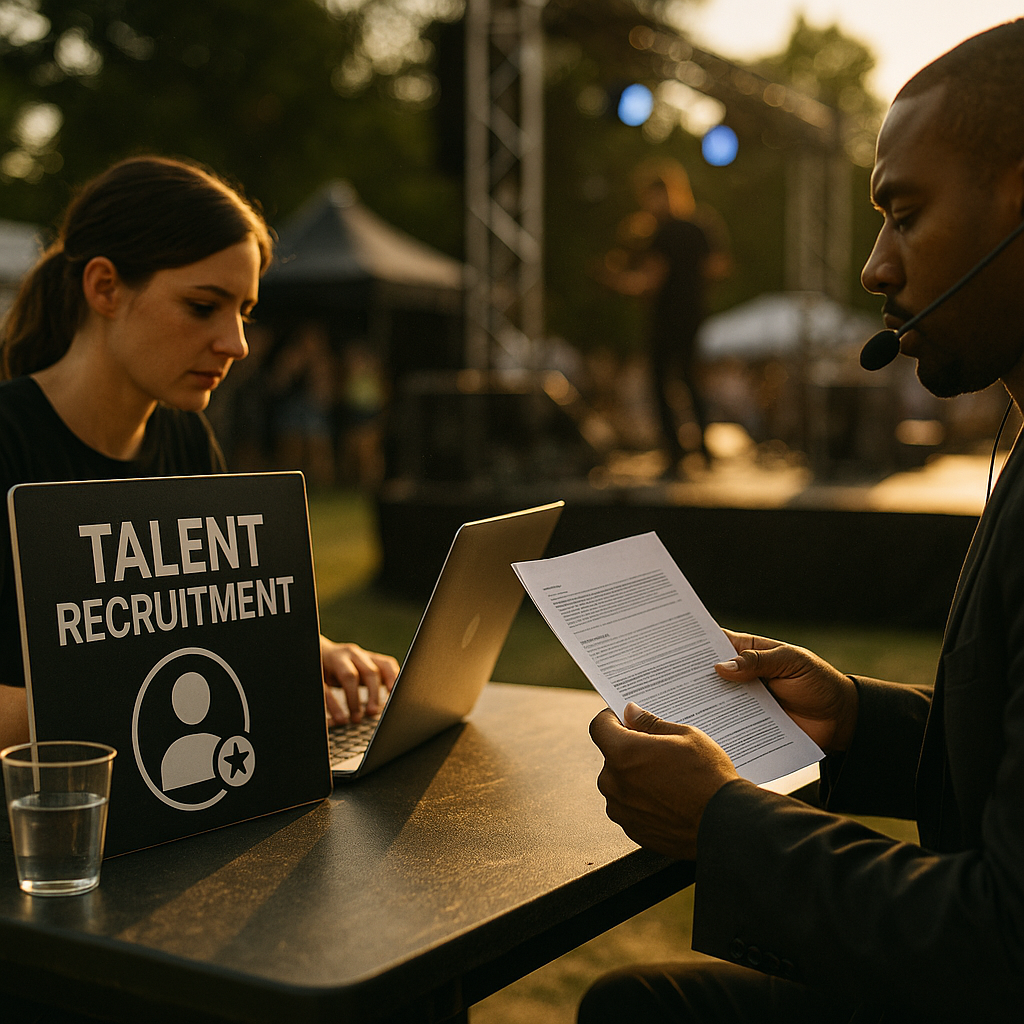
Here’s a number that should worry anyone planning a brand activation this year: nearly half of experiential marketing budgets get spent without a documented usage rights agreement for the creator content captured on site, according to industry surveys of event marketers. That gap turns a great activation into a legal headache the moment someone wants to repurpose footage for paid social. Choosing the right full service creator talent platform for on site event activations is no longer a nice to have. It is risk management with a ROI attached.
Why “Full Service” Is a Loaded Term
Every vendor calls itself full service. Few actually are. In the context of live activations, full service should mean five things happen without you chasing down five separate contractors: talent sourcing and vetting, contracting and rights management, on site logistics (think credentialing, call sheets, green rooms), content capture and editing, and post event reporting tied to spend.
Strip away the marketing language and most platforms are strong in two or three of those areas and weak in the rest. A marketplace built for UGC sourcing, for example, might nail the contracting workflow but has no muscle for managing twelve creators moving through a festival activation across three days. A traditional talent agency might staff the event flawlessly but hand you a shared drive of raw footage and call it reporting.
The platforms that win repeat event business are the ones that treat on site activation as a distinct product line, not a bolt on to their always on influencer marketplace.
The Logistics Layer Nobody Budgets For
Ask any experiential producer what breaks first at a live activation and they will tell you: it’s the handoff between who booked the talent and who is standing at the venue door at 8am. Full service platforms differentiate themselves here more than anywhere else.
- Credentialing and check in: Does the platform issue digital call sheets, confirm arrival times, and flag no shows in real time, or are you relying on a group text thread?
- Content capture workflow: Is there a standardized shot list and upload process so content from fifteen creators doesn’t arrive in fifteen different formats?
- Usage rights at the point of signing: Are whitelisting, paid amplification, and term length baked into the standard contract, or negotiated creator by creator after the event?
- Insurance and liability: Who is covering the creator if something goes wrong on site, and is that language visible before you sign?
Platforms like CreatorIQ and GRIN have built enterprise workflows around contracting and reporting, but their event specific logistics tooling tends to be thinner than what boutique experiential shops offer. If your activation is heavy on physical production (a pop up tour, a festival takeover, a retail launch event) you need to ask pointed questions about day of operations, not just creator discovery. Our enterprise platform comparison digs into how these two handle broader campaign operations, which is a useful baseline before layering in event specific demands.
Where the Money Actually Leaks
Event activation budgets get eaten by three things in roughly this order: talent fees that balloon when agencies add markup on top of markup, change fees when a creator cancels within 48 hours and the platform has no backfill process, and post production costs when raw footage needs a separate editing vendor because the platform’s “content delivery” was really just a Dropbox link.
A platform that bundles backfill guarantees and in house editing into its event package can cost more upfront but save you from the scramble pricing that shows up when you’re sourcing a replacement creator three days before a launch. This is the same math marketers apply to martech stack consolidation: fewer vendors, cleaner accountability, usually cheaper in the long run even if the sticker price per vendor looks higher.
Ask for a line item breakdown before you sign anything. Vague “all inclusive” pricing on event activations is a red flag almost as often as it’s a convenience.
What Reporting Should Look Like After the Event Ends
Here’s where full service platforms either prove their worth or expose themselves as glorified staffing agencies. Reporting on a one day activation needs to connect three data points: attendance and engagement on site, content performance once assets go live on owned and paid channels, and attribution back to any sales lift if the activation included a shoppable component.
Most platforms can hand you impressions and a highlight reel. Fewer can tie that content to a reporting API that plugs into your existing dashboards. If your team is already running attribution tooling across other influencer channels, demand that the event platform’s data export matches that schema. Otherwise you’re manually reconciling spreadsheets at 11pm the night before a board presentation, and nobody wants that.
Vetting Creators for Live, Unscripted Environments
Sourcing a creator for a sponsored Reel is a different risk profile than putting that same creator in front of a live crowd, a camera crew, and possibly a press pool. Full service platforms with event experience build additional vetting into their process: past live hosting experience, comfort with teleprompters or improvisation, and a background check process that goes beyond follower authenticity.
This is where AI powered discovery tools help narrow the funnel but shouldn’t be the final word. Platforms using AI discovery databases can surface creators who match audience demographics and content style, but someone still needs to confirm the creator can handle a three hour meet and greet line without melting down. Treat the algorithm as a shortlist generator, not a hiring decision.
A creator’s follower count tells you nothing about whether they’ll show up on time, stay on brand message for six hours straight, and hand you usable content by end of day.
Fraud and compliance checks matter here too. The FTC’s endorsement guidance applies just as much to content shot at a live event as it does to a standard sponsored post, and platforms should be building disclosure requirements into contracts before the first creator walks on site, not after legal flags it in post production.
Marketplace vs Managed Service: Which Fits Your Activation
Self serve marketplaces like Collabstr and Influee work well when you need a handful of creators for a straightforward appearance with light production needs. They are fast, transparent on pricing, and give you direct creator communication. Our marketplace comparison breaks down where each shines for smaller bookings.
Managed service platforms earn their premium when the activation has moving parts: multiple creators, a tight run of show, brand safety concerns, or a need for white glove on site coordination. The tradeoff is cost and sometimes speed, since managed platforms often require longer lead times to properly vet and brief talent.
A practical rule: if your activation needs fewer than five creators and minimal physical production, a marketplace model probably gets you there faster and cheaper. Once you’re staffing a multi day footprint with content deliverables tied to paid media amplification, you want the managed service layer, even if it costs more per creator.
A Quick Framework for Shortlisting Vendors
- Request a sample run of show from a past activation similar in scale to yours.
- Ask explicitly how backfill works if a booked creator cancels within 72 hours.
- Confirm whether usage rights and whitelisting terms are standardized or negotiated per creator.
- Check if their reporting exports integrate with your existing attribution or martech stack.
- Get references from brands that ran a comparable footprint, not just their flagship case study.
Industry benchmarks from Sprout Social and eMarketer consistently show experiential activations outperforming static sponsored content on engagement, but only when the content capture and amplification plan is built in from the start, not bolted on after the event wraps.
Budget Tiers and What You Actually Get
At the lower end, expect marketplace sourcing with limited on site support, meaning you’ll need your own producer or event manager on the ground. Mid tier packages typically add a dedicated account manager, standardized contracts, and basic content editing. Top tier full service platforms bring a producer on site, handle credentialing and run of show, deliver edited content within 48 hours, and provide a reporting dashboard tied to campaign KPIs.
None of these tiers are inherently wrong. The mistake is paying top tier prices for mid tier delivery because a sales deck used the words “full service” without the operational muscle to back it up.
Frequently Asked Questions
What makes a creator talent platform “full service” for event activations specifically?
A genuinely full service platform handles talent sourcing, contracting with usage rights built in, on site logistics like credentialing and call sheets, content capture and editing, and post event reporting tied back to campaign goals, all without requiring the brand to coordinate separate vendors for each piece.
How much should a brand budget for a full service event activation platform?
Costs vary widely based on creator count and production complexity, but brands should budget for talent fees, a platform or management fee (often 15 to 30 percent on top of talent cost), and a separate line for content editing and reporting if those aren’t bundled into the base package.
What is the biggest risk when using a marketplace instead of a managed service for events?
The biggest risk is logistics failure on site, since marketplaces typically connect brands with creators directly but don’t provide dedicated on site coordination, credentialing, or backfill support if a creator cancels close to the event date.
Do these platforms handle usage rights for content shot at events?
The strongest platforms build usage rights, including paid whitelisting terms and content term length, directly into the creator contract before the event, which avoids the common and costly problem of renegotiating rights after footage has already been captured.
Can AI tools replace manual vetting for event talent?
AI discovery tools are useful for narrowing down creators by audience fit and content style, but they can’t assess whether a creator will perform well in a live, unscripted environment, so manual vetting and reference checks remain necessary for event specific bookings.
Before you sign with any platform, run one more test: ask them to walk you through what happens at hour six of a twelve hour activation when a creator’s flight gets delayed. The answer tells you more about “full service” than any case study will.
Top Influencer Marketing Agencies
The leading agencies shaping influencer marketing in 2026
Agencies ranked by campaign performance, client diversity, platform expertise, proven ROI, industry recognition, and client satisfaction. Assessed through verified case studies, reviews, and industry consultations.
Moburst

-
2

The Shelf
Boutique Beauty & Lifestyle Influencer AgencyA data-driven boutique agency specializing exclusively in beauty, wellness, and lifestyle influencer campaigns on Instagram and TikTok. Best for brands already focused on the beauty/personal care space that need curated, aesthetic-driven content.Clients: Pepsi, The Honest Company, Hims, Elf Cosmetics, Pure LeafVisit The Shelf → -
3

Audiencly
Niche Gaming & Esports Influencer AgencyA specialized agency focused exclusively on gaming and esports creators on YouTube, Twitch, and TikTok. Ideal if your campaign is 100% gaming-focused — from game launches to hardware and esports events.Clients: Epic Games, NordVPN, Ubisoft, Wargaming, Tencent GamesVisit Audiencly → -
4

Viral Nation
Global Influencer Marketing & Talent AgencyA dual talent management and marketing agency with proprietary brand safety tools and a global creator network spanning nano-influencers to celebrities across all major platforms.Clients: Meta, Activision Blizzard, Energizer, Aston Martin, WalmartVisit Viral Nation → -
5

The Influencer Marketing Factory
TikTok, Instagram & YouTube CampaignsA full-service agency with strong TikTok expertise, offering end-to-end campaign management from influencer discovery through performance reporting with a focus on platform-native content.Clients: Google, Snapchat, Universal Music, Bumble, YelpVisit TIMF → -
6

NeoReach
Enterprise Analytics & Influencer CampaignsAn enterprise-focused agency combining managed campaigns with a powerful self-service data platform for influencer search, audience analytics, and attribution modeling.Clients: Amazon, Airbnb, Netflix, Honda, The New York TimesVisit NeoReach → -
7

Ubiquitous
Creator-First Marketing PlatformA tech-driven platform combining self-service tools with managed campaign options, emphasizing speed and scalability for brands managing multiple influencer relationships.Clients: Lyft, Disney, Target, American Eagle, NetflixVisit Ubiquitous → -
8

Obviously
Scalable Enterprise Influencer CampaignsA tech-enabled agency built for high-volume campaigns, coordinating hundreds of creators simultaneously with end-to-end logistics, content rights management, and product seeding.Clients: Google, Ulta Beauty, Converse, AmazonVisit Obviously →