


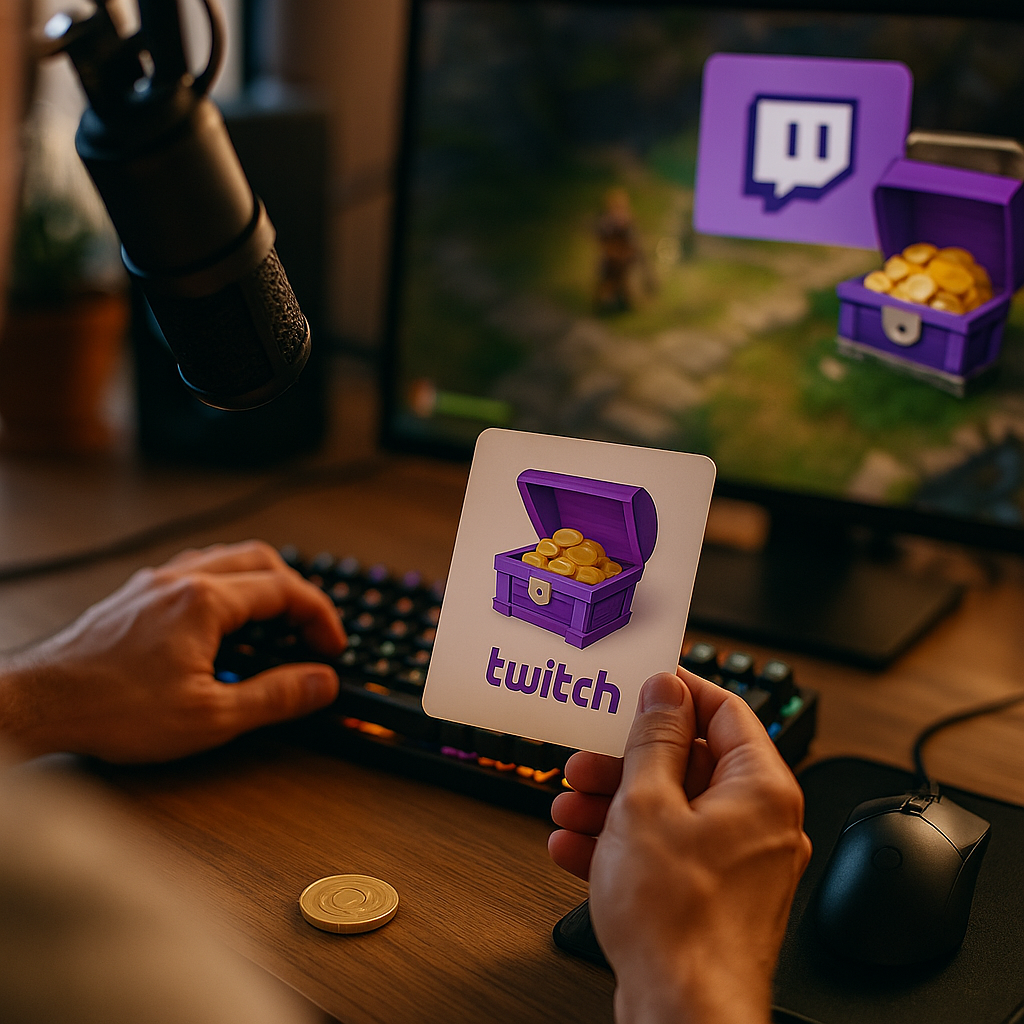
Twitch paid out more creators through Drops campaigns last year than most brands spent on traditional sponsorship packages combined, yet the format barely registers in agency pitch decks. That is a gap worth closing. Twitch Drops and branded quest mechanics let brands turn passive viewership into tracked, incentivized action, something a logo on a stream overlay never did.
If your influencer budget still treats Twitch as a cheaper YouTube with worse production value, you’re leaving a commerce channel on the table. This playbook breaks down how Drops and quests actually work, what they cost, and where the ROI math holds up against standard sponsorship deals.
What Are Twitch Drops, Really?
Drops are in-stream rewards, game items, loot, beta access, sometimes real-world products, that viewers earn simply by watching a qualifying channel for a set amount of time. Twitch’s native Drops campaign tool links a viewer’s account to a reward ledger. Watch twenty minutes, get a skin. Watch two hours across the week, unlock a bundle. No purchase required, no code to type in, just attention converted into inventory.
Branded quests push this further. Instead of a passive watch-timer, a quest asks for an action: follow a brand’s channel, use a promo code during a live shopping segment, complete a multi-stream “watch three creators” challenge, or engage with a chat command tied to a product drop. Quests are structured, gamified, and built for completion tracking, which is exactly what makes them useful for a brand team that needs more than vanity reach numbers.
Drops convert idle watch time into a measurable action. That single shift, from passive sponsorship to tracked participation, is the entire argument for building a commerce layer on top of Twitch streams.
Sponsorships vs. Drops: The ROI Gap Nobody Talks About
A standard Twitch sponsorship deal looks like this: pay a creator a flat fee, they mention your product during a segment, maybe drop a link in chat. You get an impression count and a vibe check. What you don’t get is a clean attribution path from stream to conversion.
Drops and quests flip that. Every reward claim is logged against a Twitch account ID. Every quest completion is timestamped. That means a brand can answer questions a flat-fee sponsorship never could: How many unique viewers actually completed the action? What was the completion rate versus the number who started? Did viewers from Creator A convert at a higher rate than Creator B?
This is the same attribution hunger that’s reshaped commerce on other platforms. Brands running GMV attribution models on TikTok Shop have already forced creators to prove revenue impact, not just reach. Twitch Drops campaigns apply the same discipline to live streaming, where measurement has historically been the weakest link.
- Sponsorship deals: fixed cost, impression-based reporting, limited proof of action.
- Drops campaigns: cost tied to reward fulfillment, completion-based reporting, hard data on who did what.
- Branded quests: multi-step engagement, cross-creator tracking, ideal for product launches or multi-SKU pushes.
None of this replaces sponsorship entirely. A creator’s personal endorsement still carries trust weight a quest mechanic can’t replicate. But treating Drops as a bolt-on commerce layer, rather than a replacement, is where the real budget efficiency shows up.
How the Mechanics Actually Work (And What It Costs)
Twitch’s Drops system runs through the Extensions and Developer Rig infrastructure, which means setup isn’t a five-minute job. Brands typically work through Twitch’s partner team or an approved agency to configure a campaign, set the reward tiers, whitelist participating channels, and connect the reward fulfillment (game codes, physical product vouchers, digital coupons) to a backend system.
Costs break down into three buckets: the reward itself (what you’re giving away), the creator activation fee (paying streamers to feature the quest prominently, since Drops alone won’t surface without a creator pointing at it), and the platform/integration cost if you’re building a custom quest flow rather than using Twitch’s standard Drops dashboard.
For a mid-size campaign, a reasonable budget split looks like 40% reward fulfillment, 35% creator fees, and 25% tech integration and reporting. That’s a different allocation than a typical sponsorship buy, where creator fees can eat 70% or more of the budget with little left for measurement infrastructure.
Timing matters too. Drops campaigns run in defined windows, typically 48 hours to two weeks, which forces a sense of urgency that open-ended sponsorship deals rarely create. A viewer who knows the reward disappears Sunday night behaves differently than one watching an evergreen sponsored segment.
Where Branded Quests Outperform Standard Campaigns
Quests shine in categories where product trial or repeat engagement matters more than a single purchase. Gaming peripherals, energy drinks, software subscriptions, even financial apps have run multi-stage quest campaigns asking viewers to watch, then download, then complete an in-app action for a tiered reward. Each stage drops off some percentage of participants, which is actually useful. It shows you exactly where friction lives in your funnel.
Compare that to a typical influencer sponsorship report, which tells you impressions and maybe click-throughs, with no visibility into what happened after the click. Quests close that gap because the completion data lives on Twitch’s side and can be exported for analysis.
There’s also a cross-promotion angle. A quest that spans multiple creators (watch Creator A, then Creator B, then complete an action on Creator C’s channel) builds audience overlap data a brand can use for future creator selection. You find out, empirically, which creator pairs drive the highest completion rates, rather than guessing based on follower count.
A multi-creator quest doesn’t just drive one campaign. It generates a reusable map of which creator audiences actually overlap and convert together.
Risk and Compliance: The Part Agencies Skip
Drops campaigns touch FTC disclosure rules just like any paid partnership, and the “no purchase required” framing doesn’t exempt brands from clear labeling. The FTC’s endorsement guidance still applies when a creator is compensated to promote a quest or Drops campaign, even if the viewer reward is a free in-game item rather than cash back. Brands need creators to disclose the paid partnership in-stream, not just bury it in a panel description nobody reads.
There’s also a data handling question. Reward fulfillment often requires linking a Twitch account to an email address or game account, which means brands are collecting personal data through a third-party platform. That data flow needs the same privacy review you’d apply to any first-party data collection, and UK or EU audiences bring ICO considerations into the mix if your campaign runs internationally.
Brands that have already built compliance muscle around platform demotion risk, like the frameworks covered in TikTok compliance protection strategies, will recognize the pattern. Platform rules change, and a Drops campaign built around today’s Extensions API could need rework if Twitch adjusts reward eligibility rules. Build flexibility into your contract terms with creators and your tech vendor, not just your creative brief.
Budgeting Drops Against Your Broader Creator Mix
Where does a Drops campaign fit inside an always-on influencer budget? Treat it as a commerce-layer test, not a core spend line, at least initially. Brands running structured budget allocation across platforms typically carve out 10 to 15% for experimental formats, and Twitch Drops fits squarely in that bucket for most verticals outside gaming and tech.
Gaming-adjacent brands, on the other hand, should treat Drops as a primary channel, not an experiment. The audience is already primed for reward mechanics; they’ve been earning loot drops since before influencer marketing existed as a budget line.
One more consideration: Drops campaigns generate first-party engagement data that’s genuinely useful for future creator vetting, similar to how brands use completion and overlap data from other emerging formats like Discord ambassador programs to judge community retention. If you’re already running Discord-based loyalty mechanics alongside a Twitch presence, the two data sets compound. You start seeing which creators drive retention versus which ones just drive a single spike.
For brands weighing where live, reward-based commerce sits against other emerging checkout-adjacent formats, it’s worth benchmarking against the risk profile covered in live commerce checkout risk analysis, since both formats share the same core tension: real-time engagement versus attribution lag.
Measurement tools matter here too. Standard social listening platforms like Sprout Social don’t natively parse Twitch Drops completion data, so most brands end up building a lightweight custom dashboard pulling from Twitch’s reporting API directly, or leaning on an agency partner who’s already built that pipeline. Don’t greenlight a Drops campaign without confirming someone on your team (or vendor side) can actually extract and interpret that data before launch day.
Next Step
Pick one upcoming product launch, pair it with a single-creator Drops campaign running no longer than seven days, and build your completion-rate reporting before launch, not after. That one test will tell you more about Twitch commerce than a dozen sponsorship pitches ever will.
Frequently Asked Questions
What is the difference between a Twitch Drops campaign and a standard sponsorship?
A sponsorship pays a creator for a mention or segment with impression-based reporting. A Drops campaign rewards viewers directly for watch time or completed actions, generating account-level data on who participated and whether they finished the task.
Do brands need Twitch’s approval to run a Drops campaign?
Yes. Drops campaigns run through Twitch’s Extensions and partner tools, which typically require working with Twitch’s business team or an approved agency to configure reward tiers and whitelist participating channels.
How much does a typical Twitch Drops campaign cost?
Costs vary by reward type and scale, but a reasonable mid-size campaign splits roughly 40% reward fulfillment, 35% creator activation fees, and 25% tech integration and reporting, which differs significantly from standard sponsorship budget allocation.
Are branded quests only useful for gaming brands?
No, though gaming and tech brands see the fastest adoption. Non-endemic brands in beverages, software, and finance have run quest campaigns successfully by focusing on multi-step actions like app downloads or trial signups rather than in-game rewards.
What compliance risks come with Twitch Drops campaigns?
FTC disclosure rules apply even when the reward is a free item rather than cash, and brands collecting account or email data through reward fulfillment need to apply standard data privacy review, particularly for international audiences.
FAQPage Schema
Top Influencer Marketing Agencies
The leading agencies shaping influencer marketing in 2026
Agencies ranked by campaign performance, client diversity, platform expertise, proven ROI, industry recognition, and client satisfaction. Assessed through verified case studies, reviews, and industry consultations.
Moburst

-
2

The Shelf
Boutique Beauty & Lifestyle Influencer AgencyA data-driven boutique agency specializing exclusively in beauty, wellness, and lifestyle influencer campaigns on Instagram and TikTok. Best for brands already focused on the beauty/personal care space that need curated, aesthetic-driven content.Clients: Pepsi, The Honest Company, Hims, Elf Cosmetics, Pure LeafVisit The Shelf → -
3

Audiencly
Niche Gaming & Esports Influencer AgencyA specialized agency focused exclusively on gaming and esports creators on YouTube, Twitch, and TikTok. Ideal if your campaign is 100% gaming-focused — from game launches to hardware and esports events.Clients: Epic Games, NordVPN, Ubisoft, Wargaming, Tencent GamesVisit Audiencly → -
4

Viral Nation
Global Influencer Marketing & Talent AgencyA dual talent management and marketing agency with proprietary brand safety tools and a global creator network spanning nano-influencers to celebrities across all major platforms.Clients: Meta, Activision Blizzard, Energizer, Aston Martin, WalmartVisit Viral Nation → -
5

The Influencer Marketing Factory
TikTok, Instagram & YouTube CampaignsA full-service agency with strong TikTok expertise, offering end-to-end campaign management from influencer discovery through performance reporting with a focus on platform-native content.Clients: Google, Snapchat, Universal Music, Bumble, YelpVisit TIMF → -
6

NeoReach
Enterprise Analytics & Influencer CampaignsAn enterprise-focused agency combining managed campaigns with a powerful self-service data platform for influencer search, audience analytics, and attribution modeling.Clients: Amazon, Airbnb, Netflix, Honda, The New York TimesVisit NeoReach → -
7

Ubiquitous
Creator-First Marketing PlatformA tech-driven platform combining self-service tools with managed campaign options, emphasizing speed and scalability for brands managing multiple influencer relationships.Clients: Lyft, Disney, Target, American Eagle, NetflixVisit Ubiquitous → -
8

Obviously
Scalable Enterprise Influencer CampaignsA tech-enabled agency built for high-volume campaigns, coordinating hundreds of creators simultaneously with end-to-end logistics, content rights management, and product seeding.Clients: Google, Ulta Beauty, Converse, AmazonVisit Obviously →