


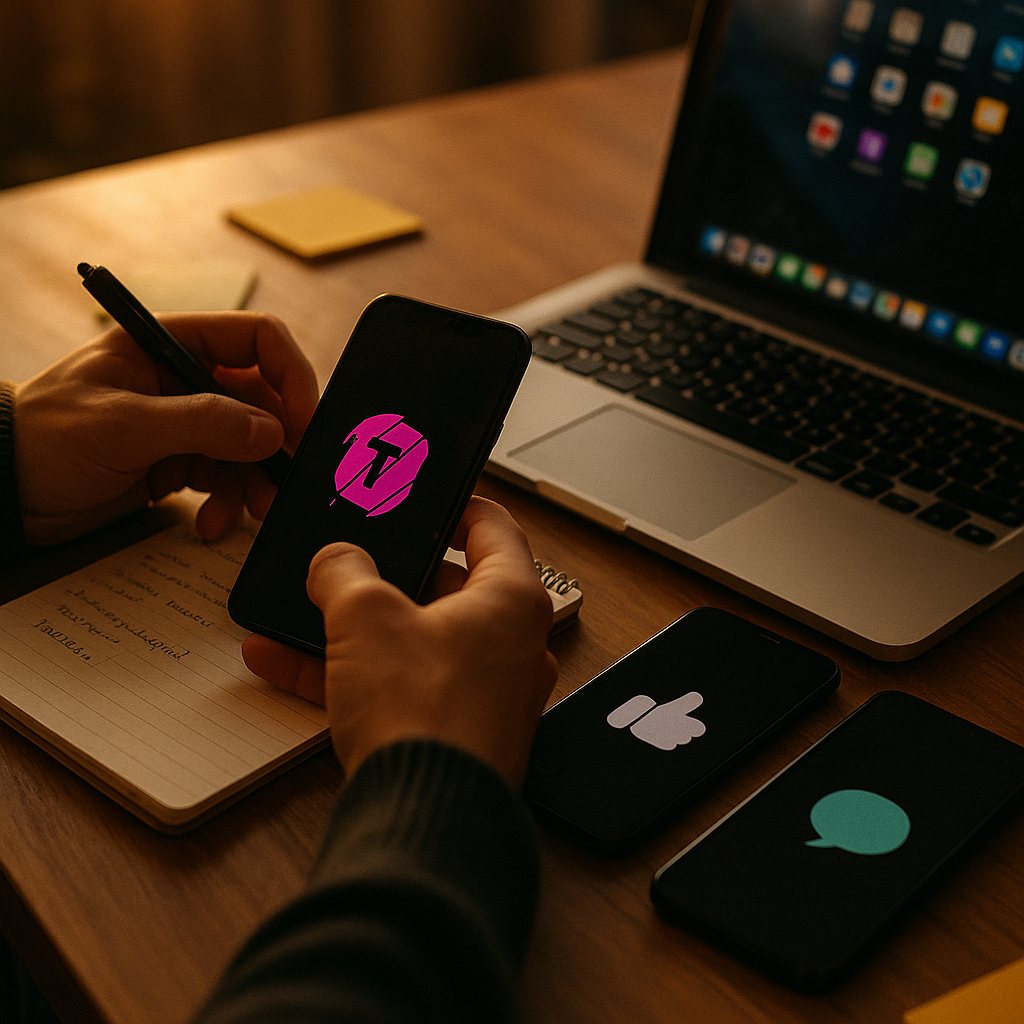
Here’s an uncomfortable number for any CMO still treating TikTok as a single point of failure: platform concentration risk has already burned brands once, when TikTok’s US ban threat sent media planners scrambling in a 48 hour panic. Triller and Clapper won’t replace TikTok. But alt-platform creator diversification isn’t a trend story anymore, it’s a hedge. This is the playbook for deciding where Triller and Clapper actually belong in your mix, and where they don’t.
Why Brands Are Even Looking at Triller and Clapper
Let’s be honest about the starting point. Neither platform rivals TikTok’s scale, and neither will in the next budget cycle. But that’s not the question smart media planners are asking. The question is: what happens to our creator program if a single platform disappears, gets demoted by regulation, or changes its monetization rules overnight?
That’s not hypothetical. Brands who lived through the TikTok algorithmic demotion scare already know how fast reach can evaporate. Diversification isn’t about chasing the next big platform. It’s about not having all your creator relationships, content formats, and audience data locked into one company’s roadmap.
Triller and Clapper sit in an interesting middle zone. They’re established enough to have real creator communities and ad infrastructure, but small enough that a modest test budget buys meaningful share of voice. That’s the pitch.
Triller: The Short-Form Comeback Nobody Asked For?
Triller has reinvented itself more times than most brands can track, pivoting through music licensing deals, combat sports streaming, and a SPAC merger along the way. What’s left is a short-form video app with a genuine music and entertainment skew, plus a creator base that leans into dance, lip-sync, and fitness content, categories that map closely to what performed well on TikTok before the algorithm got more entertainment-agnostic.
For brands, Triller’s appeal is narrower than it sounds. Beauty, music merch, fitness apparel, and entertainment-adjacent CPG categories tend to see the best creator fit. If your product doesn’t have a natural tie to music culture or dance trends, Triller’s audience composition will feel like a stretch.
The practical consideration is measurement maturity. Triller’s reporting infrastructure isn’t on par with TikTok Shop’s attribution tooling, so brands running performance campaigns need to build their own tracking layer rather than lean on native dashboards. That usually means UTM discipline and a willingness to accept directional data over granular GMV reporting, something teams used to the precision of TikTok Shop GMV attribution will need to recalibrate expectations for.
Clapper: Older Audience, Different Economics
Clapper markets itself as the anti-TikTok, and the positioning isn’t just branding. The user base skews older, often 30-plus, with a community that explicitly formed around dissatisfaction with TikTok’s moderation and algorithm shifts. That’s a genuinely different audience than most short-form platforms attract, and it opens doors for categories that struggle to break through on Gen Z-dominated feeds: home improvement, personal finance, parenting, and health-adjacent products.
We covered the budget mechanics in detail in our Clapper creator test budget guide, but the short version is this: treat Clapper as a low-cost audience research play before treating it as a performance channel. Creator rates are still low relative to TikTok and Instagram, which means a few thousand dollars buys a real test, not a token gesture.
The brands getting the most out of alt-platforms aren’t the ones chasing viral breakout moments. They’re the ones using small, cheap tests to learn things their primary platform data can’t tell them, like how an older or more skeptical audience actually responds to their product.
Clapper’s downside is predictable: smaller total addressable audience, less mature ad tooling, and creator discovery that’s still largely manual. Don’t expect a self-serve creator marketplace with the polish of TikTok Shop’s affiliate dashboard. You’re doing outreach, not browsing a catalog.
The Diversification Math: How Much Budget Actually Belongs Here?
This is where a lot of brand teams get it wrong. Diversification doesn’t mean splitting your budget evenly across five platforms and hoping something sticks. It means protecting your core channel’s performance while allocating a deliberate, capped percentage to testing emerging ones.
A reasonable framework, drawn from the always-on budgeting logic we laid out in our always-on influencer budget splits guide, looks like this:
- 70 to 80 percent stays with your proven, highest-ROI platform (likely TikTok, Instagram, or YouTube depending on your category).
- 10 to 15 percent goes to a secondary established channel you’re scaling, think Threads or Pinterest depending on your funnel stage.
- 5 to 10 percent is earmarked for alt-platform testing, Triller, Clapper, Lemon8, Bluesky, whatever fits your audience hypothesis.
That last bucket is where Triller and Clapper live. Small enough that a failed test doesn’t dent quarterly numbers, large enough that you learn something real. If you’re already running parallel tests on platforms like Lemon8 for UGC sourcing or early creator staking on Bluesky, Triller and Clapper slot into the same test-and-learn bucket rather than requiring a separate strategic conversation.
What Actually Breaks When Brands Skip the Compliance Step
Here’s the part that gets skipped in most “should we try X platform” conversations: disclosure and contract terms don’t magically transfer across platforms. A creator agreement built for TikTok’s content guidelines doesn’t automatically cover Triller’s or Clapper’s terms of service, and FTC disclosure requirements apply regardless of platform size or maturity.
Before any Triller or Clapper creator goes live, confirm three things. First, that your usage rights language covers the specific platform, not a generic “social media” clause. Second, that disclosure requirements per the FTC’s endorsement guidelines are built into the brief, not left to creator discretion. Third, that your legal team has reviewed each platform’s current terms of service, since smaller platforms tend to update policy faster and with less public notice than the majors.
This isn’t paranoia. It’s the same operational discipline brands apply to any new vendor relationship, just applied to a creator channel instead of a software contract.
Building the Test: A Simple Framework
Run alt-platform tests the way you’d run any controlled experiment, not the way most teams actually run them (which is often: throw money at five creators and hope).
- Define the hypothesis first. Are you testing audience fit, content format, or cost efficiency? Pick one primary question per test cycle.
- Cap spend and duration. Four to six weeks, a fixed creator roster, a defined budget ceiling. No extensions without a performance checkpoint.
- Build tracking before launch. UTM parameters, dedicated landing pages, and a shared tracking sheet since native analytics won’t give you everything.
- Set a kill criteria. Decide in advance what “not working” looks like so you’re not emotionally attached to a sunk cost.
- Debrief against your primary platform’s benchmarks. Compare cost per engagement and content quality against what you’d get from the same budget on your core channel.
According to eMarketer’s ongoing creator economy tracking, brands that run structured, time-boxed platform tests report significantly better budget efficiency than those running open-ended “always exploring” pilots. Structure beats enthusiasm, basically every time.
Where This Fits in a Broader Risk Strategy
Platform diversification is really risk management wearing a marketing hat. The same logic that pushes brands to test Bluesky creator vetting or explore live commerce on Kick applies here. You’re not betting the farm on Triller or Clapper becoming the next TikTok. You’re making sure your creator program and your institutional knowledge of how to run creator campaigns don’t live or die with a single platform’s decisions.
Tools like Sprout Social and HubSpot increasingly support multi-platform reporting that makes this kind of cross-channel comparison less painful than it used to be. That infrastructure maturity is part of why 2026 is a more reasonable year to run these tests than it was even two years ago.
Frequently Asked Questions
FAQs
Is Triller worth a brand’s time in 2026?
For music, fitness, beauty, or entertainment-adjacent brands, a small test budget is reasonable. For most other categories, the audience fit isn’t strong enough to justify dedicated resources beyond opportunistic testing.
How does Clapper’s audience differ from TikTok’s?
Clapper skews older, generally 30-plus, with a user base that migrated specifically because of dissatisfaction with TikTok’s moderation and algorithm changes. That makes it more promising for categories like home, finance, and parenting than for Gen Z-focused fashion or beauty plays.
What percentage of budget should go toward alt-platform testing?
A common range is 5 to 10 percent of total influencer budget, kept separate from spend on proven, high-performing channels so a failed test doesn’t impact core program results.
Do FTC disclosure rules apply on smaller platforms like Triller and Clapper?
Yes. FTC endorsement guidelines apply regardless of platform size or maturity. Brands should build disclosure requirements directly into creator briefs rather than assuming smaller platforms carry less regulatory scrutiny.
How long should a Triller or Clapper test run before judging results?
Four to six weeks with a fixed creator roster and budget ceiling is enough to gather directional data without committing resources indefinitely. Set kill criteria before launch so the decision to continue or stop isn’t made emotionally.
If your creator program currently depends on a single platform’s algorithm and goodwill, that’s the risk worth fixing first. Run one small, time-boxed test on Triller or Clapper this quarter, measure it against your core platform’s benchmarks, and let the data decide whether it earns a permanent line in next year’s budget.
Top Influencer Marketing Agencies
The leading agencies shaping influencer marketing in 2026
Agencies ranked by campaign performance, client diversity, platform expertise, proven ROI, industry recognition, and client satisfaction. Assessed through verified case studies, reviews, and industry consultations.
Moburst

-
2

The Shelf
Boutique Beauty & Lifestyle Influencer AgencyA data-driven boutique agency specializing exclusively in beauty, wellness, and lifestyle influencer campaigns on Instagram and TikTok. Best for brands already focused on the beauty/personal care space that need curated, aesthetic-driven content.Clients: Pepsi, The Honest Company, Hims, Elf Cosmetics, Pure LeafVisit The Shelf → -
3

Audiencly
Niche Gaming & Esports Influencer AgencyA specialized agency focused exclusively on gaming and esports creators on YouTube, Twitch, and TikTok. Ideal if your campaign is 100% gaming-focused — from game launches to hardware and esports events.Clients: Epic Games, NordVPN, Ubisoft, Wargaming, Tencent GamesVisit Audiencly → -
4

Viral Nation
Global Influencer Marketing & Talent AgencyA dual talent management and marketing agency with proprietary brand safety tools and a global creator network spanning nano-influencers to celebrities across all major platforms.Clients: Meta, Activision Blizzard, Energizer, Aston Martin, WalmartVisit Viral Nation → -
5

The Influencer Marketing Factory
TikTok, Instagram & YouTube CampaignsA full-service agency with strong TikTok expertise, offering end-to-end campaign management from influencer discovery through performance reporting with a focus on platform-native content.Clients: Google, Snapchat, Universal Music, Bumble, YelpVisit TIMF → -
6

NeoReach
Enterprise Analytics & Influencer CampaignsAn enterprise-focused agency combining managed campaigns with a powerful self-service data platform for influencer search, audience analytics, and attribution modeling.Clients: Amazon, Airbnb, Netflix, Honda, The New York TimesVisit NeoReach → -
7

Ubiquitous
Creator-First Marketing PlatformA tech-driven platform combining self-service tools with managed campaign options, emphasizing speed and scalability for brands managing multiple influencer relationships.Clients: Lyft, Disney, Target, American Eagle, NetflixVisit Ubiquitous → -
8

Obviously
Scalable Enterprise Influencer CampaignsA tech-enabled agency built for high-volume campaigns, coordinating hundreds of creators simultaneously with end-to-end logistics, content rights management, and product seeding.Clients: Google, Ulta Beauty, Converse, AmazonVisit Obviously →