


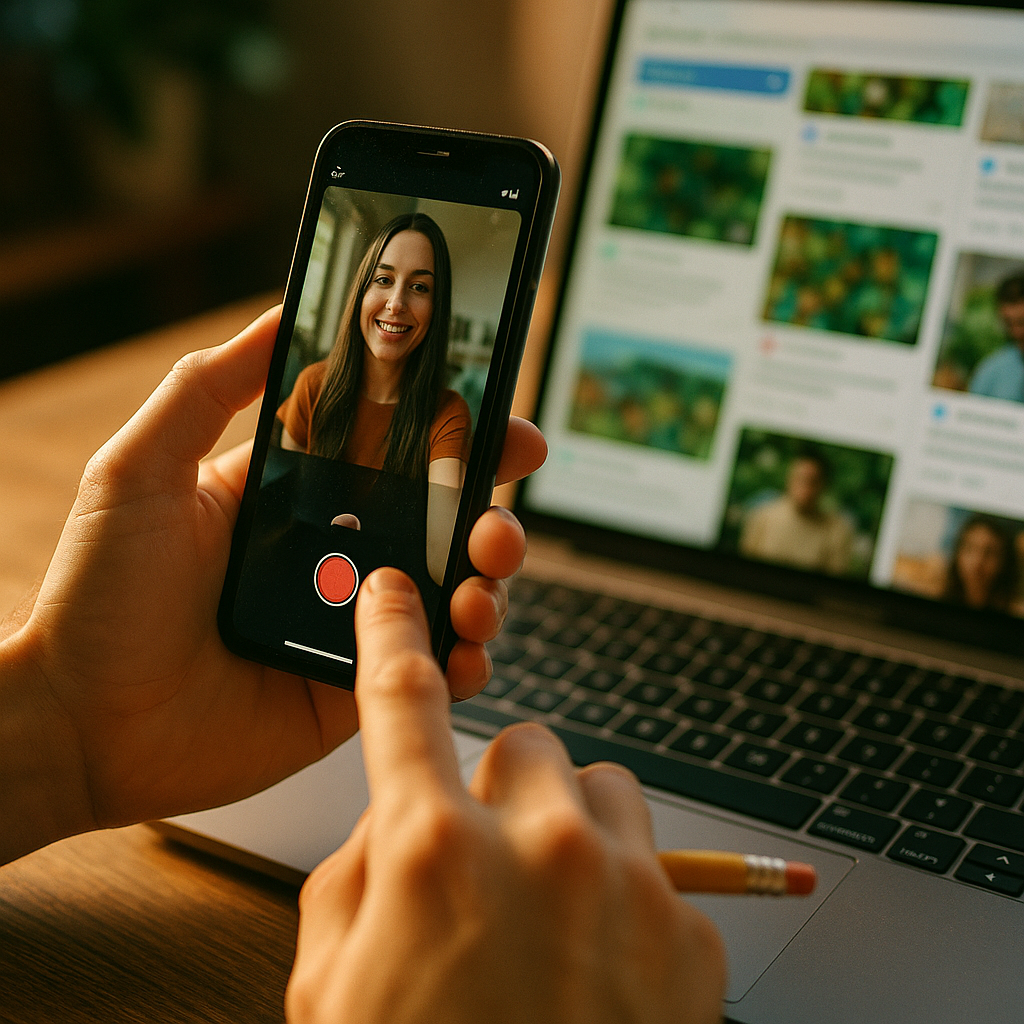
TikTok’s own data once pitched the platform as a search engine for Gen Z, rivaling Google for product and restaurant queries. That narrative is fading fast. Internal ranking changes throughout the platform’s recommendation system now favor completion rate and rewatch signals over query matching, which means discovery feed hooks matter more than keyword-stuffed captions ever did. If your creator briefs still open with “answer the search intent,” you’re optimizing for a feature TikTok is quietly deprioritizing.
This shift isn’t cosmetic. It changes how creators should structure the first three seconds of a video, how brands should brief openers, and how agencies should measure early performance. Here’s what’s actually happening and how to rewrite your creator playbook around it.
TikTok’s Search Pivot Is Real, and It’s Showing Up in the Data
For several years, TikTok leaned hard into positioning itself as a discovery and search tool, especially for younger users who skipped Google in favor of scrolling for recommendations. That strategy made sense when the platform was fighting for ad dollars against established search players. But the economics of search inside a short-form feed never quite worked the way text-based search does. Users don’t type queries and read results. They scroll, and the algorithm decides what surfaces next based on behavioral signals, not search terms.
Recent platform updates have quietly deemphasized search-style content structures (the “how to,” “best of,” and FAQ-style openers that dominated 2023 and 2024 creator strategy) in favor of rewarding videos that perform well in the ambient, non-searched discovery feed. That’s the feed most users actually live in: the one that opens by default, with no query typed at all.
If a video depends on a user typing the right search term to find it, it’s already losing to content built for pure algorithmic surfacing, where the hook alone has to do all the work in the first two seconds.
This mirrors broader trends tracked by eMarketer around how short-form platforms are consolidating around watch-time and completion metrics rather than query-based discovery. The practical result for brands: your creator content can no longer rely on being found. It has to be built to interrupt.
What Dies When Search Intent Stops Driving Reach
A lot of standard creator opener formulas were quietly built around search behavior, even if nobody called it that explicitly. Think about how many briefs still instruct creators to open with phrases like “here’s how to fix dry skin” or “the best budget laptop under $800.” Those openers worked because they mimicked search queries, which helped surface the video when users did type something similar, and they also primed algorithmic classifiers to tag the content for topic relevance.
Strip search weighting out of the ranking equation and those openers lose half their function. They still communicate value, sure, but they don’t carry the same discovery lift. Worse, they’re often slow. “Here’s how to fix dry skin” takes nearly two seconds to say, and in a feed that rewards instant pattern interrupts, two seconds is an eternity.
- Openers built for literal keyword matching no longer get the algorithmic boost they once did.
- Instructional phrasing (“how to,” “the best,” “top five”) now competes purely on emotional and visual hook strength, not search relevance.
- Videos optimized for findability over watch-time retention are seeing softer initial distribution in testing across multiple agency accounts.
None of this means keywords are worthless. Captions and on-screen text still help with accessibility and some residual discovery. But the opening line of spoken or visual hook now has to earn attention on its own merit, independent of whether it happens to match a search phrase.
Rewriting the Opener: What Actually Works in a Discovery-First Feed
If search intent isn’t carrying the opener anymore, what is? The short answer: pattern interrupts rooted in curiosity gaps, visual contrast, or emotional stakes that resolve within the first clip, not the first sentence.
Creators who are winning right now tend to structure openers around one of four mechanisms:
- The incomplete visual. Showing an action mid-motion (a product being dropped, a reveal half-covered) that forces the brain to want resolution.
- The contradiction statement. Opening with a claim that seems to conflict with common knowledge, which creates tension without needing a search-style setup.
- The stakes flash. A quick glimpse of an outcome (a transformation, a dollar figure, a before state) shown before any explanation.
- The direct address interrupt. Breaking the fourth wall in the first half second, which research on short-form attention consistently shows outperforms narrated setup lines.
Notice none of these rely on naming a topic the way a search query would. They rely on tension. This is a meaningful departure from the “answer the question fast” school of thought that dominated creator training for the past couple of years, and it requires retraining both creators and the brand teams writing briefs for them.
Formats like short form demo hooks already lean into this structure, scripting the opening seconds around visual tension rather than explanation. The same logic now needs to extend across every content category, not just product demos.
Briefing Creators for Feed-First, Not Search-First, Performance
Here’s where most brand and agency workflows need an overhaul. Creator briefs written over the last couple of years often include a line like “mention the product name and primary benefit in the first sentence for discoverability.” That instruction was reasonable when search weighting mattered. It’s now actively working against you if it forces creators into slower, more literal openers.
Revised briefing should separate two things that used to be collapsed into one instruction: the hook (which exists purely to stop the scroll) and the context (which can land a beat or two later, once attention is secured). Brands that still ask creators to front-load brand name, product category, and benefit statement in a single opening line are asking for exactly the kind of slow, search-optimized phrasing that underperforms in a pure discovery feed.
Practical changes worth testing in your next brief cycle:
- Separate “hook line” and “context line” as distinct brief fields, with the hook line capped at under two seconds of spoken or visual content.
- Stop requiring product or brand naming in the opening beat. Push it to the second or third beat instead.
- Give creators latitude to test visual-first openers (no voiceover at all) against spoken hooks, then compare completion rate, not just view count.
- Borrow structural discipline from hook taxonomy systems so openers aren’t reinvented from scratch on every brief.
This isn’t about abandoning structure. It’s about replacing search-shaped structure with retention-shaped structure, which behaves differently and needs to be briefed differently.
Measuring Hooks When Search Lift No Longer Applies
If you’ve been reporting on discoverability metrics tied to search-adjacent performance (branded search lift, hashtag page traffic, and similar proxies), you’ll need a new scorecard. Those metrics still exist, but they’re becoming a smaller slice of what actually predicts a video’s reach in a feed-first ranking environment.
Three metrics deserve more weight in your reporting going forward:
- Two-second retention rate. The percentage of viewers still watching past the opening beat. This is the closest proxy available for hook strength.
- Completion rate relative to video length. Not just full-video completions, but completion rate benchmarked against similar-length content in your vertical.
- Rewatch rate. A strong signal that the opener created enough curiosity or ambiguity that viewers looped the clip to catch something they missed.
Platforms like Sprout Social and TikTok Ads Manager both surface granular retention curves now, and agencies that aren’t pulling those curves into weekly reporting are flying blind on hook performance. If you’re still leading client reports with view counts and search-term-driven traffic, you’re reporting on a model of distribution the platform has largely moved past.
A video can hit a million views and still be a hook failure if 60 percent of that audience dropped off before the three-second mark. View count tells you almost nothing about whether the opener did its job.
Formats built around sustained tension, like the openers used in three episode micro dramas, offer a useful model here because their entire structure is built around retention curves rather than search discoverability. Borrowing that scripting discipline for standard product content is one of the more effective shortcuts brand teams can make right now.
Where This Leaves Keyword-Driven Captions and SEO Thinking
None of this means captions, alt text, or on-platform SEO are dead weight. They still contribute to accessibility and some residual surfacing, particularly for evergreen how-to content that genuinely gets searched later. But treating the caption as the primary discoverability lever, while the spoken or visual opener stays generic, has the priority backwards for how the current feed actually ranks content.
The practical framework: write captions for the humans and systems that still search, but script openers purely for the scroll. Those are two different jobs now, and collapsing them into one instruction is how briefs end up producing openers that are neither searchable nor scroll-stopping.
This same logic extends to adjacent formats. Myth busting explainers, for instance, used to open with the myth stated plainly, search-query style. Reworking that opener to flash the contradiction visually first, then state the myth, tends to hold attention longer without sacrificing the explainer’s clarity once viewers are hooked.
FAQ
Frequently Asked Questions
What are discovery feed hooks and why do they matter now?
Discovery feed hooks are the opening seconds of a short-form video designed to stop the scroll in TikTok’s default, non-searched feed. They matter more now because TikTok’s ranking system is weighting completion and retention signals more heavily than search-query relevance, so the opener has to win attention on its own rather than relying on matching a typed search term.
Is TikTok actually moving away from being a search engine?
TikTok hasn’t removed search functionality, but its recommendation system is placing less weight on search-style content structures and more on behavioral signals like watch time, completion, and rewatch rate. For brands, that means content built purely to answer search queries is seeing softer organic distribution than content built to interrupt the scroll.
Should creators stop naming the product in the first line?
Not entirely, but it should usually move to the second or third beat rather than the opening line. Leading with product name and category mimics a search-query structure that slows down the hook and reduces the pattern-interrupt effect that drives retention in a discovery-first feed.
How should brands update creator briefs for this shift?
Separate the “hook line” from the “context line” in the brief, cap the hook at under two seconds, and stop requiring brand or benefit mentions in the opening beat. Measure performance against two-second retention and completion rate rather than search-adjacent metrics like hashtag traffic.
What metrics best measure whether a new hook style is working?
Two-second retention rate, completion rate benchmarked against similar-length content, and rewatch rate are the strongest current proxies for hook effectiveness. View count alone no longer reliably indicates whether an opener succeeded.
Does this mean captions and on-platform SEO no longer matter?
Captions and alt text still help with accessibility and some residual discoverability, especially for evergreen content that genuinely gets searched later. But the spoken or visual opener should be scripted for scroll-stopping attention first, with search-friendly language treated as a secondary layer rather than the primary strategy.
Next step: pull your last ten briefs, flag any opener instruction that reads like a search query, and rewrite it as a two-second visual or tension-based hook before your next shoot cycle.
Top Influencer Marketing Agencies
The leading agencies shaping influencer marketing in 2026
Agencies ranked by campaign performance, client diversity, platform expertise, proven ROI, industry recognition, and client satisfaction. Assessed through verified case studies, reviews, and industry consultations.
Moburst

-
2

The Shelf
Boutique Beauty & Lifestyle Influencer AgencyA data-driven boutique agency specializing exclusively in beauty, wellness, and lifestyle influencer campaigns on Instagram and TikTok. Best for brands already focused on the beauty/personal care space that need curated, aesthetic-driven content.Clients: Pepsi, The Honest Company, Hims, Elf Cosmetics, Pure LeafVisit The Shelf → -
3

Audiencly
Niche Gaming & Esports Influencer AgencyA specialized agency focused exclusively on gaming and esports creators on YouTube, Twitch, and TikTok. Ideal if your campaign is 100% gaming-focused — from game launches to hardware and esports events.Clients: Epic Games, NordVPN, Ubisoft, Wargaming, Tencent GamesVisit Audiencly → -
4

Viral Nation
Global Influencer Marketing & Talent AgencyA dual talent management and marketing agency with proprietary brand safety tools and a global creator network spanning nano-influencers to celebrities across all major platforms.Clients: Meta, Activision Blizzard, Energizer, Aston Martin, WalmartVisit Viral Nation → -
5

The Influencer Marketing Factory
TikTok, Instagram & YouTube CampaignsA full-service agency with strong TikTok expertise, offering end-to-end campaign management from influencer discovery through performance reporting with a focus on platform-native content.Clients: Google, Snapchat, Universal Music, Bumble, YelpVisit TIMF → -
6

NeoReach
Enterprise Analytics & Influencer CampaignsAn enterprise-focused agency combining managed campaigns with a powerful self-service data platform for influencer search, audience analytics, and attribution modeling.Clients: Amazon, Airbnb, Netflix, Honda, The New York TimesVisit NeoReach → -
7

Ubiquitous
Creator-First Marketing PlatformA tech-driven platform combining self-service tools with managed campaign options, emphasizing speed and scalability for brands managing multiple influencer relationships.Clients: Lyft, Disney, Target, American Eagle, NetflixVisit Ubiquitous → -
8

Obviously
Scalable Enterprise Influencer CampaignsA tech-enabled agency built for high-volume campaigns, coordinating hundreds of creators simultaneously with end-to-end logistics, content rights management, and product seeding.Clients: Google, Ulta Beauty, Converse, AmazonVisit Obviously →