


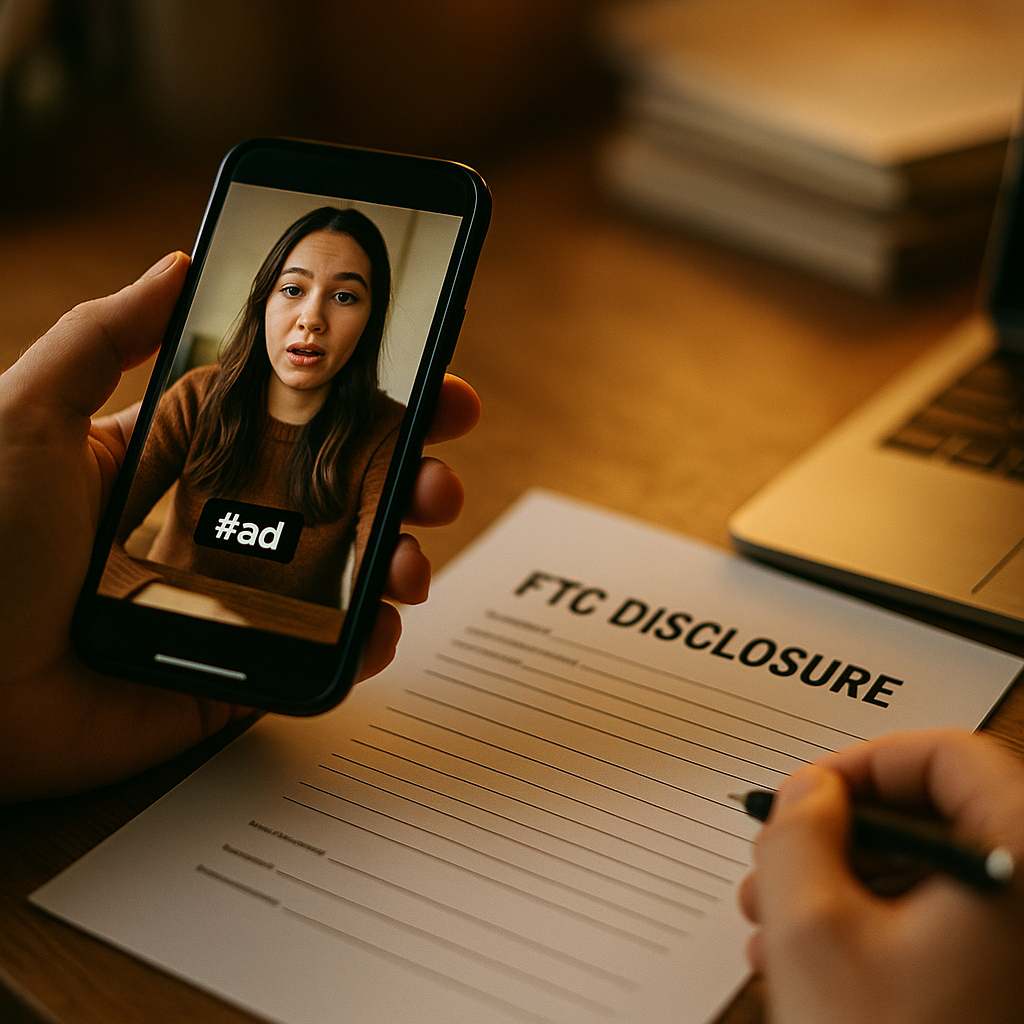
Ninety seconds. That’s roughly how long viewers spend before deciding whether to keep watching a vertical micro-drama episode, and it’s also roughly how long most brands spend thinking about disclosure before greenlighting a branded series. Micro-drama content disclosure isn’t a footnote issue anymore. With platforms like ReelShort, DramaBox, and TikTok’s serialized drama feeds pulling in hundreds of millions of watch hours, the FTC is paying attention to a format built on cliffhangers, not clarity.
Why Episodic Formats Break the Standard Disclosure Playbook
Traditional influencer disclosure guidance assumes a single post, a single caption, a single moment where “#ad” can live. Micro-dramas don’t work that way. A branded episodic series might run eight, twelve, or thirty episodes, each uploaded separately, each surfaced independently by an algorithm that doesn’t care whether a viewer caught episode one.
That’s the structural problem. The FTC’s Endorsement Guides require that a material connection be disclosed clearly and conspicuously in each piece of content where it’s relevant, not buried in a series description or a pinned comment on episode one. If a viewer lands on episode fourteen of a brand-funded romance drama without ever seeing episode one, and there’s no disclosure on that specific episode, the brand has a problem.
A disclosure that only appears once, at the start of a series, functionally disappears the moment a platform’s algorithm starts serving individual episodes out of sequence.
This isn’t theoretical. Vertical drama apps are explicitly designed around non-linear discovery. Recommendation engines surface whichever episode has the highest completion rate for a given user, which means your “part 3 of 20” might be someone’s first exposure to the entire series. Brands that assume a front-loaded disclosure covers the whole run are relying on a viewing pattern that doesn’t match how these platforms actually distribute content.
What Counts as a Branded Episodic Series, Exactly?
The category is broader than it looks. It includes:
- Fully brand-funded micro-dramas where a product or company is the plot engine (a skincare brand bankrolling a revenge-romance arc where the heroine’s glow-up is tied to the product)
- Creator-produced series with embedded brand integrations across multiple episodes, even if only some episodes feature the sponsor
- White-label drama content licensed or co-produced by a brand’s agency and distributed under a creator’s handle
- Platform-native series (TikTok, ReelShort, DramaBox) where brand placement is woven into dialogue or props rather than called out as a separate ad break
Each of these carries the same baseline obligation: if a reasonable viewer wouldn’t otherwise know about the material connection, it needs to be disclosed, and it needs to be disclosed in a way that survives the platform’s distribution logic, not just the creator’s intended narrative structure.
The Per-Episode Disclosure Problem
Here’s where most brand compliance teams get tripped up. Legal reviews one “master” disclosure template, approves it, and assumes it applies across the entire series. But the FTC’s guidance is unambiguous about disclosures needing to be clear in context, not just present somewhere in the metadata.
Practically, that means:
- Every episode featuring brand integration needs its own visible disclosure, not just a series-level tag
- Disclosures embedded only in video descriptions fail the “clear and conspicuous” test on platforms where descriptions are collapsed by default
- Audio-only mentions (“this episode is brought to you by…”) need a matching on-screen text disclosure for viewers watching muted, which is most mobile viewers
- If episodes are later re-cut, clipped, or re-uploaded by fan accounts or aggregator pages, the original disclosure often doesn’t travel with the clip, creating a downstream compliance gap the brand didn’t create but may still be implicated in
That last point matters more than brands realize. Micro-drama content gets chopped into shorts, GIFs, and reaction clips constantly. If your branded episode 7 cliffhanger becomes a standalone 15-second clip with the disclosure stripped out, you’ve got an orphaned piece of sponsored content circulating with no visible connection to the brand. This echoes concerns raised in recent FTC disclosure enforcement signals, where regulators made clear that ignorance of downstream redistribution isn’t a defense.
Binge Culture Makes This Worse, Not Better
Micro-drama platforms are engineered for binge consumption. ReelShort and DramaBox both report that paying users watch dozens of episodes in a single sitting, often unlocking content through micro-transactions. That compressed, rapid-fire viewing pattern means disclosure fatigue sets in fast. A viewer who sees “Paid Partnership” on episode one and then nine more episodes without a repeat disclosure may genuinely forget the content is sponsored by episode ten, especially if the brand integration becomes more subtle as the plot deepens.
The FTC doesn’t grade on viewer memory. It grades on whether disclosure was present and conspicuous at the point of viewing. That’s a format-level design challenge brands need to solve for, not a user-attention problem they can shrug off.
Disclosure fatigue is a UX problem dressed up as a legal technicality, and platforms that monetize binge behavior have little incentive to fix it for you.
Building a Compliance Framework That Actually Holds Up
Brands running or sponsoring episodic creator content need a structured approach, not a one-time legal sign-off. A few things that should be standard in any contract or production brief:
- Episode-level disclosure requirements written into the creator or production contract, specifying placement, duration, and on-screen text minimums for every episode featuring brand integration
- Re-upload and clip provisions requiring disclosure to persist if content is cut down, repurposed, or distributed by third-party pages the creator controls
- Platform-specific formatting since what’s “clear and conspicuous” on YouTube Shorts differs from what works on a dedicated drama app with a paywall overlay
- Periodic audits of live episodes to confirm disclosures weren’t edited out, demonetized, or algorithmically de-prioritized after launch
- A documented approval trail showing legal or compliance review happened before each batch of episodes went live, not retroactively
This is the same operational muscle brands have had to build for other emerging formats. The logic mirrors what’s happening with AI-generated content approval workflows and synthetic voice disclosure requirements, where regulators increasingly expect proof of process, not just a compliant end product.
Worth noting: platform policy and FTC rules aren’t always synchronized. TikTok’s own branded content tools have gone through multiple rolling policy changes recently, and relying solely on a platform’s built-in disclosure toggle doesn’t guarantee FTC compliance. The platform tool satisfies the platform. It doesn’t automatically satisfy federal law.
Who’s Actually Liable When Episode 9 Goes Rogue?
Agencies love to push disclosure liability entirely onto creators. The FTC doesn’t see it that way. Brands can be held directly responsible for creator endorsements they sponsor, and that responsibility doesn’t evaporate because a production agency handled the shoot or a platform handled distribution.
For episodic series specifically, liability gets murkier because multiple parties touch the content: the brand funding it, the creator or production house making it, the platform distributing it, and potentially a talent agency negotiating the deal. When a disclosure fails on episode 9 of 20, regulators will look at who had control over that episode’s final cut and release. If your contract doesn’t clearly assign disclosure responsibility and verification duties, you’re exposed by default, not by choice.
This is consistent with broader enforcement trends. State attorneys general have shown they’re willing to move faster than federal regulators on influencer disclosure cases, a pattern detailed in recent state-level enforcement coverage. Waiting for an FTC complaint before fixing your episodic disclosure process is a reactive strategy in a space that increasingly rewards proactive ones.
For additional grounding, the FTC’s own guidance on endorsements and disclosures remains the primary reference point, and legal teams should be cross-referencing it directly rather than relying on secondhand platform summaries. Industry data from eMarketer’s creator economy research also shows micro-drama ad spend climbing fast enough that regulatory scrutiny was always going to follow the money.
What This Means for Budget and Production Timelines
Compliance isn’t free, and it shouldn’t be treated as an afterthought squeezed into post-production. Building episode-level disclosure review into a production schedule adds time. It also adds cost, since someone (legal, compliance, or a dedicated creator ops person) needs to check every episode before it goes live, not just the pilot.
Brands that bake this into their original budget and timeline avoid the far more expensive alternative: pulling a live series, re-editing a dozen episodes, and managing the reputational fallout of a public FTC inquiry. Treat disclosure review as a production line item, not a legal afterthought, and the economics actually work in your favor. Sprout Social’s creator marketing benchmarks consistently show that brands with documented compliance processes recover faster from platform or regulatory disruptions than those scrambling after the fact.
If you’re greenlighting a branded micro-drama series this quarter, don’t approve a single master disclosure and call it done. Require episode-by-episode disclosure sign-off, build re-upload clauses into every creator contract, and audit live episodes monthly, because the format’s entire business model depends on viewers skipping around, and your compliance process has to account for that reality, not the one you wish existed.
FAQs
Does every episode in a branded micro-drama series need its own disclosure?
Yes. The FTC’s clear and conspicuous standard applies to each piece of content where a material connection is relevant, which means a single series-level disclosure on episode one typically isn’t sufficient if viewers can discover later episodes independently.
Who is legally responsible if a creator removes disclosure from a re-uploaded clip?
Liability often falls on whoever had control over the content and the brand relationship, which can include the brand itself, especially if the contract doesn’t clearly assign responsibility for monitoring downstream clips and re-uploads.
Is a platform’s built-in branded content tag enough to satisfy FTC rules?
Not necessarily. Platform tools satisfy platform policy, but the FTC evaluates whether disclosure was clear and conspicuous to a reasonable viewer, which can require additional on-screen text or audio disclosure beyond a platform’s default labeling feature.
How often should brands audit live episodic content for disclosure compliance?
Monthly audits are a reasonable baseline for active series, with additional spot checks whenever episodes are re-edited, re-uploaded, or repurposed into shorter clips by the creator or third-party accounts.
Does disclosure fatigue in binge-watched series create legal risk?
It can. If a disclosure only appears once early in a series and viewers binge through many episodes without seeing it repeated, regulators may view later episodes as inadequately disclosed, regardless of what appeared in episode one.
Top Influencer Marketing Agencies
The leading agencies shaping influencer marketing in 2026
Agencies ranked by campaign performance, client diversity, platform expertise, proven ROI, industry recognition, and client satisfaction. Assessed through verified case studies, reviews, and industry consultations.
Moburst

-
2

The Shelf
Boutique Beauty & Lifestyle Influencer AgencyA data-driven boutique agency specializing exclusively in beauty, wellness, and lifestyle influencer campaigns on Instagram and TikTok. Best for brands already focused on the beauty/personal care space that need curated, aesthetic-driven content.Clients: Pepsi, The Honest Company, Hims, Elf Cosmetics, Pure LeafVisit The Shelf → -
3

Audiencly
Niche Gaming & Esports Influencer AgencyA specialized agency focused exclusively on gaming and esports creators on YouTube, Twitch, and TikTok. Ideal if your campaign is 100% gaming-focused — from game launches to hardware and esports events.Clients: Epic Games, NordVPN, Ubisoft, Wargaming, Tencent GamesVisit Audiencly → -
4

Viral Nation
Global Influencer Marketing & Talent AgencyA dual talent management and marketing agency with proprietary brand safety tools and a global creator network spanning nano-influencers to celebrities across all major platforms.Clients: Meta, Activision Blizzard, Energizer, Aston Martin, WalmartVisit Viral Nation → -
5

The Influencer Marketing Factory
TikTok, Instagram & YouTube CampaignsA full-service agency with strong TikTok expertise, offering end-to-end campaign management from influencer discovery through performance reporting with a focus on platform-native content.Clients: Google, Snapchat, Universal Music, Bumble, YelpVisit TIMF → -
6

NeoReach
Enterprise Analytics & Influencer CampaignsAn enterprise-focused agency combining managed campaigns with a powerful self-service data platform for influencer search, audience analytics, and attribution modeling.Clients: Amazon, Airbnb, Netflix, Honda, The New York TimesVisit NeoReach → -
7

Ubiquitous
Creator-First Marketing PlatformA tech-driven platform combining self-service tools with managed campaign options, emphasizing speed and scalability for brands managing multiple influencer relationships.Clients: Lyft, Disney, Target, American Eagle, NetflixVisit Ubiquitous → -
8

Obviously
Scalable Enterprise Influencer CampaignsA tech-enabled agency built for high-volume campaigns, coordinating hundreds of creators simultaneously with end-to-end logistics, content rights management, and product seeding.Clients: Google, Ulta Beauty, Converse, AmazonVisit Obviously →