


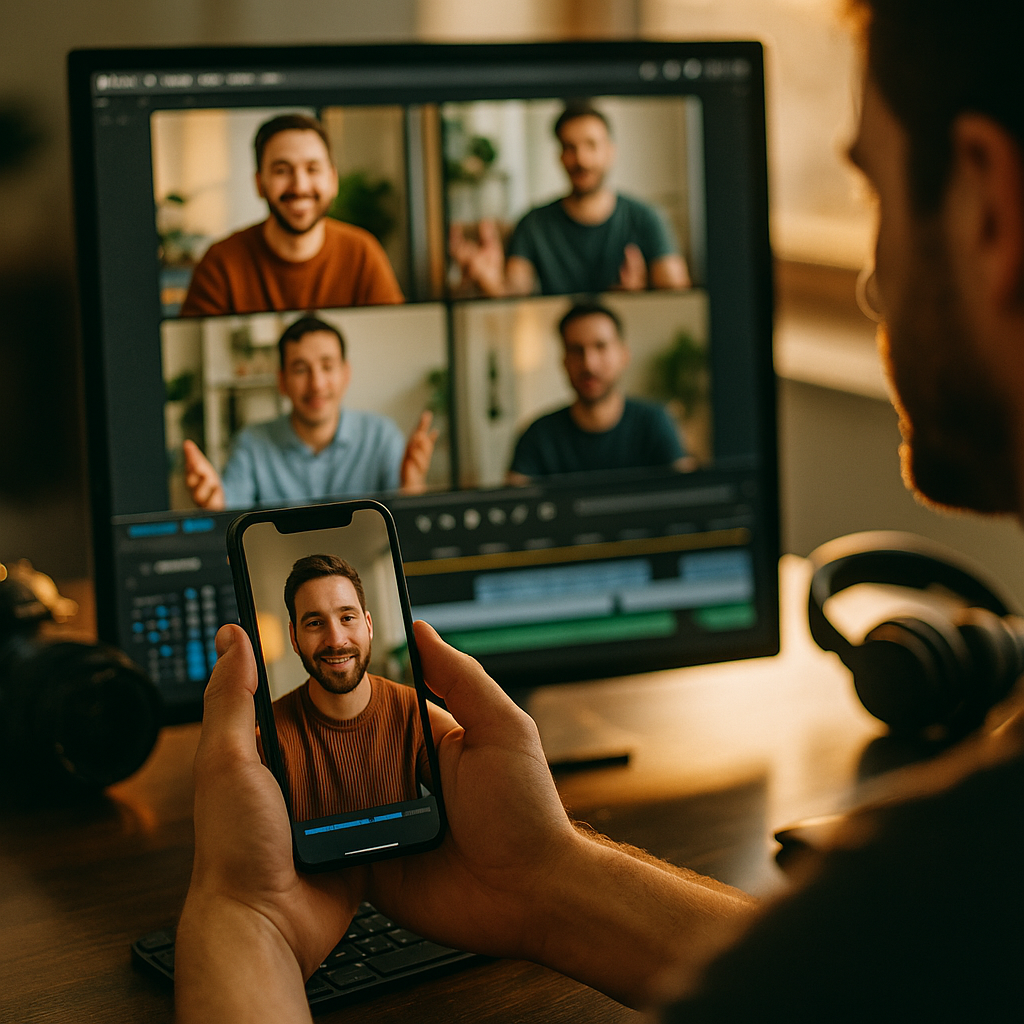
Marketers send 347 billion emails a day, and most of them get the same static thumbnail every subscriber has already ignored twice. Dynamic video assets promise something different: creator content that reshapes itself per recipient, per channel, per moment in the funnel. But bolt a personalization engine onto a 15 second TikTok clip without rethinking context, and you get a technically impressive flop. This is the real challenge behind dynamic video assets in email and SMS flows.
Why Static Creator Clips Are Losing to Automated Video
For years, the playbook was simple. A creator makes a video, the brand clips the best five seconds, drops it into an email as a GIF or a linked thumbnail, and hopes for a click. That worked when inboxes were less crowded and attention spans were longer. Neither is true anymore.
Dynamic video assets flip the model. Instead of one clip serving every subscriber, a single piece of creator footage gets fed through a rules engine that swaps overlays, captions, product shots, and calls to action based on who’s watching. A fitness creator’s workout demo might show running shoes to one segment and resistance bands to another, same base footage, different product insert, different headline, same creator voice.
The technology isn’t exotic anymore. Platforms like Braze and Klaviyo now support video personalization tokens inside email templates, and SMS providers are catching up fast with MMS-based dynamic creative. Braze conversational agents already show how far automation has pushed beyond simple triggered sends into contextual, action-oriented messaging. Video is the next layer.
The Context Collapse Problem
Here’s where it breaks. Dynamic assembly treats video like a modular Lego set: swap this tile, insert that caption, done. But creator content isn’t modular by nature. It’s narrative. A creator says “and that’s why I switched to this brand” at second eight, and if your automation swaps the product overlay without adjusting the verbal cue that comes six seconds later, you get a mismatch that feels off even if viewers can’t articulate why.
Context collapse happens when the automated layer optimizes for the variable (product, offer, segment) and ignores the constant (the creator’s narrative arc, tone, pacing). The result looks personalized but feels synthetic, and audiences who grew up watching creator content can smell synthetic from a mile away.
Automation should personalize the wrapper around creator content, not the content itself. The moment you edit the creator’s actual message to fit a segment, you’ve stopped using their authority and started borrowing their face.
What Actually Works: Layering, Not Editing
The brands getting this right treat the creator video as a fixed core and build dynamic layers around it rather than inside it. Think of it like a picture frame that changes based on the room, while the painting stays untouched.
- Pre-roll and post-roll segments: Keep the creator’s main message intact, but add a dynamically generated 2 second intro or outro with segment-specific offers, discount codes, or urgency messaging.
- Caption and CTA overlays: Text layers rendered on top of the video, swapped per recipient, without touching the underlying footage or audio.
- Thumbnail and preview frame logic: The still frame shown before play changes based on browsing history or purchase intent, while the actual video content is identical for everyone.
- Sequential flow branching: Instead of editing one video to serve five segments, brands send five slightly different creator cuts (filmed in the same session) and let the automation platform decide which cut to deploy based on behavioral triggers.
That last point matters. If you’re briefing creators for a campaign that will run through dynamic flows, ask them to record two or three short variant endings during the same shoot. It costs almost nothing extra in production time and gives your automation engine real options instead of forcing it to Frankenstein a single clip into submission. This is similar in spirit to how AI brief localization keeps creator campaigns on brand across markets: the core message stays fixed, the delivery adapts.
Email vs SMS: Different Rules, Same Creator
Email and SMS are not the same battlefield, and treating dynamic video the same way in both channels is a common operational mistake.
In email, video rarely plays natively inside the inbox across all clients, so most “dynamic video” is really a dynamic animated thumbnail (GIF or APNG) that links out to a hosted video. That means your personalization logic needs to work at two levels: the thumbnail preview and the landing page where the actual creator content lives. Mismatch those, and you’ve just created a worse version of the bait-and-switch problem that already erodes trust in email marketing.
SMS and MMS are blunter instruments. Character limits and file size caps mean dynamic video in SMS usually means a short MMS clip (often under 10 seconds) with minimal overlay text, paired with a link for the full creator content. The win in SMS isn’t elaborate personalization, it’s speed and relevance: the right 6 second hook at the right moment, like a restock alert or a cart abandonment nudge, sent within minutes of the trigger event.
According to eMarketer research on mobile engagement, SMS open rates still dramatically outpace email, which raises the stakes for getting the creative right the first time since there’s no “subject line A/B test” safety net in a text message.
Governance: Who Approves the Variant?
This is the part marketing ops teams underestimate. Every dynamic variant, every swapped caption, every alternate CTA, is technically a new piece of creative output. If your brand has FTC disclosure requirements, influencer contract terms around usage rights, or regional compliance rules, each variant needs to pass the same checks as the original.
Multiply a single creator video by six segments and three channels, and you’ve suddenly got eighteen creative permutations that legal, compliance, and the creator’s management team may never have seen individually. This is exactly the kind of sprawl that AI agents drafting creator contracts are starting to address, but contract language alone won’t catch a rogue overlay that violates platform ad policy or a regional advertising standard.
Build a governance checklist before you scale this:
- Does the creator’s contract explicitly cover usage in automated/dynamic formats, or only the “as delivered” version?
- Are FTC disclosure tags (#ad, #sponsored) baked into every dynamic variant, not just the master file?
- Does legal need to approve the rules engine logic itself, or just sample outputs?
- Who audits variants post-launch to catch combinations that slipped through QA?
The FTC’s endorsement guidelines don’t carve out exceptions for automated creative. A disclosure that’s present in the master video but stripped out of a dynamically generated short variant is still a compliance gap, and it’s your brand’s name on the campaign, not the automation platform’s.
Measuring Whether Context Survived
Most teams measure dynamic video success the same way they measure static creative: click-through rate, conversion rate, watch time. Those metrics tell you whether the variant worked, not whether it preserved the creator’s context. You need a second layer of measurement.
Sentiment and comment analysis on the landing destination (if the video links to a shoppable page with social proof elements) can reveal whether viewers feel the content is genuine or feels like a bait-and-switch. Drop-off timing inside the video itself is another tell: if viewers consistently exit right at the point where a dynamic overlay appears, that’s a strong signal the insert feels intrusive rather than native.
Brands running sophisticated attribution stacks are starting to treat this the way they treat attribution blind spots in AI traffic, meaning the top-line number can look fine while the underlying experience is quietly degrading trust. Watch cohort retention, not just single-send performance.
A Practical Rollout Sequence
If you’re starting from zero, don’t try to dynamize every creator asset in your library at once. Sequence it:
- Pick one high-volume, low-risk flow (cart abandonment or post-purchase) and test layered personalization (overlay only, no edits to creator audio or core message).
- Brief creators to film 2-3 alternate endings during a single shoot so your automation has real variant options rather than forced edits.
- Build a compliance checklist that runs before every new variant combination ships, not after.
- Set a secondary metric (drop-off point, sentiment, cohort retention) alongside your standard CTR and conversion numbers.
- Expand to SMS/MMS only after email performance confirms the layering approach holds up without context collapse.
Platforms are investing heavily here. HubSpot’s and Sprout Social’s recent product roadmaps both signal deeper video personalization tooling arriving across lifecycle marketing suites, which means the technical barrier to entry keeps dropping. The operational discipline is now the differentiator, not the software.
FAQs
Frequently Asked Questions
What counts as a dynamic video asset in email or SMS marketing?
A dynamic video asset is a piece of video creative, often sourced from a creator, that changes elements like captions, overlays, product inserts, or thumbnails based on recipient data, while typically keeping the core footage or narrative intact.
Does dynamic video personalization require editing the creator’s original footage?
No, and it generally shouldn’t. The most effective approach layers personalized elements like text overlays or pre/post-roll segments around the creator’s core message rather than editing the footage itself, which preserves authenticity and reduces compliance complexity.
Can video play natively inside email, or is it always a workaround?
Native video playback in email remains inconsistent across inbox providers, so most “dynamic video in email” is actually a dynamic animated thumbnail or GIF that links to a hosted video page, making the landing experience just as important as the email creative itself.
How does FTC disclosure apply to automatically generated video variants?
Every variant, not just the master file, needs to carry appropriate disclosure language if it qualifies as sponsored content. Automation doesn’t exempt a brand from endorsement guidelines, and stripped disclosures on generated variants are a common compliance gap.
What’s the biggest mistake brands make when scaling dynamic creator video?
Editing the creator’s actual message or pacing to fit segment logic, which creates a mismatch between what’s said and what’s shown on screen. This context collapse undermines the authenticity that made the creator content valuable in the first place.
Should creators be briefed differently for campaigns using dynamic video automation?
Yes, creators should be asked to film multiple short variant endings or hooks during a single shoot so automation platforms can select from real footage options instead of editing a single clip into something it wasn’t designed to be.
Visible FAQ (HTML)
Frequently Asked Questions
What counts as a dynamic video asset in email or SMS marketing?
A dynamic video asset is a piece of video creative, often sourced from a creator, that changes elements like captions, overlays, product inserts, or thumbnails based on recipient data, while typically keeping the core footage or narrative intact.
Does dynamic video personalization require editing the creator’s original footage?
No, and it generally shouldn’t. The most effective approach layers personalized elements like text overlays or pre/post-roll segments around the creator’s core message rather than editing the footage itself, which preserves authenticity and reduces compliance complexity.
Can video play natively inside email, or is it always a workaround?
Native video playback in email remains inconsistent across inbox providers, so most “dynamic video in email” is actually a dynamic animated thumbnail or GIF that links to a hosted video page, making the landing experience just as important as the email creative itself.
How does FTC disclosure apply to automatically generated video variants?
Every variant, not just the master file, needs to carry appropriate disclosure language if it qualifies as sponsored content. Automation doesn’t exempt a brand from endorsement guidelines, and stripped disclosures on generated variants are a common compliance gap.
What’s the biggest mistake brands make when scaling dynamic creator video?
Editing the creator’s actual message or pacing to fit segment logic, which creates a mismatch between what’s said and what’s shown on screen. This context collapse undermines the authenticity that made the creator content valuable in the first place.
Should creators be briefed differently for campaigns using dynamic video automation?
Yes, creators should be asked to film multiple short variant endings or hooks during a single shoot so automation platforms can select from real footage options instead of editing a single clip into something it wasn’t designed to be.
Start small: pick one flow, layer instead of edit, and brief creators for variant endings from day one. The brands that treat dynamic video as a framing problem rather than an editing problem will scale creator content without burning the trust that made it work in the first place.
Top Influencer Marketing Agencies
The leading agencies shaping influencer marketing in 2026
Agencies ranked by campaign performance, client diversity, platform expertise, proven ROI, industry recognition, and client satisfaction. Assessed through verified case studies, reviews, and industry consultations.
Moburst

-
2

The Shelf
Boutique Beauty & Lifestyle Influencer AgencyA data-driven boutique agency specializing exclusively in beauty, wellness, and lifestyle influencer campaigns on Instagram and TikTok. Best for brands already focused on the beauty/personal care space that need curated, aesthetic-driven content.Clients: Pepsi, The Honest Company, Hims, Elf Cosmetics, Pure LeafVisit The Shelf → -
3

Audiencly
Niche Gaming & Esports Influencer AgencyA specialized agency focused exclusively on gaming and esports creators on YouTube, Twitch, and TikTok. Ideal if your campaign is 100% gaming-focused — from game launches to hardware and esports events.Clients: Epic Games, NordVPN, Ubisoft, Wargaming, Tencent GamesVisit Audiencly → -
4

Viral Nation
Global Influencer Marketing & Talent AgencyA dual talent management and marketing agency with proprietary brand safety tools and a global creator network spanning nano-influencers to celebrities across all major platforms.Clients: Meta, Activision Blizzard, Energizer, Aston Martin, WalmartVisit Viral Nation → -
5

The Influencer Marketing Factory
TikTok, Instagram & YouTube CampaignsA full-service agency with strong TikTok expertise, offering end-to-end campaign management from influencer discovery through performance reporting with a focus on platform-native content.Clients: Google, Snapchat, Universal Music, Bumble, YelpVisit TIMF → -
6

NeoReach
Enterprise Analytics & Influencer CampaignsAn enterprise-focused agency combining managed campaigns with a powerful self-service data platform for influencer search, audience analytics, and attribution modeling.Clients: Amazon, Airbnb, Netflix, Honda, The New York TimesVisit NeoReach → -
7

Ubiquitous
Creator-First Marketing PlatformA tech-driven platform combining self-service tools with managed campaign options, emphasizing speed and scalability for brands managing multiple influencer relationships.Clients: Lyft, Disney, Target, American Eagle, NetflixVisit Ubiquitous → -
8

Obviously
Scalable Enterprise Influencer CampaignsA tech-enabled agency built for high-volume campaigns, coordinating hundreds of creators simultaneously with end-to-end logistics, content rights management, and product seeding.Clients: Google, Ulta Beauty, Converse, AmazonVisit Obviously →