


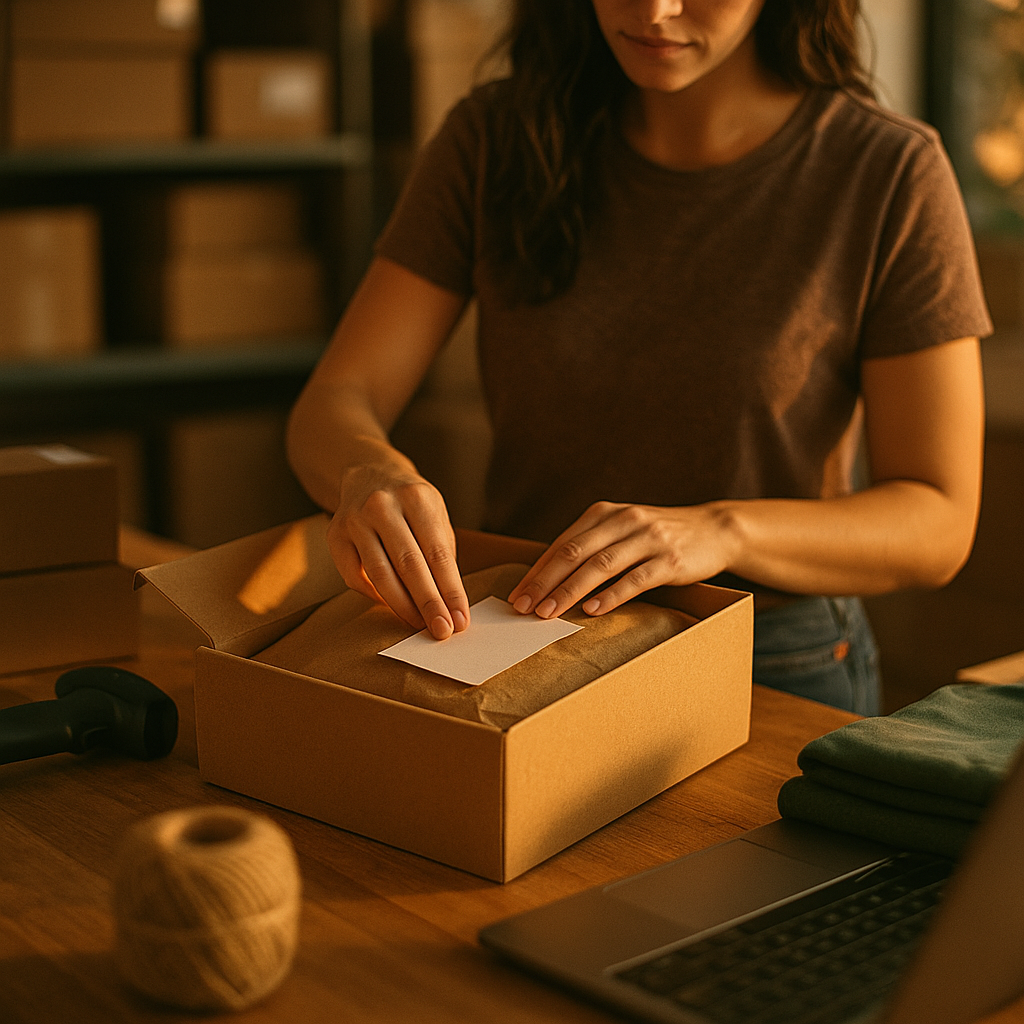
Orders ship in silence. Trust doesn’t. A single pack an order with me video from a small apparel brand can outperform a paid ad by 3x on watch time, according to internal benchmarks shared by several DTC operators on TikTok Shop. Why? Because shoppers no longer trust product shots. They trust process. And the pack an order with me format hands them exactly that: unscripted proof that a real person, in a real warehouse, is handling their stuff with care.
This isn’t a packaging aesthetic trend anymore. It’s become a conversion lever that operations and marketing teams are fighting over who gets to own.
Why Fulfillment Footage Converts Better Than Product Shots
Here’s the uncomfortable truth for brand teams: your polished product photography is competing with a stranger’s iPhone video of boxes on a folding table, and the stranger is winning. Pack an order with me content taps into a psychological shortcut. Viewers equate visible process with accountability. If a brand is willing to show the messy middle (the tape gun, the tissue paper, the handwritten thank-you note) it signals nothing is hidden. That reads as honesty, even if the footage is lightly staged.
This mirrors what’s already working in adjacent formats. Behind-the-scenes clips have proven that raw footage sells better than finished ads because it removes the perceived gap between marketing and reality. Pack an order with me takes that same logic and applies it to the one moment every customer actually waits for: the box showing up at their door.
Shoppers aren’t asking “does this product work.” They’re asking “can I trust the people selling it to me.” Fulfillment footage answers the second question better than any testimonial.
The Data Behind the Trend
Search interest for “packing orders” and “small business packing” content has climbed steadily on TikTok and Pinterest, and Sprout Social has flagged “process transparency” as one of the top content categories driving engagement for small and mid-size brands. Meanwhile, eMarketer research on creator-led commerce consistently finds that authenticity signals, not production value, correlate most strongly with purchase intent among Gen Z and millennial shoppers.
What does that mean operationally? It means your fulfillment center, the part of the business you’ve probably never thought of as a content studio, is sitting on an asset. Every pack job is a potential trust-building clip. The brands capitalizing on this aren’t hiring new creators. They’re pointing a phone at existing staff.
What Actually Makes a Pack an Order With Me Video Work
Not every warehouse clip performs. The format has a loose but consistent structure that separates the ones that build trust from the ones that just look like filler content.
- A visible human. Hands, a voice, maybe a face. Faceless conveyor-belt footage reads as corporate and loses the trust effect entirely.
- Unedited pacing, with light cuts. Viewers want to feel like they’re watching real time, even if you’ve trimmed dead air. Over-editing kills the authenticity signal.
- Visible quality control. Checking an item for defects, confirming the right size, double-checking the address. These micro-moments are doing more conversion work than any voiceover.
- A small narrative beat. A note for the customer, a sticker, a comment about the order (“this is for someone’s birthday, I can tell from the gift wrap request”). This is the same instinct behind storytime formats that use narrative hooks to lower ad CPA. Fulfillment content benefits from the same micro-storytelling.
- Sound design that matches the mood. Tape ripping, paper crinkling, a stamp thudding down. Brands borrowing from ASMR unboxing scripts and scoring sound cues deliberately are seeing longer watch times on pack-along content too.
Skip any one of these and the video still “performs” in a vanity-metric sense, views happen regardless. But the trust transfer, the part that actually moves someone from browsing to buying, weakens fast without the human and narrative elements.
Who Should Actually Be Filming This?
This is where most brands get the operational model wrong. Marketing teams often try to recreate pack an order with me content in a studio, with props and a hired creator pretending to fulfill an order. It almost never lands. Audiences can tell the difference between someone performing fulfillment and someone actually doing their job on camera.
The better model: equip real fulfillment staff, even just one or two who are comfortable on camera, with a phone mount and a simple shot list. Keep it low-pressure. The goal isn’t cinematic quality, it’s proof of process. Brands running multi-angle product content have already learned this lesson the hard way, as detailed in multi angle product demos coverage: production value and authenticity sit on a trade-off curve, and for fulfillment footage specifically, authenticity wins almost every time.
Risk and Compliance: The Part Brand Teams Skip
Here’s where this gets less fun and more necessary. Fulfillment footage isn’t risk-free, and legal or compliance teams should be looped in before this becomes a weekly series.
First, customer privacy. Shipping labels show full names and addresses. A single unblurred label in a viral video is a data exposure problem, and depending on jurisdiction, a potential compliance issue under guidance from bodies like the ICO in the UK or general consumer protection expectations enforced by the FTC in the US. Blur labels. Every time. No exceptions, no “it was just a quick clip.”
Second, product accuracy. If the footage shows a packing process that doesn’t match what actually happens at scale (say, a handwritten note that’s only added for the one order being filmed), that’s a misrepresentation risk. Regulators and increasingly savvy audiences are both watching for staged-but-presented-as-standard practices. This connects to the same scrutiny that’s shaped returns proof demo videos, where brands show refund processes to build trust. The standard is the same: show what actually happens, every time, or don’t show it at all.
If your pack an order with me video shows a process your customer service team can’t actually guarantee at scale, you’re not building trust. You’re setting up a future complaint.
Third, platform disclosure rules still apply even when the content feels like internal footage. If a creator or employee is incentivized, or if the content functions as advertising, Meta’s and TikTok’s branded content policies may require disclosure tags. Don’t assume “it’s just our warehouse” exempts you.
Building This Into a Repeatable Program, Not a One-Off Stunt
The brands getting real ROI from this format aren’t posting one viral pack-along clip and hoping it repeats. They’re building a lightweight content pipeline around fulfillment.
That typically looks like: a rotating cast of two to four staff members who are comfortable on camera, a simple weekly or biweekly filming cadence tied to actual order volume (not staged for content), and a minimal edit process that preserves the raw feel while trimming genuinely dead time. Some brands are layering in the same episodic thinking covered in episodic creator series content, where a recurring cast builds loyalty across a format rather than chasing one-off views. A “meet the packer” angle, where the same one or two staff become recognizable faces over weeks, compounds the trust effect because repeat viewers start to recognize and root for specific people.
Operationally, this needs a owner. Is it social media, is it ops, is it customer experience? The honest answer is it should be a shared workflow: ops provides access and timing, marketing provides light editing and distribution strategy, and legal signs off on the label-blurring and disclosure protocol before anything goes live. Treat it like any other UGC pipeline, with the same rigor applied to repurposing UGC without reach penalties, because fulfillment footage is still user-generated in spirit even when staff-produced.
Measuring What Actually Matters
Views and likes are vanity here. The metrics that matter are post-purchase: are customers citing the fulfillment video in reviews, is support ticket volume around “where’s my order” anxiety dropping, and is there a measurable lift in repeat purchase rate among customers exposed to the content versus those who weren’t. A handful of DTC brands running this as a controlled test have reported single-digit percentage lifts in repeat purchase rate, modest but real, and notably cheaper to produce than paid creative.
Track it like any other content investment: attribute view-through conversions where platform tools allow (TikTok Shop and Meta both offer this), and survey new customers on what convinced them to buy. If “I saw how carefully they packed orders” shows up in qualitative feedback, you’ve found your proof of concept.
Next Step
Start small: film one real fulfillment session this week with a staff member who’s willing, blur every label, and post it without over-editing. If it outperforms your last three paid ads on watch time, you’ve found a content line worth building a real program around.
FAQs
What is a pack an order with me video?
It’s a format where a brand films the actual process of packing and shipping a customer order, typically showing hands-on fulfillment, quality checks, and small personal touches like notes or stickers, to build trust through transparency rather than polished product marketing.
Does this format actually improve sales, or just engagement?
Early data from DTC brands running controlled tests shows measurable lifts in repeat purchase rate and reduced “where’s my order” support tickets, suggesting the trust effect extends beyond vanity metrics into real post-purchase behavior.
Who should film pack an order with me content, marketing or operations staff?
Operations staff who actually fulfill orders perform best on camera because audiences can detect staged fulfillment. The ideal model pairs real fulfillment staff with light marketing support for editing and distribution.
What are the biggest compliance risks with fulfillment footage?
Unblurred shipping labels exposing customer data, showing packing practices that don’t match standard operations, and missing branded content disclosures when staff or creators are incentivized to post.
How often should a brand post this type of content?
A weekly or biweekly cadence tied to real order volume works better than daily posting, which risks feeling staged. Consistency with a recognizable cast of staff builds more trust than frequency alone.
FAQs
Top Influencer Marketing Agencies
The leading agencies shaping influencer marketing in 2026
Agencies ranked by campaign performance, client diversity, platform expertise, proven ROI, industry recognition, and client satisfaction. Assessed through verified case studies, reviews, and industry consultations.
Moburst

-
2

The Shelf
Boutique Beauty & Lifestyle Influencer AgencyA data-driven boutique agency specializing exclusively in beauty, wellness, and lifestyle influencer campaigns on Instagram and TikTok. Best for brands already focused on the beauty/personal care space that need curated, aesthetic-driven content.Clients: Pepsi, The Honest Company, Hims, Elf Cosmetics, Pure LeafVisit The Shelf → -
3

Audiencly
Niche Gaming & Esports Influencer AgencyA specialized agency focused exclusively on gaming and esports creators on YouTube, Twitch, and TikTok. Ideal if your campaign is 100% gaming-focused — from game launches to hardware and esports events.Clients: Epic Games, NordVPN, Ubisoft, Wargaming, Tencent GamesVisit Audiencly → -
4

Viral Nation
Global Influencer Marketing & Talent AgencyA dual talent management and marketing agency with proprietary brand safety tools and a global creator network spanning nano-influencers to celebrities across all major platforms.Clients: Meta, Activision Blizzard, Energizer, Aston Martin, WalmartVisit Viral Nation → -
5

The Influencer Marketing Factory
TikTok, Instagram & YouTube CampaignsA full-service agency with strong TikTok expertise, offering end-to-end campaign management from influencer discovery through performance reporting with a focus on platform-native content.Clients: Google, Snapchat, Universal Music, Bumble, YelpVisit TIMF → -
6

NeoReach
Enterprise Analytics & Influencer CampaignsAn enterprise-focused agency combining managed campaigns with a powerful self-service data platform for influencer search, audience analytics, and attribution modeling.Clients: Amazon, Airbnb, Netflix, Honda, The New York TimesVisit NeoReach → -
7

Ubiquitous
Creator-First Marketing PlatformA tech-driven platform combining self-service tools with managed campaign options, emphasizing speed and scalability for brands managing multiple influencer relationships.Clients: Lyft, Disney, Target, American Eagle, NetflixVisit Ubiquitous → -
8

Obviously
Scalable Enterprise Influencer CampaignsA tech-enabled agency built for high-volume campaigns, coordinating hundreds of creators simultaneously with end-to-end logistics, content rights management, and product seeding.Clients: Google, Ulta Beauty, Converse, AmazonVisit Obviously →