


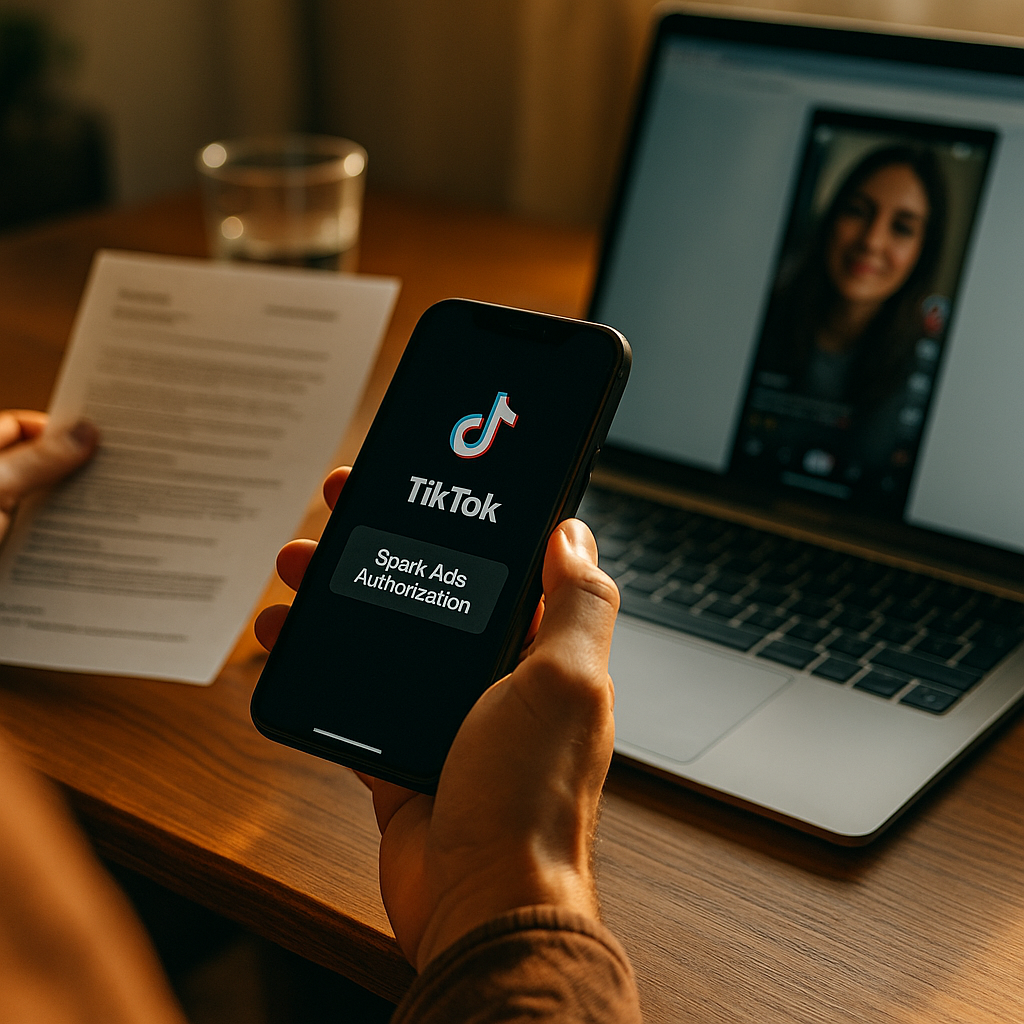
TikTok’s own benchmarks show Spark Ads can drive a 134% higher completion rate than standard in-feed ads, yet most brands still run boosted content through the wrong handle, the wrong authorization window, or the wrong bid strategy. If your TikTok Spark Ads campaigns are underperforming, the problem usually isn’t the creative. It’s the mechanics behind it.
Spark Ads let you boost organic posts, either your own branded content or creator videos with proper authorization, without losing the comments, likes, and shares already attached to the post. That social proof matters. A boosted video with 40,000 organic views and a wall of comments reads as trustworthy in a way a cold ad never will. But getting the format right takes more than clicking “promote.”
Why Spark Ads Outperform Standard In-Feed Placements
Regular TikTok ads run from a brand’s ad account with zero social history. Viewers see an ad, full stop. Spark Ads run from a real handle, either the brand’s own verified account or a creator’s, and they carry that account’s engagement history into the paid placement. The algorithm treats this differently too: Spark Ads can pull from the creator’s existing audience signals, which often improves relevance scoring and lowers delivery costs.
The practical result is a lower cost per acquisition. Brands running performance campaigns through TikTok’s Smart+ and Spark Ads combination regularly report CPA reductions in the 15% to 30% range compared to identical creative run as standard in-feed ads, based on internal case studies TikTok has published through its TikTok Ads platform. Your mileage will vary by vertical and funnel stage, but the directional pattern holds across most categories we track.
Boosting content from a creator’s handle preserves the social proof that makes the ad feel native, and that authenticity is doing real work on your CPA, not just your vanity metrics.
Getting Creator Authorization Right (This Is Where Most Programs Break)
You cannot boost a creator’s video without their explicit authorization through TikTok’s Creator Marketplace or a direct Spark Ads Authorization Code. Skip this step and you’re exposed to takedown requests, strained creator relationships, and potential platform penalties. Here’s the workflow that actually holds up operationally:
- Request the authorization code during contract negotiation, not after the content goes live. Build it into your creator brief as a standard deliverable alongside the video itself.
- Set the authorization window deliberately. TikTok allows codes valid for 30 days up to a full year. Shorter windows give creators more control and often make them more willing to sign off quickly; longer windows reduce your admin overhead for always-on campaigns.
- Centralize code storage. If you’re running creator programs across multiple agencies or in-house teams, a shared tracker (even a simple spreadsheet tied to your DAM) prevents the embarrassing scenario of a code expiring mid-flight on a campaign that’s finally hitting its stride.
- Clarify usage rights in the contract, not just the platform settings. Spark Ads authorization governs paid boosting on TikTok, but your legal team should separately confirm whether you can repurpose the footage elsewhere.
Pricing for authorization varies widely. Some creators bundle it into their standard rate; others charge a separate fee, often 10% to 25% on top of the content fee, for granting boost rights. If you’re negotiating pay structures across a roster of creators, it helps to benchmark against established frameworks like the ones outlined in our creator pay models guide, which breaks down flat fee, commission, and hybrid structures that map well onto Spark Ads negotiations too.
Should You Boost From the Brand Handle or the Creator Handle?
This is the question that trips up more media buyers than anything else. There’s no universal answer, but there is a useful decision framework.
Boost from the creator’s handle when the goal is top-of-funnel trust building, when you’re targeting cold audiences who’ve never heard of your brand, or when the creative itself leans heavily on the creator’s personal credibility (a dermatologist reviewing skincare, a finance creator breaking down a product). The authenticity signal is the whole point.
Boost from the brand handle when you’re retargeting warm audiences who already know you, when you need the ad to drive directly to a product page with your own pixel tracking fully intact, or when you’re running a multi-creator campaign and want consistent attribution under one account for easier reporting. Branded content ads (a Spark Ads variant specifically for brand-boosted creator content) can split the difference, letting you run the creator’s video from your own ad account while still tagging the original creator.
Building the CPA-Reducing Bid Strategy
Spark Ads perform best when paired with the right campaign objective and bidding approach. A few operational notes from campaigns that have actually moved CPA in the right direction:
Start with Lowest Cost bidding during the learning phase, typically the first 50 conversions or so, before switching to Cost Cap once you have enough data to set a realistic target. Jumping straight to an aggressive Cost Cap on a brand-new Spark Ad almost always chokes delivery, because the algorithm hasn’t yet learned which audience segments the boosted creator content resonates with.
Run multiple creator videos as Spark Ads within the same ad group rather than isolating each one into its own campaign. TikTok’s delivery system optimizes faster with more creative variety feeding the same optimization event, and you’ll identify your top performer within days instead of weeks.
Campaigns that combine three to five Spark Ads from different creator handles in one ad group typically reach stable CPA faster than single-creative campaigns, because the algorithm has more signal to work with during the learning phase.
Don’t ignore Smart+ for performance campaigns either. TikTok’s automated campaign type increasingly favors Spark Ads as inputs because the organic engagement data gives the machine learning model richer signal than a cold ad asset. Feeding it boosted creator content rather than brand-only creative has become one of the more reliable levers for budget-constrained teams trying to hit CPA targets without constant manual optimization.
Creative Selection: What Actually Earns the Boost
Not every piece of organic content deserves paid distribution. Before you spend a dollar boosting, look at the first 48 hours of organic performance. Videos with above-average watch-through rate and a comment-to-view ratio higher than your account norm are the ones worth boosting; everything else is a coin flip.
A few creative patterns that have held up well across verticals:
- Unscripted product demos that look native to the creator’s existing content style, not obviously branded.
- Videos with a clear hook in the first two seconds and a specific, nameable product benefit stated out loud (captions alone don’t carry enough weight on sound-on platforms like TikTok).
- Content that already generated organic comments asking “where can I buy this” or similar purchase-intent signals. That’s as close to a pre-qualified ad as you’ll find.
If you’re sourcing creators at volume, especially nano and micro tiers, pairing your seeding strategy with a structured boost pipeline matters more than most brands realize. Our nano creator seeding playbook covers how to build the pipeline that feeds your Spark Ads funnel with enough raw organic content to choose from.
Measurement: Attribution Gets Messier With Spark Ads
Boosted creator content introduces an attribution wrinkle that pure brand-account ads don’t have. Because the post lives on the creator’s profile and may continue earning organic engagement during the paid flight, your reporting needs to separate paid-driven conversions from residual organic lift. TikTok’s Ads Manager does break this out, but only if you’ve set up conversion tracking correctly through the TikTok Pixel or Events API before the campaign launches, not after.
Watch for these common measurement traps:
- Duplicate counting when the same creator video is boosted simultaneously by both the creator’s own promotional spend and your brand’s Spark Ads, which happens more often than teams expect when affiliate and paid media teams don’t coordinate.
- View-through attribution inflation on campaigns with long click-through windows. Tighten your attribution window if you’re seeing CPA numbers that look suspiciously good.
- Cross-platform leakage when the same creator content also runs as a TikTok Shop video, which complicates whether a sale should be credited to the Spark Ad or the shop’s own ranking algorithm. If you’re running TikTok Shop alongside Spark Ads, it’s worth reviewing how showcase tab ranking interacts with paid boosts, since both compete for some of the same visibility signals.
Benchmark your Spark Ads CPA against industry data where you can. eMarketer’s social ad spend research and Statista’s platform performance datasets both offer useful external reference points for whether your numbers are actually competitive or just look good in isolation. Internal trend lines matter more, but external benchmarking keeps you honest about where you stand against category norms, something Sprout Social’s social media benchmark reports also track well for cross-platform comparison.
Compliance Still Matters, Even on a Fast-Moving Platform
Disclosure requirements don’t disappear because content is boosted rather than organic. The FTC’s endorsement guidelines apply equally to paid amplification of creator content, and TikTok’s own branded content toggle should be enabled on any Spark Ad built from sponsored material. Review the FTC’s endorsement guidance before scaling any program that relies heavily on creator-handle boosting, particularly if you’re running in regulated categories like finance, health, or supplements where scrutiny is higher.
Scaling the Program Without Losing Control
Once you’ve found a formula that works, the temptation is to boost everything. Resist it. A disciplined Spark Ads program boosts selectively, based on organic performance thresholds, not on creator seniority or contract size. A nano creator’s video with strong early engagement deserves a bigger boost budget than a mid-tier influencer’s underperforming post, full stop.
Build a standing operating rhythm: review organic performance weekly, greenlight boost candidates against a fixed threshold (say, top 20% of watch-through rate within your account), and rotate creative into ad groups on a two-week cycle so the algorithm always has fresh signal. Static creative decays fast on TikTok, usually within 10 to 14 days before frequency fatigue sets in and CPA starts climbing again.
For brands running live commerce alongside Spark Ads, timing coordination matters too. Boosting a creator’s pre-live teaser video right before a scheduled livestream can meaningfully lift live viewership, a tactic worth pairing with the scheduling guidance in our live shopping timing guide.
FAQs
What is the difference between Spark Ads and regular TikTok in-feed ads?
Spark Ads boost an existing organic post, either the brand’s own or an authorized creator’s, keeping the original likes, comments, and shares intact. Regular in-feed ads run as fresh content from the ad account with no prior engagement history attached.
Do I need creator permission to run Spark Ads on their content?
Yes. You need an explicit TikTok Spark Ads Authorization Code from the creator before boosting their video. Running paid spend behind unauthorized content violates TikTok’s policies and can result in takedowns or account penalties.
How long does a Spark Ads authorization code last?
Creators can set authorization windows anywhere from 30 days to a full year. Shorter windows give creators more control, while longer windows reduce administrative overhead for brands running always-on campaigns.
Does boosting from a creator handle actually lower CPA?
In most documented cases, yes. The retained social proof and algorithmic relevance signals from an established creator account tend to produce stronger engagement and lower delivery costs than identical creative run as a cold brand ad, though results vary by vertical and audience.
Can I use Spark Ads with TikTok Shop content?
Yes, Spark Ads can boost TikTok Shop videos, but measurement gets more complex since organic shop ranking and paid attribution can overlap. Set up clean conversion tracking before launch to avoid double counting sales.
What creative should I prioritize for boosting?
Prioritize organic posts that already show above-average watch-through rate and a higher-than-normal comment-to-view ratio within the first 48 hours. Those early signals are the strongest predictor of paid performance.
Next step: Pull your last 90 days of organic creator content, rank it by watch-through rate and comment-to-view ratio, and run a two-week Spark Ads test on your top five posts before committing further budget. The data will tell you faster than any benchmark which creators are worth boosting at scale.
Top Influencer Marketing Agencies
The leading agencies shaping influencer marketing in 2026
Agencies ranked by campaign performance, client diversity, platform expertise, proven ROI, industry recognition, and client satisfaction. Assessed through verified case studies, reviews, and industry consultations.
Moburst

-
2

The Shelf
Boutique Beauty & Lifestyle Influencer AgencyA data-driven boutique agency specializing exclusively in beauty, wellness, and lifestyle influencer campaigns on Instagram and TikTok. Best for brands already focused on the beauty/personal care space that need curated, aesthetic-driven content.Clients: Pepsi, The Honest Company, Hims, Elf Cosmetics, Pure LeafVisit The Shelf → -
3

Audiencly
Niche Gaming & Esports Influencer AgencyA specialized agency focused exclusively on gaming and esports creators on YouTube, Twitch, and TikTok. Ideal if your campaign is 100% gaming-focused — from game launches to hardware and esports events.Clients: Epic Games, NordVPN, Ubisoft, Wargaming, Tencent GamesVisit Audiencly → -
4

Viral Nation
Global Influencer Marketing & Talent AgencyA dual talent management and marketing agency with proprietary brand safety tools and a global creator network spanning nano-influencers to celebrities across all major platforms.Clients: Meta, Activision Blizzard, Energizer, Aston Martin, WalmartVisit Viral Nation → -
5

The Influencer Marketing Factory
TikTok, Instagram & YouTube CampaignsA full-service agency with strong TikTok expertise, offering end-to-end campaign management from influencer discovery through performance reporting with a focus on platform-native content.Clients: Google, Snapchat, Universal Music, Bumble, YelpVisit TIMF → -
6

NeoReach
Enterprise Analytics & Influencer CampaignsAn enterprise-focused agency combining managed campaigns with a powerful self-service data platform for influencer search, audience analytics, and attribution modeling.Clients: Amazon, Airbnb, Netflix, Honda, The New York TimesVisit NeoReach → -
7

Ubiquitous
Creator-First Marketing PlatformA tech-driven platform combining self-service tools with managed campaign options, emphasizing speed and scalability for brands managing multiple influencer relationships.Clients: Lyft, Disney, Target, American Eagle, NetflixVisit Ubiquitous → -
8

Obviously
Scalable Enterprise Influencer CampaignsA tech-enabled agency built for high-volume campaigns, coordinating hundreds of creators simultaneously with end-to-end logistics, content rights management, and product seeding.Clients: Google, Ulta Beauty, Converse, AmazonVisit Obviously →