


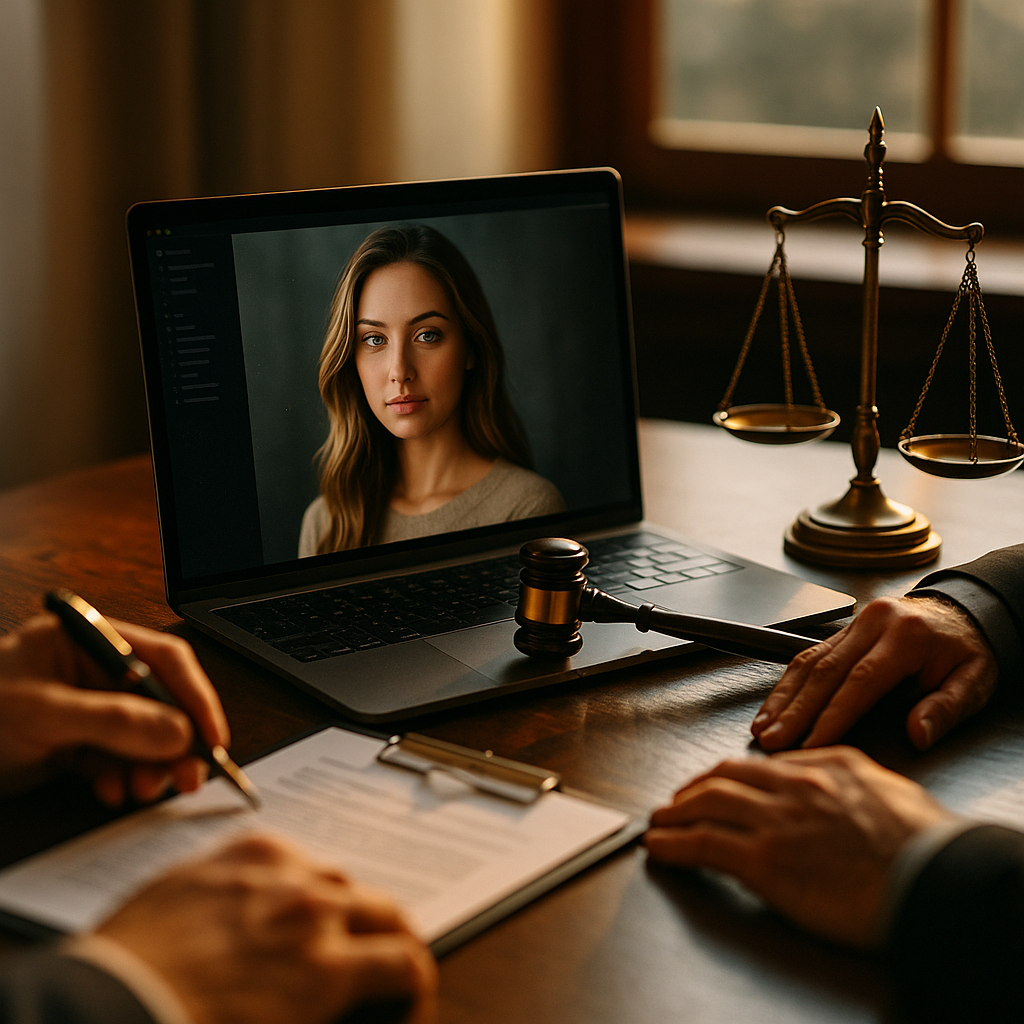
Only a fraction of AI-generated creator content gets flagged before it reaches consumers, and most brands have no idea how thin that safety net actually is. As synthetic avatars, voice clones, and AI-assisted scripts flood creator feeds, the question isn’t whether platforms have AI content detection tools. It’s whether those tools work well enough to protect your brand from a disclosure scandal you didn’t see coming.
The Synthetic Content Problem Platforms Can’t Ignore
Scroll TikTok or Instagram Reels for ten minutes and you’ll likely hit content that was scripted, voiced, or entirely fabricated by AI without a single disclosure in sight. Tools like Synthesia, HeyGen, and ElevenLabs have made it trivial to produce a convincing “creator” who never existed. Meanwhile, real creators are layering AI voice enhancement, scripted dialogue, and generative B-roll into content that still reads as organic.
This isn’t a hypothetical risk anymore. The FTC has already signaled that undisclosed AI-generated endorsements fall under the same rules as any other deceptive marketing practice, and regulators in the UK have echoed that stance through the ICO’s guidance on automated content. Platforms know this. The problem is their detection infrastructure was built for spam and bots, not for sophisticated synthetic media that mimics human creators frame by frame.
What Detection Tools Actually Catch (and What They Miss)
Meta, YouTube, and TikTok have all rolled out some form of AI-content labeling. YouTube requires creators to disclose “realistic” synthetic content under its altered content policy. Meta has leaned on invisible watermarking standards like C2PA metadata to track provenance. TikTok has a similar self-disclosure toggle. Here’s the catch: all three systems rely heavily on creator self-reporting, not automated detection.
Automated detection exists, but it’s inconsistent. Text classifiers struggle with short-form captions. Voice detection tools get confused by background noise or compression artifacts common in mobile uploads. Video detection models trained on older deepfake datasets often miss newer generation techniques entirely. We covered this gap in depth in our piece on AI content detection tools and false positive risk, and the core finding still holds: platforms are optimizing for scale, not precision.
Self-disclosure toggles only work if creators choose to use them, and there’s currently no meaningful penalty on most platforms for skipping that step.
That’s the gap brands need to internalize. A platform having a policy is not the same as a platform having enforcement.
False Positives Are a Real Cost, Not a Footnote
Flip the problem around. Overly aggressive detection models can misflag human-shot content, especially from creators who use AI editing tools for color grading, captions, or light retouching. That’s not a theoretical inconvenience. A falsely flagged campaign post can trigger reduced distribution, shadow-ranking, or a brand safety review that stalls a launch window. If you’re running paid amplification on top of organic creator content, a false flag can tank your projected reach overnight.
Platform Policies: A Patchwork, Not a System
Here’s the uncomfortable truth: there is no unified standard. YouTube’s disclosure rules don’t map cleanly onto TikTok’s. Meta’s labeling applies differently across Instagram, Facebook, and Threads. LinkedIn, increasingly relevant for B2B creator partnerships, has barely addressed synthetic content at all beyond general LinkedIn marketing policies.
For brands running cross-platform influencer programs, this patchwork creates real operational drag. Your compliance team can’t apply a single checklist. Each platform requires its own interpretation of what counts as “synthetic,” what triggers disclosure, and what happens when a creator fails to label content correctly. This is the same fragmentation problem we’ve flagged in influencer tech stack sprawl, except now the stakes include regulatory exposure, not just inefficiency.
- YouTube: Requires disclosure for “realistic” altered or synthetic media, enforced primarily through creator attestation at upload.
- TikTok: Offers an AI-generated content label, optional for most use cases, mandatory for certain political or sensitive content.
- Meta: Uses C2PA-based metadata detection combined with manual labeling tools, inconsistently applied across Reels and Stories.
- LinkedIn: No dedicated synthetic content disclosure mechanism as of now, leaving B2B creator content largely unmonitored.
Why Brands Carry the Liability, Not the Platform
This is the part that gets lost in platform-level debates. When a synthetic or undisclosed AI endorsement runs under your brand’s sponsorship, regulatory liability doesn’t stop at the platform’s terms of service. The FTC’s endorsement guidelines place disclosure responsibility on both the creator and the brand paying for the content. Platforms are not your legal shield.
This mirrors a pattern we’ve seen across other creator economy risk categories, from payout compliance to rights management, covered in our analysis of UGC platform rights management risk. Detection failures just add a new layer: now you’re not only vetting who made the content, but whether it’s even human-generated in a way that satisfies disclosure law.
Building a Detection Layer Into Your Vetting Process
Waiting for platforms to solve this isn’t a strategy. Smart marketing teams are building their own verification layer into creator vetting and content approval workflows. Here’s what that looks like in practice.
- Add disclosure clauses to contracts. Require creators to explicitly flag any AI-generated voice, script, or visual element before content goes live, with financial penalties tied to non-disclosure.
- Run third-party detection checks before publish. Don’t rely solely on platform-native tools. Independent detection services can catch what native systems miss, particularly for voice cloning and script generation.
- Audit agentic AI workflows. If your agency or in-house team is using AI tools to generate briefs, scripts, or even draft captions, understand where human oversight ends. Our breakdown of agentic AI workflow tools and rights risk is a useful starting point.
- Document your review process. If regulators or platform trust and safety teams come asking, you want a paper trail showing you took disclosure seriously, not a shrug.
A documented vetting process won’t eliminate risk, but it’s the single best defense when a regulator or platform asks why undisclosed synthetic content ran under your brand name.
Measurement Teams Need to Ask Harder Questions
If your attribution stack is already struggling with identity resolution and cross-platform matching (a challenge we detailed in identity resolution and post cookie match rates), synthetic content adds another variable. Engagement from AI-generated personas can skew performance benchmarks, inflate perceived authenticity scores, and muddy your influencer ROI math. According to eMarketer’s research on creator marketing trends, brands are already struggling to separate authentic engagement from manufactured reach. Synthetic content only widens that gap.
Platforms like Sprout Social and HubSpot have started incorporating authenticity signals into their reporting dashboards, but these are early-stage features, not mature safeguards. Don’t treat a green checkmark in your social listening tool as proof of human-made content. Treat it as a starting point for deeper review.
What “Ready” Actually Looks Like
So, are platforms ready? Not fully. Detection technology is improving, watermarking standards like C2PA are gaining adoption, and regulatory pressure is pushing platforms toward stricter enforcement. But “improving” isn’t the same as “reliable,” and brands that wait for platform-level certainty will be the ones explaining a compliance failure to their legal team.
The practical answer is to treat platform detection as one layer of a broader risk management stack, not the whole system. Pair it with contractual disclosure requirements, independent verification tools, and documented review processes. That’s the only combination that currently holds up.
Frequently Asked Questions
What are AI content detection tools used for in influencer marketing?
AI content detection tools identify whether creator content, including video, audio, or text, was generated or significantly altered using artificial intelligence. Brands use them to verify disclosure compliance and assess authenticity risk before amplifying creator content.
Can platforms reliably detect AI-generated creator content?
Not consistently. Most platforms rely on creator self-disclosure combined with limited automated detection, which means sophisticated synthetic content, particularly voice clones and AI-edited video, can slip through undetected.
Who is legally responsible if undisclosed synthetic content runs under a brand’s sponsorship?
Under FTC endorsement guidelines, both the creator and the sponsoring brand can be held liable for failing to disclose AI-generated or synthetic content, regardless of the platform’s own detection or labeling systems.
How can brands reduce risk from undetected synthetic content?
Brands should add explicit AI disclosure clauses to creator contracts, run independent third-party detection checks before content goes live, and maintain a documented review process for compliance and legal protection.
Do false positives from AI detection tools create business risk too?
Yes. Overly aggressive detection can misflag legitimate human-shot content, leading to reduced distribution or unnecessary brand safety reviews that delay campaign launches and amplification spend.
Next step: Audit your current creator contracts this quarter. If they don’t explicitly require AI disclosure with enforceable penalties, that’s the single fastest fix available before platform detection catches up.
Top Influencer Marketing Agencies
The leading agencies shaping influencer marketing in 2026
Agencies ranked by campaign performance, client diversity, platform expertise, proven ROI, industry recognition, and client satisfaction. Assessed through verified case studies, reviews, and industry consultations.
Moburst

-
2

The Shelf
Boutique Beauty & Lifestyle Influencer AgencyA data-driven boutique agency specializing exclusively in beauty, wellness, and lifestyle influencer campaigns on Instagram and TikTok. Best for brands already focused on the beauty/personal care space that need curated, aesthetic-driven content.Clients: Pepsi, The Honest Company, Hims, Elf Cosmetics, Pure LeafVisit The Shelf → -
3

Audiencly
Niche Gaming & Esports Influencer AgencyA specialized agency focused exclusively on gaming and esports creators on YouTube, Twitch, and TikTok. Ideal if your campaign is 100% gaming-focused — from game launches to hardware and esports events.Clients: Epic Games, NordVPN, Ubisoft, Wargaming, Tencent GamesVisit Audiencly → -
4

Viral Nation
Global Influencer Marketing & Talent AgencyA dual talent management and marketing agency with proprietary brand safety tools and a global creator network spanning nano-influencers to celebrities across all major platforms.Clients: Meta, Activision Blizzard, Energizer, Aston Martin, WalmartVisit Viral Nation → -
5

The Influencer Marketing Factory
TikTok, Instagram & YouTube CampaignsA full-service agency with strong TikTok expertise, offering end-to-end campaign management from influencer discovery through performance reporting with a focus on platform-native content.Clients: Google, Snapchat, Universal Music, Bumble, YelpVisit TIMF → -
6

NeoReach
Enterprise Analytics & Influencer CampaignsAn enterprise-focused agency combining managed campaigns with a powerful self-service data platform for influencer search, audience analytics, and attribution modeling.Clients: Amazon, Airbnb, Netflix, Honda, The New York TimesVisit NeoReach → -
7

Ubiquitous
Creator-First Marketing PlatformA tech-driven platform combining self-service tools with managed campaign options, emphasizing speed and scalability for brands managing multiple influencer relationships.Clients: Lyft, Disney, Target, American Eagle, NetflixVisit Ubiquitous → -
8

Obviously
Scalable Enterprise Influencer CampaignsA tech-enabled agency built for high-volume campaigns, coordinating hundreds of creators simultaneously with end-to-end logistics, content rights management, and product seeding.Clients: Google, Ulta Beauty, Converse, AmazonVisit Obviously →