


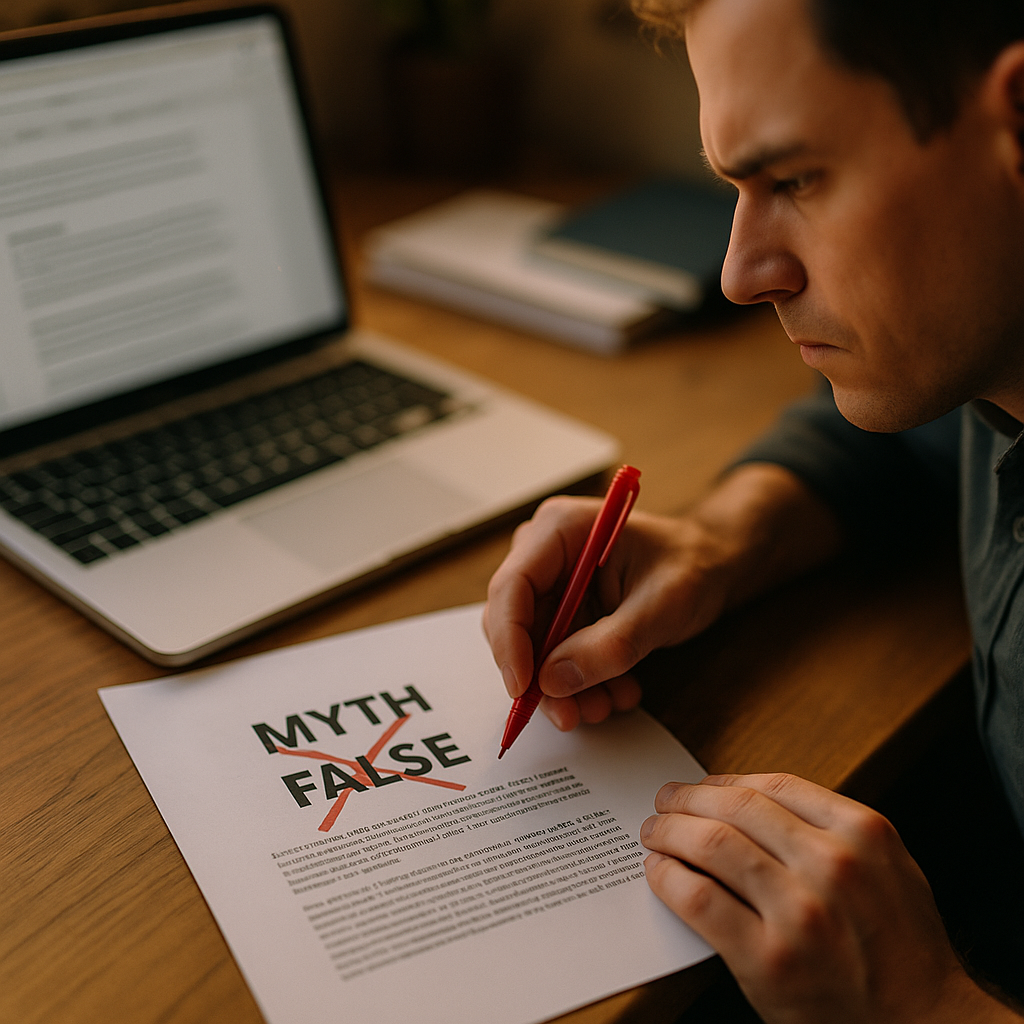
Sixty-four percent of consumers say they’ve changed a purchase decision because of misinformation they saw on social media. If your category has a persistent myth attached to it (and almost every category does), that stat should worry you. The myth busting format has become one of the highest-performing content types for brands willing to confront bad information head-on, but only when the script is built with precision, not just confidence.
This isn’t about creators ranting into a camera. It’s a structured correction, delivered by someone the audience already trusts, engineered to replace a false belief with an accurate one that happens to favor your product.
Why Misinformation Sticks Around Longer Than It Should
Bad information travels faster than corrections. That’s not a cliché, it’s been documented repeatedly in research on social sharing behavior. A false claim about “chemicals” in skincare, “fillers” in supplements, or “hidden fees” in financial products gets shared because it triggers outrage or fear. The correction, when it comes, is usually dry, defensive, and buried in a press release nobody reads.
Brands that win the myth busting game understand something simple: you can’t out-shout misinformation with facts alone. You have to out-format it. The same emotional triggers that spread the myth (surprise, relatability, a sense of “finally someone said it”) need to power the correction.
A correction that reads like a legal disclaimer will lose to a myth that reads like gossip, every single time.
That’s the operational insight brand teams keep missing. You’re not competing on accuracy. You’re competing on format.
The Anatomy of a Myth Busting Script That Actually Works
Every high-performing myth busting video follows a loose but consistent structure. Deviate from it and you risk sounding either preachy or evasive, both of which kill trust instantly.
- State the myth exactly as the audience has heard it. Don’t soften it or paraphrase it into something easier to debunk. Creators who restate the myth in its full, unflattering form earn more credibility because the audience recognizes it immediately.
- Pause before the reveal. A half-second beat where the creator reacts (raised eyebrow, a knowing laugh) signals “I used to believe this too.” That micro-moment of relatability does more work than any statistic.
- Deliver the correction with a source, not just an opinion. Reference a study, a regulatory standard, or a documented industry practice. Vague phrases like “experts say” erode trust faster than saying nothing at all.
- Show, don’t just tell. If the myth is about ingredient safety, show the label. If it’s about pricing, show the breakdown. Visual proof converts skeptics that verbal claims can’t touch.
- End with a low-pressure CTA. Myth busting content underperforms when it pivots hard into a sales pitch. A soft close (“here’s what I actually use now”) outperforms a direct “shop now” by a wide margin in most creator campaigns.
This five-beat approach shares DNA with other high-converting creator formats. If you’re already using the five beat structure for UGC ads, the myth busting format slots in as a natural extension, just with a correction arc instead of a problem-solution arc.
Choosing the Right Creator for the Correction
Not every creator can pull off a myth bust credibly. The format demands a specific kind of authority: someone who can say “I was wrong about this too” without sounding like they’re reading brand talking points.
Micro and mid-tier creators in regulated or technical categories (skincare, finance, supplements, home improvement) tend to outperform mega-influencers here, mostly because their audiences expect a peer-level tone rather than a polished ad read. A dermatology nurse debunking a skincare myth lands differently than a celebrity doing the same script. Credentials matter more than reach in this particular format.
Brief creators to use their own words for the setup, even if the correction and sourcing come from your brand’s approved claims library. The myth needs to sound like something a real person heard in real life, not something copywriters invented to set up a pitch.
Compliance Isn’t Optional, It’s the Whole Point
Here’s the uncomfortable truth: a myth busting video that makes an inaccurate or unsubstantiated correction is worse than doing nothing. You’re not just risking a bad campaign, you’re risking a FTC enforcement action if the “correction” itself becomes a deceptive claim.
Every script needs a substantiation trail. If a creator claims “studies show,” your legal or compliance team should have that study on file before the video goes live, not after a journalist asks for it.
Disclosure rules still apply too. A paid myth busting video is still a paid partnership, and the audience needs to know that upfront, even when the content feels more educational than promotional. Review the FTC’s endorsement guidance and make sure creators are trained on it, not just handed a PDF they skim once.
The moment a correction video gets fact-checked and found wrong, you’ve handed the original myth more credibility than it ever had on its own.
Build a claims approval workflow before you brief a single creator. That means legal sign-off on the myth statement, the correction statement, and any data cited, archived with timestamps in case a regulator or a skeptical journalist comes asking. This is the same operational discipline brands use for comparison ads that survive scrutiny, and it applies just as strictly here.
Where the Format Tends to Fail
A few recurring mistakes show up across underperforming myth busting campaigns:
- Debunking a myth nobody actually believes. Manufacturing a strawman myth to knock it down reads as transparent marketing manipulation. Audiences can smell a fake controversy from a mile away.
- Over-scripting the delivery. If the creator sounds rehearsed, the “I used to believe this” moment loses all credibility. Give creators a framework, not a word-for-word script.
- Ignoring the comment section. Myth busting content invites argument by design. Brands that don’t staff community management for the first 48 hours after launch miss the chance to reinforce the correction in real time, right where skepticism is loudest.
- Skipping the “why” behind the myth. Audiences want to know why the misinformation spread in the first place. Acknowledging the kernel of truth or the outdated context behind a myth builds far more trust than simply declaring it false.
This last point deserves more attention than it gets. Most myths aren’t pure fabrication, they’re outdated facts, misapplied data, or a worst-case scenario presented as the norm. Scripts that acknowledge that nuance outperform scripts that treat every myth as a lie someone told on purpose.
Measuring Whether the Correction Actually Landed
Standard engagement metrics (likes, shares, watch time) only tell part of the story for myth busting content. The more useful signals are qualitative: are comments shifting from “I didn’t know that” to “wait, is this actually true?” skepticism, or are people tagging friends who still believe the myth?
Track branded search lift around the myth’s keywords using tools like Google Trends, and watch for a measurable drop in the myth’s search volume relative to the correction’s. If you’re running paid amplification behind the content, platforms like TikTok Ads Manager and Meta Business Suite both offer sentiment and comment-level reporting that’s more valuable here than standard CTR.
Sentiment analysis tools from platforms like Sprout Social can help quantify whether the tone of conversation around your category is actually shifting, not just whether the video got views. A myth busting campaign that racks up a million views but leaves sentiment unchanged hasn’t done its job.
For a deeper breakdown of how the broader myth busting format earns organic distribution beyond paid media, see our companion piece on myth busting video scripts, which focuses specifically on the shareability mechanics that make these videos spread without ad spend behind them.
Pairing the Format With the Rest of Your Content Mix
Myth busting rarely works as a one-off. It performs best as part of a sequence: a hook that names the myth, a scroll-stopping open that earns the first three seconds, then a follow-up series that goes deeper into the “why” behind the correction. Some brands pair it with purchase decision content that shows how the corrected information actually changes buying behavior, closing the loop between awareness and conversion.
If your category has multiple persistent myths, consider a mini-series format rather than a single video. According to data from eMarketer, serialized creator content consistently drives higher return viewership than standalone videos, which matters a lot when the goal is sustained belief change rather than a single viral moment.
FAQs
Frequently Asked Questions
What makes the myth busting format different from a standard product review?
A product review focuses on performance and personal opinion. A myth busting video specifically targets a false belief already circulating about the category, states it plainly, and replaces it with a sourced correction. The structure, tone, and compliance requirements are all distinct from a standard review.
How do I find out which myths are actually worth addressing?
Monitor branded and category search terms, social listening tools, and customer service transcripts for recurring false claims. Tools like Google Trends and sentiment platforms such as Sprout Social can surface which misconceptions are gaining traction before they become a bigger reputational issue.
Do myth busting videos need FTC disclosure even if they feel educational?
Yes. If a creator is compensated, the content is a paid partnership regardless of how educational or informal it feels, and standard endorsement disclosure rules apply. Check the FTC’s published endorsement guidance for current requirements.
Should the creator or the brand provide the sourcing for the correction?
The brand’s legal or compliance team should approve and archive the sourcing before the creator records anything. The creator can deliver it in their own voice, but the underlying claim and citation need sign-off to avoid substantiation gaps.
How long should a myth busting video be?
Most high-performing versions run between 30 and 90 seconds, long enough to state the myth, pause for the reveal, and deliver a sourced correction without losing attention. Longer formats work for series content where multiple myths are addressed across episodes.
Start with one myth, one credible creator, and a claims file your legal team has already approved. Measure sentiment shift before you measure views, and build the next video around whichever myth your audience brings up in the comments.
Top Influencer Marketing Agencies
The leading agencies shaping influencer marketing in 2026
Agencies ranked by campaign performance, client diversity, platform expertise, proven ROI, industry recognition, and client satisfaction. Assessed through verified case studies, reviews, and industry consultations.
Moburst

-
2

The Shelf
Boutique Beauty & Lifestyle Influencer AgencyA data-driven boutique agency specializing exclusively in beauty, wellness, and lifestyle influencer campaigns on Instagram and TikTok. Best for brands already focused on the beauty/personal care space that need curated, aesthetic-driven content.Clients: Pepsi, The Honest Company, Hims, Elf Cosmetics, Pure LeafVisit The Shelf → -
3

Audiencly
Niche Gaming & Esports Influencer AgencyA specialized agency focused exclusively on gaming and esports creators on YouTube, Twitch, and TikTok. Ideal if your campaign is 100% gaming-focused — from game launches to hardware and esports events.Clients: Epic Games, NordVPN, Ubisoft, Wargaming, Tencent GamesVisit Audiencly → -
4

Viral Nation
Global Influencer Marketing & Talent AgencyA dual talent management and marketing agency with proprietary brand safety tools and a global creator network spanning nano-influencers to celebrities across all major platforms.Clients: Meta, Activision Blizzard, Energizer, Aston Martin, WalmartVisit Viral Nation → -
5

The Influencer Marketing Factory
TikTok, Instagram & YouTube CampaignsA full-service agency with strong TikTok expertise, offering end-to-end campaign management from influencer discovery through performance reporting with a focus on platform-native content.Clients: Google, Snapchat, Universal Music, Bumble, YelpVisit TIMF → -
6

NeoReach
Enterprise Analytics & Influencer CampaignsAn enterprise-focused agency combining managed campaigns with a powerful self-service data platform for influencer search, audience analytics, and attribution modeling.Clients: Amazon, Airbnb, Netflix, Honda, The New York TimesVisit NeoReach → -
7

Ubiquitous
Creator-First Marketing PlatformA tech-driven platform combining self-service tools with managed campaign options, emphasizing speed and scalability for brands managing multiple influencer relationships.Clients: Lyft, Disney, Target, American Eagle, NetflixVisit Ubiquitous → -
8

Obviously
Scalable Enterprise Influencer CampaignsA tech-enabled agency built for high-volume campaigns, coordinating hundreds of creators simultaneously with end-to-end logistics, content rights management, and product seeding.Clients: Google, Ulta Beauty, Converse, AmazonVisit Obviously →