


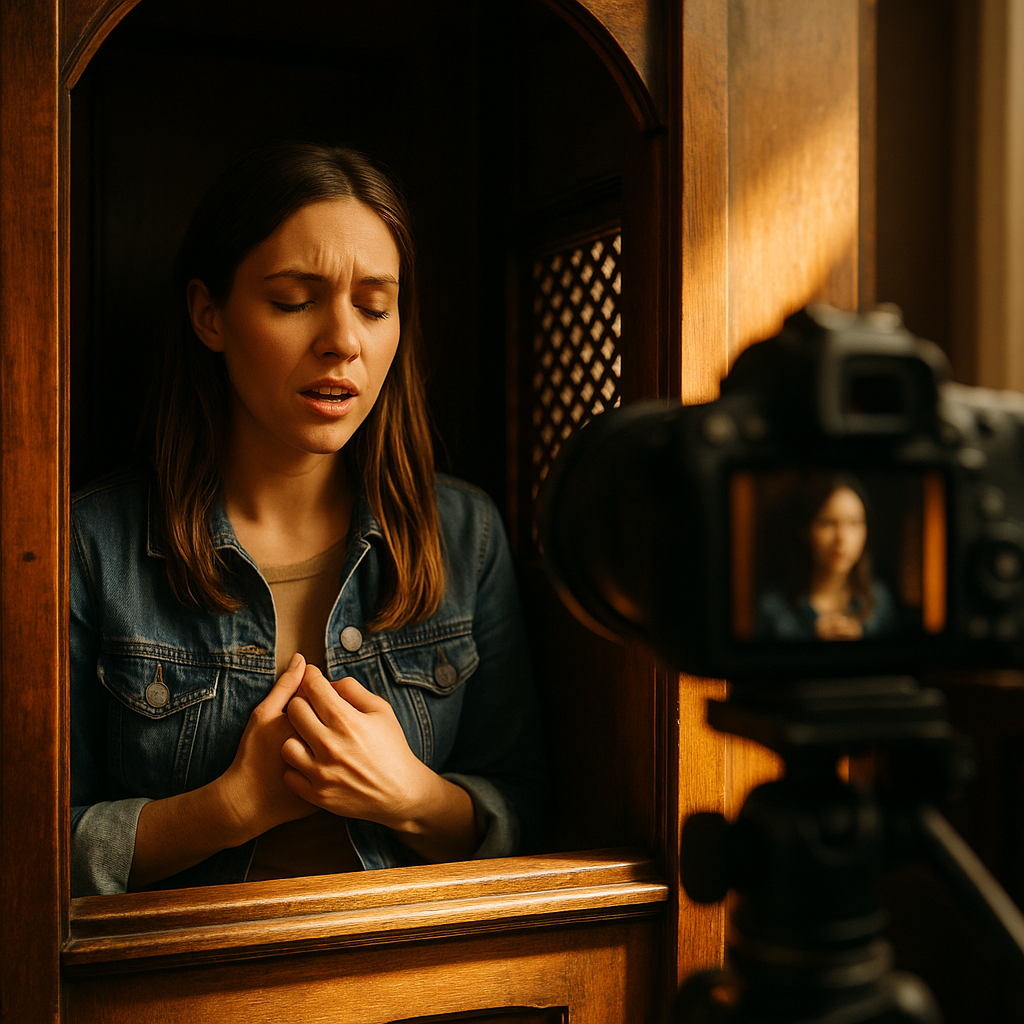
A single unscripted, slightly awkward confession on camera can outsell a studio-lit testimonial by double digits. That is not a hypothesis, it is what happens when brands run the confessional booth format against traditional review content in A/B tests. Viewers have gotten too good at spotting polish. They trust the stumble, not the script.
So why does raw beat refined, and how do you script “raw” without it looking staged (because yes, you still have to script it)? Let’s get into the mechanics.
Why Polished Reviews Are Losing Ground
Polished testimonials used to be the gold standard. Good lighting, clean audio, a confident subject reciting benefits in order. That format worked when audiences had fewer reference points for what “sponsored” looked like. Now they’ve seen thousands of these clips and built a mental filter that flags anything too smooth as an ad, not a recommendation.
The confessional booth format flips that script, literally. It borrows from reality TV: a single subject, a static or handheld frame, direct eye contact with the lens, and a tone that feels like they’re telling a friend something slightly embarrassing. No set dressing. No lower thirds. Just a person and a camera.
Audiences don’t distrust ads. They distrust ads that try too hard to not look like ads. The confessional format works because it stops trying.
This isn’t just vibes. Nielsen and other research bodies have long shown that peer recommendations and word-of-mouth style content outperform branded messaging on trust metrics, a pattern that holds across the platforms creators use most. For a deeper data dive on how trust signals shift purchase behavior, eMarketer’s consumer trust research is a solid starting point for brand teams building the business case internally.
What Actually Makes a Confession Feel Real
Here’s the uncomfortable part for brand teams used to controlling every word: the confessional booth format requires you to let go of some control to get the performance lift. But “letting go” doesn’t mean no script. It means a different kind of script.
- Start with a flaw, not a feature. “I almost didn’t buy this because the price seemed off” lands harder than “I love how affordable this is.”
- Use hesitation markers. Natural pauses, “I don’t know how to explain this,” or a half laugh before the real admission. These aren’t filler, they’re credibility signals.
- Keep the resolution understated. Big enthusiastic endings read as scripted. A quiet “yeah, it just works” closes stronger than “I’m obsessed, you NEED this.”
- Anchor to a specific moment. Not “this changed my routine” but “I used it on a Tuesday before a client call and forgot I was wearing it.”
The goal is a script that gives the creator a skeleton, not a monologue. You’re writing beats, not lines. This is the same principle behind internal monologue scripts that work in POV content: structure the thought process, let the creator find their own words inside it.
The Three Beat Confessional Skeleton
Most high-performing confessional booth clips follow a loose three beat arc, usually under 45 seconds:
- The admission. A doubt, a skepticism, a reason they almost didn’t try the product.
- The turn. What actually happened when they used it, stated plainly, without superlatives.
- The quiet truth. A low key, almost reluctant endorsement. Think “I guess I get it now” over “This is the best thing ever.”
Brief as it is, that arc does more conversion work than a 90 second polished review because it mirrors how people actually talk when they’re being honest. Nobody describes a genuine experience in three perfectly structured sentences with a call to action at the end. That structure is exactly what signals “ad” to a scrolling viewer.
Casting Matters More Than Script Here
You can write the best confessional skeleton in the world and it’ll fall flat with the wrong creator. This format punishes performers and rewards people who are comfortable being slightly unpolished on camera. Micro and nano creators often outperform bigger names here, precisely because their audiences expect less production value and more candor.
When you’re briefing creators, resist the urge to send a full script document. Send a one page beat sheet with the three turns above, a few example phrases (not mandatory lines), and a note on tone: “talk like you’re telling your sister, not pitching a client.” That framing alone changes delivery dramatically.
This casting logic overlaps with what we’ve covered in scripting authenticity for carousel content, where the same tension exists between giving creators direction and letting their natural voice carry the message.
Compliance Still Applies, Even When It Looks Unscripted
Here’s where a lot of brand and legal teams get nervous, and rightly so. “Raw” content still needs disclosure, still needs claims substantiation, and still needs to meet platform and regulatory standards. The informal tone doesn’t exempt you from FTC endorsement guidelines, and treating it as a loophole is a fast way to get a compliance notice.
Build disclosure into the confession itself rather than bolting it on as a caption afterthought. “A brand sent me this to try and I was skeptical” does double duty: it discloses the relationship and sets up the skeptic to convert arc in one line. That’s smarter than relying on a buried #ad tag that platforms and regulators increasingly scrutinize.
If your team is navigating claims that need correcting or softening without losing the trust this format builds, the approach we outlined in correcting claims without losing trust applies directly here. The confessional format is especially vulnerable to overclaiming because the “realness” makes viewers believe stronger statements than they would in an obviously polished ad. Script conservatively, let the delivery carry the weight.
Where This Format Fits in a Broader Content Mix
Confessional booth content isn’t a replacement for every testimonial format, it’s a complement. Polished reviews still have a role for considered purchases where viewers want detail: specs, comparisons, long term use cases. That’s where formats like split screen comparison content or structured UGC style ad structures do heavier lifting.
Think of the confessional format as top of funnel trust building and mid funnel objection handling rolled into one. It’s particularly effective for:
- Products with a price objection or skepticism barrier (supplements, subscription services, anything “too good to be true” adjacent)
- Rebuilding trust after a brand controversy or product recall
- Categories saturated with polished ads, where rawness itself becomes the differentiator
It’s less effective for B2B software, enterprise purchases, or anything requiring technical validation. If you’re in that lane, the build in public approach tends to earn more credibility than a confessional tone, which can read as flippant for high consideration purchases.
Measuring What “Converts Better” Actually Means
Before you greenlight a confessional booth campaign, define what conversion means for this format specifically. Raw content often underperforms on immediate click through rate (it looks less “ad-like,” so fewer people tap a CTA overlay) but outperforms on completion rate, saves, and downstream conversion when retargeted. That’s a different funnel shape than polished content.
Track these metrics separately rather than lumping confessional content into the same dashboard view as your polished reviews:
- Watch completion rate (raw content typically holds attention longer once the hook lands)
- Comment sentiment and comment to view ratio (confessions invite “me too” responses that polished reviews rarely get)
- Save and share rate, which signals the content is being used as proof to show someone else
- Assisted conversion in retargeting windows, since the initial view often plants doubt resolution rather than driving immediate purchase
Platforms like Sprout Social and native analytics on Meta and TikTok Ads Manager can help you separate these signals if you’re not already segmenting by content format. If your current dashboard treats every testimonial the same, you’re almost certainly undervaluing this format’s actual return.
Scaling It Without Losing the Rawness
The hardest part of this format isn’t the first batch, it’s the tenth. Once you have a beat sheet that works, the temptation is to tighten it into a script template and send it to fifty creators. Don’t. That’s how confessional content turns into the exact polished pattern it’s meant to subvert.
Keep the brief loose. Rotate the specific “admission” prompt so creators aren’t all opening with the same doubt. Pull from your own customer service logs or review site complaints for real objections people have, then hand those to creators as the starting hesitation rather than inventing generic ones. That keeps every piece feeling individually true even at scale, which is the entire point of the format.
Next step: pull your three most common customer objections from support tickets or review sites, hand each one to a different creator as their “admission” beat, and run them against your current polished testimonial as a direct A/B test before committing budget to a full rollout.
Frequently Asked Questions
What is the confessional booth format in influencer marketing?
It’s a testimonial style modeled on reality TV confession cams: a single creator speaks directly to camera in an unpolished, candid setting, admitting doubts before explaining why a product won them over. It prioritizes authenticity signals over production value.
Does confessional content still need FTC disclosure?
Yes. The informal tone doesn’t change disclosure requirements. The strongest approach is weaving disclosure into the script itself, such as stating the brand sent the product, rather than relying solely on a caption tag.
How long should a confessional booth clip be?
Most high-performing examples run under 45 seconds, following a three beat structure: the admission, the turn, and a quiet, understated endorsement.
Which creators perform best in this format?
Micro and nano creators often outperform larger names because their audiences expect lower production value and more candor, which matches the format’s core appeal.
How do I measure ROI on raw testimonial content versus polished reviews?
Track completion rate, comment sentiment, save and share rate, and assisted conversions in retargeting windows separately from polished content metrics, since confessional content often drives downstream trust rather than immediate clicks.
Top Influencer Marketing Agencies
The leading agencies shaping influencer marketing in 2026
Agencies ranked by campaign performance, client diversity, platform expertise, proven ROI, industry recognition, and client satisfaction. Assessed through verified case studies, reviews, and industry consultations.
Moburst

-
2

The Shelf
Boutique Beauty & Lifestyle Influencer AgencyA data-driven boutique agency specializing exclusively in beauty, wellness, and lifestyle influencer campaigns on Instagram and TikTok. Best for brands already focused on the beauty/personal care space that need curated, aesthetic-driven content.Clients: Pepsi, The Honest Company, Hims, Elf Cosmetics, Pure LeafVisit The Shelf → -
3

Audiencly
Niche Gaming & Esports Influencer AgencyA specialized agency focused exclusively on gaming and esports creators on YouTube, Twitch, and TikTok. Ideal if your campaign is 100% gaming-focused — from game launches to hardware and esports events.Clients: Epic Games, NordVPN, Ubisoft, Wargaming, Tencent GamesVisit Audiencly → -
4

Viral Nation
Global Influencer Marketing & Talent AgencyA dual talent management and marketing agency with proprietary brand safety tools and a global creator network spanning nano-influencers to celebrities across all major platforms.Clients: Meta, Activision Blizzard, Energizer, Aston Martin, WalmartVisit Viral Nation → -
5

The Influencer Marketing Factory
TikTok, Instagram & YouTube CampaignsA full-service agency with strong TikTok expertise, offering end-to-end campaign management from influencer discovery through performance reporting with a focus on platform-native content.Clients: Google, Snapchat, Universal Music, Bumble, YelpVisit TIMF → -
6

NeoReach
Enterprise Analytics & Influencer CampaignsAn enterprise-focused agency combining managed campaigns with a powerful self-service data platform for influencer search, audience analytics, and attribution modeling.Clients: Amazon, Airbnb, Netflix, Honda, The New York TimesVisit NeoReach → -
7

Ubiquitous
Creator-First Marketing PlatformA tech-driven platform combining self-service tools with managed campaign options, emphasizing speed and scalability for brands managing multiple influencer relationships.Clients: Lyft, Disney, Target, American Eagle, NetflixVisit Ubiquitous → -
8

Obviously
Scalable Enterprise Influencer CampaignsA tech-enabled agency built for high-volume campaigns, coordinating hundreds of creators simultaneously with end-to-end logistics, content rights management, and product seeding.Clients: Google, Ulta Beauty, Converse, AmazonVisit Obviously →