


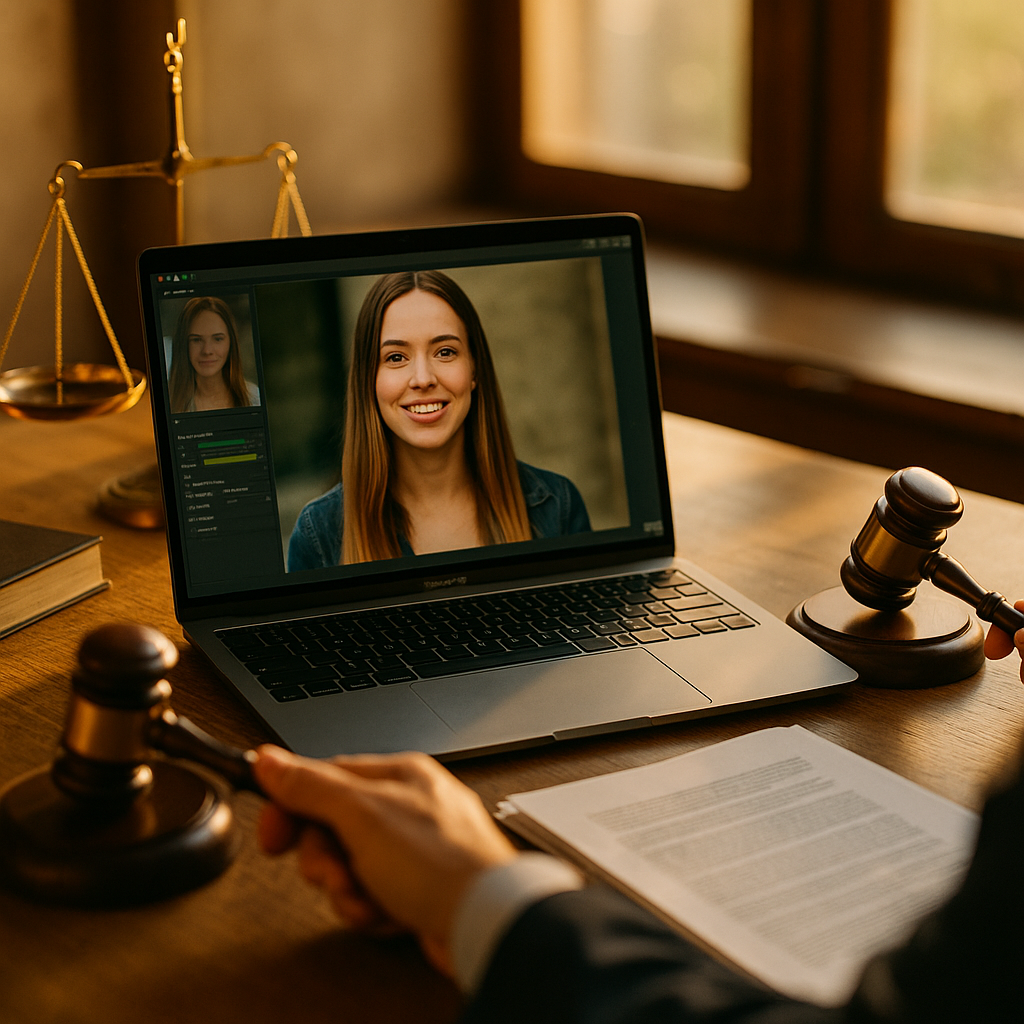
Forty five states now recognize some form of right of publicity. At least fourteen have updated those statutes since 2023 to explicitly cover AI generated voice and likeness clones. If your brand ran a single synthetic creator ad last quarter without checking state-by-state consent requirements, you may already be exposed. State right of publicity laws have quietly become the sharpest legal threat to AI deepfake creator ads, and most marketing teams still treat this as a federal FTC problem instead of a 50-jurisdiction compliance puzzle.
Why State Legislatures Moved Faster Than Congress
Congress has debated federal deepfake and likeness legislation for years without passing anything comprehensive. States didn’t wait. Tennessee’s ELVIS Act, Illinois’s biometric privacy amendments, and California’s expanded Civil Code protections all target the same thing: using someone’s voice, face, or performance style without consent, including AI generated versions of it.
This matters for brands because right of publicity claims don’t require proof of consumer deception the way FTC actions do. A creator (or their estate) just has to show their likeness was used commercially without authorization. That’s a much lower bar, and it’s why plaintiff’s attorneys increasingly prefer state publicity claims over federal advertising law when going after synthetic media campaigns.
Right of publicity claims skip the “was the consumer deceived” question entirely. The question becomes simpler and harder to defend: did you have permission to use this person’s likeness, full stop.
The Patchwork Problem Brands Can’t Ignore
Here’s the operational headache: these laws don’t match. Tennessee’s ELVIS Act covers voice specifically and applies broadly to AI simulations. New York’s amended civil rights law covers “digital replicas” in commercial contexts with specific carve outs for satire and news. California distinguishes between living and deceased personalities, with post-mortem rights lasting up to 70 years and requiring registered consent from estates.
Some states require written consent before any synthetic likeness use. Others only trigger liability if the use causes confusion about endorsement. A few, including Washington and Illinois, layer biometric privacy statutes on top of publicity rights, meaning a single AI-generated creator ad could violate two separate legal frameworks in the same state.
- Tennessee (ELVIS Act): Broadest voice protection in the country, covers AI simulation explicitly, applies to any commercial use.
- California: Covers voice and likeness, extends post-mortem, requires clear consent documentation for synthetic use.
- New York: “Digital replica” language added directly to civil rights statute, narrow exceptions for parody.
- Illinois: Biometric Information Privacy Act (BIPA) can apply if facial or voice data was captured and used to train a model without consent.
If your media buying team runs national campaigns, you’re not dealing with one law. You’re dealing with roughly a dozen overlapping ones, each with different consent thresholds and penalty structures. We’ve covered the broader fragmentation in our right of publicity patchwork breakdown, and the AI deepfake layer makes that patchwork considerably more dangerous.
What Counts as a “Digital Replica” Under These Laws?
Most newer statutes define a digital replica broadly: any computer-generated, synthetic, or AI-altered representation that is “readily identifiable” as a real person. That threshold catches more than full deepfake video. Voice cloning for a product testimonial, AI-generated B-roll featuring a creator’s trained likeness model, and even heavily filtered content that mimics a known creator’s signature style can all qualify depending on state interpretation.
This is where brands get tripped up. Marketing teams often assume “AI generated” and “real creator endorsement” are separate categories that need separate compliance checks. Under most of these statutes, they’re not. If the output is identifiable as a specific person, consent rules apply regardless of how the content was produced.
Where Brands Actually Get Exposed
Three scenarios keep showing up in legal reviews and early litigation:
- Voice cloning for dubbed or localized ads. A creator agrees to one English language ad, and an agency uses AI dubbing to create Spanish or French versions without renegotiating consent. That’s a separate use under most publicity statutes.
- Training creator look-alike models on licensed content. If your agency trains an in-house AI model on a roster of past creator content to generate “inspired by” ad variations, you may be creating unauthorized digital replicas even without using the creator’s name.
- Post-contract reuse of AI-enhanced assets. Many creator contracts grant usage rights for “the content delivered,” not derivative AI versions generated after the relationship ends. Reusing old footage through a generative tool to make new ad variants can trigger a claim even if the original license looked broad.
None of these require malicious intent. Most of the current wave of publicity lawsuits involves brands and agencies that thought their existing creator contract language covered AI use. It usually doesn’t, because most contracts predate the current generation of voice and video synthesis tools. Our deep dive on AI generated UGC disclosure walks through how the FTC layer compounds this exposure separately from state publicity claims.
Building the Compliance Map: A Practical Checklist
Treat this like a jurisdictional audit, not a one-time legal memo. Here’s what a working compliance map should include:
- Tier your states by exposure. Flag Tennessee, California, New York, and Illinois as tier one, given their explicit AI replica language and active enforcement. Build broader national defaults around their strictest requirements rather than the loosest state’s rules.
- Audit existing creator contracts for AI language. Any agreement signed before current year minus two likely doesn’t mention synthetic media, voice cloning, or derivative AI use at all. That silence is a liability, not a loophole.
- Require explicit synthetic use clauses going forward. Spell out voice cloning, dubbing, face replacement, and AI-assisted editing as distinct licensed uses, each requiring separate compensation and consent.
- Document consent at the point of capture. A signed release that says “likeness” without referencing AI derivatives won’t satisfy most updated state statutes. Capture explicit, itemized consent.
- Loop in E&O coverage early. Confirm your insurance actually covers publicity claims tied to AI-generated content, not just traditional endorsement disputes. Our breakdown on E&O insurance clauses is a useful starting point for that conversation with carriers.
Pair this with vendor vetting. If you’re using third-party AI avatar or dubbing tools, confirm they’re not pulling training data from creator content without documented licensing. The AI creator vetting tools piece covers the diligence steps that apply here too.
Enforcement Is Already Happening
This isn’t theoretical. Several high-profile cases involving unauthorized AI voice clones in advertising have already resulted in settlements or injunctions over the past two years, and state attorneys general have signaled interest in using publicity statutes as an enforcement tool when federal action stalls. The FTC has also made clear it views AI-generated endorsements as falling under existing deception rules, meaning brands can face a double exposure: a federal advertising claim and a state publicity claim from the same campaign.
Industry data backs up the urgency. Surveys from eMarketer show rapid adoption of AI tools in creator marketing workflows, often outpacing legal review processes inside the same organizations. Statista tracking on AI adoption in advertising shows similar momentum, with legal and compliance teams frequently cited as the last function to catch up.
The gap between “we can generate this” and “we’re legally allowed to use this” has never been wider, and state publicity law is where that gap gets tested in court.
For international campaigns, don’t assume this is a US-only concern either. The EU AI Act disclosure rules add a parallel layer of obligation for synthetic influencer content running in European markets, and age-related consent issues compound further under rules like state age verification laws when AI tools touch livestream or shoppable content involving younger audiences.
What This Means for Budget and Workflow Decisions
Legal review can’t be the last gate before launch anymore. Build publicity rights review into the AI tool selection phase, not the final ad approval phase. Ask vendors directly: where does your training data come from, and can you indemnify against publicity claims? If they can’t answer clearly, that’s your answer.
Budget for this too. Updated contract templates, per-state legal review, and expanded insurance riders all cost money, but they cost far less than a settlement or an injunction pulling a national campaign mid-flight. Marketing leaders who treat this as a line item now will have a real advantage over competitors scrambling after their first cease and desist letter.
The Bottom Line
Map your top campaign states against their current publicity statutes before your next AI-assisted creator campaign goes live, not after. Update creator contracts to explicitly address synthetic voice and likeness use, and confirm your insurance actually covers the claims these laws now create.
Frequently Asked Questions
Do state right of publicity laws apply to AI-generated ads even without a real creator’s name attached?
Yes. Most updated statutes focus on whether the output is “readily identifiable” as a specific person, not whether their name is used. A trained voice model or face replica can trigger liability on its own.
Which states currently have the strictest AI deepfake publicity laws?
Tennessee’s ELVIS Act is widely considered the broadest, followed by California, New York, and Illinois, which layer biometric privacy rules on top of traditional publicity statutes.
Does an existing creator contract automatically cover AI-generated derivatives?
Usually not. Most contracts written before the current wave of generative AI tools only cover the specific delivered content, not AI-altered or AI-generated derivative versions, including dubbed or voice-cloned variants.
Can a brand be liable even if an agency or vendor created the deepfake content?
In most cases, yes. Brands that approve, distribute, or profit from the ad typically share liability alongside the agency or AI vendor, especially if due diligence on consent wasn’t documented.
How does this interact with FTC rules on AI disclosure?
They’re separate but overlapping risks. FTC rules focus on consumer deception, while state publicity laws focus on consent and compensation for likeness use. A single AI ad can violate both at once.
Top Influencer Marketing Agencies
The leading agencies shaping influencer marketing in 2026
Agencies ranked by campaign performance, client diversity, platform expertise, proven ROI, industry recognition, and client satisfaction. Assessed through verified case studies, reviews, and industry consultations.
Moburst

-
2

The Shelf
Boutique Beauty & Lifestyle Influencer AgencyA data-driven boutique agency specializing exclusively in beauty, wellness, and lifestyle influencer campaigns on Instagram and TikTok. Best for brands already focused on the beauty/personal care space that need curated, aesthetic-driven content.Clients: Pepsi, The Honest Company, Hims, Elf Cosmetics, Pure LeafVisit The Shelf → -
3

Audiencly
Niche Gaming & Esports Influencer AgencyA specialized agency focused exclusively on gaming and esports creators on YouTube, Twitch, and TikTok. Ideal if your campaign is 100% gaming-focused — from game launches to hardware and esports events.Clients: Epic Games, NordVPN, Ubisoft, Wargaming, Tencent GamesVisit Audiencly → -
4

Viral Nation
Global Influencer Marketing & Talent AgencyA dual talent management and marketing agency with proprietary brand safety tools and a global creator network spanning nano-influencers to celebrities across all major platforms.Clients: Meta, Activision Blizzard, Energizer, Aston Martin, WalmartVisit Viral Nation → -
5

The Influencer Marketing Factory
TikTok, Instagram & YouTube CampaignsA full-service agency with strong TikTok expertise, offering end-to-end campaign management from influencer discovery through performance reporting with a focus on platform-native content.Clients: Google, Snapchat, Universal Music, Bumble, YelpVisit TIMF → -
6

NeoReach
Enterprise Analytics & Influencer CampaignsAn enterprise-focused agency combining managed campaigns with a powerful self-service data platform for influencer search, audience analytics, and attribution modeling.Clients: Amazon, Airbnb, Netflix, Honda, The New York TimesVisit NeoReach → -
7

Ubiquitous
Creator-First Marketing PlatformA tech-driven platform combining self-service tools with managed campaign options, emphasizing speed and scalability for brands managing multiple influencer relationships.Clients: Lyft, Disney, Target, American Eagle, NetflixVisit Ubiquitous → -
8

Obviously
Scalable Enterprise Influencer CampaignsA tech-enabled agency built for high-volume campaigns, coordinating hundreds of creators simultaneously with end-to-end logistics, content rights management, and product seeding.Clients: Google, Ulta Beauty, Converse, AmazonVisit Obviously →