


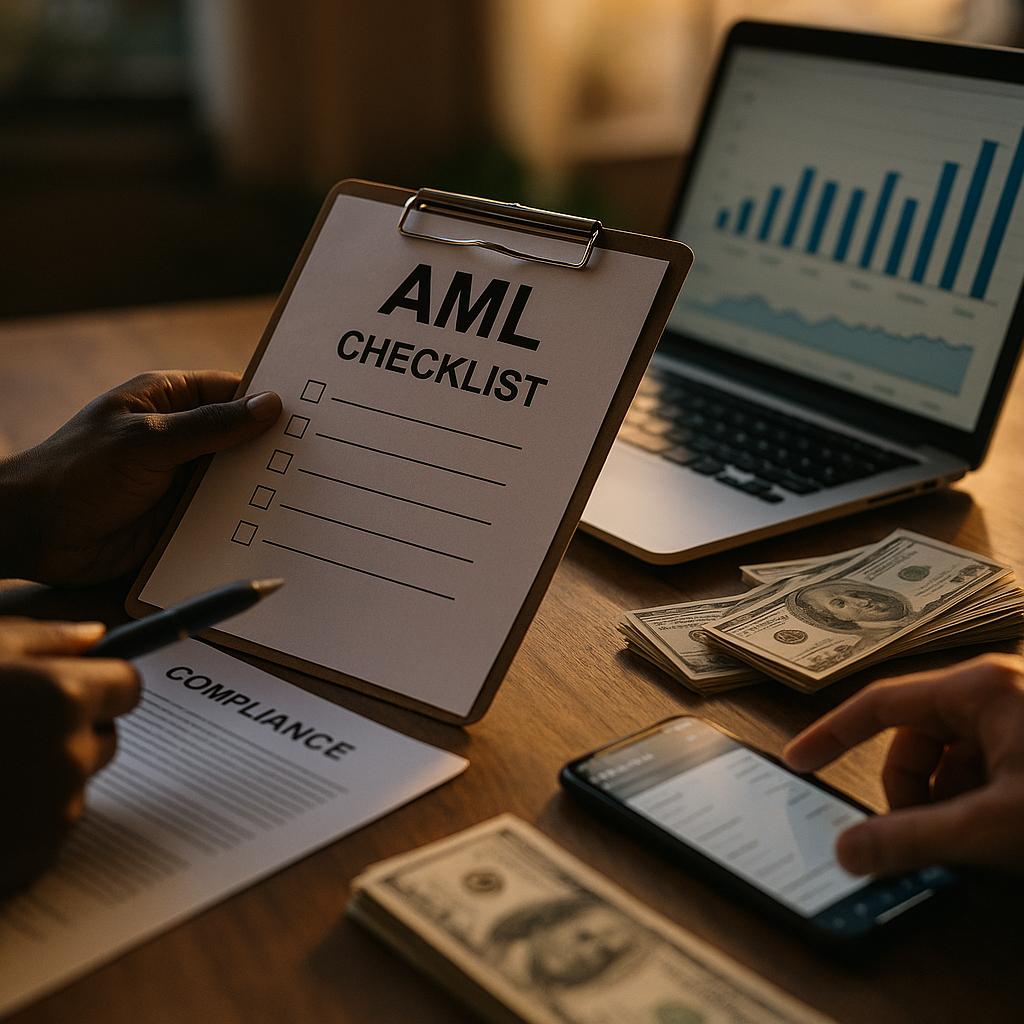
Here’s an uncomfortable number for your next budget review: global regulators levied more than billions in anti money laundering fines last year, and payment intermediaries, including the platforms brands use to pay creators, were among the fastest growing enforcement targets. If your influencer program routes payments through a third party mass payout tool, you are not just buying convenience. You are buying exposure. Creator payment platforms and anti money laundering rules are now a brand risk issue, not just a fintech compliance footnote.
Why AML Suddenly Matters for Influencer Budgets
Five years ago, nobody in a marketing department worried about money laundering. Creator payments were small, domestic, and handled through PayPal or a check. Fast forward to now: creator economy payouts run into the tens of billions annually, cross borders routinely, and flow through payment rails built for speed rather than scrutiny. That combination, high volume, low friction, global reach, is exactly what AML regulators look for.
Financial Action Task Force (FATF) guidance has increasingly flagged “new payment products and services” as a laundering vector, and creator payout platforms fit that description almost perfectly. Brands that treat these platforms as neutral plumbing are missing the point. The platform’s compliance posture becomes your compliance posture the moment funds leave your account.
If your creator payment platform can’t answer “who did we actually pay and why” in under five minutes, you have an AML gap, not a vendor relationship.
What AML Rules Actually Require
Anti money laundering regulation, whether under the US Bank Secrecy Act, the EU’s AML directives, or FATF’s global standards, generally requires three things from financial intermediaries: customer due diligence (know who you’re paying), transaction monitoring (watch for suspicious patterns), and reporting (flag anything that looks wrong to regulators). Creator payment platforms that process payouts at scale, PayPal, Tipalti, Payoneer, Trolley, and similar tools, typically hold some form of money transmitter license or operate under a banking partner’s compliance umbrella.
That licensing comes with obligations. Know Your Customer (KYC) checks on payees. Sanctions screening against OFAC and equivalent lists. Monitoring for structuring, the practice of splitting payments to stay under reporting thresholds. None of this is optional, and none of it disappears because the “customer” being paid is a 24 year old TikTok creator rather than a corporate vendor.
- Customer due diligence: verifying creator identity, business structure, and beneficial ownership for agency or LLC payees.
- Sanctions screening: checking every payee against OFAC, UN, and EU restricted party lists before funds move.
- Transaction monitoring: flagging unusual patterns like sudden volume spikes, rapid fund withdrawal, or payments to high risk jurisdictions.
- Suspicious activity reporting: filing SARs or equivalent reports when something doesn’t add up.
Where Brands Actually Get Exposed
Most marketing teams assume the payment platform absorbs all the AML risk. That’s only partially true, and the gap matters. Brands retain exposure in a few specific places.
First, vendor selection. If you choose a payout platform that skips proper KYC to speed up onboarding (a real selling point some smaller tools advertise), you’re choosing speed over compliance. Regulators don’t care that the platform made onboarding frictionless. They care that funds moved without adequate screening, and your brand’s name is on the originating transaction.
Second, structuring risk inside your own program. Agencies sometimes split large creator payments into smaller tranches to avoid internal approval thresholds or to simplify tax reporting. That practice can look identical to classic structuring behavior from an AML monitoring standpoint, even when the intent is purely administrative. This connects directly to the kind of payee misclassification issues covered in our piece on creator 1099 misclassification, where sloppy payment categorization creates downstream audit risk on multiple fronts at once.
Third, cross border payouts to creators in high risk jurisdictions. Paying a creator in a FATF grey listed country isn’t illegal, but it does trigger enhanced due diligence requirements that most marketing ops teams have never heard of, let alone built into their workflow.
The Cross Border Complication
Global creator programs multiply AML exposure fast. A brand running campaigns across North America, Southeast Asia, and the Gulf is dealing with wildly different regulatory regimes, currency controls, and sanctions regimes simultaneously. What counts as routine in one jurisdiction can trigger a suspicious activity flag in another.
This is closely related to the tax complexity we’ve covered in cross border creator tax forms and EU VAT on creator payments. Tax compliance and AML compliance aren’t the same obligation, but they run on the same data: who got paid, how much, in what currency, from where. If your tax documentation is a mess, your AML documentation almost certainly is too, because both rely on accurate payee records.
Brands running programs through agencies or talent networks should also revisit how those intermediaries are licensed. Our coverage of influencer talent agency licensing walks through why an unlicensed agency sitting between you and the creator can quietly become your biggest point of failure, both for payment compliance and general brand risk.
Vetting a Payment Platform: What to Actually Check
Procurement teams evaluate creator payment platforms on speed, fees, and integration ease. Those matter, but they’re not the full picture. Before signing a contract, marketing and legal should jointly confirm the following.
- Licensing status: Is the platform a registered money transmitter in every jurisdiction where you’ll be paying creators? Ask for license numbers, not just marketing claims.
- KYC depth: Does the platform verify government ID, not just an email and a bank account? Thin verification is a red flag, full stop.
- Sanctions screening frequency: Is screening done once at onboarding, or on an ongoing basis against updated lists? Sanctions lists change constantly, and one time checks age badly.
- Audit trail access: Can you, the brand, pull a full transaction history with payee identity data on demand? If a regulator or auditor comes asking, “the platform has it somewhere” is not an acceptable answer.
- Threshold reporting logic: Does the platform have automated flags for structuring patterns, or does it rely purely on manual review?
Treat this like you would any financial vendor due diligence process, because that’s exactly what it is. Marketing teams that would never sign a media buying contract without legal review are routinely signing payout platform agreements without the same scrutiny.
Documentation Is Your Best Defense
Regulators and auditors don’t expect brands to catch every bad actor. They expect brands to show a documented, consistent process. That distinction matters enormously in an enforcement conversation.
Keep records of why each creator was onboarded, what verification steps the payment platform ran, and how payment amounts were determined. This overlaps with the archiving discipline we recommend in influencer content archiving, except here the retention window matters even more: many AML frameworks expect five to seven years of transaction records, not just campaign assets.
A documented process that occasionally misses something beats an undocumented process that happens to catch everything, every single time a regulator looks.
Build a simple internal checklist: payee verified, sanctions screened, payment logged with purpose code, contract on file. It sounds basic because it is. Basic is what survives an audit.
What This Means for Contracts and Insurance
AML exposure should also show up in your creator contract language and your insurance conversations. If a payment platform fails to catch a sanctioned entity and funds get frozen mid campaign, who absorbs the cost, the delay, the PR fallout? That’s a question for legal, not an afterthought.
Review indemnification clauses with the same rigor applied to the exclusivity and renewal terms discussed in multi year creator contracts. And if you’re carrying errors and omissions coverage for your influencer program, confirm whether payment related regulatory failures are actually within scope, something our analysis of E&O insurance clauses digs into in more detail. Most generic E&O policies were written before anyone thought creator payouts needed AML coverage, so don’t assume you’re protected.
Practical Next Steps for Marketing Teams
You don’t need to become a compliance officer to manage this risk responsibly. You do need a short list of non negotiables before your next platform renewal or RFP.
- Require written confirmation of money transmitter licensing from any payout vendor, in every country you operate.
- Build a standing audit trail export process, quarterly at minimum, so you’re never scrambling during an actual review.
- Loop legal into payment platform contracts the same way you loop them into talent agreements.
- Flag any payment pattern that looks like intentional threshold avoidance, even if it’s internally motivated rather than malicious.
- Reassess cross border payout corridors annually, since sanctions regimes and grey list countries shift more often than most teams track.
None of this is glamorous work. It’s also exactly the kind of unglamorous diligence that separates brands who sail through a regulatory inquiry from brands who end up as the cautionary case study at the next industry conference.
FAQs
Common questions marketing and compliance teams ask when evaluating creator payment platforms for AML exposure.
Do anti money laundering rules actually apply to influencer payments?
Yes. Any payment processed through a licensed money transmitter or banking rail falls under that institution’s AML obligations, regardless of whether the recipient is a creator, a vendor, or a contractor. The payment amount and recipient type don’t exempt a transaction from scrutiny.
Is the brand or the payment platform responsible for AML compliance?
Primary legal responsibility typically sits with the licensed payment platform, but brands retain reputational and operational risk, especially if they knowingly select a platform with weak controls or structure payments to avoid internal thresholds. Shared responsibility is the more accurate framing than either party being fully off the hook.
What red flags should trigger extra scrutiny on a creator payment?
Watch for payees in high risk or sanctioned jurisdictions, requests to split large payments into smaller tranches, mismatched payee names between contracts and payout accounts, and sudden changes in banking details shortly before a scheduled payout.
How long should brands retain creator payment records for AML purposes?
Many frameworks expect five to seven years of retained transaction data, including payee verification records. This mirrors the retention discipline recommended for broader influencer content archiving practices.
Can using a creator payment platform reduce overall compliance workload?
It can, but only if the platform has genuinely robust KYC, sanctions screening, and audit trail capabilities. A platform chosen purely for low fees or fast onboarding can increase workload later by forcing manual remediation after the fact.
Visible FAQ Recap
Bottom line: treat your creator payment platform like a financial compliance vendor, not a marketing tool, because that’s the regulatory reality it operates under. Audit your current platform’s AML controls this quarter, before a renewal cycle or a regulator forces the conversation.
Top Influencer Marketing Agencies
The leading agencies shaping influencer marketing in 2026
Agencies ranked by campaign performance, client diversity, platform expertise, proven ROI, industry recognition, and client satisfaction. Assessed through verified case studies, reviews, and industry consultations.
Moburst

-
2

The Shelf
Boutique Beauty & Lifestyle Influencer AgencyA data-driven boutique agency specializing exclusively in beauty, wellness, and lifestyle influencer campaigns on Instagram and TikTok. Best for brands already focused on the beauty/personal care space that need curated, aesthetic-driven content.Clients: Pepsi, The Honest Company, Hims, Elf Cosmetics, Pure LeafVisit The Shelf → -
3

Audiencly
Niche Gaming & Esports Influencer AgencyA specialized agency focused exclusively on gaming and esports creators on YouTube, Twitch, and TikTok. Ideal if your campaign is 100% gaming-focused — from game launches to hardware and esports events.Clients: Epic Games, NordVPN, Ubisoft, Wargaming, Tencent GamesVisit Audiencly → -
4

Viral Nation
Global Influencer Marketing & Talent AgencyA dual talent management and marketing agency with proprietary brand safety tools and a global creator network spanning nano-influencers to celebrities across all major platforms.Clients: Meta, Activision Blizzard, Energizer, Aston Martin, WalmartVisit Viral Nation → -
5

The Influencer Marketing Factory
TikTok, Instagram & YouTube CampaignsA full-service agency with strong TikTok expertise, offering end-to-end campaign management from influencer discovery through performance reporting with a focus on platform-native content.Clients: Google, Snapchat, Universal Music, Bumble, YelpVisit TIMF → -
6

NeoReach
Enterprise Analytics & Influencer CampaignsAn enterprise-focused agency combining managed campaigns with a powerful self-service data platform for influencer search, audience analytics, and attribution modeling.Clients: Amazon, Airbnb, Netflix, Honda, The New York TimesVisit NeoReach → -
7

Ubiquitous
Creator-First Marketing PlatformA tech-driven platform combining self-service tools with managed campaign options, emphasizing speed and scalability for brands managing multiple influencer relationships.Clients: Lyft, Disney, Target, American Eagle, NetflixVisit Ubiquitous → -
8

Obviously
Scalable Enterprise Influencer CampaignsA tech-enabled agency built for high-volume campaigns, coordinating hundreds of creators simultaneously with end-to-end logistics, content rights management, and product seeding.Clients: Google, Ulta Beauty, Converse, AmazonVisit Obviously →