


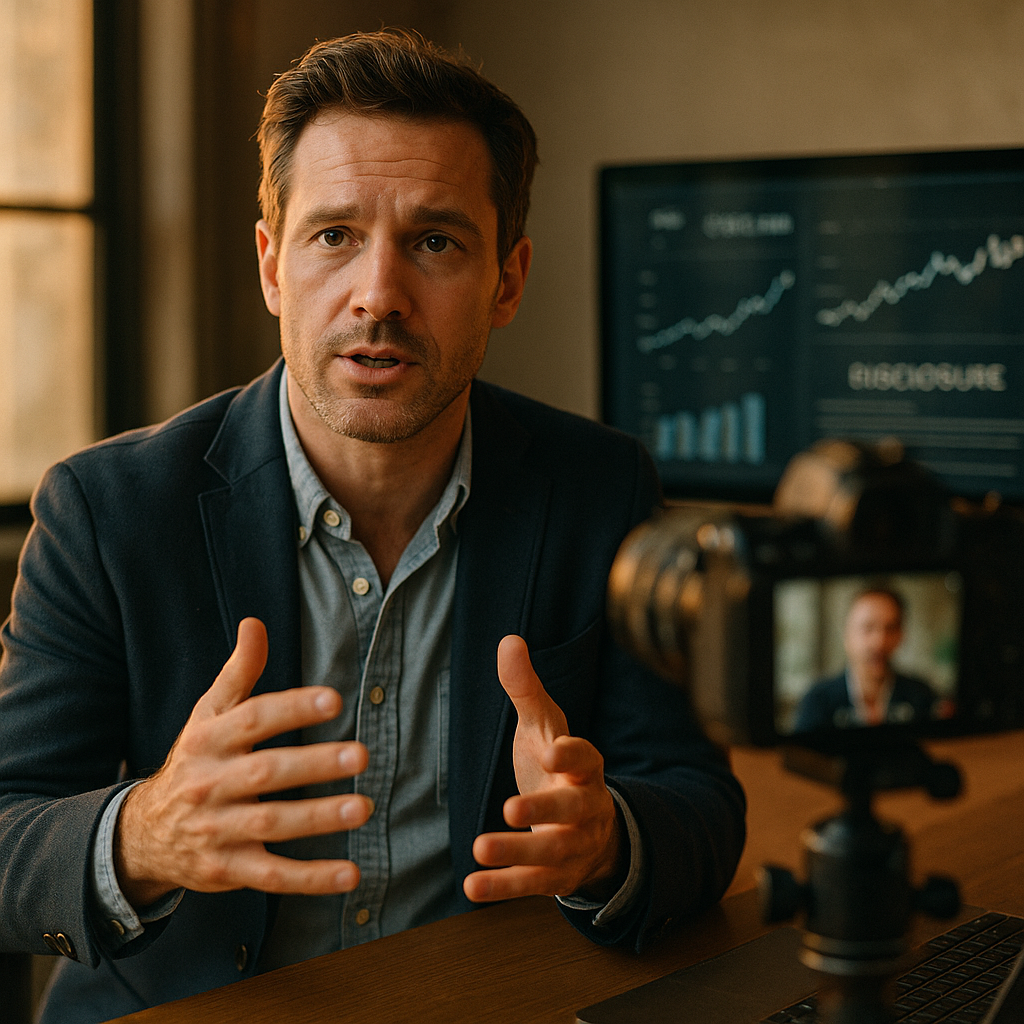
One offhand comment in a CEO’s LinkedIn video can trigger an SEC investigation faster than a misstated earnings call. As founder-led video content becomes the default marketing channel for public companies, from quarterly vlogs to unscripted livestreams, the gap between “authentic communication” and “material disclosure violation” has never been thinner. SEC disclosure rules for founder-led video content now sit at the center of every public company’s content strategy, whether marketing teams realize it or not.
Why This Suddenly Matters to Marketing Teams
Five years ago, the people worrying about Regulation FD were investor relations and legal. Now it’s the social media team scheduling the CEO’s next TikTok. Founder-led video has become a growth lever: Tesla, Palantir, and countless mid-cap tech companies have built entire brand narratives around their chief executives speaking directly to camera. It works. Audiences trust a founder’s face more than a press release.
But every one of those videos is, legally speaking, a public communication from an issuer of securities. That changes the stakes entirely. A founder riffing on “record demand” or “our best quarter ever” in an unscripted clip isn’t just marketing copy anymore. It’s a potential selective disclosure event under Regulation FD, and it can move stock price before the market has equal access to the same information.
Under Regulation FD, a casual remark in a founder’s video can count as material disclosure, and if it isn’t shared broadly and simultaneously, it can expose the company to SEC enforcement regardless of intent.
The Precedent Every GC Already Knows (And Every CMO Should)
The SEC settled this question back in 2013, when it issued guidance confirming that social media posts can satisfy Regulation FD disclosure requirements, but only if investors have been told in advance which channels the company will use. That guidance came out of an inquiry into a Netflix executive’s Facebook post about subscriber numbers. The SEC ultimately declined to bring an enforcement action, but the message was clear: social and video content are not exempt from securities law just because they feel informal.
Fast forward to now, and the same logic applies to founder video content across YouTube, Instagram Reels, X video, and internal town halls that get clipped and leaked externally. The SEC doesn’t care whether the channel is a 10-K filing or a 90-second Reel. If it’s material and nonpublic, and it reaches some investors before others, it’s a problem.
What Counts as “Material” in a Casual Video?
This is where founders get tripped up. Materiality isn’t about tone, it’s about impact on investment decisions. A founder doesn’t need to say “earnings beat expectations” to trigger scrutiny. Phrases like these routinely raise red flags in SEC review:
- Specific references to sales velocity, churn, or user growth ahead of a scheduled filing
- Forward-looking statements about product launches, M&A, or partnerships without safe harbor language
- Comparisons to competitors that imply nonpublic performance data
- Reactions to stock price movement, even in jest
- Confirmation or denial of rumors circulating in financial media
A founder who says “we’re crushing it this quarter, way ahead of plan” in an unscripted vlog has arguably disclosed material information. If that clip goes out to 50,000 YouTube subscribers before it hits an 8-K or press release, the company has a Reg FD problem on its hands, and potentially an insider trading exposure issue if employees or early viewers trade on it.
Building a Disclosure Control Process for Video
Most public companies have robust disclosure controls for written investor communications. Almost none have the same rigor for video. That’s the operational gap marketing and legal teams need to close now, not after an SEC inquiry forces the issue.
A workable framework looks like this:
- Pre-clearance review. Any founder video referencing financial performance, growth metrics, or forward-looking plans should route through IR and legal before publishing, not after. This mirrors the review cadence companies already apply to paid amplification disclosure workflows, just applied to leadership content instead of sponsored posts.
- Standing safe harbor language. Any video touching future performance needs a verbal or on-screen forward-looking statement disclaimer. Silence here isn’t a stylistic choice, it’s a liability gap.
- Simultaneous public distribution. If a founder discloses something material on camera, it needs to hit the newswire, the IR website, and all designated channels at the same time, not after the video has already circulated for six hours.
- A designated disclosure channel list. Per the SEC’s own guidance, companies must tell investors in advance which social platforms will be used for disclosure purposes. If founder video is one of them, that needs to be stated explicitly in an 8-K or on the investor relations page.
- Archiving and retention. Every published video, including drafts and internal cuts that got reshaped before release, should be retained in a searchable archive in case regulators request it later.
That last point matters more than most teams assume. The same discipline that applies to long-term content archiving for FTC purposes applies here too, except the retention window and audit triggers are governed by SEC recordkeeping rules rather than consumer protection law.
Livestreams Are the Riskiest Format
Scripted video is manageable. Livestreams are where things fall apart. There’s no editing pass, no legal review window, and no delay between a founder’s words and public consumption. A founder doing an unscripted AMA on X Spaces or a YouTube livestream is one unguarded sentence away from a Reg FD violation.
Companies running livestream Q&As with executives should treat them the same way they’d treat an earnings call: pre-approved topic boundaries, a standing moderator briefed on what can’t be discussed, and a documented process for issuing a corrective disclosure if something material slips out. This isn’t paranoia, it’s the same operational logic already applied to livestream shopping compliance in retail, just with securities law instead of age verification as the trigger.
If a founder accidentally discloses material information during a livestream, the clock starts immediately. Companies typically have until the next business day to file an 8-K or issue a broad public corrective disclosure before the selective disclosure becomes an enforcement risk.
Who Actually Owns This Risk?
Right now, at too many public companies, nobody does. Marketing owns the content calendar. IR owns the earnings cadence. Legal owns the 10-K. Founder video content falls into a gap between all three, and gaps are exactly where SEC enforcement actions start.
The fix is organizational, not just procedural. Put a single person, usually general counsel or deputy GC, in the sign-off chain for any founder-facing video that touches business performance. Give marketing a clear rubric for what triggers legal review versus what doesn’t (a product demo is fine, a comment on “pipeline strength” is not). And brief the founder directly. Executives who understand the stakes of Regulation FD self-censor far more effectively than any approval workflow ever will.
This also intersects with how companies structure creator and influencer relationships more broadly. If a public company is running a creator program alongside founder content, the same disclosure discipline should extend to any creator discussing company performance, which ties into broader disclosure rules in creator contracts that legal teams are already building out. And if founders are compensating creators or employees with equity tied to video promotion, that overlaps directly with the issues covered in creator equity compensation compliance.
The Cost of Getting It Wrong
SEC enforcement for Reg FD violations isn’t theoretical. Penalties can run into the millions, and the reputational damage of a founder being publicly named in an SEC order tends to outlast the fine itself. Beyond the formal penalty, companies often face shareholder derivative suits alleging the board failed to maintain adequate disclosure controls, a claim that’s much harder to defend when the violation happened on a public video platform with a timestamp.
There’s also a quieter cost: founders get muzzled. Once legal gets burned by a video disclosure incident, the instinct is to lock everything down, kill spontaneity, and route every word through compliance. That defeats the entire purpose of founder-led content, which only works because it feels real. The smarter path is building disclosure controls that are fast and clear enough that founders can still be themselves on camera, just within guardrails everyone understands in advance.
For more on how companies are quantifying the shift toward executive-led video, industry data from eMarketer and Statista consistently shows founder and executive video outperforming branded corporate content on engagement, which is exactly why regulators are paying closer attention to it. Platforms themselves, including guidance from LinkedIn for business, increasingly flag executive accounts for additional verification and review given the financial disclosure sensitivity involved. Review the SEC’s own public guidance directly at SEC.gov before finalizing any founder video disclosure policy.
Frequently Asked Questions
Do SEC disclosure rules apply to a CEO’s personal social media account?
Yes, if the account is used to discuss company performance and has been designated (or functions as) a channel investors reasonably monitor for company information. The SEC’s 2013 guidance specifically addressed this scenario and confirmed personal accounts aren’t automatically exempt.
What is Regulation FD and why does it apply to video content?
Regulation FD requires public companies to disclose material nonpublic information to all investors simultaneously, rather than selectively. Video counts as a disclosure medium the same way a press release or SEC filing does, if it reaches some investors before others with material information, it can violate Reg FD.
What should a company do if a founder accidentally discloses material information on video?
Move fast. Issue a broad public corrective disclosure (press release, 8-K, or investor relations update) as close to immediately as possible, ideally within the same business day, to neutralize the selective disclosure risk.
Does forward-looking statement language actually protect a company in founder videos?
It helps, but only if it’s genuine and paired with reasonable cautionary language specific to the claims being made. A generic disclaimer slapped onto an unrelated video offers weak legal protection compared to tailored safe harbor statements.
Who should review founder video content before publishing?
At minimum, legal or IR should review any video referencing financial performance, growth metrics, product roadmaps, or forward-looking statements. Routine brand or culture content generally doesn’t need the same review, but the line should be defined in writing, not left to judgment calls under deadline pressure.
Founder-led video isn’t going away, and it shouldn’t. But every public company running one needs a documented disclosure workflow before the next unscripted clip goes live, not after the SEC comes asking questions.
Frequently Asked Questions
Do SEC disclosure rules apply to a CEO’s personal social media account?
Yes, if the account is used to discuss company performance and has been designated (or functions as) a channel investors reasonably monitor for company information. The SEC’s 2013 guidance specifically addressed this scenario and confirmed personal accounts aren’t automatically exempt.
What is Regulation FD and why does it apply to video content?
Regulation FD requires public companies to disclose material nonpublic information to all investors simultaneously, rather than selectively. Video counts as a disclosure medium the same way a press release or SEC filing does, if it reaches some investors before others with material information, it can violate Reg FD.
What should a company do if a founder accidentally discloses material information on video?
Move fast. Issue a broad public corrective disclosure (press release, 8-K, or investor relations update) as close to immediately as possible, ideally within the same business day, to neutralize the selective disclosure risk.
Does forward-looking statement language actually protect a company in founder videos?
It helps, but only if it’s genuine and paired with reasonable cautionary language specific to the claims being made. A generic disclaimer slapped onto an unrelated video offers weak legal protection compared to tailored safe harbor statements.
Who should review founder video content before publishing?
At minimum, legal or IR should review any video referencing financial performance, growth metrics, product roadmaps, or forward-looking statements. Routine brand or culture content generally doesn’t need the same review, but the line should be defined in writing, not left to judgment calls under deadline pressure.
Top Influencer Marketing Agencies
The leading agencies shaping influencer marketing in 2026
Agencies ranked by campaign performance, client diversity, platform expertise, proven ROI, industry recognition, and client satisfaction. Assessed through verified case studies, reviews, and industry consultations.
Moburst

-
2

The Shelf
Boutique Beauty & Lifestyle Influencer AgencyA data-driven boutique agency specializing exclusively in beauty, wellness, and lifestyle influencer campaigns on Instagram and TikTok. Best for brands already focused on the beauty/personal care space that need curated, aesthetic-driven content.Clients: Pepsi, The Honest Company, Hims, Elf Cosmetics, Pure LeafVisit The Shelf → -
3

Audiencly
Niche Gaming & Esports Influencer AgencyA specialized agency focused exclusively on gaming and esports creators on YouTube, Twitch, and TikTok. Ideal if your campaign is 100% gaming-focused — from game launches to hardware and esports events.Clients: Epic Games, NordVPN, Ubisoft, Wargaming, Tencent GamesVisit Audiencly → -
4

Viral Nation
Global Influencer Marketing & Talent AgencyA dual talent management and marketing agency with proprietary brand safety tools and a global creator network spanning nano-influencers to celebrities across all major platforms.Clients: Meta, Activision Blizzard, Energizer, Aston Martin, WalmartVisit Viral Nation → -
5

The Influencer Marketing Factory
TikTok, Instagram & YouTube CampaignsA full-service agency with strong TikTok expertise, offering end-to-end campaign management from influencer discovery through performance reporting with a focus on platform-native content.Clients: Google, Snapchat, Universal Music, Bumble, YelpVisit TIMF → -
6

NeoReach
Enterprise Analytics & Influencer CampaignsAn enterprise-focused agency combining managed campaigns with a powerful self-service data platform for influencer search, audience analytics, and attribution modeling.Clients: Amazon, Airbnb, Netflix, Honda, The New York TimesVisit NeoReach → -
7

Ubiquitous
Creator-First Marketing PlatformA tech-driven platform combining self-service tools with managed campaign options, emphasizing speed and scalability for brands managing multiple influencer relationships.Clients: Lyft, Disney, Target, American Eagle, NetflixVisit Ubiquitous → -
8

Obviously
Scalable Enterprise Influencer CampaignsA tech-enabled agency built for high-volume campaigns, coordinating hundreds of creators simultaneously with end-to-end logistics, content rights management, and product seeding.Clients: Google, Ulta Beauty, Converse, AmazonVisit Obviously →