


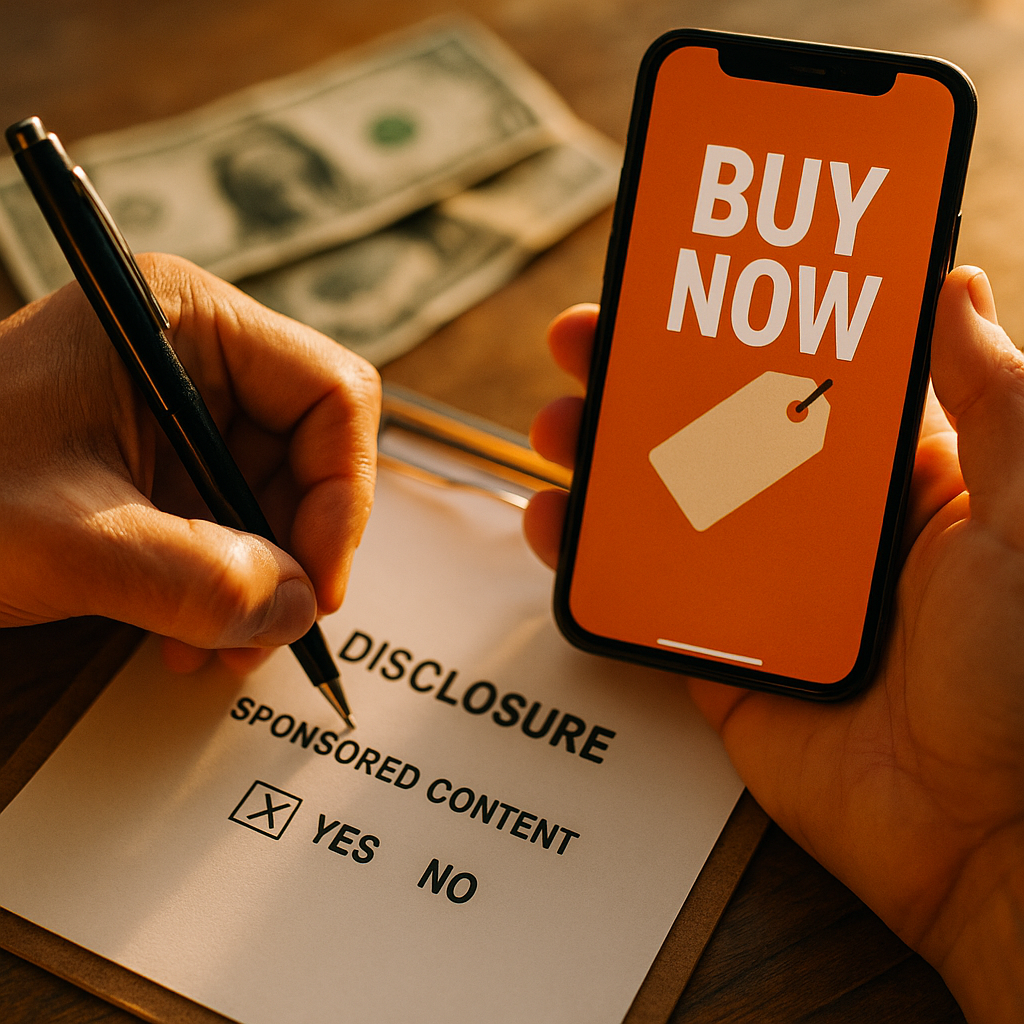
Zero dollars changed hands upfront. No flat fee, no free product even. Just a commission on every sale a creator’s link generated. And the FTC still called it a material connection requiring disclosure. If your brand runs performance-based creator payouts and assumes affiliate commissions sit outside disclosure rules because “it’s just a percentage,” you’re reading the regulation wrong, and the exposure is bigger than most compliance teams realize.
The Myth That Commission Isn’t Compensation
Somewhere along the way, a lot of brand marketers convinced themselves that affiliate commissions are different from sponsorship fees. The logic goes: a flat payment is “pay for promotion,” while a commission is “pay for performance,” so it’s basically a sales job, not an endorsement. That distinction feels intuitive. It’s also legally irrelevant.
The Federal Trade Commission doesn’t care how the money arrives. It cares whether a connection exists between the creator and the brand that a reasonable consumer wouldn’t expect, and whether that connection could affect how the audience weighs the creator’s claims. A commission structure is textbook material connection. The creator has a direct financial incentive to drive clicks and purchases, which is precisely the kind of bias the FTC’s Endorsement Guides were built to surface.
Under FTC guidance, any payment tied to a creator’s recommendation, whether flat fee, free product, or a commission on sales, counts as a material connection that must be disclosed.
Why Affiliate Deals Feel Lower Risk (And Aren’t)
Affiliate programs scale fast. Brands onboard hundreds, sometimes thousands, of creators through platforms like ShareASale, Impact, or TikTok Shop’s affiliate marketplace, often with minimal individual vetting. That volume creates a dangerous assumption: if nobody signed a formal contract spelling out “sponsored content,” maybe the disclosure obligation doesn’t apply.
It applies. The FTC’s position has been consistent for over a decade: disclosure obligations attach to the relationship, not the paperwork. A creator posting a product review with an affiliate link earning them 8% per sale is in exactly the same disclosure position as a creator paid a flat $5,000 for a sponsored post. Both have skin in the game. Both need to say so, clearly and conspicuously, near the claim itself.
This matters even more as creator commerce spending keeps climbing and affiliate-style arrangements become the default monetization model on platforms like TikTok Shop and Amazon Influencer. Volume doesn’t dilute risk. It multiplies it.
Where Brands Get Tripped Up
- Assuming the platform handles disclosure. TikTok Shop and similar marketplaces may auto-tag “Shop” badges, but those badges often don’t satisfy FTC disclosure standards on their own, especially when content is cross-posted to Instagram or YouTube without the badge intact.
- Treating micro-affiliates as exempt. A creator with 3,000 followers earning $40 a month in commissions still has a material connection. Follower count and payout size don’t create a disclosure threshold.
- Relying on vague hashtags. #ad or #sponsored works. #partner, #collab, or nothing at all generally doesn’t meet the “clear and conspicuous” bar the FTC expects.
- Losing visibility once content moves off-platform. A review video with an affiliate link gets reposted, clipped, or embedded elsewhere, and the disclosure disappears in transit.
What “Material Connection” Actually Means in Practice
The FTC defines a material connection broadly: any relationship that might affect the weight or credibility a consumer gives to an endorsement. That includes employment, family ties, free products, event invites, and yes, commission structures. The test isn’t “did money change hands at the moment of posting.” It’s “does this creator stand to gain if the audience acts on their recommendation.”
Performance-based payouts fail that test by design. The entire point of an affiliate link is to reward action. That’s not a loophole around disclosure rules, it’s the exact scenario those rules were written for.
Brands that have been through an FTC inquiry know the agency doesn’t just look at the creator’s post. It looks at the brand’s affiliate agreement, the onboarding materials, and whether the brand instructed or enabled creators to disclose properly. A poorly worded affiliate contract that never mentions FTC obligations is itself evidence of inadequate oversight. For a deeper breakdown of disclosure mechanics specific to affiliate links, see our coverage of affiliate disclosure requirements.
The Enforcement Pattern Brands Should Watch
FTC enforcement against individual micro-affiliates is rare. Enforcement against brands running sloppy affiliate programs at scale is where the real exposure sits. The agency has repeatedly signaled that it holds brands and agencies responsible for monitoring their creator networks, not just drafting a disclosure clause and walking away.
That’s an operational problem as much as a legal one. If your affiliate program has 500 active creators and no systematic audit process, you don’t actually know your disclosure compliance rate. You’re guessing. And “we didn’t know” has never been a winning defense in an FTC consent order.
Brands that scale affiliate programs without a disclosure audit process are effectively building compliance debt that compounds with every new creator added.
This is also where worker classification and payment structure start to overlap with disclosure risk. If you’re restructuring how affiliates get paid, it’s worth reviewing how those arrangements intersect with broader classification exposure, covered in our piece on creator payment classification risk.
Building a Compliance Process That Actually Scales
Treating disclosure as a one-time contract clause doesn’t work once you’re running affiliate programs with hundreds of participants. It needs to be a system, not a sentence buried in a terms-of-service agreement.
- Bake disclosure language into onboarding, not just contracts. Give creators exact phrasing, show examples of compliant posts, and explain the “why” so it’s not just a checkbox.
- Audit on a rolling schedule. Spot-check a percentage of affiliate content monthly rather than waiting for a complaint or a regulator’s letter.
- Track disclosure across repurposed content. If a creator’s review gets clipped for paid ads or embedded on a retail site, confirm the disclosure travels with it. This connects directly to issues we’ve covered around whitelisting and distribution rights, where content gets repurposed beyond its original disclosure context.
- Document everything. If the FTC ever comes knocking, a documented audit trail showing active monitoring is your best evidence of good faith compliance efforts.
- Keep archived proof of compliant posts. Platforms change, posts get deleted, and algorithms update badge displays. Archiving matters more than most teams assume, a point we unpack in our guide to content archiving for FTC audits.
None of this requires exotic legal infrastructure. It requires treating performance-based creator relationships with the same disclosure rigor you’d apply to a six-figure brand ambassador deal. The dollar amount isn’t the trigger. The incentive is.
A Quick Gut Check for Marketing Teams
Ask yourself three questions before your next affiliate campaign launch. Does the creator benefit financially if someone clicks or buys? Would the average viewer assume this is an unbiased opinion without more context? Is the disclosure visible before the viewer has to click “more” or scroll past three lines of caption?
If you answered yes, no, and no, you’ve got a disclosure gap. Fix it before a regulator, a competitor, or a consumer watchdog group finds it for you. Platforms like Sprout Social and HubSpot both publish practical guidance on building disclosure checks into campaign workflows, worth reviewing if your current process is still manual.
The Bottom Line for Brand Teams
Run an audit of your current affiliate roster this quarter: check whether disclosures are present, clear, and placed before the point of action, not buried in a bio link or a pinned comment. That single exercise will tell you more about your real FTC exposure than any contract review ever will.
Frequently Asked Questions
Does the FTC consider affiliate commissions the same as sponsorship fees?
Yes. The FTC treats any payment tied to a creator’s recommendation, including commission on sales through an affiliate link, as a material connection requiring clear disclosure, regardless of the payment structure.
Do micro-affiliates earning small commissions still need to disclose?
Yes. There is no follower count or payout threshold that exempts a creator from disclosure obligations. Even a small commission creates a financial incentive the FTC considers material.
Is a platform’s automatic “Shop” or “affiliate” badge enough to satisfy disclosure rules?
Not always. Platform badges may not meet the FTC’s “clear and conspicuous” standard, especially if content is reposted elsewhere without the badge, so brands should not rely on platform tagging alone.
Who is responsible if an affiliate creator fails to disclose properly?
Both the creator and the brand running the affiliate program can face scrutiny. The FTC has signaled that brands are expected to monitor and enforce disclosure compliance across their creator networks, not just include a clause in a contract.
What disclosure language satisfies FTC requirements for affiliate content?
Clear terms like “#ad” or “I earn a commission from purchases made through this link” placed before the point of action, not buried in captions or linked bios, generally meet FTC expectations better than vague terms like “#partner.”
Top Influencer Marketing Agencies
The leading agencies shaping influencer marketing in 2026
Agencies ranked by campaign performance, client diversity, platform expertise, proven ROI, industry recognition, and client satisfaction. Assessed through verified case studies, reviews, and industry consultations.
Moburst

-
2

The Shelf
Boutique Beauty & Lifestyle Influencer AgencyA data-driven boutique agency specializing exclusively in beauty, wellness, and lifestyle influencer campaigns on Instagram and TikTok. Best for brands already focused on the beauty/personal care space that need curated, aesthetic-driven content.Clients: Pepsi, The Honest Company, Hims, Elf Cosmetics, Pure LeafVisit The Shelf → -
3

Audiencly
Niche Gaming & Esports Influencer AgencyA specialized agency focused exclusively on gaming and esports creators on YouTube, Twitch, and TikTok. Ideal if your campaign is 100% gaming-focused — from game launches to hardware and esports events.Clients: Epic Games, NordVPN, Ubisoft, Wargaming, Tencent GamesVisit Audiencly → -
4

Viral Nation
Global Influencer Marketing & Talent AgencyA dual talent management and marketing agency with proprietary brand safety tools and a global creator network spanning nano-influencers to celebrities across all major platforms.Clients: Meta, Activision Blizzard, Energizer, Aston Martin, WalmartVisit Viral Nation → -
5

The Influencer Marketing Factory
TikTok, Instagram & YouTube CampaignsA full-service agency with strong TikTok expertise, offering end-to-end campaign management from influencer discovery through performance reporting with a focus on platform-native content.Clients: Google, Snapchat, Universal Music, Bumble, YelpVisit TIMF → -
6

NeoReach
Enterprise Analytics & Influencer CampaignsAn enterprise-focused agency combining managed campaigns with a powerful self-service data platform for influencer search, audience analytics, and attribution modeling.Clients: Amazon, Airbnb, Netflix, Honda, The New York TimesVisit NeoReach → -
7

Ubiquitous
Creator-First Marketing PlatformA tech-driven platform combining self-service tools with managed campaign options, emphasizing speed and scalability for brands managing multiple influencer relationships.Clients: Lyft, Disney, Target, American Eagle, NetflixVisit Ubiquitous → -
8

Obviously
Scalable Enterprise Influencer CampaignsA tech-enabled agency built for high-volume campaigns, coordinating hundreds of creators simultaneously with end-to-end logistics, content rights management, and product seeding.Clients: Google, Ulta Beauty, Converse, AmazonVisit Obviously →