


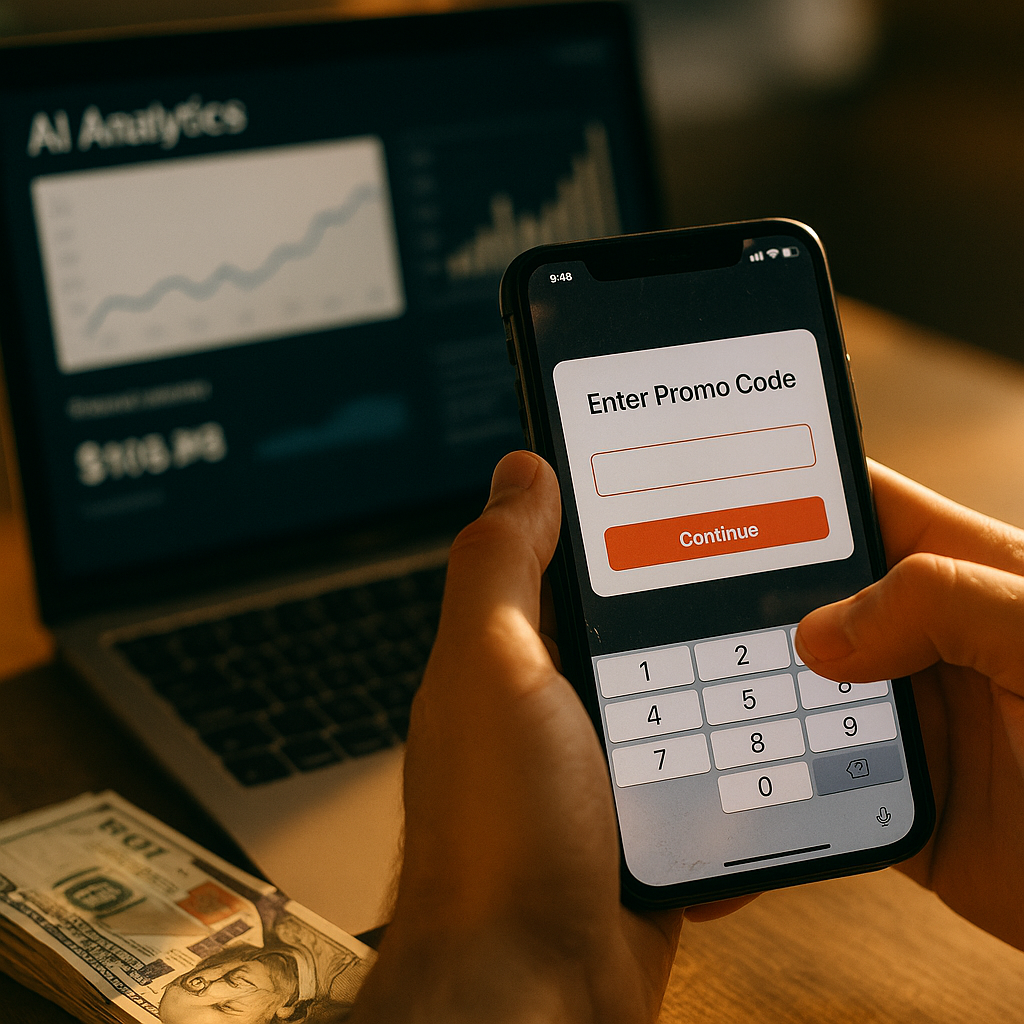
Here’s an uncomfortable question for every brand running six-figure creator budgets: if your attribution model is so advanced, why does the intern’s spreadsheet of promo code redemptions still produce cleaner numbers than your AI-powered dashboard? Ask any performance marketer who has reconciled a manual promo codes report against a probabilistic attribution model, and they’ll tell you the same thing. The simple code wins. Not because AI is bad technology, but because it’s answering a different question than the one most creator programs actually need answered.
The Attribution Promise That Keeps Breaking
AI attribution vendors have spent the better part of three years promising to solve the “last click doesn’t exist anymore” problem. Cookie deprecation, in-app browsers, and privacy-first operating systems all made deterministic tracking harder, so the industry pivoted to probabilistic models, media mix modeling, and machine learning inference. These tools are genuinely useful at the aggregate level. They’re much weaker when you need to answer a specific, practical question: did Creator A’s video on a Tuesday actually drive 340 sales, or is that number a statistical artifact of an algorithm smoothing over gaps in the data?
That gap matters more in creator marketing than almost any other channel. Brands aren’t just trying to understand channel-level ROI, they’re trying to decide which individual creators to re-sign, which ones to drop, and how to structure next quarter’s commission tiers. rebuilding attribution for zero click search environments has forced a lot of teams to confront how much of their “AI-driven” reporting is actually confident guessing dressed up in a clean UI.
A promo code redemption is a fact. An attribution model’s output is an estimate. Brands making five and six-figure creator decisions deserve to know which one they’re looking at.
Why Promo Codes Still Win on the Ground
Promo codes are unglamorous. They’re also brutally honest. When a customer types CREATORNAME20 at checkout, there’s no inference happening, no device graph stitching, no probabilistic weighting across touchpoints. It’s a direct, observable action tied to a single, unambiguous source. That’s the entire appeal.
Consider a mid-size DTC skincare brand running a roster of 40 creators. Their AI attribution platform, built on multi-touch modeling, reported that a group of five “high-impact” creators were responsible for 22% of incremental revenue. When the brand cross-referenced that against unique promo codes assigned to each creator, three of those five barely moved the needle. The attribution model had inflated their contribution because their content appeared early in modeled customer journeys, a position the algorithm weighted heavily even though the actual purchase happened weeks later through an entirely different path.
This isn’t a one-off. According to eMarketer, marketers consistently cite measurement accuracy as one of their top three frustrations with influencer programs, even as spend on the channel keeps climbing. The tools have gotten more sophisticated. The trust gap hasn’t closed.
Promo codes solve this by removing the guesswork. They give brands:
- A direct, auditable link between a specific creator and a specific transaction
- Easy reconciliation against finance and inventory systems without a data science team
- A negotiating tool for performance-based contracts that creators themselves understand and trust
- Protection against the “black box” problem where nobody on the team can explain why the model said what it said
That last point matters more than most brands admit. When a CFO asks why creator spend doubled this quarter, “the AI model attributed increased influence” is not a sentence that survives a budget review. “This creator’s code was used 4,200 times at an average order value of $68” absolutely does.
What AI Attribution Actually Measures (And Misses)
None of this means AI attribution is worthless. It’s genuinely good at answering questions promo codes can’t touch: incremental lift across a full-funnel campaign, the interplay between paid and organic creator content, or how a creator’s audience behaves across multiple touchpoints before converting. unified models merging MMM and incrementality testing are genuinely moving the needle on strategic planning.
The problem is scope creep. Brands bought AI attribution tools to answer “what’s our true incrementality,” then started asking those same tools “which individual creator should we pay a bonus to this month.” That’s asking a macro tool to do micro work, and the results are predictably shaky. Probabilistic models are built to be directionally right across thousands of data points, not surgically precise about one creator’s one post.
There’s also a data quality issue underneath all of this. research on creator data quality gaps found that nearly half of the inputs feeding these AI systems have structural issues, duplicate records, mismatched UTMs, inconsistent naming conventions across platforms. Feed an attribution model garbage inputs and it will still produce an output. It just won’t be one you can defend in a board meeting.
Platforms like TikTok Shop and Instagram’s affiliate tools have started building native code and link tracking directly into their creator commerce features, which tells you something about where the market is actually voting with its product roadmaps. You can review the TikTok for Business ads platform and see the emphasis shifting toward direct, trackable conversion events rather than purely modeled attribution.
The Hybrid Model Smart Brands Are Running
The brands getting this right aren’t choosing promo codes or AI attribution. They’re running both, with a clear division of labor. Promo codes and unique affiliate links handle creator-level truth: who sold what, to whom, at what price. AI attribution and media mix modeling handle the strategic layer: overall channel health, cross-platform synergy, and budget allocation between creator marketing and paid media.
This mirrors what’s happening with marketing measurement partners more broadly. Choosing between mobile measurement providers like Airbridge, AppsFlyer, or Singular isn’t an either/or decision against promo codes either, it’s about layering deterministic and probabilistic data so each one covers the other’s blind spots.
There’s a third layer worth mentioning too: warehouse-first identity resolution. Brands running warehouse first identity tools are finding they can reconstruct customer journeys using first-party data without relying entirely on either promo codes or black-box AI models. It’s more engineering work upfront, but it closes the gap between “what the model says” and “what actually happened in our CRM.”
The practical workflow looks something like this for a team running quarterly creator programs:
- Assign every creator a unique promo code or trackable link before content goes live
- Use that code data as the primary source for individual creator performance reviews and payouts
- Feed aggregated, code-verified conversion data into the AI attribution or MMM layer as ground truth
- Use the AI layer to answer strategic questions: budget splits, channel mix, incrementality testing
- Audit the two data sets against each other quarterly to catch drift
That last step is the one most teams skip, and it’s the one that catches problems early. If your promo code data and your AI attribution data start diverging by more than 15 to 20%, something in your tracking setup needs attention before you make another budget decision based on either one.
Margins, Not Just Clicks, Decide the Winner
There’s a financial angle here too that’s easy to overlook. As more brands move toward margin based target ROAS models, the precision of promo code data becomes even more valuable. You can’t optimize creator payouts around true margin contribution if your attribution data is a probabilistic estimate with a wide confidence interval. Promo codes let finance teams tie creator compensation directly to verified revenue and actual margin, not a modeled approximation that might be off by a third.
This also matters for compliance. The Federal Trade Commission expects brands to be able to substantiate performance claims made in creator contracts and disclosures. A promo code redemption log is far easier to produce in an audit than an explanation of how a neural network weighted forty touchpoints across a fourteen-day window.
When AI Attribution Actually Makes Sense
To be fair to the technology: AI attribution earns its keep in a few specific scenarios. Large-scale brand awareness campaigns where no direct conversion event exists benefit from modeled lift studies. Cross-channel budget planning, where you’re deciding how much to shift from paid social to creator partnerships, needs the broader view that only aggregated modeling can provide. And brands dealing with long, non-linear purchase cycles (think furniture, financial services, or B2B software) genuinely need probabilistic tools because no single promo code can capture a journey that spans months.
The mistake is applying that same modeled logic to decisions that should be deterministic. Sprout Social’s research on creator marketing consistently shows that brands with clearer measurement frameworks report higher satisfaction with influencer ROI, and clarity usually comes from simpler, more direct tracking methods layered underneath the fancier tools.
Reconstructing journeys that cookies and modeled attribution hide is also becoming its own discipline. reconstructed customer journey work shows brands recovering revenue attribution that neither promo codes nor standard AI models catch on their own, usually by stitching first-party data back together at the identity level.
Frequently Asked Questions
The questions below reflect what brand and agency teams ask most often when deciding how to measure creator campaigns.
Are promo codes outdated for creator attribution?
No. Promo codes remain one of the most reliable, low-cost ways to verify individual creator performance. Their simplicity is the advantage: there’s no modeling layer between the customer action and the data you see.
Why does AI attribution overestimate some creators?
Probabilistic models often assign credit based on position in a modeled journey rather than confirmed purchase behavior. Creators who appear early in a customer’s browsing pattern can get weighted heavily even when their content didn’t directly drive the sale.
Should brands drop AI attribution tools entirely?
No. AI attribution and media mix modeling are valuable for strategic, channel-level decisions like budget allocation and incrementality testing. They’re just the wrong tool for evaluating individual creator payouts or performance bonuses.
How do promo codes handle multi-touch customer journeys?
They don’t capture every touchpoint, and that’s by design. Promo codes answer “who gets credit for this specific transaction,” not “how many channels influenced this customer over time.” Brands needing the full journey view should pair codes with warehouse-first identity resolution or MMM.
What’s the biggest risk of relying only on AI attribution for creator payouts?
Overpaying creators who look influential in a model but didn’t drive verified sales, while underpaying creators whose direct, trackable impact gets diluted across a broader modeled journey. It also creates compliance exposure if payout logic can’t be clearly explained or substantiated.
Frequently Asked Questions
Are promo codes outdated for creator attribution?
No. Promo codes remain one of the most reliable, low-cost ways to verify individual creator performance. Their simplicity is the advantage: there’s no modeling layer between the customer action and the data you see.
Why does AI attribution overestimate some creators?
Probabilistic models often assign credit based on position in a modeled journey rather than confirmed purchase behavior. Creators who appear early in a customer’s browsing pattern can get weighted heavily even when their content didn’t directly drive the sale.
Should brands drop AI attribution tools entirely?
No. AI attribution and media mix modeling are valuable for strategic, channel-level decisions like budget allocation and incrementality testing. They’re just the wrong tool for evaluating individual creator payouts or performance bonuses.
How do promo codes handle multi-touch customer journeys?
They don’t capture every touchpoint, and that’s by design. Promo codes answer “who gets credit for this specific transaction,” not “how many channels influenced this customer over time.” Brands needing the full journey view should pair codes with warehouse-first identity resolution or MMM.
What’s the biggest risk of relying only on AI attribution for creator payouts?
Overpaying creators who look influential in a model but didn’t drive verified sales, while underpaying creators whose direct, trackable impact gets diluted across a broader modeled journey. It also creates compliance exposure if payout logic can’t be clearly explained or substantiated.
If your next creator negotiation hinges on performance data, start with the promo code report, not the attribution dashboard. Use AI modeling to plan the budget, use the code to decide who earns it.
Top Influencer Marketing Agencies
The leading agencies shaping influencer marketing in 2026
Agencies ranked by campaign performance, client diversity, platform expertise, proven ROI, industry recognition, and client satisfaction. Assessed through verified case studies, reviews, and industry consultations.
Moburst

-
2

The Shelf
Boutique Beauty & Lifestyle Influencer AgencyA data-driven boutique agency specializing exclusively in beauty, wellness, and lifestyle influencer campaigns on Instagram and TikTok. Best for brands already focused on the beauty/personal care space that need curated, aesthetic-driven content.Clients: Pepsi, The Honest Company, Hims, Elf Cosmetics, Pure LeafVisit The Shelf → -
3

Audiencly
Niche Gaming & Esports Influencer AgencyA specialized agency focused exclusively on gaming and esports creators on YouTube, Twitch, and TikTok. Ideal if your campaign is 100% gaming-focused — from game launches to hardware and esports events.Clients: Epic Games, NordVPN, Ubisoft, Wargaming, Tencent GamesVisit Audiencly → -
4

Viral Nation
Global Influencer Marketing & Talent AgencyA dual talent management and marketing agency with proprietary brand safety tools and a global creator network spanning nano-influencers to celebrities across all major platforms.Clients: Meta, Activision Blizzard, Energizer, Aston Martin, WalmartVisit Viral Nation → -
5

The Influencer Marketing Factory
TikTok, Instagram & YouTube CampaignsA full-service agency with strong TikTok expertise, offering end-to-end campaign management from influencer discovery through performance reporting with a focus on platform-native content.Clients: Google, Snapchat, Universal Music, Bumble, YelpVisit TIMF → -
6

NeoReach
Enterprise Analytics & Influencer CampaignsAn enterprise-focused agency combining managed campaigns with a powerful self-service data platform for influencer search, audience analytics, and attribution modeling.Clients: Amazon, Airbnb, Netflix, Honda, The New York TimesVisit NeoReach → -
7

Ubiquitous
Creator-First Marketing PlatformA tech-driven platform combining self-service tools with managed campaign options, emphasizing speed and scalability for brands managing multiple influencer relationships.Clients: Lyft, Disney, Target, American Eagle, NetflixVisit Ubiquitous → -
8

Obviously
Scalable Enterprise Influencer CampaignsA tech-enabled agency built for high-volume campaigns, coordinating hundreds of creators simultaneously with end-to-end logistics, content rights management, and product seeding.Clients: Google, Ulta Beauty, Converse, AmazonVisit Obviously →