


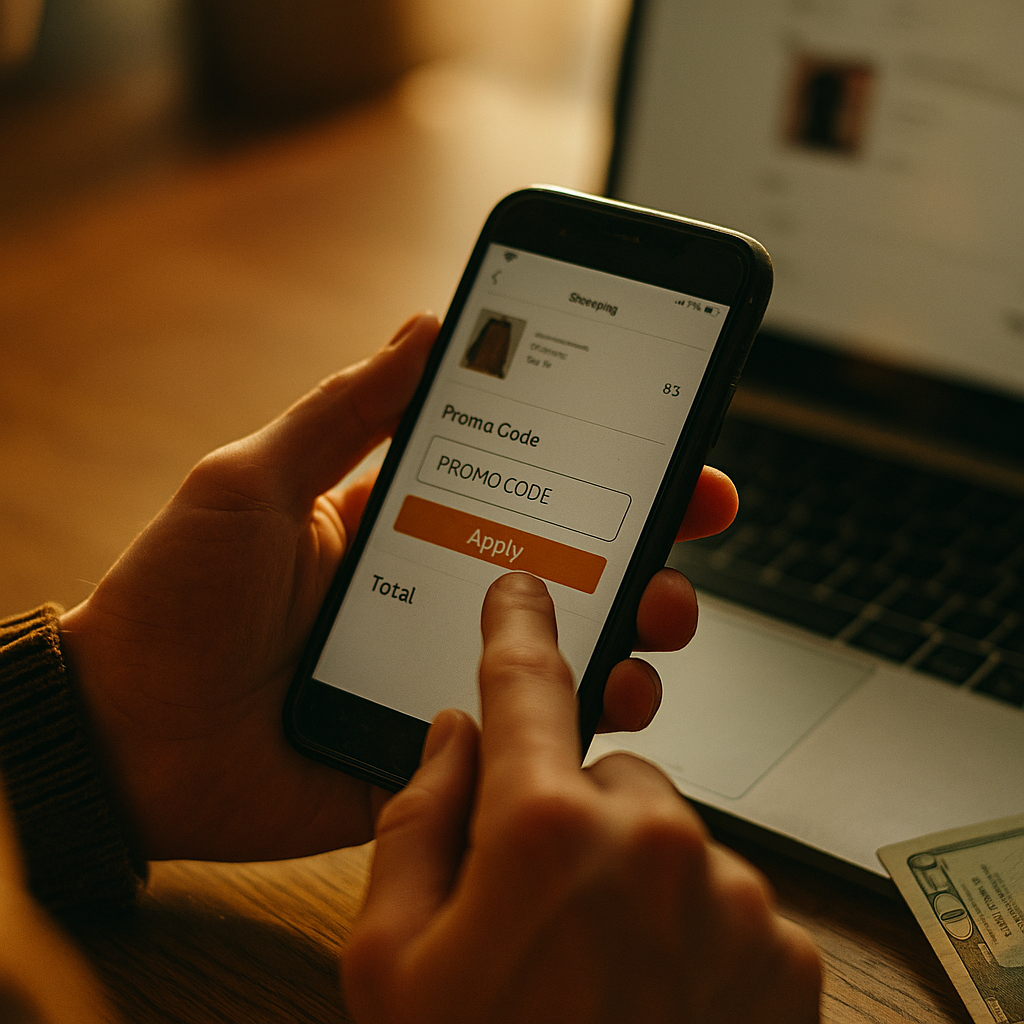
45.9 percent of brands still hand creators a discount code instead of a trackable link. That is not nostalgia. In a channel obsessed with pixel-perfect attribution, promo code attribution remains the default measurement tool for nearly half the market, and the reasons have almost nothing to do with laziness and everything to do with how real purchase behavior works.
The Stat Nobody Wants to Admit
Ask any performance marketer which they’d rather use, affiliate links or promo codes, and most will say links. Links feel modern. They feel clean. They slot into a dashboard and spit out a clickthrough rate that makes a slide deck look good. Yet when you survey actual brand practice rather than stated preference, the numbers flip. A recent cross-industry survey found 45.9 percent of brands default to discount code attribution as their primary influencer tracking method, outpacing dedicated affiliate link platforms and even app-based tracking pixels.
Why does this matter? Because it reveals a gap between what the industry says it wants (precision, automation, programmatic scale) and what actually drives measurable revenue inside a messy, multi-device, privacy-constrained buying journey. Codes win not because they’re elegant, but because they’re resilient.
Promo codes survive the exact conditions that break link tracking: dark social shares, cross-device purchases, ad blockers, and in-app browsers that strip referral parameters.
Why Links Break and Codes Don’t
Affiliate links depend on a chain of technical assumptions holding true. The click has to fire. The cookie has to persist. The browser can’t block third-party trackers. The customer has to buy on the same device, ideally in the same session. In practice, none of that holds reliably anymore.
Consider the typical path: a shopper sees a creator’s video on TikTok, taps nothing, opens Safari later that night, and buys from a desktop the next morning. No click, no cookie, no attribution. Apple’s ITP, Google’s phase-out of third-party cookies, and the sheer dominance of in-app browsers on Instagram and TikTok have quietly gutted the reliability of link-based tracking. Google’s own guidance on tracking limitations acknowledges how fragmented cross-device measurement has become.
A promo code sidesteps almost all of that. The customer remembers “SARAH20” because it’s tied to a person they trust, not a URL they have to screenshot or bookmark. They can type it in three days later from any device, any browser, any checkout flow. It travels through word of mouth, screenshots, group chats, and Discord servers in a way a tracking URL never will. That’s dark social doing what dark social does, and codes are the only attribution method built to survive it.
The Compliance Angle Brands Underrate
There’s also a disclosure benefit that rarely gets discussed. Regulators in the US and UK have tightened scrutiny on undisclosed material connections between brands and creators. A unique promo code baked into the caption or verbal read (“use code JESS15 for 15 percent off”) doubles as a built-in disclosure mechanism. It signals to the consumer that a commercial relationship exists, which helps brands stay inside FTC endorsement guidelines. Affiliate links, especially when shortened or masked, can actually obscure that relationship if creators aren’t careful about labeling. That’s a quiet compliance win for legal and brand safety teams who are increasingly involved in influencer program sign-off. For more on how disclosure requirements are reshaping contracts, see how brand safety shifts from scripts to contracts rather than relying on creative guidelines alone.
Operational Simplicity Wins the Budget Argument
Here’s the part finance and ops teams actually care about. Affiliate link platforms, whether that’s Impact, ShareASale, or a custom-built solution, require integration work. Someone has to connect the e-commerce backend, map UTM structures, QA the tracking, and troubleshoot broken redirects when a creator posts the wrong link. Promo codes require none of that. Any Shopify store, any POS system, any basic e-commerce platform can generate a unique code in minutes. No engineering ticket required.
For mid-market brands without a dedicated martech team, that difference is the whole ballgame. A DTC skincare brand running fifteen creator partnerships a month doesn’t want to manage fifteen tracking links across fifteen platforms with fifteen different UTM conventions. It wants fifteen codes it can issue, revoke, and reconcile against sales data in a single spreadsheet. HubSpot’s own research on marketing attribution has repeatedly flagged that simpler tracking methods see higher adoption among resource-constrained teams, and influencer marketing is no exception.
This operational logic connects directly to a broader trend covered in attribution models missing two thirds of influencer driven sales: the industry keeps building more sophisticated tracking infrastructure while the actual purchase behavior keeps routing around it. Codes are the pragmatic patch.
Where Affiliate Links Still Win
None of this means links are obsolete. For large-scale affiliate programs with hundreds of participants, where automated payout reconciliation matters more than individual relationship tracking, link-based platforms still make sense. They scale better across huge rosters, integrate with programmatic payout systems, and work well for evergreen content like YouTube reviews or blog posts where a code would feel out of place or go stale.
Links also win on granular campaign-level data. If a brand wants to know exactly which Instagram Story slide drove the click, a link with a unique parameter beats a code every time. That level of detail matters for brands running always-on retainer programs where creative testing is constant. If your program has moved toward retainer rosters instead of one off deals, the ongoing cadence of content makes link-level granularity worth the operational overhead.
The honest answer is that most mature programs end up running both. Codes for top-of-funnel creator partnerships and younger, non-technical creators who just want to say a word on camera. Links for performance-focused affiliates, paid partnerships with sophisticated tracking needs, and anyone running evergreen or long-tail content.
What the 45.9 Percent Figure Signals About the Market
Step back and the number tells a bigger story than a tracking preference. It suggests the influencer marketing industry, for all its talk of AI-driven attribution and programmatic optimization, still runs on relationship-based commerce. A code is personal. It’s a shorthand for “this creator sent you,” and consumers respond to that social proof in a way that a sterile tracking link never replicates.
That’s consistent with other data showing micro influencer trust premiums reshaping creator budgets. Trust-driven purchase behavior doesn’t route cleanly through a URL. It routes through a name, a code, a recommendation repeated in a comment section. Brands that treat influencer marketing like paid search, obsessing over last-click attribution and granular link data, are often measuring the wrong thing entirely.
It’s also worth connecting this to budget allocation trends. As a quarter of marketing budgets now flow to creators, CFOs are asking harder questions about ROI proof. Promo codes, messy as they are, give finance teams a number they can point to: redemptions, revenue per code, repeat usage. That’s more defensible in a budget review than a click count that may or may not reflect an actual sale.
A promo code that converts at 3 percent beats a tracking link with a 40 percent clickthrough rate and no attributable revenue. Redemptions pay the bills; clicks don’t.
Building a Hybrid Attribution Stack That Actually Works
If you’re running an influencer program right now and wondering which method to standardize on, don’t. Standardize on a decision framework instead:
- Use unique codes for any creator partnership where trust and word-of-mouth sharing matter more than click-level granularity, which is most micro and mid-tier influencer work.
- Use affiliate links for large-scale programs, paid partnership ads, and evergreen content where long-term click data justifies the setup cost.
- Layer in post-purchase surveys (“how did you hear about us?”) to catch the dark social and word-of-mouth conversions that neither method captures perfectly.
- Reconcile code redemption data against paid media spend monthly, not quarterly, so budget shifts happen before the quarter closes rather than after.
The brands getting this right aren’t choosing one method and declaring victory. They’re building a hybrid stack and accepting that attribution in influencer marketing will always be directionally accurate rather than perfectly precise. That’s a hard pill for data teams raised on paid search dashboards, but it’s the operating reality of a channel built on trust rather than clicks. For brands still fighting legal and compliance friction around creator disclosure, it’s also worth reviewing how contracts rather than dashboards close the ROI gap in markets with stricter enforcement.
FAQs
Frequently Asked Questions
Why do brands use promo codes instead of affiliate links for influencer tracking?
Promo codes survive conditions that break link tracking, including cross-device purchases, ad blockers, and in-app browsers that strip referral data. They’re also easier to set up operationally since any basic e-commerce platform can issue a unique code without engineering support.
Are affiliate links completely unreliable for influencer marketing?
No. Affiliate links still provide valuable click-level granularity and work well for large-scale affiliate programs, evergreen content, and campaigns where automated payout reconciliation across hundreds of creators matters more than individual relationship tracking.
Can brands use both promo codes and affiliate links together?
Yes, and most mature influencer programs do. Codes work best for trust-driven partnerships with micro and mid-tier creators, while links suit performance-focused affiliates and evergreen content where granular click data is worth the extra setup.
Do promo codes help with FTC disclosure compliance?
A spoken or captioned promo code naturally signals a commercial relationship to the consumer, which supports disclosure requirements under FTC endorsement guidelines. This is distinct from a masked or shortened affiliate link, which can sometimes obscure that relationship if not labeled carefully.
What is the biggest downside of relying only on promo codes?
Promo codes lack the granular, content-level detail that affiliate links provide, such as which specific post or story slide drove a conversion. Brands running heavy creative testing programs often need that link-level data to optimize content decisions.
Stop debating codes versus links as a binary choice. Audit your current roster, assign codes to relationship-driven creators and links to performance affiliates, then reconcile both against actual revenue every month rather than every quarter.
Top Influencer Marketing Agencies
The leading agencies shaping influencer marketing in 2026
Agencies ranked by campaign performance, client diversity, platform expertise, proven ROI, industry recognition, and client satisfaction. Assessed through verified case studies, reviews, and industry consultations.
Moburst

-
2

The Shelf
Boutique Beauty & Lifestyle Influencer AgencyA data-driven boutique agency specializing exclusively in beauty, wellness, and lifestyle influencer campaigns on Instagram and TikTok. Best for brands already focused on the beauty/personal care space that need curated, aesthetic-driven content.Clients: Pepsi, The Honest Company, Hims, Elf Cosmetics, Pure LeafVisit The Shelf → -
3

Audiencly
Niche Gaming & Esports Influencer AgencyA specialized agency focused exclusively on gaming and esports creators on YouTube, Twitch, and TikTok. Ideal if your campaign is 100% gaming-focused — from game launches to hardware and esports events.Clients: Epic Games, NordVPN, Ubisoft, Wargaming, Tencent GamesVisit Audiencly → -
4

Viral Nation
Global Influencer Marketing & Talent AgencyA dual talent management and marketing agency with proprietary brand safety tools and a global creator network spanning nano-influencers to celebrities across all major platforms.Clients: Meta, Activision Blizzard, Energizer, Aston Martin, WalmartVisit Viral Nation → -
5

The Influencer Marketing Factory
TikTok, Instagram & YouTube CampaignsA full-service agency with strong TikTok expertise, offering end-to-end campaign management from influencer discovery through performance reporting with a focus on platform-native content.Clients: Google, Snapchat, Universal Music, Bumble, YelpVisit TIMF → -
6

NeoReach
Enterprise Analytics & Influencer CampaignsAn enterprise-focused agency combining managed campaigns with a powerful self-service data platform for influencer search, audience analytics, and attribution modeling.Clients: Amazon, Airbnb, Netflix, Honda, The New York TimesVisit NeoReach → -
7

Ubiquitous
Creator-First Marketing PlatformA tech-driven platform combining self-service tools with managed campaign options, emphasizing speed and scalability for brands managing multiple influencer relationships.Clients: Lyft, Disney, Target, American Eagle, NetflixVisit Ubiquitous → -
8

Obviously
Scalable Enterprise Influencer CampaignsA tech-enabled agency built for high-volume campaigns, coordinating hundreds of creators simultaneously with end-to-end logistics, content rights management, and product seeding.Clients: Google, Ulta Beauty, Converse, AmazonVisit Obviously →