


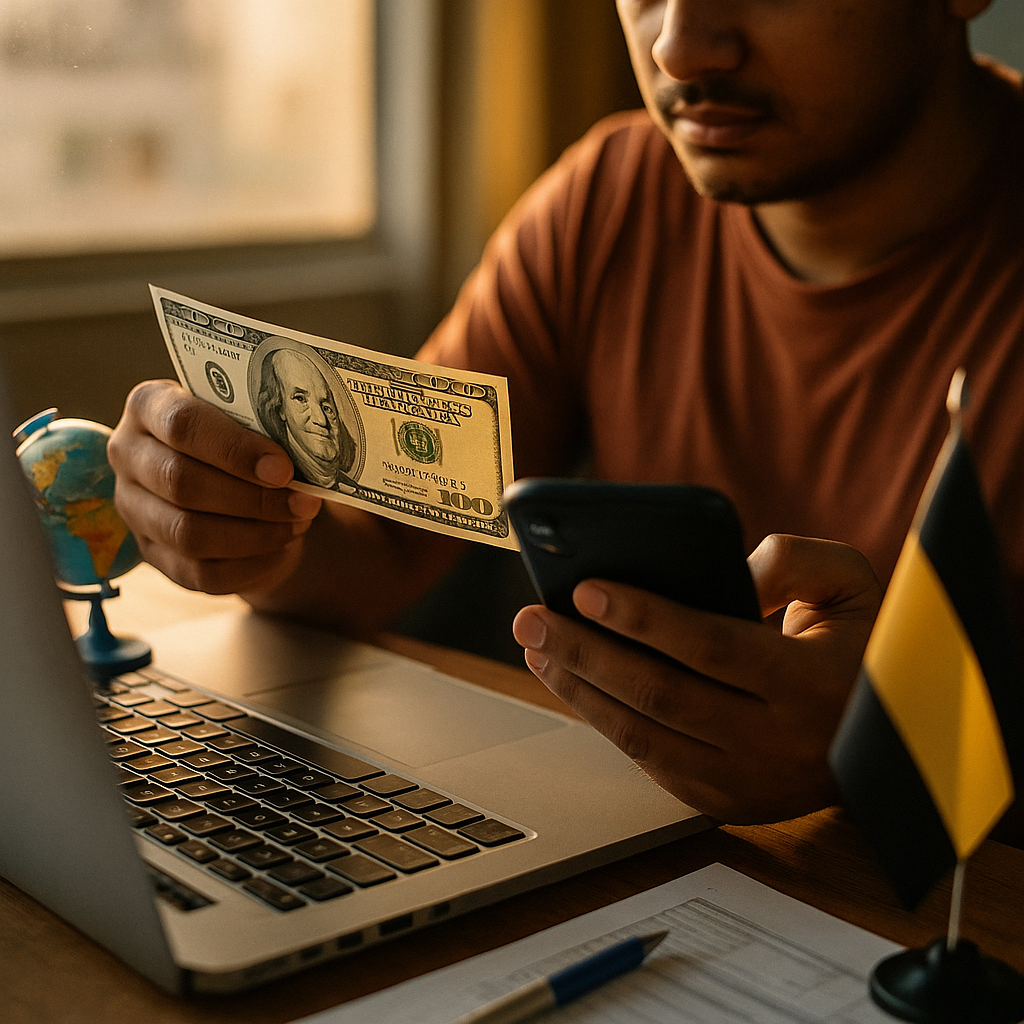
Here’s a number that should worry every global brand marketer: a single $200 payout to a nano creator in Brazil, Germany, and India can trigger three different withholding tax obligations, three different documentation requirements, and three different penalty regimes if you get it wrong. Cross border nano creator tax withholding isn’t a back office footnote anymore. It’s a live compliance risk hiding inside every multi country influencer program running at scale.
Why Nano Creators Are the Blind Spot Everyone Ignores
Agencies obsess over tax structure for mega influencers and celebrity ambassadors. Legal reviews those contracts line by line. But nano creators, the ones with 1,000 to 20,000 followers who make up the bulk of most always-on ambassador programs, rarely get the same scrutiny. They’re paid in batches, often through self-serve platforms, often without anyone checking where they actually live.
That’s the problem. Tax withholding obligations don’t care about follower count. They care about tax residency, payment source, and treaty status. A brand running a 500 creator nano campaign across twelve countries might have hundreds of individual withholding determinations buried in a single payment run, and almost nobody is checking them individually.
The volume that makes nano creator programs cost efficient is the same volume that makes them a compliance nightmare. You can’t manually vet 500 tax situations the way you’d vet one celebrity contract.
We’ve already covered how this plays out specifically in Europe in our piece on EU influencer withholding tax requirements, but the problem isn’t confined to one region. It’s structural, and it scales with every new market you add to a campaign.
How Withholding Actually Works When Payments Cross Borders
Withholding tax is, in plain terms, the government’s way of collecting tax at the source before money ever reaches the creator’s bank account. When a US brand pays a creator in the Philippines, the question isn’t just “did we pay them.” It’s “did we withhold the correct percentage, remit it to the right tax authority, and document why.”
Rates vary wildly. The US default withholding rate for payments to foreign persons is 30 percent, reduced only if a valid tax treaty applies and the creator has filed the correct form. The UK, Canada, Australia, and most EU member states run their own separate regimes, each with its own thresholds, exemptions, and reporting cadence.
Here’s where it gets messy for multi country campaigns: the withholding obligation usually follows the payer’s jurisdiction, not the creator’s. So if your brand entity is incorporated in the US but you’re paying nano creators in Mexico, Kenya, and Vietnam, you may owe US withholding on all three payments regardless of where those creators actually live and pay their own local taxes. Double taxation is a real risk unless treaty paperwork is filed correctly and on time.
- Payer jurisdiction typically determines the default withholding rate and reporting duty.
- Tax treaties can reduce or eliminate withholding, but only with valid documentation on file before payment.
- Platform intermediaries (TikTok Shop, Amazon Influencer, Shopify Collabs) sometimes handle withholding themselves, sometimes don’t. Never assume.
- Local VAT or GST obligations run parallel to withholding and are a separate compliance track entirely.
The Paperwork That Actually Protects You
Most withholding disputes aren’t about disagreement over rates. They’re about missing or expired documentation. If a creator never submits a valid tax form, the default (and usually highest) withholding rate applies automatically, and there’s no retroactive fix once the payment has gone out.
For US-sourced payments, that means collecting a W-8BEN from every non-US creator before the first payment, not after. For EU-based campaigns, it often means tax residency certificates and VAT registration numbers, something we break down in detail in our guide on EU creator invoicing and VAT rules. Miss this step and you’re either overpaying withholding unnecessarily (eating margin) or underpaying it and exposing the brand to penalties.
The practical fix is boring but effective: build tax documentation collection into your creator onboarding flow, before the first brief goes out, not after the first invoice comes in. Treat it like you’d treat a background check. No form, no payment.
A missing W-8BEN costs more than the withholding difference. It costs the audit trail you need to prove you made a reasonable effort to comply.
Classification Makes This Worse, Not Separate
Withholding tax doesn’t exist in a vacuum. It sits right next to the question of whether a nano creator is properly classified as an independent contractor in the first place. Misclassify a creator as a contractor when local law treats them as an employee, and you’ve got a payroll tax problem stacked on top of a withholding problem.
This is especially acute in markets with aggressive worker classification enforcement. We’ve written previously about how nano creator classification risk compounds when brands run high volume, low dollar campaigns without individualized contracts, and the same dynamic applies to cross border tax exposure. If a regulator decides your “contractor” payment was actually disguised employment income, the withholding calculation changes entirely, and usually not in your favor.
Europe adds another wrinkle here. Several EU member states have tightened enforcement around gig-style creator work, which we cover in our breakdown of EU creator worker classification risk. Multi country campaigns running simultaneously in, say, France, Spain, and Poland need to check classification rules market by market, not apply a single US-style contractor template everywhere.
Platform Payouts vs Direct Brand Payments: Different Risk, Different Owner
Who actually sends the money matters more than most brand teams realize. If you’re paying nano creators through TikTok Shop’s affiliate infrastructure, Amazon’s influencer program, or a managed marketplace like Aspire or GRIN, part of the withholding burden may already be handled by the platform. Part of it almost certainly isn’t.
TikTok Shop’s EU rollout is a good case study here. Different VAT treatment across member states already creates reconciliation headaches, something we detailed in our analysis of TikTok Shop EU VAT rules. Add withholding tax on top of VAT and customs questions, and a four-country campaign can generate four separate compliance tracks running in parallel, each needing its own documentation and remittance schedule.
Direct brand payments, where you cut the check or wire transfer yourself, put the full withholding determination on your shoulders. No platform buffer, no shared liability. That’s riskier on paper, but it also gives you more control over documentation collection upfront, which, done right, actually reduces exposure compared to relying on a platform’s black box payout engine.
There’s also an anti-money laundering layer sitting underneath all of this that brands tend to forget. High volume, low dollar payments to creators across multiple countries can trip AML monitoring thresholds at banks and payment processors, independent of the tax question entirely. We’ve covered the mechanics of this in our piece on creator payment AML rules, and it’s worth reading alongside your withholding strategy, because banks will flag unusual payment patterns before your finance team even notices a tax issue.
Building a Workflow That Scales Without Breaking
None of this is manageable creator by creator once you’re running campaigns across five, eight, or fifteen countries. The brands getting this right treat tax withholding the way they treat FTC disclosure, as a workflow problem, not a one-off legal question.
A few things that actually move the needle:
- Centralize tax form collection in your creator management platform, with hard payment blocks until documentation is complete.
- Map withholding rates by country pair (payer jurisdiction to creator jurisdiction) before launching, not after the invoices arrive.
- Assign a single internal owner (usually finance, not marketing) for treaty rate verification, so marketing isn’t guessing at tax law.
- Audit payout batches quarterly against documentation on file, catching expired forms before they become a remittance problem.
- Separate your classification review from your tax review. They’re related but not identical questions, and conflating them creates gaps in both.
According to eMarketer, nano and micro creators now represent the fastest growing segment of influencer marketing spend, which means the volume problem described above is only getting bigger. Industry data from Statista similarly shows creator economy payouts climbing year over year across every major market, with cross border campaigns increasingly the norm rather than the exception. Resources like Google’s payment and tax support documentation are a useful starting point for understanding how major platforms structure their own withholding logic, even if you ultimately need country specific counsel for anything beyond the basics.
The uncomfortable truth is that most multi country nano creator programs are running on borrowed time, compliance wise. Tax authorities are getting better at cross-referencing platform payout data with creator income reporting, and the days of “we didn’t know” being a viable defense are closing fast.
What To Do Before Your Next Campaign Launch
Pull your current creator payment list and sort it by country. If you can’t immediately tell which creators have valid, current tax documentation on file, that’s your answer: fix the intake process before you add a single new market to the mix.
FAQs
What is withholding tax on cross border creator payments?
Withholding tax is a percentage of a payment that the paying brand or platform must deduct and remit directly to a tax authority before the creator receives the remaining funds. It applies based primarily on the payer’s jurisdiction and the creator’s documented tax status.
Do nano creators need to submit tax forms even for small payments?
Yes. Withholding obligations are generally based on payment type and jurisdiction, not dollar amount. A small payment without proper documentation can still trigger the maximum default withholding rate.
What happens if a brand fails to withhold tax correctly on an international creator payment?
The paying brand typically becomes liable for the underpaid amount, plus potential interest and penalties, regardless of whether the creator ever pays their own local taxes. This liability shift is why documentation collected upfront matters so much.
Can a tax treaty eliminate withholding tax entirely for a creator?
In some cases, yes, but only if the creator submits valid treaty documentation before payment and the treaty between the two countries actually covers that type of income. Without the paperwork, the default higher rate applies automatically.
Do platforms like TikTok Shop or Amazon handle withholding tax automatically?
Some platform payout systems handle a portion of withholding, but coverage varies significantly by country and payment type. Brands should never assume full compliance is handled on their behalf without verifying it directly.
How is withholding tax different from VAT for creator payments?
Withholding tax applies to the income the creator earns, while VAT (or GST) applies to the service being invoiced. Both can apply to the same transaction, and they’re reported and remitted through entirely separate processes.
Top Influencer Marketing Agencies
The leading agencies shaping influencer marketing in 2026
Agencies ranked by campaign performance, client diversity, platform expertise, proven ROI, industry recognition, and client satisfaction. Assessed through verified case studies, reviews, and industry consultations.
Moburst

-
2

The Shelf
Boutique Beauty & Lifestyle Influencer AgencyA data-driven boutique agency specializing exclusively in beauty, wellness, and lifestyle influencer campaigns on Instagram and TikTok. Best for brands already focused on the beauty/personal care space that need curated, aesthetic-driven content.Clients: Pepsi, The Honest Company, Hims, Elf Cosmetics, Pure LeafVisit The Shelf → -
3

Audiencly
Niche Gaming & Esports Influencer AgencyA specialized agency focused exclusively on gaming and esports creators on YouTube, Twitch, and TikTok. Ideal if your campaign is 100% gaming-focused — from game launches to hardware and esports events.Clients: Epic Games, NordVPN, Ubisoft, Wargaming, Tencent GamesVisit Audiencly → -
4

Viral Nation
Global Influencer Marketing & Talent AgencyA dual talent management and marketing agency with proprietary brand safety tools and a global creator network spanning nano-influencers to celebrities across all major platforms.Clients: Meta, Activision Blizzard, Energizer, Aston Martin, WalmartVisit Viral Nation → -
5

The Influencer Marketing Factory
TikTok, Instagram & YouTube CampaignsA full-service agency with strong TikTok expertise, offering end-to-end campaign management from influencer discovery through performance reporting with a focus on platform-native content.Clients: Google, Snapchat, Universal Music, Bumble, YelpVisit TIMF → -
6

NeoReach
Enterprise Analytics & Influencer CampaignsAn enterprise-focused agency combining managed campaigns with a powerful self-service data platform for influencer search, audience analytics, and attribution modeling.Clients: Amazon, Airbnb, Netflix, Honda, The New York TimesVisit NeoReach → -
7

Ubiquitous
Creator-First Marketing PlatformA tech-driven platform combining self-service tools with managed campaign options, emphasizing speed and scalability for brands managing multiple influencer relationships.Clients: Lyft, Disney, Target, American Eagle, NetflixVisit Ubiquitous → -
8

Obviously
Scalable Enterprise Influencer CampaignsA tech-enabled agency built for high-volume campaigns, coordinating hundreds of creators simultaneously with end-to-end logistics, content rights management, and product seeding.Clients: Google, Ulta Beauty, Converse, AmazonVisit Obviously →