


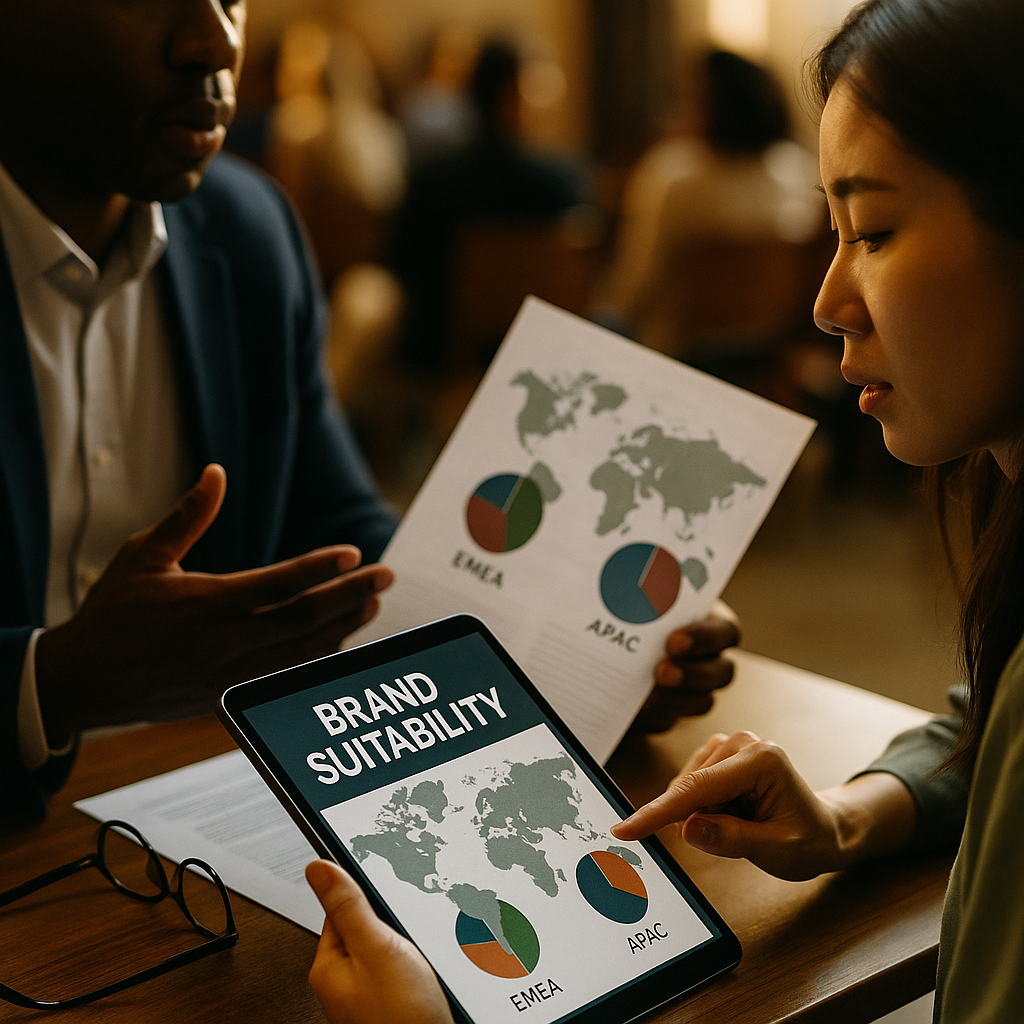
Brand suitability isn’t one standard. It’s a moving target that shifts depending on which market your campaign lands in, and most global brand safety frameworks still pretend otherwise. A single piece of UGC deemed perfectly safe in Berlin can trigger a platform takedown in Jakarta, a regulator inquiry in London, or silent audience backlash in Seoul, for entirely different reasons.
The Same Word, Two Different Risk Maps
Ask a brand safety lead in London what keeps them up at night, and you’ll hear about data privacy, gambling adjacency, and disclosure compliance. Ask the same question in Singapore or Mumbai, and the answer shifts toward religious sensitivity, political commentary, and platform fragmentation across a dozen regional apps most Western teams have never opened.
Both regions care about suitability. Neither defines it the same way. That gap matters more than most global marketing teams admit, because the frameworks built for EMEA compliance rarely translate cleanly to APAC’s cultural terrain, and vice versa.
Treating brand suitability as a single global checklist is how brands end up compliant in one market and tone-deaf in another, often within the same campaign quarter.
EMEA: Regulation Writes the Rulebook
In Europe and the UK, suitability concerns are shaped heavily by law. The General Data Protection Regulation (GDPR), the EU’s Digital Services Act, and the UK’s CAP Code all impose hard lines around disclosure, targeting minors, and data handling. The Information Commissioner’s Office has made clear that influencer content involving personal data or children’s audiences faces scrutiny that goes well beyond a platform’s community guidelines.
This produces a specific flavor of risk aversion. EMEA brand teams obsess over paperwork: contracts, disclosure language, right-to-use clauses. It’s not that cultural sensitivity doesn’t matter, it does, but legal exposure tends to dominate the suitability conversation in boardrooms from Paris to Frankfurt.
That legal-first posture shows up operationally too. Our analysis of contract-driven ROI gaps found that European brands increasingly treat the contract itself, not the dashboard, as the primary suitability control. If the paperwork is airtight, the campaign is “safe” by local standards, even if the creative itself touches sensitive cultural ground.
Gambling, Alcohol, and the Minors Problem
Gambling and alcohol advertising rules differ wildly country to country within EMEA itself. Germany’s restrictions on alcohol marketing to younger audiences don’t match France’s, and the UK’s gambling ad watershed rules add another layer entirely. A pan-European influencer campaign has to clear a patchwork of national codes, not a single EU standard, which is exactly why so many brand safety teams in the region lean on legal review as their suitability gatekeeper rather than editorial judgment alone.
APAC’s Suitability Lens Runs on Culture, Not Statute
Flip to APAC, and the center of gravity moves from statute books to social norms. Religious observance shapes what’s acceptable in Indonesia and Malaysia, where halal certification and modesty standards influence everything from product placement to creator wardrobe choices. Political sensitivity shapes what flies in markets like China, Vietnam, and increasingly India, where a creator’s unrelated political comment can sink a brand partnership overnight, regardless of contract language.
Platform fragmentation compounds the problem. WeChat, LINE, KakaoTalk, and Xiaohongshu each carry their own moderation logic and cultural expectations, distinct from the Instagram-and-TikTok duopoly that still anchors most EMEA planning. A suitability checklist built for Meta’s and TikTok’s brand safety controls simply doesn’t map onto a Xiaohongshu campaign brief.
APAC suitability risk is rarely about what the law says. It’s about what the audience will tolerate, and that threshold moves market by market, sometimes creator by creator.
There’s also a trust dimension worth naming. Gen Z trust in influencers has climbed sharply across several APAC markets, which raises the stakes for suitability missteps. High trust means high exposure when a creator’s values or past content clash with a brand’s, and vetting infrastructure in many APAC markets hasn’t caught up with the trust level audiences now place in creators.
Why Does Platform Choice Change the Suitability Calculus?
Here’s a question worth sitting with: why does the same brand safety team approve a creator in one market and reject a near-identical profile in another? Usually it comes down to platform behavior, not creator behavior. TikTok’s algorithm surfaces content differently in Southeast Asia than it does in Western Europe, and engagement patterns diverge too. Our data on TikTok engagement outperforming Instagram shows regional variance that directly affects how far a piece of borderline content travels, and therefore how much suitability risk it actually carries.
A mildly edgy joke that gets buried in an EMEA feed might get amplified into a regional trending topic on a platform with different recommendation logic in Southeast Asia. Reach changes risk. That’s a variable most global suitability frameworks underweight badly.
Compliance Theater Versus Cultural Fluency
Here’s the uncomfortable truth: a lot of what passes for “brand suitability review” in global marketing orgs is compliance theater. Legal sign-off on disclosure language, a keyword blocklist, a follower count threshold. None of that catches a creator whose values quietly conflict with a brand’s position on a sensitive regional issue.
This is where vetting has to evolve past follower counts and into something closer to proof of judgment. Our reporting on how UGC creator vetting is dropping follower floors in favor of skill and track-record checks points to where the whole industry needs to go, especially in markets where cultural missteps carry more weight than legal ones.
It’s also worth remembering that suitability failures rarely happen in isolation. Our piece on three creator marketing fires sharing one root cause found that most brand crises trace back to the same gap: nobody owned the suitability call before content went live. That gap widens fast when a global brand assumes its EMEA playbook will hold up in Jakarta or Seoul.
Operational Fixes That Actually Scale Across Regions
So what does a workable, multi-region suitability framework actually look like? A few practices separate brands that get this right from those still firefighting:
- Localize the review panel, not just the content. EMEA legal teams should not be the final word on APAC creative. Build regional sign-off authority into the workflow, with people who understand local religious calendars, political sensitivities, and platform norms.
- Separate legal risk from cultural risk in your scoring model. A campaign can be fully GDPR-compliant and still be a cultural disaster in another market. Track them as distinct risk categories, not one combined “suitability score.”
- Audit platform-specific amplification behavior. Know how content travels on Xiaohongshu versus Instagram versus LINE before greenlighting borderline creative, since reach changes the real-world stakes of any suitability call.
- Build regional vetting criteria, not just global ones. A creator’s past content that reads as harmless in one market can be disqualifying in another. Region-specific review checklists catch this; global ones usually don’t.
- Treat BFSI and regulated categories as their own track. Financial services campaigns face compounding legal review timelines across regions. Our coverage of BFSI legal review cycles costing brands the festive window shows how slow, fragmented approval processes can cost entire seasonal campaign windows if suitability and legal review aren’t run in parallel.
None of this is cheap to build. But the alternative, running one global suitability standard and hoping it holds everywhere, is how brands end up pulling campaigns mid-flight or apologizing publicly in a market they never fully understood in the first place. Industry benchmarking from eMarketer and Statista consistently shows influencer spend climbing fastest in APAC markets, which means the cost of getting suitability wrong there is only going up.
Frequently Asked Questions
FAQs
What does brand suitability mean in influencer marketing?
Brand suitability refers to whether a piece of content, creator, or platform context aligns with a brand’s values, risk tolerance, and audience expectations. It differs from brand safety, which focuses more narrowly on avoiding harmful or illegal content; suitability is broader and more subjective, shaped by cultural, legal, and regional context.
Why do EMEA and APAC brand suitability standards differ so much?
EMEA suitability concerns are largely driven by regulation, including GDPR, the EU’s Digital Services Act, and national advertising codes covering gambling, alcohol, and minors. APAC suitability concerns are shaped more by cultural and religious norms, political sensitivity, and a fragmented platform landscape that includes apps like WeChat, LINE, and Xiaohongshu alongside global platforms.
Can a brand use the same suitability checklist across every global market?
No. A single global checklist tends to over-index on legal compliance in regions like EMEA while missing cultural or political risk factors unique to APAC markets. Brands with mature programs typically separate legal risk scoring from cultural risk scoring and build region-specific review panels.
How does platform choice affect brand suitability risk?
Recommendation algorithms and audience behavior vary significantly by platform and region. Content that stays low-reach on one platform can get amplified unexpectedly on another, changing the real-world stakes of borderline creative. Suitability reviews should account for how content is likely to travel on each specific platform in each specific market.
What’s the biggest mistake brands make with cross-regional suitability?
Assuming cultural fluency can be solved with the same legal review process used for regulatory compliance. Legal sign-off catches disclosure and contract issues but rarely catches a creator whose past content or public stance conflicts with local cultural or political sensitivities.
The fix isn’t a bigger global checklist, it’s two distinct ones: a legal risk model for EMEA and a cultural risk model for APAC, scored separately and owned by people who actually understand each market before content goes live.
Top Influencer Marketing Agencies
The leading agencies shaping influencer marketing in 2026
Agencies ranked by campaign performance, client diversity, platform expertise, proven ROI, industry recognition, and client satisfaction. Assessed through verified case studies, reviews, and industry consultations.
Moburst

-
2

The Shelf
Boutique Beauty & Lifestyle Influencer AgencyA data-driven boutique agency specializing exclusively in beauty, wellness, and lifestyle influencer campaigns on Instagram and TikTok. Best for brands already focused on the beauty/personal care space that need curated, aesthetic-driven content.Clients: Pepsi, The Honest Company, Hims, Elf Cosmetics, Pure LeafVisit The Shelf → -
3

Audiencly
Niche Gaming & Esports Influencer AgencyA specialized agency focused exclusively on gaming and esports creators on YouTube, Twitch, and TikTok. Ideal if your campaign is 100% gaming-focused — from game launches to hardware and esports events.Clients: Epic Games, NordVPN, Ubisoft, Wargaming, Tencent GamesVisit Audiencly → -
4

Viral Nation
Global Influencer Marketing & Talent AgencyA dual talent management and marketing agency with proprietary brand safety tools and a global creator network spanning nano-influencers to celebrities across all major platforms.Clients: Meta, Activision Blizzard, Energizer, Aston Martin, WalmartVisit Viral Nation → -
5

The Influencer Marketing Factory
TikTok, Instagram & YouTube CampaignsA full-service agency with strong TikTok expertise, offering end-to-end campaign management from influencer discovery through performance reporting with a focus on platform-native content.Clients: Google, Snapchat, Universal Music, Bumble, YelpVisit TIMF → -
6

NeoReach
Enterprise Analytics & Influencer CampaignsAn enterprise-focused agency combining managed campaigns with a powerful self-service data platform for influencer search, audience analytics, and attribution modeling.Clients: Amazon, Airbnb, Netflix, Honda, The New York TimesVisit NeoReach → -
7

Ubiquitous
Creator-First Marketing PlatformA tech-driven platform combining self-service tools with managed campaign options, emphasizing speed and scalability for brands managing multiple influencer relationships.Clients: Lyft, Disney, Target, American Eagle, NetflixVisit Ubiquitous → -
8

Obviously
Scalable Enterprise Influencer CampaignsA tech-enabled agency built for high-volume campaigns, coordinating hundreds of creators simultaneously with end-to-end logistics, content rights management, and product seeding.Clients: Google, Ulta Beauty, Converse, AmazonVisit Obviously →