


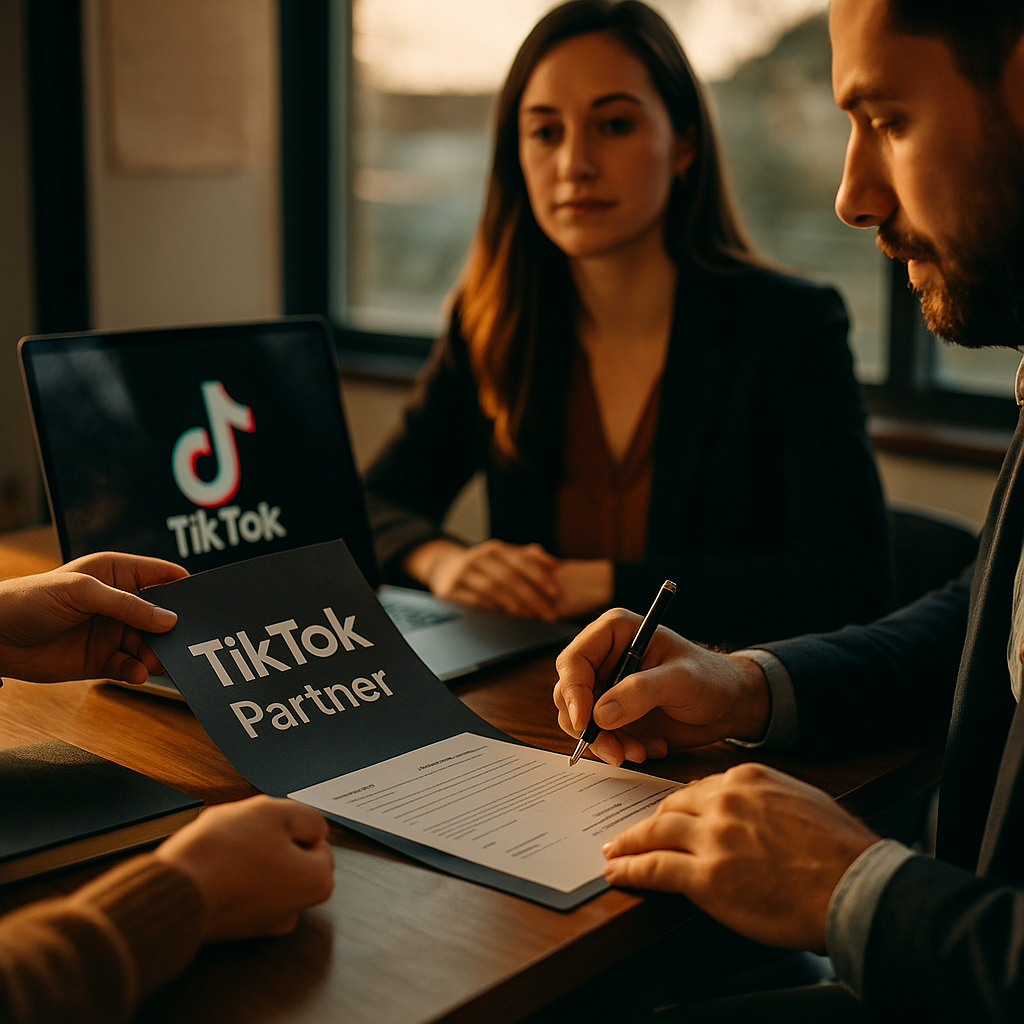
Only a fraction of agencies carrying the “TikTok Premier Partner” badge actually meet the platform’s own benchmarks for ad spend management and brand safety tooling, yet brands routinely treat the badge as a substitute for their own vetting. It isn’t. A proper due diligence checklist for vetting TikTok Premier agency partners has to go deeper than a logo on a slide deck, into contracts, data access, and who actually eats the liability when a campaign goes wrong.
Why TikTok Premier Partner Status Isn’t a Compliance Guarantee
TikTok’s Marketing Partner program certifies agencies on capability, things like API access, creative tooling, and spend thresholds. It says almost nothing about contract hygiene, data governance, or how a partner handles a crisis. Plenty of certified shops have thin legal teams and even thinner incident response plans.
That distinction matters more now than it did two years ago. TikTok’s advertiser base has matured, budgets have scaled into eight figures for some enterprise brands, and regulators are paying closer attention to how platforms and their partners handle consumer data. A badge tells you the agency can run campaigns. It doesn’t tell you they’ll protect your brand, your data, or your legal exposure if something breaks.
A Premier Partner badge certifies technical capability, not legal accountability. Those are two different audits, and most brands only run one of them.
Contract Terms That Separate Real Partners From Resellers
Start with the paper. Too many brands sign agency contracts that were clearly written for a different client, with the names swapped and little else reviewed. Before you commit spend, pull apart the agreement and look for these specific provisions.
- Scope of authority: Does the contract specify exactly which TikTok accounts, Business Center seats, and ad accounts the agency can access? Vague scope language is how agencies end up with standing access long after a campaign ends.
- Subcontracting disclosure: Many “Premier Partners” white label execution to smaller shops or freelance media buyers. You need a clause requiring disclosure of any subcontractors touching your account or your creator data.
- IP and usage rights: Confirm the contract addresses creator content licensing separately from the agency’s own service fees. Usage rights for whitelisted ads or UGC libraries need their own clause, not a buried reference. If you’re building a content library that spans multiple campaigns, review how multi year UGC libraries handle rights retention before signing anything with a Premier Partner managing that content.
- Termination and data return: What happens to your audience data, creator lists, and performance history if you switch agencies mid-contract? If the answer isn’t spelled out, assume it defaults in the agency’s favor.
- Renewal and auto-extension clauses: Agency contracts often mirror the same quiet auto-renewal traps that plague creator whitelisting deals. The same discipline that applies to whitelisting renewal clauses should apply here: know your exit window and calendar it.
None of this is exotic legal work. It’s the kind of redlining a procurement team should do on any six or seven figure vendor relationship. The problem is that influencer and social budgets often skip procurement entirely because they’re categorized as “marketing experiments” rather than vendor contracts.
Data Access: Who Sees What, and For How Long?
This is where most brand side teams underinvest their attention, and it’s the section regulators care about most. TikTok Premier Partners often request Business Center admin access, pixel and events API credentials, and in some cases direct access to first party customer data for lookalike modeling.
Ask the agency to walk you through their data retention policy in writing, not verbally on a sales call. You want answers to three questions: where is the data stored, who internally can access it, and what’s the deletion timeline after contract termination. If the agency can’t produce a data processing agreement that addresses these points, that’s a dealbreaker, not a negotiation point.
Brands running campaigns across the EU or UK also need to confirm the agency’s DPA aligns with GDPR requirements, not just TikTok’s platform terms. If you’re building out your broader data governance framework, the audit approach used for creator data processing agreements is a solid template for evaluating any agency vendor, not just creators.
If an agency can’t produce a written data retention and deletion policy before you sign, assume your customer data outlives the contract.
There’s also the question of cross platform data sharing. Some Premier Partners manage TikTok, Meta, and YouTube simultaneously and build unified reporting dashboards that pool first party data across platforms. That’s operationally convenient, but it raises the same liability questions explored in platform data sharing agreements: who’s accountable if that pooled data gets breached or misused downstream.
US brands should also check how the agency handles state level privacy obligations. With the patchwork of state privacy laws expanding, an agency operating nationally needs a documented approach, not a case by case improvisation. The framework outlined for state privacy law patchwork compliance is a useful benchmark for what you should expect an agency partner to already have in place.
Liability: Who Pays When the Campaign Goes Sideways?
Here’s the uncomfortable truth: most agency contracts shift very little actual liability onto the agency. Indemnification clauses are often narrow, capped at the value of fees paid, or written to protect the agency’s IP rather than the brand’s exposure.
Walk through a few realistic scenarios with your legal team before signing. What happens if a creator the agency sourced fails to disclose a paid partnership and the FTC opens an inquiry? Who’s responsible if the agency’s media buying team overspends due to a misconfigured bid strategy? What if a teen creator misrepresents their age and the campaign runs afoul of COPPA? Each of these has already happened to real brands, and the contract language determines whether the brand or the agency absorbs the fallout.
FTC disclosure failures are a particularly live risk given how aggressively the agency enforces paid partnership labeling. Make sure your contract requires the agency to maintain documented disclosure compliance processes, not just a verbal assurance that “creators know the rules.” The enforcement patterns detailed in FTC guidance on endorsements make clear that brands, not just creators, carry exposure when disclosure breaks down.
If your program touches younger audiences or family content categories, the liability questions get sharper. Review how the agency’s compliance protocols map against lessons from the YouTube COPPA settlement, which showed regulators are willing to pursue brands and platforms jointly, not just the content creator.
The Vetting Checklist
Here’s a condensed working checklist you can hand to procurement, legal, or your agency relations lead before any TikTok Premier Partner contract moves to signature.
- Request the agency’s TikTok Partner certification details directly from TikTok, not just a screenshot from the agency.
- Confirm subcontractor disclosure requirements are written into the contract, not assumed.
- Obtain a written data processing and retention policy, reviewed by your privacy counsel.
- Verify indemnification language covers FTC disclosure failures, data breaches, and creator misconduct, not just IP disputes.
- Check termination clauses for data return timelines and account access revocation procedures.
- Ask for references from at least two brands that have exited an agency relationship, not just active clients.
- Confirm how the agency verifies creator audience authenticity, since fake follower exposure can quietly inflate your reported ROI.
- Review insurance coverage, including whether the agency carries cyber liability and errors and omissions policies adequate to your spend level.
On that last point, don’t assume standard agency insurance covers influencer specific risk. Some brands are now pairing agency vetting with dedicated coverage, an approach covered in depth in our piece on creator cancellation insurance, which is worth reading alongside your contract review.
Industry benchmarking data from eMarketer and Statista consistently shows influencer and social commerce budgets growing faster than the governance structures meant to oversee them. That gap is exactly where agency liability disputes tend to surface, usually about eighteen months after the contract was signed and everyone’s forgotten the fine print.
Red Flags That Should End the Conversation
A few signals should make you pause regardless of how strong the agency’s case studies look. Reluctance to put data retention policies in writing is one. Vague answers about subcontracting is another. If an agency pushes back hard on indemnification language, ask yourself why they’re so uncomfortable owning the risk they’re asking you to trust them with.
Also watch for agencies that resist third party audits of their ad account access logs. Full transparency on who touched your Business Center and when isn’t an unreasonable ask, it’s basic account hygiene that any serious operator should already have documented.
Frequently Asked Questions
What does TikTok Premier Partner status actually certify?
It certifies technical and operational capability, such as API integrations, creative tooling, and minimum ad spend management thresholds. It does not certify contract practices, data governance standards, or liability coverage, which brands must vet independently.
Should brands require a separate data processing agreement with their TikTok agency?
Yes. A platform level terms of service agreement with TikTok does not replace a direct data processing agreement between your brand and the agency, particularly when the agency has access to first party customer data for targeting or lookalike audiences.
Who is liable if a creator sourced by the agency fails to disclose a paid partnership?
Liability depends entirely on the contract language. Without explicit indemnification clauses covering disclosure failures, brands often end up absorbing regulatory risk even though the agency selected and briefed the creator.
How often should brands re-audit an existing agency partnership?
An annual review is a reasonable minimum, with additional checks triggered by major contract renewals, leadership changes at the agency, or any shift in the scope of data access granted.
Is agency insurance coverage something brands should verify before signing?
Yes. Standard general liability policies often don’t extend to data breaches or influencer specific disputes. Brands should request proof of cyber liability and errors and omissions coverage appropriate to their spend level.
Treat your next TikTok Premier Partner contract like any other major vendor deal: redline it, audit the data terms, and confirm the liability language before a single dollar moves. The brands that skip this step aren’t saving time, they’re just deferring the cost of the problem to a worse moment.
Top Influencer Marketing Agencies
The leading agencies shaping influencer marketing in 2026
Agencies ranked by campaign performance, client diversity, platform expertise, proven ROI, industry recognition, and client satisfaction. Assessed through verified case studies, reviews, and industry consultations.
Moburst

-
2

The Shelf
Boutique Beauty & Lifestyle Influencer AgencyA data-driven boutique agency specializing exclusively in beauty, wellness, and lifestyle influencer campaigns on Instagram and TikTok. Best for brands already focused on the beauty/personal care space that need curated, aesthetic-driven content.Clients: Pepsi, The Honest Company, Hims, Elf Cosmetics, Pure LeafVisit The Shelf → -
3

Audiencly
Niche Gaming & Esports Influencer AgencyA specialized agency focused exclusively on gaming and esports creators on YouTube, Twitch, and TikTok. Ideal if your campaign is 100% gaming-focused — from game launches to hardware and esports events.Clients: Epic Games, NordVPN, Ubisoft, Wargaming, Tencent GamesVisit Audiencly → -
4

Viral Nation
Global Influencer Marketing & Talent AgencyA dual talent management and marketing agency with proprietary brand safety tools and a global creator network spanning nano-influencers to celebrities across all major platforms.Clients: Meta, Activision Blizzard, Energizer, Aston Martin, WalmartVisit Viral Nation → -
5

The Influencer Marketing Factory
TikTok, Instagram & YouTube CampaignsA full-service agency with strong TikTok expertise, offering end-to-end campaign management from influencer discovery through performance reporting with a focus on platform-native content.Clients: Google, Snapchat, Universal Music, Bumble, YelpVisit TIMF → -
6

NeoReach
Enterprise Analytics & Influencer CampaignsAn enterprise-focused agency combining managed campaigns with a powerful self-service data platform for influencer search, audience analytics, and attribution modeling.Clients: Amazon, Airbnb, Netflix, Honda, The New York TimesVisit NeoReach → -
7

Ubiquitous
Creator-First Marketing PlatformA tech-driven platform combining self-service tools with managed campaign options, emphasizing speed and scalability for brands managing multiple influencer relationships.Clients: Lyft, Disney, Target, American Eagle, NetflixVisit Ubiquitous → -
8

Obviously
Scalable Enterprise Influencer CampaignsA tech-enabled agency built for high-volume campaigns, coordinating hundreds of creators simultaneously with end-to-end logistics, content rights management, and product seeding.Clients: Google, Ulta Beauty, Converse, AmazonVisit Obviously →