


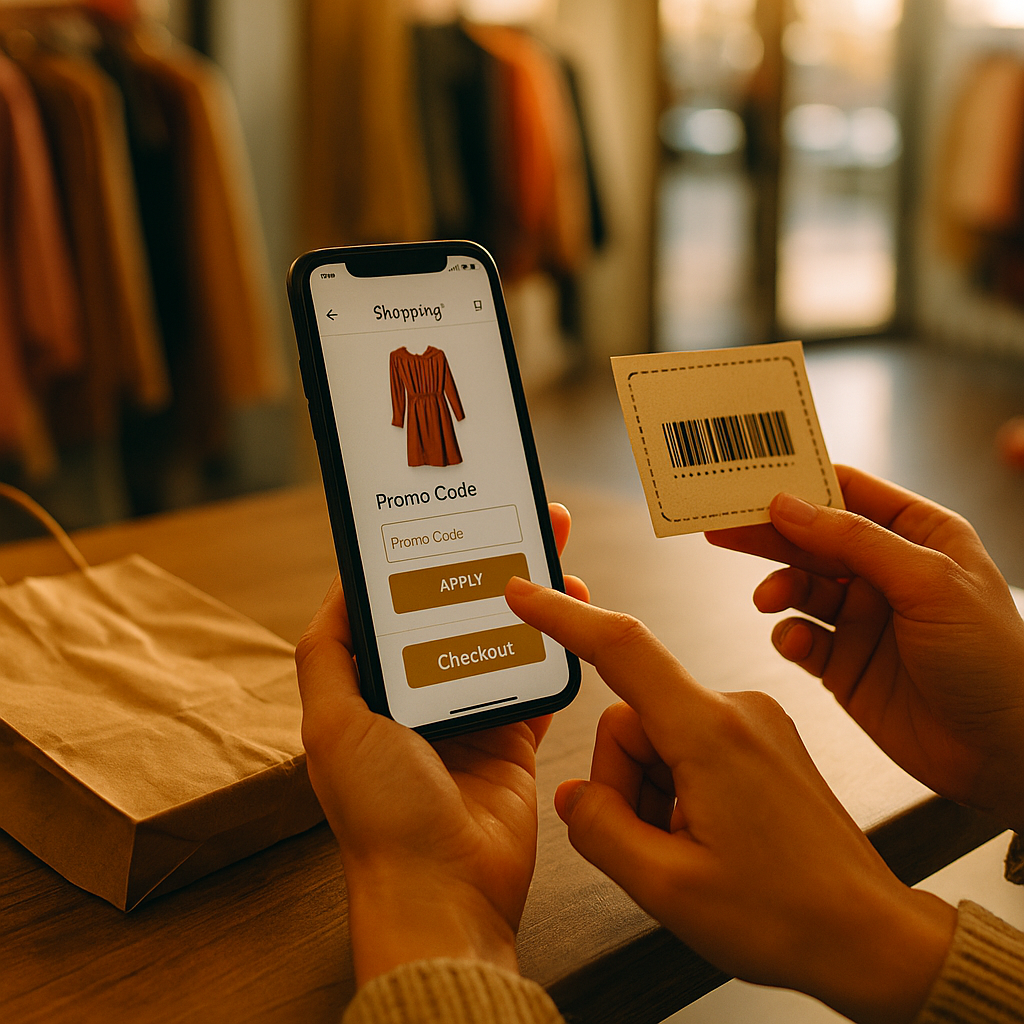
45.9 percent. That’s the share of influencer attribution still running through promo codes, according to recent creator marketing benchmarking data. Not pixel tracking. Not multi-touch models. Not AI-driven mixed media modeling. A discount code typed into a checkout box, the same mechanism brands used a decade ago. If influencer marketing has matured into a multibillion dollar media category, why is its measurement backbone still this primitive?
The honest answer is that promo codes work well enough, cost almost nothing, and don’t require anyone to rebuild a stack mid-quarter. That’s not a flattering reason, but it’s the real one.
The stat nobody wants to admit out loud
Ask any performance marketing lead how they’re measuring creator ROI and you’ll get a polished answer about blended attribution, incrementality testing, and platform APIs. Ask to see the actual tracking sheet, and there’s a good chance it’s a spreadsheet of codes like “SARAH20” mapped to a discount percentage.
Promo codes persist because they solve a real problem cheaply: they tell you, unambiguously, that a specific person used a specific code. No cookie consent issues. No walled garden API limits. No dependency on a platform’s willingness to share conversion data. In a privacy-constrained environment where third-party cookies are functionally dead and platform tracking policies keep shifting, a promo code is refreshingly dumb and refreshingly reliable.
Promo codes aren’t surviving because they’re accurate, they’re surviving because they’re the only attribution method a brand fully owns end to end, with zero platform dependency.
Compare that to pixel-based tracking, which breaks the moment a user switches devices, clears cookies, or watches a video on one app and purchases through a browser on another. Promo codes don’t care about any of that. They’re blunt, but they’re consistent.
Why the resistance to upgrading isn’t really about technology
Most martech vendors will tell you brands resist upgrading because of budget constraints or legacy systems. That’s partially true, but it misses the bigger issue: organizational trust.
A promo code produces a number a CFO can understand in five seconds. “This code generated 340 sales.” Try explaining a probabilistic attribution model built on media mix modeling or multi-touch weighting to a finance team that’s never heard of Shapley value allocation, and you’ll watch their eyes glaze over. Simplicity sells internally, even when it sacrifices precision.
This mirrors a pattern seen across martech adoption generally. Teams keep basic automation and manual processes running in parallel because proving the ROI of a more sophisticated system takes longer than just sticking with what already demonstrates a number, even an imperfect one. The same logic applies to attribution. A flawed but explainable system beats an accurate but opaque one in most budget conversations.
There’s also a risk calculus at play. Switching an entire measurement stack mid-campaign cycle introduces the possibility that reported performance drops, not because the campaign got worse, but because the new system counts differently. No brand marketer wants to walk into a quarterly review explaining why ROI “fell” due to a methodology change. So the incentive is to keep the old system running, even as a secondary layer, just to protect the narrative.
What promo codes actually miss
The limitations are well documented, but they bear repeating because they explain why relying on codes alone creates real financial blind spots.
- Discount fatigue skews data. Codes train audiences to wait for a deal, which inflates short-term conversion numbers while quietly eroding full-price sales and brand equity.
- Code sharing breaks attribution integrity. Once a code leaks to a deal aggregator site or gets shared in a group chat, it’s no longer tracking the creator’s actual influence, it’s tracking whoever found the code.
- Zero visibility into upper-funnel impact. Codes only capture the final conversion step. They say nothing about the awareness, consideration, or brand lift a creator generated along the way, a gap that’s been documented extensively in attribution research.
- No cross-device or cross-platform view. Someone who sees a TikTok video, researches on desktop, and buys in-store a week later never touches the code, so that sale gets attributed to nothing.
- Codes incentivize vanity redemption over genuine intent. Creators sometimes push codes hard in captions purely to hit redemption targets, which distorts the quality of the audience actually converting.
None of this means promo codes are useless. It means they’re a floor, not a ceiling. Using them as the only attribution layer is like measuring a TV campaign purely by call-in orders mentioning a special phone number. It captures something real, but it ignores most of what actually happened.
What a better stack actually looks like
The brands getting this right aren’t abandoning promo codes, they’re layering them underneath more sophisticated systems. A typical modern stack includes:
- Trackable, UTM-tagged links paired with server-side conversion APIs from platforms like Meta or TikTok, which survive cookie restrictions better than client-side pixels.
- Incrementality testing using geo holdouts or matched market comparisons, which isolate what creator spend actually added versus what would have happened anyway.
- Post-purchase surveys (“How did you hear about us?”) that catch conversions codes and links both miss.
- Media mix modeling that treats creator spend as one input among many, rather than measuring it in isolation.
This shift mirrors what’s happening industry-wide as creator spend gets reclassified as media rather than a soft marketing line item. Once procurement owns the budget line, they demand the same rigor applied to paid search or programmatic display, and promo codes alone don’t clear that bar. The same pressure is pushing brands toward pay-per-conversion deal structures, which require cleaner attribution to even function.
Agentic martech platforms are also starting to close the gap automatically, pulling data from multiple sources and reconciling it in near real time rather than waiting for a quarterly reporting cycle, a shift covered in depth around how agentic systems replace static dashboards. The technology to do better exists. Adoption is the bottleneck, not capability.
The budget conversation nobody’s having
Here’s the uncomfortable part: upgrading attribution infrastructure costs money and headcount, and most influencer programs are still proving their baseline ROI case before they can justify investing further. It’s a chicken-and-egg problem. You need better data to justify a bigger budget, but better data requires a budget most teams don’t have yet.
This is part of why brands keep raising creator budgets while attribution methodology quietly stays frozen. It’s easier to add spend to a working channel than to pause and rebuild measurement from scratch. The risk, of course, is that brands keep scaling a channel they’re measuring imprecisely, which compounds the inaccuracy as dollars grow.
There’s a compliance angle too that often gets ignored. Promo code based attribution offers no real audit trail for FTC disclosure compliance or brand safety review, since it tells you nothing about the content context surrounding the conversion. As regulatory scrutiny increases, relying solely on a redemption count leaves brands with thin documentation if a disclosure dispute ever surfaces.
Where this leaves brand teams right now
Nobody’s suggesting you rip out promo codes next quarter. They’re cheap, familiar, and they still tell you something real. The smarter move is treating them as one signal in a layered system, not the whole truth. Pair codes with trackable links, run at least one incrementality test per quarter, and start asking your creators or agency partners what post-purchase survey data they can share. That incremental shift costs far less than a full stack overhaul, and it closes the biggest blind spots without blowing up your reporting mid-cycle.
Frequently Asked Questions
Why do brands still rely so heavily on promo codes for influencer attribution?
Promo codes are cheap, simple to explain internally, and don’t depend on platform APIs or cookie tracking, which makes them resilient in a privacy-restricted measurement environment even though they miss most of the customer journey.
What’s the biggest risk of relying only on promo code attribution?
It creates blind spots around upper-funnel impact, cross-device conversions, and code sharing, which can both undercount true performance and overstate discount-driven sales that erode full-price revenue.
What should brands add to a promo code based system first?
Trackable UTM links combined with server-side conversion tracking are usually the fastest, lowest-cost upgrade, followed by periodic incrementality testing to validate that creator spend is adding real lift.
Does switching attribution methods make past campaign data unreliable?
It can create reporting inconsistencies if done abruptly, which is why most brands run new and old systems in parallel for at least one full quarter before retiring the previous method.
Is promo code attribution a compliance risk?
It offers limited documentation for disclosure or brand safety audits since it doesn’t capture content context, which can become a liability if regulators or platforms request a clearer trail.
Top Influencer Marketing Agencies
The leading agencies shaping influencer marketing in 2026
Agencies ranked by campaign performance, client diversity, platform expertise, proven ROI, industry recognition, and client satisfaction. Assessed through verified case studies, reviews, and industry consultations.
Moburst

-
2

The Shelf
Boutique Beauty & Lifestyle Influencer AgencyA data-driven boutique agency specializing exclusively in beauty, wellness, and lifestyle influencer campaigns on Instagram and TikTok. Best for brands already focused on the beauty/personal care space that need curated, aesthetic-driven content.Clients: Pepsi, The Honest Company, Hims, Elf Cosmetics, Pure LeafVisit The Shelf → -
3

Audiencly
Niche Gaming & Esports Influencer AgencyA specialized agency focused exclusively on gaming and esports creators on YouTube, Twitch, and TikTok. Ideal if your campaign is 100% gaming-focused — from game launches to hardware and esports events.Clients: Epic Games, NordVPN, Ubisoft, Wargaming, Tencent GamesVisit Audiencly → -
4

Viral Nation
Global Influencer Marketing & Talent AgencyA dual talent management and marketing agency with proprietary brand safety tools and a global creator network spanning nano-influencers to celebrities across all major platforms.Clients: Meta, Activision Blizzard, Energizer, Aston Martin, WalmartVisit Viral Nation → -
5

The Influencer Marketing Factory
TikTok, Instagram & YouTube CampaignsA full-service agency with strong TikTok expertise, offering end-to-end campaign management from influencer discovery through performance reporting with a focus on platform-native content.Clients: Google, Snapchat, Universal Music, Bumble, YelpVisit TIMF → -
6

NeoReach
Enterprise Analytics & Influencer CampaignsAn enterprise-focused agency combining managed campaigns with a powerful self-service data platform for influencer search, audience analytics, and attribution modeling.Clients: Amazon, Airbnb, Netflix, Honda, The New York TimesVisit NeoReach → -
7

Ubiquitous
Creator-First Marketing PlatformA tech-driven platform combining self-service tools with managed campaign options, emphasizing speed and scalability for brands managing multiple influencer relationships.Clients: Lyft, Disney, Target, American Eagle, NetflixVisit Ubiquitous → -
8

Obviously
Scalable Enterprise Influencer CampaignsA tech-enabled agency built for high-volume campaigns, coordinating hundreds of creators simultaneously with end-to-end logistics, content rights management, and product seeding.Clients: Google, Ulta Beauty, Converse, AmazonVisit Obviously →