


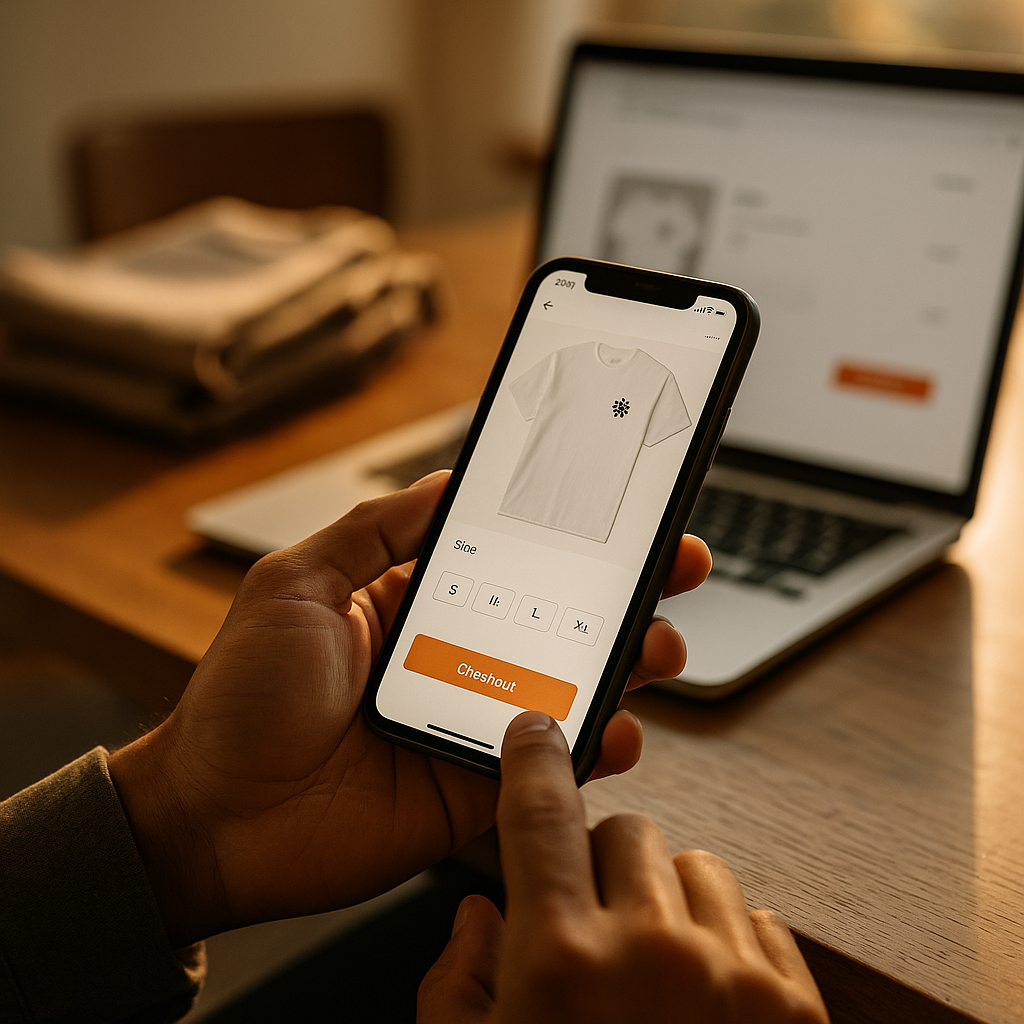
TikTok Shop generated more than $33 billion in gross merchandise value last year, and most of that volume never left the app. If your product catalog, creator links, and checkout flow aren’t built for that reality, you’re funding someone else’s growth. Native shop feature optimization is no longer a nice-to-have experiment. It’s the difference between a creator partnership that converts and one that just generates likes.
The Shop Tab Is Now a Revenue Channel, Not a Feature
Platforms stopped treating in-app shopping as a side project a while back. TikTok Shop, Instagram Shop, Pinterest’s shoppable pins, and even Whatnot’s livestream checkout now sit inside the core app experience, not behind a link-out. That shift matters for brands because every tap a shopper saves between “I want this” and “I bought this” compounds into real conversion lift.
eMarketer and Statista data both point the same direction: social commerce spend keeps climbing year over year, and the platforms with native checkout are capturing a disproportionate share of that growth. Meanwhile, brands still routing creator traffic to an external site are watching 60 to 80 percent of clicks disappear before they ever reach a product page. That’s not a creator problem. That’s a checkout architecture problem.
Every additional tap between discovery and purchase costs you conversion. Native checkout removes taps; brands that still force an off-platform redirect are paying a hidden tax on every campaign.
Build a Catalog That Doesn’t Fight the Platform
Most brands underestimate how much native shop performance depends on boring, unglamorous catalog hygiene. Product titles, images, variant structure, and pricing display all feed the algorithm that decides whether your item surfaces in a creator’s video or sits buried on page four.
- Title structure matters. TikTok Shop and Instagram Shop both reward descriptive, keyword-forward titles over brand-speak. “Lightweight Hiking Backpack, 40L, Water Resistant” outperforms a clever internal product name every time.
- Images need to survive a 3 second scroll. Native shop thumbnails are small. A lifestyle shot that looks great on your website can become an unreadable blur in a shop feed.
- Variant sprawl kills conversion. If a shopper has to choose from 14 color options before they can even see a price, you’ve added friction the algorithm will penalize.
- Stock accuracy is non-negotiable. Platforms deprioritize listings with frequent out-of-stock flags, and nothing tanks a creator’s trust in your brand faster than a dead checkout link mid-campaign.
Run a quarterly catalog audit the same way you’d audit a paid search account. It’s tedious. It’s also where a lot of “creator didn’t convert” problems actually live.
Creator Affiliate Links Are the Make-or-Break Variable
A brilliant piece of creator content tagged with a broken or slow-loading product link is wasted spend. Full stop. Before any campaign goes live, test the actual tap-to-cart path on both iOS and Android, not just desktop preview.
Affiliate commission structure also shapes behavior more than brands like to admit. Creators optimize for what pays. If your commission on a $40 item is lower than a competitor’s on a similar product, don’t be surprised when that creator quietly stops tagging you in future content. This is the same dynamic playing out across creator revenue share negotiations on other platforms: the economics have to work for both sides, not just the brand.
For nano and micro creators specifically, native shop tagging often outperforms traditional affiliate links because the friction is so low. Pairing that with a structured nano creator whitelisting approach lets you push paid spend behind the content that’s already converting organically inside the shop tab.
Checkout Friction You Can Actually Fix This Quarter
Cart abandonment inside native shop features is often a symptom of something fixable, not an inherent platform limitation. A few places to look first:
- Payment method coverage. If your store only accepts one payment rail inside the native checkout, you’re losing shoppers who expect Apple Pay, Shop Pay, or Klarna style buy-now-pay-later options.
- Shipping cost surprise. Native checkout flows surface shipping cost later in the process than a typical ecommerce site. Build that into your pricing strategy rather than hoping shoppers don’t notice.
- Return policy visibility. Shoppers converting inside a shop tab rarely read a full returns page. Short, visible return terms on the product listing itself reduce pre-purchase hesitation.
- Load speed inside the in-app browser. Even with native checkout, some flows still route through an embedded browser for certain steps. Test it on an older Android device, not just your own flagship phone.
None of this requires a new platform strategy. It requires someone on your team actually completing a purchase, start to finish, once a week.
Compliance Doesn’t Pause for a Faster Checkout
Faster checkout paths don’t reduce disclosure obligations, and regulators have made that explicit. The FTC’s endorsement guidance applies just as much to a tagged product inside a shop feed as it does to a traditional sponsored post. Creators tagging your products for commission need clear disclosure language, and brands are increasingly held accountable for a creator’s compliance gaps, not just their own.
This is especially relevant as live shopping grows. If you’re running campaigns through livestream shopping formats, disclosure needs to happen verbally and on screen, repeatedly, not just once at the top of the stream. Build a compliance checklist into your creator brief template rather than relying on creators to remember platform rules that change more often than most brand teams track.
Measuring What Actually Converts (Not Just What the Dashboard Shows)
Platform-native analytics will tell you clicks, views, and GMV attributed to a specific video or livestream. What they won’t reliably tell you is incrementality: did that sale happen because of the creator, or would it have happened anyway through paid search or direct traffic?
Set up a basic test structure before your next major push: a control group of SKUs with no creator activity, and a test group running identical creator content with native shop tagging. Compare lift, not just raw GMV. HubSpot and Sprout Social both publish regular benchmarking data that’s useful for sanity-checking your numbers against category averages, but your own first-party data will always be more actionable than an industry median.
Raw GMV from a shop tab tells you what sold. It doesn’t tell you whether the creator caused the sale or simply got credit for a purchase that was already coming. Build an incrementality test before you scale budget on native shop performance alone.
Pair native shop data with paid amplification signals where you can. If you’re running partnership ads behind top-performing organic creator content, the shop tab conversion data should directly inform which assets get budget, rather than treating paid and organic creator performance as separate reporting tracks. The same logic applies to creator collaboration tools that surface early performance signals before a piece of content fully scales.
What Changes as Live Shopping Grows
Livestream checkout adds a layer native shop optimization can’t ignore: timing. Unlike a static product tag, a live shopping event creates urgency windows measured in minutes, not days. Brands that pre-load inventory, pre-test checkout speed, and brief hosts on exact pricing and promo codes before the stream starts see meaningfully better conversion than those treating live shopping as “just another video format.” Check platform documentation like TikTok’s business resources or Meta’s business tools for the latest native checkout specs before each major campaign, since these features update faster than most brand playbooks do.
FAQs
Frequently Asked Questions
What is native shop feature optimization?
It’s the practice of refining product catalogs, creator affiliate links, and checkout flows inside a platform’s built-in shopping feature (like TikTok Shop or Instagram Shop) to reduce friction and increase in-app purchase conversion, rather than relying on redirects to an external website.
Does native checkout actually convert better than linking out to a brand website?
In most cases, yes. Removing the off-platform redirect typically reduces drop-off significantly because shoppers stay in the same app, same login, and same payment flow. The exact lift varies by category and platform, so test it against your own baseline rather than assuming a universal percentage.
How often should brands audit their shop catalog?
Quarterly at minimum, with a lighter check before any major creator campaign. Stock accuracy, pricing, and image quality degrade faster than most teams expect, especially when multiple team members manage listings.
Do FTC disclosure rules apply to products tagged inside a native shop feature?
Yes. Disclosure obligations apply regardless of whether a purchase happens through a tagged product, an affiliate link, or a traditional sponsored post. Brands should include disclosure requirements directly in creator briefs and contracts.
What’s the biggest mistake brands make with creator affiliate links in native shop features?
Treating link setup as a one-time task instead of testing it before every campaign. Broken links, outdated pricing, or out-of-stock products kill conversion even when the creator content itself is strong.
Next step: Pick your top five SKUs by creator-driven traffic, run a full tap-to-purchase test on both iOS and Android this week, and fix whatever friction you find before your next campaign goes live.
Top Influencer Marketing Agencies
The leading agencies shaping influencer marketing in 2026
Agencies ranked by campaign performance, client diversity, platform expertise, proven ROI, industry recognition, and client satisfaction. Assessed through verified case studies, reviews, and industry consultations.
Moburst

-
2

The Shelf
Boutique Beauty & Lifestyle Influencer AgencyA data-driven boutique agency specializing exclusively in beauty, wellness, and lifestyle influencer campaigns on Instagram and TikTok. Best for brands already focused on the beauty/personal care space that need curated, aesthetic-driven content.Clients: Pepsi, The Honest Company, Hims, Elf Cosmetics, Pure LeafVisit The Shelf → -
3

Audiencly
Niche Gaming & Esports Influencer AgencyA specialized agency focused exclusively on gaming and esports creators on YouTube, Twitch, and TikTok. Ideal if your campaign is 100% gaming-focused — from game launches to hardware and esports events.Clients: Epic Games, NordVPN, Ubisoft, Wargaming, Tencent GamesVisit Audiencly → -
4

Viral Nation
Global Influencer Marketing & Talent AgencyA dual talent management and marketing agency with proprietary brand safety tools and a global creator network spanning nano-influencers to celebrities across all major platforms.Clients: Meta, Activision Blizzard, Energizer, Aston Martin, WalmartVisit Viral Nation → -
5

The Influencer Marketing Factory
TikTok, Instagram & YouTube CampaignsA full-service agency with strong TikTok expertise, offering end-to-end campaign management from influencer discovery through performance reporting with a focus on platform-native content.Clients: Google, Snapchat, Universal Music, Bumble, YelpVisit TIMF → -
6

NeoReach
Enterprise Analytics & Influencer CampaignsAn enterprise-focused agency combining managed campaigns with a powerful self-service data platform for influencer search, audience analytics, and attribution modeling.Clients: Amazon, Airbnb, Netflix, Honda, The New York TimesVisit NeoReach → -
7

Ubiquitous
Creator-First Marketing PlatformA tech-driven platform combining self-service tools with managed campaign options, emphasizing speed and scalability for brands managing multiple influencer relationships.Clients: Lyft, Disney, Target, American Eagle, NetflixVisit Ubiquitous → -
8

Obviously
Scalable Enterprise Influencer CampaignsA tech-enabled agency built for high-volume campaigns, coordinating hundreds of creators simultaneously with end-to-end logistics, content rights management, and product seeding.Clients: Google, Ulta Beauty, Converse, AmazonVisit Obviously →