


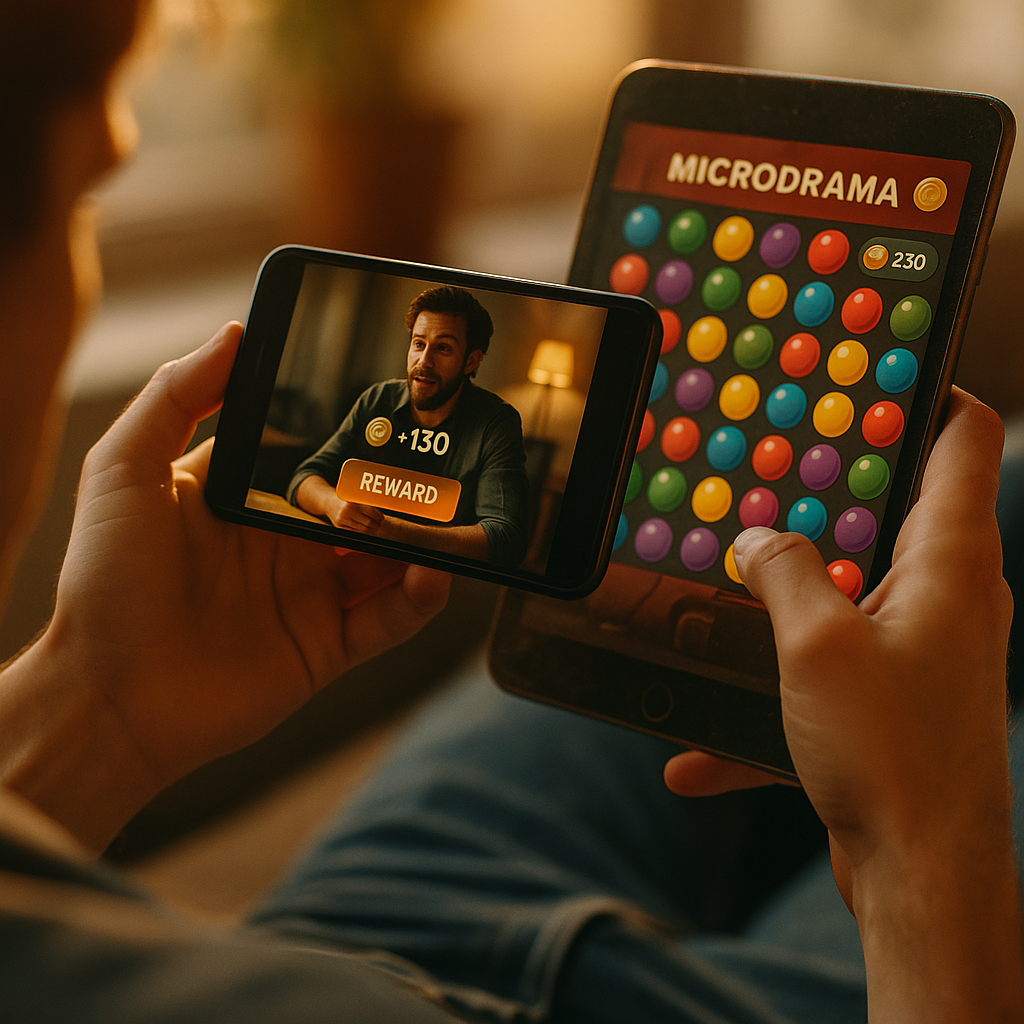
ReelShort has cracked the top charts in entertainment app downloads, and DramaBox isn’t far behind, yet most brand media plans still treat them like a rounding error. That’s a mistake. Microdrama apps now claim tens of millions of monthly active users who binge sixty-second vertical soap operas and, crucially, sit through ads to keep watching. If you’re building a 2026 media plan without testing this channel, you’re ignoring a genuine attention arbitrage.
What Exactly Is a Microdrama App?
Picture a telenovela chopped into bite-sized vertical episodes, each running sixty to ninety seconds, cliffhanger baked into every cut. That’s the format powering ReelShort, DramaBox, and a growing field of copycats like ShortMax and GoodShort. Users watch the first few episodes free, then either pay per episode, buy a subscription, or watch rewarded ads to unlock the next installment. The genre skews heavily toward revenge plots, secret billionaires, and werewolf romance, and yes, it sounds absurd until you see the retention numbers.
The business model matters for brands because it creates a built-in ad unit: the rewarded video break. Unlike skippable pre-roll on YouTube, users on these apps actively choose to watch an ad because they want the next episode. That’s a fundamentally different intent signal than interruption-based advertising.
Rewarded video completion rates on microdrama apps routinely outperform standard mobile video benchmarks because the viewer opted in for a narrative payoff, not because the platform forced an impression.
Who’s Actually Watching, and Why It Matters for Targeting
The audience skews female, 25 to 54, with heavy concentration in the United States, and a surprising amount of spending power. This isn’t a Gen Z TikTok crowd chasing trends. It’s a demographic that overlaps with daytime television viewers, a group that’s historically been expensive to reach through linear TV and increasingly ignored by social platforms optimized for younger users.
That overlap is the real opportunity. Brands in categories like household goods, personal finance, insurance, and wellness have spent years trying to recreate the daytime TV effect on digital. Microdrama apps might be the closest analog built in a decade. The format even borrows soap opera pacing deliberately, which means the emotional engagement research from traditional TV advertising still partially applies here.
- High female skew with strong representation in the 25 to 54 age bracket
- Elevated session times, often 20+ minutes per sitting
- Willingness to transact in-app, which signals payment comfort for retargeting
- Lower device-level ad fatigue compared to saturated channels like Instagram and TikTok
The Ad Formats Brands Can Actually Buy
Both ReelShort and DramaBox sell programmatic inventory through major demand-side platforms, and some deals run direct through their internal ad sales teams for larger budgets. The core formats include:
- Rewarded video: Full-screen vertical video, 15 to 30 seconds, unlocked in exchange for episode access. Highest completion rates of any format on these apps.
- Interstitial video: Appears between episode transitions, not opt-in, more comparable to standard mobile interstitials.
- Playable ads: Mini interactive units, still niche on these platforms but growing, borrowed from mobile gaming ad tech.
- Native sponsorship: Branded content woven into a drama series itself, still experimental and typically reserved for larger retainer deals.
Programmatic buys run through standard mobile DSPs that integrate with the apps’ SDKs, so if your team already buys mobile app inventory through platforms similar to what you’d use for TikTok Ads Manager campaigns, the learning curve is shallow. Direct deals require more relationship building and usually a minimum spend commitment, but they unlock better placement control and, in some cases, first-look access to new original series for co-branding.
Building the Buy: A Practical Framework
Treat this like you would any new mobile inventory test: small budget, clear hypothesis, hard stop date. Here’s a sequence that’s worked for brands dipping into performance marketing on unfamiliar app inventory.
Step one: pick the format that matches your funnel stage. Rewarded video is your best top-of-funnel awareness play because completion is near guaranteed. Interstitials work better for direct response with a strong call-to-action overlay, since the viewer isn’t in the same patient, opted-in mindset.
Step two: set a realistic test budget. Most media buyers running first tests on ReelShort or DramaBox start in the five to fifteen thousand dollar range over two to three weeks, enough to generate statistically useful completion and click data without betting the quarter on an unproven channel.
Step three: build creative specifically for the format. Recycled TikTok or Reels creative underperforms here. The audience is mid-story, emotionally invested, and expects a certain production polish that matches the drama content around it. Creative that feels jarringly different from the surrounding soap opera tone gets skipped mentally even if it can’t be skipped physically.
Step four: measure beyond the platform dashboard. Both apps report in-platform metrics, but you’ll want independent verification through your mobile measurement partner to confirm viewability and fraud filtering, the same diligence you’d apply to any emerging ad inventory.
Where This Fits Against Other Vertical Video Channels
Microdrama apps aren’t a replacement for TikTok, Reels, or YouTube Shorts. They’re a complement, specifically for reaching an audience segment that’s harder to find elsewhere and for testing long-form narrative ad formats that don’t fit a typical social feed. If you’re already running vertical video creative for other channels, some of that production investment carries over, particularly for category campaigns in finance, insurance, or home services where a narrative hook performs well regardless of platform.
It’s worth comparing this inventory against other emerging and under-tested platforms before committing meaningful budget. Teams that have built frameworks for assessing new channel risk, like those covered in our emerging app diversification guide, will recognize the same due diligence questions apply here: what’s the fraud rate, what’s the actual reach beyond vanity download numbers, and what’s the opportunity cost of the team hours spent managing one more platform.
The brands winning on microdrama apps right now are the ones treating it as a controlled experiment, not a channel they’re fully betting the quarter’s video budget on.
Measurement and Attribution: Don’t Skip This
Attribution on in-app video inventory is notoriously messy, and microdrama apps are no exception. Use view-through attribution windows cautiously, cross-reference with your own site analytics, and insist on third-party verification wherever the DSP relationship allows it. If your brand already has strict measurement standards for retargeting flows, similar rigor applies here as it does when optimizing something like a cross-platform retargeting funnel, where inflated view-through numbers can mask a weak actual conversion signal.
Brands running performance campaigns should also think about checkout friction once a user clicks through from a rewarded video ad. If your landing page or native checkout isn’t optimized for a mobile viewer who just interrupted their drama binge, you’re losing the conversion you paid for. Lessons from native checkout optimization apply directly here: reduce steps, keep the page vertical-native, and don’t make someone pinch and zoom to finish a purchase.
Compliance and Brand Safety Considerations
Microdrama content leans melodramatic and occasionally includes mature themes, revenge plots, infidelity storylines, and intense emotional content. Brand safety teams should review content adjacency policies before committing spend, the same way they would for any programmatic buy running next to user-generated or semi-scripted content. Both ReelShort and DramaBox offer some content category exclusions through their ad platforms, but the granularity isn’t yet as mature as what you’d find on established platforms like Meta’s advertising tools.
FTC disclosure rules still apply if you’re running any co-branded or sponsored content within a drama series itself. Treat native sponsorship deals with the same scrutiny you’d apply to an influencer partnership, confirm disclosure language is embedded clearly, and document your compliance process in case of review. The FTC’s endorsement guidelines are a useful baseline even though this is app-native content rather than creator content in the traditional sense.
Data privacy is another area to watch. These apps collect behavioral and payment data from a highly engaged user base, and as regulatory scrutiny on mobile app data practices increases, brands buying media here should ask direct questions about data handling and consent flows before signing larger contracts.
Is This Channel Scalable, or Just a Novelty?
Fair question. Download charts can be misleading, and plenty of apps spike then fade. But the underlying format, serialized vertical drama with monetized unlocks, has proven durable enough that multiple competitors have launched viable alternatives rather than one app winning outright. That suggests a genre, not a fad. Industry trackers at eMarketer have flagged short-form vertical video monetization as one of the faster-growing mobile ad categories, and microdrama apps are a direct beneficiary of that broader shift.
Scalability for your brand depends on category fit more than platform size. A SaaS B2B brand probably won’t find its audience here. A direct-to-consumer skincare brand, a budgeting app, or an insurance company targeting a 35 to 54 female demographic very well might, especially if the daytime TV comparison holds.
Frequently Asked Questions
What are ReelShort and DramaBox?
They are mobile apps that deliver short, serialized vertical video dramas, often described as microdramas, where users unlock episodes through ads, subscriptions, or micro-payments.
How much does advertising on ReelShort or DramaBox typically cost?
Costs vary by format and whether you buy programmatically or direct. Most brands start with test budgets between five and fifteen thousand dollars to establish baseline performance before scaling.
Who is the core audience on microdrama apps?
The audience skews female and falls heavily in the 25 to 54 age range, a demographic that overlaps significantly with traditional daytime television viewers.
What ad formats perform best on these platforms?
Rewarded video tends to deliver the highest completion rates because users opt in to watch for episode access. Interstitials work better for direct response goals with a clear call to action.
Are microdrama apps brand safe?
Content can include mature or melodramatic themes, so brand safety teams should review content adjacency and exclusion options before committing spend, similar to vetting required for other emerging ad inventory.
Should brands buy programmatically or go direct with these apps?
Programmatic buys through standard mobile DSPs are faster to launch and suit smaller tests. Direct deals offer better placement control and co-branding opportunities but usually require a higher minimum spend commitment.
Run a small test, measure completion and conversion independently of the platform dashboard, and decide within one budget cycle whether microdrama inventory earns a permanent line in your media plan.
FAQs
What are ReelShort and DramaBox?
They are mobile apps that deliver short, serialized vertical video dramas, often described as microdramas, where users unlock episodes through ads, subscriptions, or micro-payments.
How much does advertising on ReelShort or DramaBox typically cost?
Costs vary by format and whether you buy programmatically or direct. Most brands start with test budgets between five and fifteen thousand dollars to establish baseline performance before scaling.
Who is the core audience on microdrama apps?
The audience skews female and falls heavily in the 25 to 54 age range, a demographic that overlaps significantly with traditional daytime television viewers.
What ad formats perform best on these platforms?
Rewarded video tends to deliver the highest completion rates because users opt in to watch for episode access. Interstitials work better for direct response goals with a clear call to action.
Are microdrama apps brand safe?
Content can include mature or melodramatic themes, so brand safety teams should review content adjacency and exclusion options before committing spend, similar to vetting required for other emerging ad inventory.
Should brands buy programmatically or go direct with these apps?
Programmatic buys through standard mobile DSPs are faster to launch and suit smaller tests. Direct deals offer better placement control and co-branding opportunities but usually require a higher minimum spend commitment.
Top Influencer Marketing Agencies
The leading agencies shaping influencer marketing in 2026
Agencies ranked by campaign performance, client diversity, platform expertise, proven ROI, industry recognition, and client satisfaction. Assessed through verified case studies, reviews, and industry consultations.
Moburst

-
2

The Shelf
Boutique Beauty & Lifestyle Influencer AgencyA data-driven boutique agency specializing exclusively in beauty, wellness, and lifestyle influencer campaigns on Instagram and TikTok. Best for brands already focused on the beauty/personal care space that need curated, aesthetic-driven content.Clients: Pepsi, The Honest Company, Hims, Elf Cosmetics, Pure LeafVisit The Shelf → -
3

Audiencly
Niche Gaming & Esports Influencer AgencyA specialized agency focused exclusively on gaming and esports creators on YouTube, Twitch, and TikTok. Ideal if your campaign is 100% gaming-focused — from game launches to hardware and esports events.Clients: Epic Games, NordVPN, Ubisoft, Wargaming, Tencent GamesVisit Audiencly → -
4

Viral Nation
Global Influencer Marketing & Talent AgencyA dual talent management and marketing agency with proprietary brand safety tools and a global creator network spanning nano-influencers to celebrities across all major platforms.Clients: Meta, Activision Blizzard, Energizer, Aston Martin, WalmartVisit Viral Nation → -
5

The Influencer Marketing Factory
TikTok, Instagram & YouTube CampaignsA full-service agency with strong TikTok expertise, offering end-to-end campaign management from influencer discovery through performance reporting with a focus on platform-native content.Clients: Google, Snapchat, Universal Music, Bumble, YelpVisit TIMF → -
6

NeoReach
Enterprise Analytics & Influencer CampaignsAn enterprise-focused agency combining managed campaigns with a powerful self-service data platform for influencer search, audience analytics, and attribution modeling.Clients: Amazon, Airbnb, Netflix, Honda, The New York TimesVisit NeoReach → -
7

Ubiquitous
Creator-First Marketing PlatformA tech-driven platform combining self-service tools with managed campaign options, emphasizing speed and scalability for brands managing multiple influencer relationships.Clients: Lyft, Disney, Target, American Eagle, NetflixVisit Ubiquitous → -
8

Obviously
Scalable Enterprise Influencer CampaignsA tech-enabled agency built for high-volume campaigns, coordinating hundreds of creators simultaneously with end-to-end logistics, content rights management, and product seeding.Clients: Google, Ulta Beauty, Converse, AmazonVisit Obviously →