


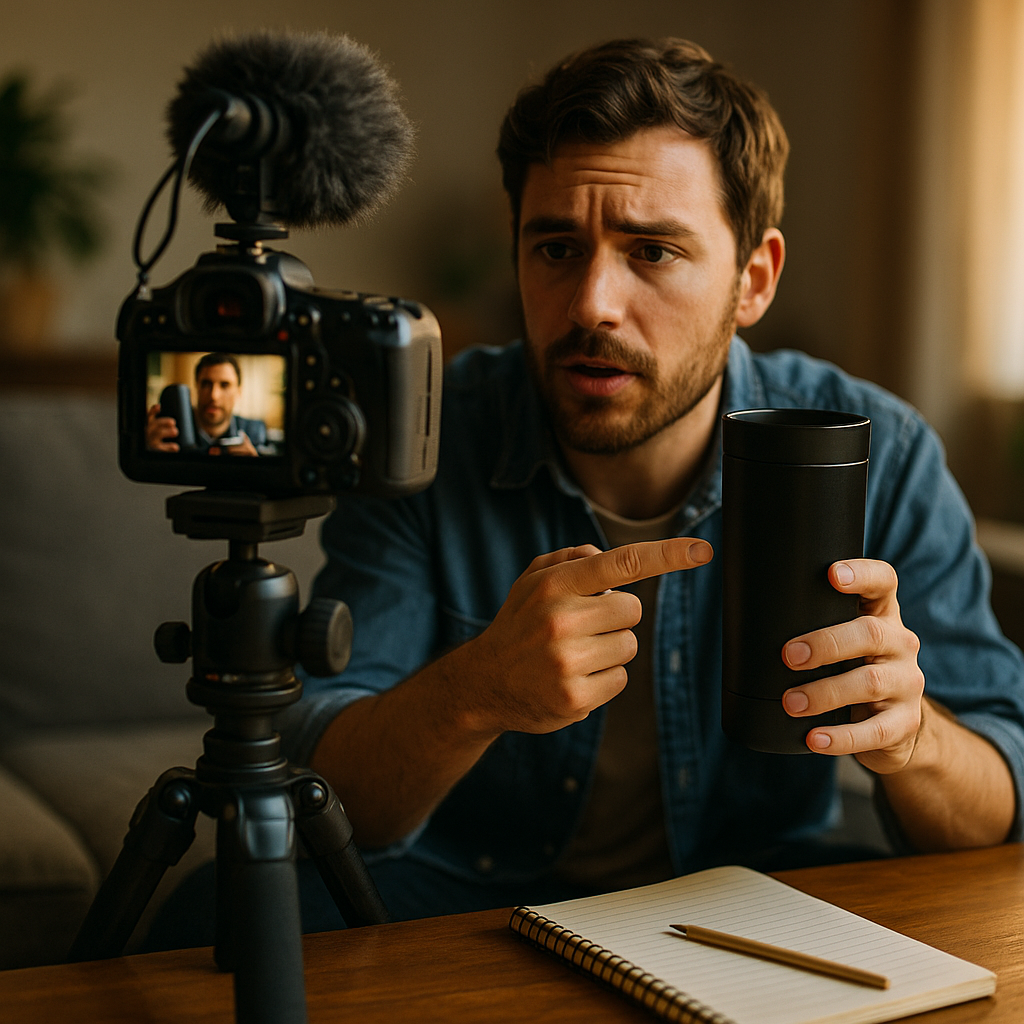
The average YouTube vlog runs 18 minutes. Viewers who make it past minute three watch, on average, another 11 minutes before clicking away. That window is where brand deals live or die. A clumsy vlog integration script gets skipped, muted, or reported. A well-built one gets watched twice and screenshotted into a group chat. The difference almost never comes down to budget. It comes down to whether anyone actually scripted the moment instead of hoping the creator would “just mention it naturally.”
Why Long Form Still Wins for Brand Recall
Short form gets the attention in budget meetings, but long form vlogs do something 15 second clips can’t: they build parasocial trust across a continuous timeline. Viewers spend 20, 30, sometimes 60 minutes inside a creator’s actual day. That’s not an ad break. That’s cohabitation. When a product shows up inside that lived experience, it inherits the credibility of the whole episode.
Nielsen and multiple creator economy studies have shown that viewers recall branded integrations in long form video at meaningfully higher rates than pre-roll or mid-roll ads, largely because the product appears inside a narrative rather than interrupting one. That’s the entire premise of vlog integration: the brand becomes a supporting character, not a commercial break.
A product mentioned during a creator’s actual routine gets remembered. A product bolted onto a routine gets skipped, often within the first two seconds of the segment.
The Anatomy of a Vlog Integration Script
Most brands over-script vlog reads, treating them like a 30 second TV spot stapled into a 20 minute video. That’s the fastest way to kill watch time. A real vlog integration script isn’t a monologue. It’s a structural map with four components:
- The entry point: the exact moment in the day where the product logically appears (morning coffee, gym bag, desk setup, errand run).
- The trigger line: a one-sentence bridge that connects the activity to the product without sounding like a transition slide.
- The functional beat: 15 to 30 seconds of the creator actually using the product, filmed as b-roll rather than a direct-to-camera pitch.
- The exit line: a short, honest reaction that returns the viewer to the day’s narrative.
Notice what’s missing: a hard sell. Vlog audiences have radar for ad copy. The script’s job is to give the creator just enough scaffolding to stay on brand message while leaving room for their actual voice. This is the same philosophy behind voiceover-driven UGC scripts that convert without ever showing a hard pitch on screen.
Where in the Day Should the Product Show Up?
Placement matters more than copy. A skincare brand integrated at minute two, before the viewer has settled in, performs worse than the same read placed at minute nine, once the viewer is emotionally invested in the creator’s morning. Data from creator economy coverage and internal agency benchmarks both point to the same window: integrations placed between 35% and 55% of total video runtime retain the highest percentage of viewers through the segment.
Three placement patterns consistently outperform random insertion:
- The routine anchor. Attach the product to something the creator already does daily, like a skincare step or a commute ritual. Repetition across multiple videos builds familiarity without feeling like repeated advertising.
- The problem-solution beat. The creator hits a small friction point in the day (slow wifi, bad coffee, cluttered desk) and the product resolves it on camera. This mirrors the structure used in proof of concept videos, just stretched across a longer timeline.
- The guest segment. The product gets its own mini chapter, often timestamped in the description, so viewers who skip ahead still land on the integration intentionally rather than by accident.
Writing Dialogue That Doesn’t Sound Like a Script
This is the hardest part, and it’s where most brand briefs fail. The goal isn’t eliminating structure. It’s hiding it. Give creators a skeleton of required talking points (claims, disclosure language, one or two approved phrases for legal) and let them fill in the connective tissue in their own cadence.
A few tactical rules that hold up across categories:
- Avoid adjectives the brand would use in a press release. “Revolutionary” and “game-changing” don’t survive contact with an audience that’s heard a thousand ad reads.
- Let the creator react before they explain. A genuine “oh that’s actually really good” lands better than a rehearsed feature list.
- Script the boundaries, not the sentences. Tell the creator what claims they can’t make (especially for regulated categories like supplements or finance), not exactly what to say.
This approach overlaps heavily with techniques used in first-person narrative ad scripting, where authenticity depends on giving performers real agency inside a constrained frame.
Disclosure Isn’t Optional, and It’s Not Hard
Every vlog integration involving compensation, free product, or an affiliate link needs clear disclosure under FTC endorsement guidelines. The common mistake isn’t skipping disclosure entirely, it’s burying it in a description box nobody reads. A verbal mention (“this part of the video is sponsored by”) paired with on-screen text at the start of the integration covers both legal bases and keeps YouTube’s own paid promotion toggle honest.
Brands running programs across multiple creators should standardize disclosure language in the script template itself, not leave it to individual judgment. Teams dealing with regulated categories should study how claim-based scripts pass FTC review, since the same logic applies to any vlog segment making a functional or health-adjacent claim.
A clear 3-second disclosure costs you almost nothing in watch time. A vague one costs you a platform strike, or worse, a regulatory inquiry.
Measuring What Actually Worked
Vlog integrations are harder to measure than a direct-response ad, but not impossible. Retention graphs on YouTube Studio show exactly where viewers drop off during the integration segment, which tells you immediately whether the placement or the script failed. Pair that with unique promo codes or trackable affiliate links, and brands get a reasonably clean read on conversion without needing a full attribution model.
Three metrics worth tracking on every integration:
- Segment retention delta: the drop in viewership from the moment before the integration to the moment after.
- Replay rate: whether viewers rewind into the segment, a strong signal the content itself (not just the product) held attention.
- Comment sentiment: a fast, free way to catch whether the audience perceived the integration as forced.
Brands running these programs at scale often borrow structure from episodic series scripting, treating a run of vlog integrations as a connected arc rather than isolated one-off reads. That continuity compounds recall across a campaign instead of resetting it with every video.
Scaling Across a Creator Roster
One script per creator doesn’t scale past a handful of partnerships. Agencies managing larger rosters typically build a single integration framework (entry point, trigger line, functional beat, exit line, disclosure block) and then customize the tone layer per creator persona. This is the same logic behind persona-driven scripting frameworks that cut creative fatigue across large campaigns.
Track performance by creator archetype, not just by individual channel. A high-energy lifestyle vlogger and a slow-paced study-with-me creator need different pacing even with the identical product beat. Tools like Sprout Social or a dedicated influencer platform can help normalize these comparisons across a roster so briefs improve with each cycle instead of starting from zero every time.
Common Mistakes That Tank Watch Time
- Front-loading the pitch. Putting the integration in the first 90 seconds before viewers are invested kills retention fast.
- Over-scripting the exact words. Robotic delivery is the number one reason viewers skip ahead.
- Ignoring the day’s actual flow. A kitchen gadget mentioned while the creator is driving breaks immersion instantly.
- Skipping a clean disclosure moment. This isn’t just a legal risk, audiences notice and call it out in comments.
Next Step
Build one reusable integration template this quarter, test it across three creators with different pacing styles, and compare retention deltas before scaling the format further. The script structure matters more than the product category, and once it’s dialed in, it travels across nearly every long form channel in your roster.
Frequently Asked Questions
How long should a vlog product integration be?
Most effective integrations run between 30 and 90 seconds, including the functional beat. Longer segments risk viewer drop-off unless the product itself is the subject of the video.
Where in a vlog should the product placement go?
Data consistently shows the strongest retention when integrations land between 35% and 55% of total runtime, once viewers are emotionally invested but before fatigue sets in.
Do creators need to verbally disclose sponsorships in vlogs?
Yes. FTC guidelines require clear disclosure of any material connection, and relying solely on a description box link is not considered sufficient on its own.
Should brands write exact dialogue for creators?
No. Scripts should define required claims, disclosure language, and structural beats, while leaving wording to the creator’s natural voice to preserve authenticity and watch time.
How do you measure ROI on a vlog integration?
Track segment retention delta, replay rate, comment sentiment, and conversions through unique promo codes or trackable links tied specifically to that creator and video.
Top Influencer Marketing Agencies
The leading agencies shaping influencer marketing in 2026
Agencies ranked by campaign performance, client diversity, platform expertise, proven ROI, industry recognition, and client satisfaction. Assessed through verified case studies, reviews, and industry consultations.
Moburst

-
2

The Shelf
Boutique Beauty & Lifestyle Influencer AgencyA data-driven boutique agency specializing exclusively in beauty, wellness, and lifestyle influencer campaigns on Instagram and TikTok. Best for brands already focused on the beauty/personal care space that need curated, aesthetic-driven content.Clients: Pepsi, The Honest Company, Hims, Elf Cosmetics, Pure LeafVisit The Shelf → -
3

Audiencly
Niche Gaming & Esports Influencer AgencyA specialized agency focused exclusively on gaming and esports creators on YouTube, Twitch, and TikTok. Ideal if your campaign is 100% gaming-focused — from game launches to hardware and esports events.Clients: Epic Games, NordVPN, Ubisoft, Wargaming, Tencent GamesVisit Audiencly → -
4

Viral Nation
Global Influencer Marketing & Talent AgencyA dual talent management and marketing agency with proprietary brand safety tools and a global creator network spanning nano-influencers to celebrities across all major platforms.Clients: Meta, Activision Blizzard, Energizer, Aston Martin, WalmartVisit Viral Nation → -
5

The Influencer Marketing Factory
TikTok, Instagram & YouTube CampaignsA full-service agency with strong TikTok expertise, offering end-to-end campaign management from influencer discovery through performance reporting with a focus on platform-native content.Clients: Google, Snapchat, Universal Music, Bumble, YelpVisit TIMF → -
6

NeoReach
Enterprise Analytics & Influencer CampaignsAn enterprise-focused agency combining managed campaigns with a powerful self-service data platform for influencer search, audience analytics, and attribution modeling.Clients: Amazon, Airbnb, Netflix, Honda, The New York TimesVisit NeoReach → -
7

Ubiquitous
Creator-First Marketing PlatformA tech-driven platform combining self-service tools with managed campaign options, emphasizing speed and scalability for brands managing multiple influencer relationships.Clients: Lyft, Disney, Target, American Eagle, NetflixVisit Ubiquitous → -
8

Obviously
Scalable Enterprise Influencer CampaignsA tech-enabled agency built for high-volume campaigns, coordinating hundreds of creators simultaneously with end-to-end logistics, content rights management, and product seeding.Clients: Google, Ulta Beauty, Converse, AmazonVisit Obviously →