


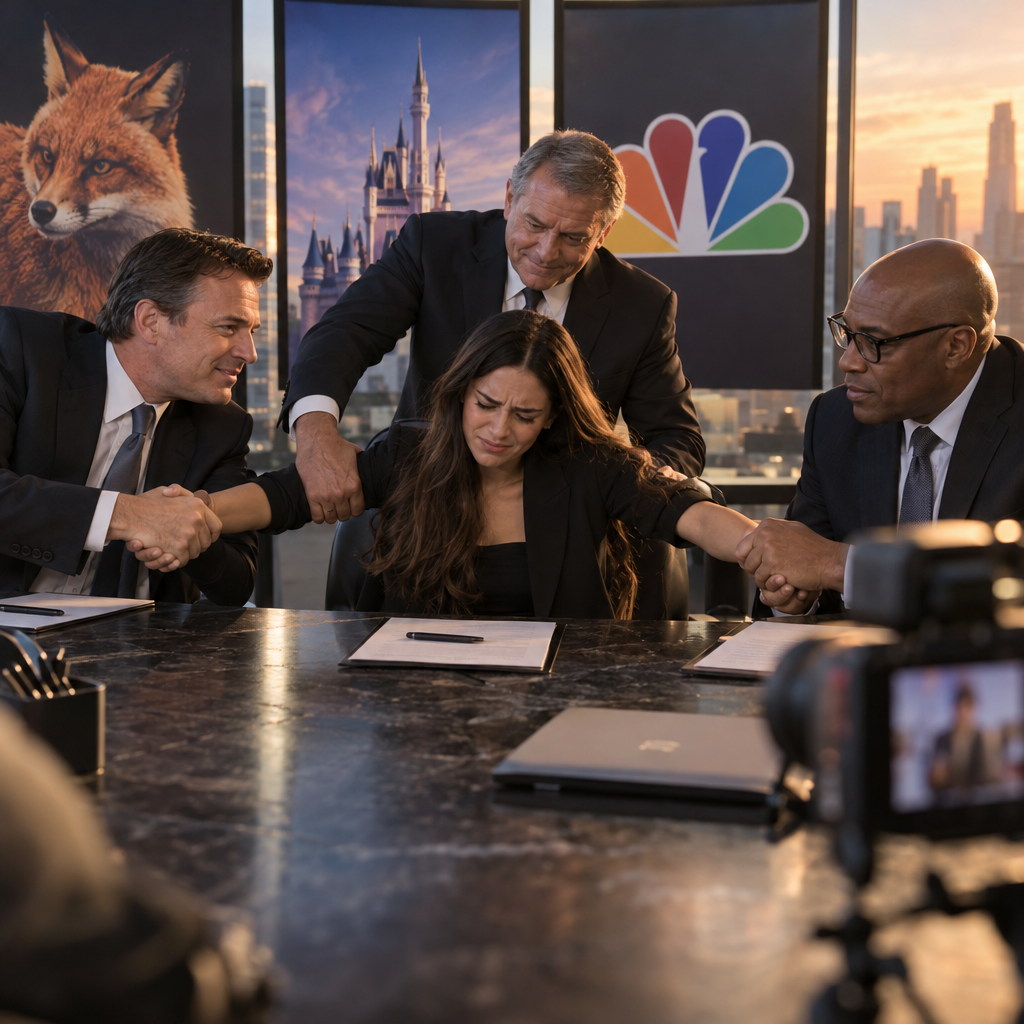
When FOX, Disney, and NBCUniversal all start chasing the same creators your brand already pays, something structural has shifted. Legacy media’s creator economy pivot isn’t a side experiment anymore. It’s a direct challenge to how agencies source talent, negotiate rights, and price brand deals. For marketers running influencer programs, this is the moment to rethink who you’re actually competing with for attention and budget.
The Pivot Is Real, Not a Press Release
For years, legacy media treated creators as guests, not competitors. That era is over. FOX has backed creator networks and talent incubators designed to funnel short-form content into its broadcast and streaming pipelines. Disney has expanded creator marketplace programs that pair YouTube and TikTok talent with franchise IP, effectively turning influencers into extensions of its studio machine. NBCUniversal has built creator studio partnerships that treat top talent less like freelancers and more like contracted production units, complete with development deals and cross-platform distribution.
None of this is charity. These companies watched ad dollars migrate to platforms they don’t own, and they decided the fastest way back in was to buy or build the supply chain themselves.
Legacy media isn’t entering the creator economy to sponsor it. They’re entering to own the distribution and pricing of it, which changes the leverage brands have always assumed they held.
Why Now? The Math Finally Forced Their Hand
Linear TV ad revenue keeps sliding while creator-driven commerce keeps compounding. Short-form video has already pulled ahead in ROI rankings that matter to CFOs, not just marketing teams. When eMarketer data shows creator content outperforming traditional branded video on cost-per-engagement, studio executives stop calling it a fad and start calling it a budget line.
There’s also a talent economics angle. Platform payouts have become less reliable for creators themselves, with reports showing platform payouts hitting 24.4 percent of what they once were relative to reach. That instability makes legacy media’s offer, studio backing, IP access, and predictable production budgets, genuinely attractive to top-tier talent who are tired of algorithm whiplash.
What Changed Structurally
- Studios are signing multi-project development deals directly with creators instead of one-off sponsorships.
- In-house production arms are absorbing creator content into existing distribution pipelines (streaming, FAST channels, social cuts).
- IP licensing terms now include creator-led content formats as a negotiated line item, not an afterthought.
What This Means for Brand Deals
If a creator’s biggest check now comes from a studio development deal rather than a brand partnership, your negotiating position just weakened. You’re no longer the most lucrative or prestigious offer on the table. That’s a real shift for brands used to being a creator’s top-line revenue source.
It also complicates usage rights. A creator under a studio development contract may have exclusivity clauses or content ownership terms that limit what they can promise your brand. Before signing anyone with a visible studio affiliation, get explicit confirmation on whether sponsored content conflicts with their production agreements. This isn’t paranoia, it’s basic contract hygiene that most brand teams still skip.
Brands that keep treating creator contracts like simple sponsorship agreements will get blindsided by exclusivity clauses baked into studio development deals. Read the fine print before you brief anyone.
Pricing Pressure Moves in Two Directions
At the top end, studio-backed talent will command premium rates because they come with built-in production value and cross-platform reach. Think fewer deliverables, higher polish, bigger price tags. This echoes what’s already happening in the broader market, where creator rates jump as inventory shrinks during high-demand windows.
At the mid tier, expect a squeeze. As studios absorb more top talent into exclusive pipelines, mid-tier creators who aren’t picked up will compete harder for brand budgets, which could actually benefit brands looking for value. This mirrors the dynamic already playing out where mid-tier creators control a growing share of niche budgets precisely because they’re more accessible and less encumbered by exclusivity.
The smart move for brand teams: diversify your roster now. Don’t build your entire influencer strategy around talent likely to get absorbed into a studio pipeline in the next renewal cycle.
Compliance and Risk Get More Complicated
Legacy media’s entrance raises the bar on disclosure and rights management. These companies operate under far more legal scrutiny than most creator management agencies, which is actually good news for brand safety, but it also means more layered contracts. You’ll need to verify whose rules apply when a creator’s content touches both a studio IP deal and your sponsorship.
The FTC’s existing endorsement guidelines don’t change based on who else is paying the creator, but enforcement complexity does. If a creator has four different entities (studio, platform, agency, and your brand) all with a stake in a single piece of content, disclosure clarity can get muddy fast. Review the FTC’s endorsement guidance with your legal team before greenlighting any deal involving studio-affiliated talent.
This is also where in-house teams have an advantage. Programs that have already centralized vetting and contract review, a trend covered in depth in our piece on brands bringing creator teams in house, are better positioned to catch these conflicts before they become legal headaches.
Operational Playbook: What to Do Differently
Here’s the practical part. You don’t need to panic, but you do need to adjust process.
- Audit your current roster for studio affiliations. Check whether any high-value creators have signed development or exclusivity deals in the past two quarters. This is now a standard due diligence step, not an edge case.
- Renegotiate usage rights language. Make sure your contracts explicitly address conflicts with third-party production agreements, not just competitor brand exclusivity.
- Build relationships with mid-tier talent early. As studios skim the top of the market, mid-tier creators become more valuable and more available. Lock in rates before demand catches up.
- Track attribution more rigorously. As measurement standards mature across the industry, documented in our coverage of the attribution era and in-house rise, brands need their own data to negotiate confidently against studio-backed pricing power.
- Watch AI production tools as a counterweight. If studio talent gets pricier, AI-assisted content creation can help offset production costs on your end, a shift already underway as covered in AI cutting production costs while trust pricing holds firm.
Could This Actually Benefit Brands Long Term?
Possibly. Legacy media’s involvement brings professionalized production standards, clearer contract language, and in some cases more brand-safe content environments than the open creator market has historically offered. If FOX, Disney, and NBCUniversal succeed in formalizing parts of the creator economy, brands could eventually get more predictable, higher-quality inventory, just at a higher price.
The tradeoff is leverage. Brands that built their influencer strategy on being a creator’s primary income source will need to accept a different negotiating dynamic going forward. That’s not catastrophic, but it does require a mindset shift from “we fund this creator” to “we’re one of several stakeholders in this creator’s output.”
Frequently Asked Questions
What exactly are FOX, Disney, and NBCUniversal doing in the creator economy?
They’re investing directly in creator networks, launching studio-backed development deals with top talent, and building production pipelines that absorb creator content into their existing distribution channels like streaming platforms and FAST channels.
Does this mean brand deals with top creators will get more expensive?
For studio-affiliated creators, likely yes. Their rates will reflect the production value and exclusivity built into studio contracts. Mid-tier creators not absorbed into these pipelines may become relatively more affordable and accessible for brand partnerships.
How does this affect contract negotiations with creators?
Brands need to explicitly check for exclusivity clauses or usage conflicts tied to any studio development deals before finalizing sponsorship agreements. Standard influencer contracts that don’t address this will create legal exposure.
Should brands shift budget away from influencer marketing because of this trend?
No. This is a structural shift in talent supply and pricing, not a signal that influencer marketing is declining. Brands should adjust sourcing strategy and diversify their creator roster rather than cutting investment.
Is legacy media’s creator economy pivot good or bad for brand safety?
Generally positive. Studio involvement tends to bring more formalized production and compliance standards than the open creator market, which can reduce brand safety risk when working with affiliated talent.
The legacy media creator economy pivot isn’t a trend to watch from the sidelines. Audit your roster for studio conflicts this quarter, tighten your usage rights language, and start building relationships with mid-tier talent before the squeeze tightens further.
FAQs
What exactly are FOX, Disney, and NBCUniversal doing in the creator economy?
They’re investing directly in creator networks, launching studio-backed development deals with top talent, and building production pipelines that absorb creator content into their existing distribution channels like streaming platforms and FAST channels.
Does this mean brand deals with top creators will get more expensive?
For studio-affiliated creators, likely yes. Their rates will reflect the production value and exclusivity built into studio contracts. Mid-tier creators not absorbed into these pipelines may become relatively more affordable and accessible for brand partnerships.
How does this affect contract negotiations with creators?
Brands need to explicitly check for exclusivity clauses or usage conflicts tied to any studio development deals before finalizing sponsorship agreements. Standard influencer contracts that don’t address this will create legal exposure.
Should brands shift budget away from influencer marketing because of this trend?
No. This is a structural shift in talent supply and pricing, not a signal that influencer marketing is declining. Brands should adjust sourcing strategy and diversify their creator roster rather than cutting investment.
Is legacy media’s creator economy pivot good or bad for brand safety?
Generally positive. Studio involvement tends to bring more formalized production and compliance standards than the open creator market, which can reduce brand safety risk when working with affiliated talent.
Top Influencer Marketing Agencies
The leading agencies shaping influencer marketing in 2026
Agencies ranked by campaign performance, client diversity, platform expertise, proven ROI, industry recognition, and client satisfaction. Assessed through verified case studies, reviews, and industry consultations.
Moburst

-
2

The Shelf
Boutique Beauty & Lifestyle Influencer AgencyA data-driven boutique agency specializing exclusively in beauty, wellness, and lifestyle influencer campaigns on Instagram and TikTok. Best for brands already focused on the beauty/personal care space that need curated, aesthetic-driven content.Clients: Pepsi, The Honest Company, Hims, Elf Cosmetics, Pure LeafVisit The Shelf → -
3

Audiencly
Niche Gaming & Esports Influencer AgencyA specialized agency focused exclusively on gaming and esports creators on YouTube, Twitch, and TikTok. Ideal if your campaign is 100% gaming-focused — from game launches to hardware and esports events.Clients: Epic Games, NordVPN, Ubisoft, Wargaming, Tencent GamesVisit Audiencly → -
4

Viral Nation
Global Influencer Marketing & Talent AgencyA dual talent management and marketing agency with proprietary brand safety tools and a global creator network spanning nano-influencers to celebrities across all major platforms.Clients: Meta, Activision Blizzard, Energizer, Aston Martin, WalmartVisit Viral Nation → -
5

The Influencer Marketing Factory
TikTok, Instagram & YouTube CampaignsA full-service agency with strong TikTok expertise, offering end-to-end campaign management from influencer discovery through performance reporting with a focus on platform-native content.Clients: Google, Snapchat, Universal Music, Bumble, YelpVisit TIMF → -
6

NeoReach
Enterprise Analytics & Influencer CampaignsAn enterprise-focused agency combining managed campaigns with a powerful self-service data platform for influencer search, audience analytics, and attribution modeling.Clients: Amazon, Airbnb, Netflix, Honda, The New York TimesVisit NeoReach → -
7

Ubiquitous
Creator-First Marketing PlatformA tech-driven platform combining self-service tools with managed campaign options, emphasizing speed and scalability for brands managing multiple influencer relationships.Clients: Lyft, Disney, Target, American Eagle, NetflixVisit Ubiquitous → -
8

Obviously
Scalable Enterprise Influencer CampaignsA tech-enabled agency built for high-volume campaigns, coordinating hundreds of creators simultaneously with end-to-end logistics, content rights management, and product seeding.Clients: Google, Ulta Beauty, Converse, AmazonVisit Obviously →