


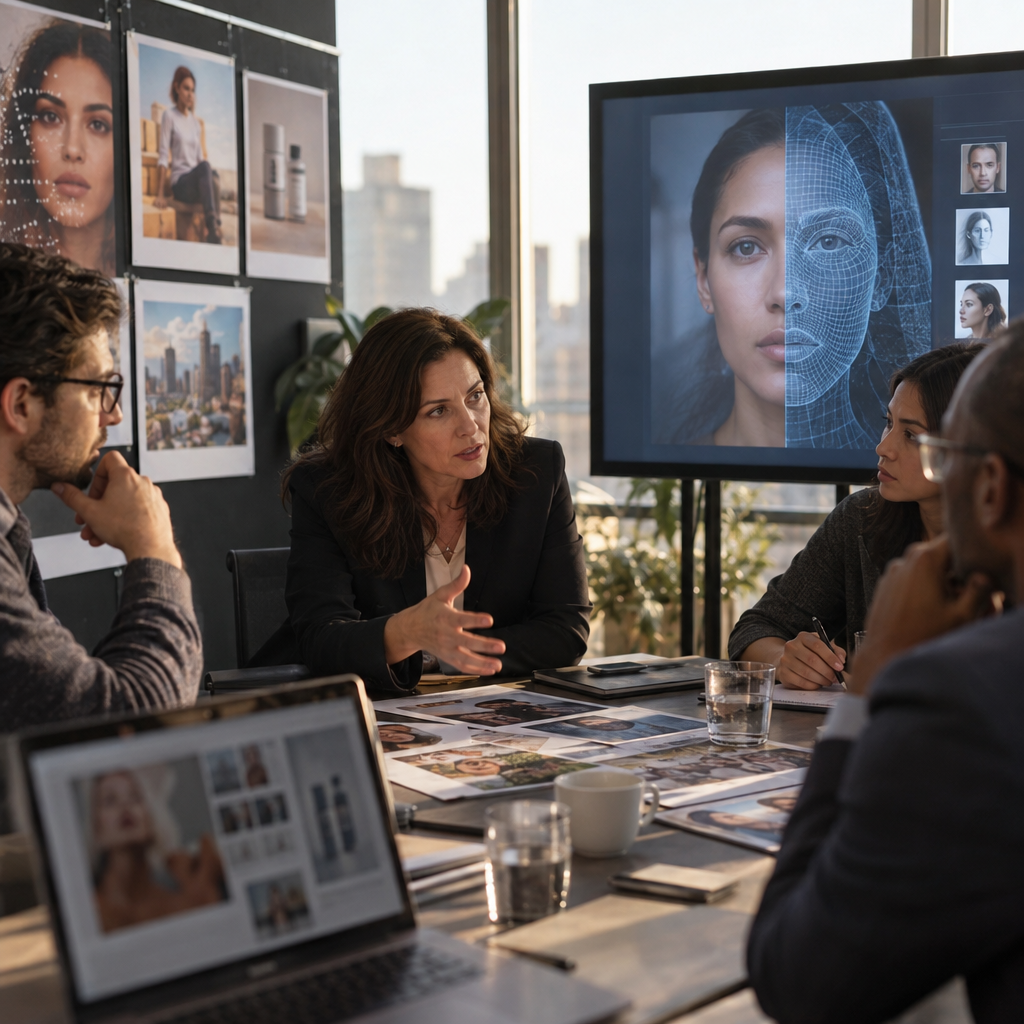
Here’s an uncomfortable number for anyone running an influencer program right now: trust in AI-generated content has dropped sharply enough that Ad Age dedicated an entire research track to it this year. If your influencer disclosure strategy still treats “#ad” as a checkbox, you’re already behind. The backlash isn’t theoretical anymore. It’s showing up in survey data, in comment sections, and in how consumers decide who to believe.
The Ad Age Trust Data Nobody Wanted to See
Ad Age’s recent trust research found that consumer confidence in branded content drops significantly the moment audiences suspect AI involvement, even when the content performs well creatively. That’s a strange paradox for marketers. We’ve spent two years celebrating AI’s ability to cut production costs and scale content output, and now the same audiences we’re trying to reach are telling researchers they trust it less.
This isn’t a small, niche sentiment either. The research points to a broader pattern that mirrors what we’ve already covered on how AI cuts production costs without necessarily protecting the trust premium that creators built their audiences on in the first place. Brands got the efficiency. They didn’t automatically get to keep the credibility.
Audiences aren’t rejecting AI tools outright. They’re rejecting the feeling of being deceived about what’s real, who made it, and why they’re seeing it.
Why AI Backlash Hits Disclosure Harder Than Expected
Disclosure has always been about one thing: making the commercial relationship visible. For years, that meant flagging a paid partnership. Simple enough. Now there’s a second layer of opacity that brands haven’t fully reckoned with. Was this script written by AI? Was the creator’s face deepfaked into a product demo? Did a human actually use this product, or did generative tools fabricate the “unboxing”?
Consumers are asking these questions whether or not brands are ready to answer them. According to eMarketer’s consumer trust research, skepticism toward synthetic media correlates directly with lower purchase intent, even in categories where the product itself is perfectly legitimate. The backlash isn’t really about AI as a technology. It’s about perceived dishonesty, and disclosure is the mechanism that’s supposed to prevent that perception from forming in the first place.
Here’s the part that should worry compliance teams specifically: generic disclosure language that doesn’t address AI involvement now reads as incomplete, maybe even evasive, to a more media-literate audience. A simple “#sponsored” tag no longer answers the question audiences are actually asking.
Is Your Disclosure Language Keeping Up With AI Skepticism?
Run this quick audit. Pull your last 20 sponsored posts. How many disclose the use of AI tools in production, scripting, voice cloning, or visual editing? If the answer is close to zero, you have a gap, and it’s growing faster than most legal teams realize.
The FTC’s endorsement guidelines already require clear and conspicuous disclosure of material connections. They don’t yet have AI-specific language baked into every enforcement action, but regulators have signaled increasing interest in synthetic media disclosure. Waiting for a formal rule before acting is a risk management mistake, not a compliance strategy.
The FTC Angle Brands Keep Underestimating
Most brand legal teams treat influencer disclosure as a solved problem. Get the hashtag placement right, confirm the creator used the platform’s paid partnership tool, file it away. That approach worked when the main risk was a creator forgetting to tag a post. It doesn’t work when the deception risk now includes AI-generated testimonials, synthetic voiceovers, or content that implies human usage that never happened.
Regulatory exposure here isn’t hypothetical. Enforcement priorities shift, and AI-washing, claiming or implying authenticity that doesn’t exist, is exactly the kind of consumer harm regulators are built to address. Brands that get ahead of this now, by building AI-use disclosure into contracts and content review, will be in a dramatically better position than those scrambling after an enforcement action or a viral callout post.
- Require creators to flag AI-assisted scripting or editing in brief approvals, not just final captions.
- Update influencer contracts to define what counts as “AI involvement” for disclosure purposes.
- Train internal review teams to spot synthetic elements before content goes live, not after a complaint.
Three Disclosure Fixes That Actually Rebuild Trust
Fixing this doesn’t require reinventing your entire influencer program. It requires being specific where you’ve been vague.
First, separate commercial disclosure from production disclosure. “This is a paid partnership” and “this video used AI voice editing” are two different pieces of information, and audiences want both. Combining them into one vague disclaimer dilutes the signal.
Second, favor formats that make authenticity harder to fake and easier to prove. Research we’ve covered on live formats beating static posts on trust metrics isn’t a coincidence. Live, unscripted content is inherently harder to doctor, and audiences seem to sense that even without articulating why. The same logic shows up in educational content outperforming polished ads, where perceived effort and imperfection read as credibility signals rather than production flaws.
Third, stop measuring disclosure compliance by platform checkbox alone. A paid partnership tag satisfies the platform’s terms of service. It doesn’t necessarily satisfy the FTC’s “clear and conspicuous” standard, and it definitely doesn’t satisfy an audience that’s grown suspicious of anything that feels synthetic. Brands that are serious about this are starting to audit disclosure language the same way they audit social engagement benchmarks, as an ongoing metric, not a one-time setup task.
Platform compliance and regulatory compliance are not the same thing, and treating them as interchangeable is how brands end up explaining themselves to a reporter instead of a lawyer.
What This Means for Budget and Vendor Selection
There’s an operational angle here too. As AI tools get folded deeper into creator production pipelines, brands need to ask vendors and agencies pointed questions before signing contracts. Which parts of this deliverable were AI-assisted? Can that be disclosed without undermining the creative? If a vendor can’t answer clearly, that’s a flag worth escalating before the campaign launches, not after it’s flagged by an outside party.
This also intersects with the broader shift toward in-house creator operations that we’ve tracked across brands like Google, Blizzard, and Etsy. One underappreciated advantage of bringing creator management in-house is tighter control over disclosure consistency. Agencies managing dozens of client relationships don’t always have bandwidth to customize AI-disclosure language per brand. In-house teams can bake it into process from day one.
None of this means AI tools are off limits for influencer content. Efficiency gains are real, and HubSpot’s marketing research consistently shows AI-assisted content accelerating production timelines without necessarily hurting performance. The issue has never been the tool. It’s the silence around using it.
Next step: Pull your current disclosure templates this week and add one line addressing AI involvement in production. It’s a small edit that closes a growing credibility gap before it costs you a campaign, or a regulator’s attention.
Frequently Asked Questions
What is an influencer disclosure strategy?
An influencer disclosure strategy is the set of guidelines, contract terms, and content review processes a brand uses to ensure sponsored content clearly communicates paid relationships and, increasingly, any use of AI tools in production or presentation.
Why is AI backlash affecting influencer marketing specifically?
Influencer marketing relies heavily on perceived authenticity. When audiences suspect AI involvement without clear disclosure, that perceived authenticity drops, which directly undermines the trust that makes influencer content effective in the first place.
Does the FTC require disclosure of AI use in sponsored content?
Current FTC endorsement guidelines require clear disclosure of material connections between brands and endorsers. They don’t yet include explicit AI-specific rules, but regulators have shown growing interest in synthetic media, and brands that disclose proactively reduce future enforcement risk.
How can brands disclose AI use without hurting campaign performance?
Separate commercial disclosure from production disclosure, use clear and specific language rather than vague disclaimers, and favor content formats like live video or unscripted demos where authenticity is easier to demonstrate.
Should brands avoid AI tools entirely to rebuild trust?
No. The data points to transparency as the fix, not avoidance. Brands that disclose AI involvement clearly can still use the technology’s efficiency benefits without triggering the trust penalty tied to undisclosed synthetic content.
Top Influencer Marketing Agencies
The leading agencies shaping influencer marketing in 2026
Agencies ranked by campaign performance, client diversity, platform expertise, proven ROI, industry recognition, and client satisfaction. Assessed through verified case studies, reviews, and industry consultations.
Moburst

-
2

The Shelf
Boutique Beauty & Lifestyle Influencer AgencyA data-driven boutique agency specializing exclusively in beauty, wellness, and lifestyle influencer campaigns on Instagram and TikTok. Best for brands already focused on the beauty/personal care space that need curated, aesthetic-driven content.Clients: Pepsi, The Honest Company, Hims, Elf Cosmetics, Pure LeafVisit The Shelf → -
3

Audiencly
Niche Gaming & Esports Influencer AgencyA specialized agency focused exclusively on gaming and esports creators on YouTube, Twitch, and TikTok. Ideal if your campaign is 100% gaming-focused — from game launches to hardware and esports events.Clients: Epic Games, NordVPN, Ubisoft, Wargaming, Tencent GamesVisit Audiencly → -
4

Viral Nation
Global Influencer Marketing & Talent AgencyA dual talent management and marketing agency with proprietary brand safety tools and a global creator network spanning nano-influencers to celebrities across all major platforms.Clients: Meta, Activision Blizzard, Energizer, Aston Martin, WalmartVisit Viral Nation → -
5

The Influencer Marketing Factory
TikTok, Instagram & YouTube CampaignsA full-service agency with strong TikTok expertise, offering end-to-end campaign management from influencer discovery through performance reporting with a focus on platform-native content.Clients: Google, Snapchat, Universal Music, Bumble, YelpVisit TIMF → -
6

NeoReach
Enterprise Analytics & Influencer CampaignsAn enterprise-focused agency combining managed campaigns with a powerful self-service data platform for influencer search, audience analytics, and attribution modeling.Clients: Amazon, Airbnb, Netflix, Honda, The New York TimesVisit NeoReach → -
7

Ubiquitous
Creator-First Marketing PlatformA tech-driven platform combining self-service tools with managed campaign options, emphasizing speed and scalability for brands managing multiple influencer relationships.Clients: Lyft, Disney, Target, American Eagle, NetflixVisit Ubiquitous → -
8

Obviously
Scalable Enterprise Influencer CampaignsA tech-enabled agency built for high-volume campaigns, coordinating hundreds of creators simultaneously with end-to-end logistics, content rights management, and product seeding.Clients: Google, Ulta Beauty, Converse, AmazonVisit Obviously →