


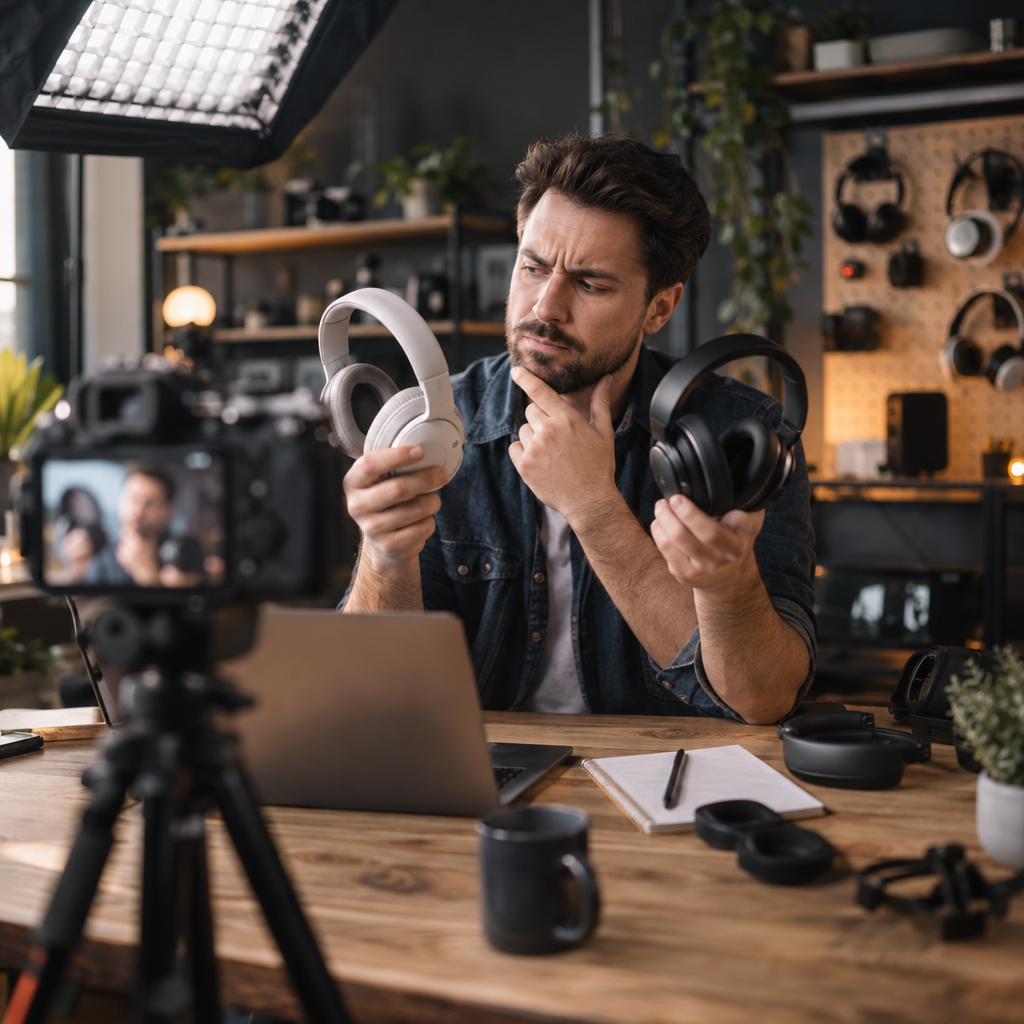
Here’s an uncomfortable truth: 82% of consumers say they trust product recommendations from people over brands, yet most branded video content still reads like a sales pitch wearing a creator costume. Comparison format videos flip that script. By pitting one product against another on camera, head to head reviews give skeptical buyers the one thing a polished ad never can: a reason to believe.
The format isn’t new. QVC built an empire on side by side demos decades before TikTok existed. What’s changed is the scale, the speed, and the stakes. A poorly scripted comparison video can tank trust faster than it builds it. Let’s get into how to script these things so they actually convert.
Why Side By Side Beats a Straight Pitch
Skeptical buyers have been burned before. They’ve bought the “game changing” gadget that sat in a drawer. They’ve read five star reviews that turned out to be fake. So when a brand says “our product is better,” the default reaction is suspicion, not interest.
Comparison videos work because they shift the burden of proof. Instead of asking viewers to trust a claim, you’re showing them a test. Even if the test is lightly staged (and let’s be honest, most are), the format signals transparency. The viewer gets to watch the evidence unfold rather than accept a conclusion handed to them.
A head to head format doesn’t ask viewers to trust your claim. It lets them watch the evidence and draw their own conclusion, which is exactly why skeptics engage with it longer than they do with a standard testimonial.
This matters more in categories where buyers already do their own research before purchasing, think skincare, tech accessories, kitchen gear, supplements. Research from eMarketer consistently shows that comparison and review content ranks among the highest intent touchpoints in the shopper journey. If your brand isn’t showing up in that comparison moment, a competitor or an unaffiliated reviewer will fill the gap for you.
The Five Beat Structure That Actually Converts
Comparison videos fail most often because they’re structured like arguments instead of demonstrations. Here’s the beat sheet we recommend for scripts that hold attention and build credibility:
- The setup (0 to 3 seconds): State exactly what’s being compared and why it matters. “I tried the $12 version against the $60 version so you don’t have to.” No fluff, no music swell, just the premise.
- The criteria: Tell viewers what you’re actually testing before you test it. This single step separates credible comparisons from obviously biased ones.
- The test: Show both products under the same conditions. Same lighting, same angle, same amount of product used. Inconsistency here is the fastest way to lose trust.
- The surprise or concession: This is the beat most scripts skip, and it’s the one that makes or breaks credibility. Admit where the “losing” product actually wins something. Maybe it’s cheaper. Maybe it smells better. A comparison with zero concessions reads as an ad, not a review.
- The verdict: Give a clear recommendation, but frame it around use case rather than absolute superiority. “If you travel a lot, grab the smaller one. If you’re at a desk all day, the bigger one wins.”
This structure mirrors the trust building approach used in how it’s made videos, where process transparency does the persuading instead of a hard sell. Comparison content works on the same psychological lever: show your work.
Picking the Right Comparison Angle
Not every comparison needs a named competitor sitting in frame. In fact, legal and brand safety teams often push back hard on direct competitor call outs, and for good reason. There are three angles that tend to perform well without inviting a cease and desist letter:
- Versus the old way. Compare your product to the outdated method it replaces. A posture corrector versus “just remembering to sit up straight.” Lower risk, often funnier, and it reframes the category instead of attacking a rival brand.
- Versus the generic alternative. “Name brand versus the one from the dollar store” style content performs extremely well because it taps into price anxiety, a near universal skeptic trigger.
- Versus a named competitor. Highest risk, highest reward. This only works if your claims are defensible and your legal team has signed off on the specific language used on screen.
Whichever angle you choose, brief your creators the way you’d brief any high stakes UGC asset. A tight, specific brief reduces the chance of a creator improvising a claim that gets your brand in trouble. The approach outlined in one page creator briefs works particularly well here because comparison scripts need precision, not vague creative direction.
Where Comparison Videos Go Wrong
Three mistakes show up constantly in comparison format content, and all three are avoidable with better scripting.
Mistake one: rigged conditions. Testing your product under ideal settings and the competitor under worst case conditions. Audiences catch this within seconds, and the comments section will let you know.
Mistake two: no disclosure. If the brand paid for the content or sent free product, that needs to be disclosed clearly, not buried in a hashtag at the end of a caption. The FTC’s endorsement guidelines apply to comparison content just as much as standard reviews, and enforcement has only gotten stricter. If you’re running creator comparisons across multiple markets, pair this with a documented localized disclosure framework so you’re not improvising compliance language market by market.
Mistake three: zero objectivity. A comparison that favors your product in every single category, every single time, stops functioning as a comparison. It becomes an ad with extra steps. Build the concession beat into every script, non negotiably.
The fastest way to lose a skeptical buyer’s trust is to run a comparison with zero losses for your own product. Audiences are savvier than brands give them credit for.
Shooting It Without Looking Staged
Production choices matter as much as scripting here. A comparison video shot with identical lighting setups, matching camera distances, and consistent audio levels reads as fair. One where your product gets flattering light and the competitor gets shadows reads as manipulation, even if that wasn’t the intent.
If you’re producing multiple comparison angles from a single shoot (price tier, use case, ingredient breakdown), the efficient move is capturing everything in one session using a multi angle shoot approach. This cuts production costs while giving you enough raw footage to build several comparison cuts for different ad sets.
Don’t ignore the sound off viewer either. Platforms like Instagram and TikTok report that a huge share of video is watched muted, particularly in feed. Your comparison claims, criteria, and verdict all need to live in on screen text, not just narration. The caption and text overlay strategy covered in sound off vertical video scripting applies directly to comparison formats, since the “versus” framing needs to be instantly legible even with the volume down.
Testing on a Budget Before You Scale
You don’t need a studio budget to validate whether a comparison angle will convert. Several brands now run small batches of comparison scripts as rapid tests, similar to the method described in micro budget UGC testing, before committing to a full production. Script five different comparison hooks, shoot them cheaply with a single creator and two products on a table, and let performance data tell you which angle resonates before investing in a bigger shoot.
Metrics to watch during testing aren’t just view count. Watch time past the “criteria” beat tells you whether the setup is working. Comment sentiment tells you whether viewers believe the test was fair. And conversion rate on the specific product featured as the “winner” tells you whether the format is actually moving people down funnel, not just entertaining them. Tools like Sprout Social and native platform analytics both surface this kind of beat level drop off if you tag your video chapters correctly.
Measuring Conversion, Not Just Watch Time
A comparison video can get great watch time and still convert poorly if the verdict beat is vague. Be specific in the final recommendation. “Both are good” is a watch time killer and a conversion killer. Give viewers a clear next step tied to a clear use case, and tag the winning product directly if you’re running this through shoppable vertical video tagging. The shorter the distance between “this one wins” and “tap to buy,” the higher your conversion rate will land.
Data from HubSpot and various Statista consumer behavior reports consistently show comparison content outperforming standard product demos on time spent and purchase intent metrics, particularly in considered purchase categories where buyers are actively weighing alternatives.
FAQs
Quick answers to the questions marketing teams ask most often before greenlighting a comparison campaign.
Do comparison videos need to name a specific competitor?
No. Many of the highest performing comparison videos compare a product against a generic alternative, an outdated method, or a cheaper substitute rather than naming a specific competitor brand. This lowers legal risk while still delivering the trust building effect of a side by side format.
How do I avoid legal issues with comparison claims?
Keep claims specific, documented, and testable. Avoid superlatives you can’t back up with data, disclose any paid partnership clearly per FTC guidelines, and have legal review any script that names a competitor directly before it goes into production.
What’s the ideal length for a comparison format video?
Most high converting comparison videos run between 30 and 90 seconds for short form placements. Longer formats, up to three or four minutes, work better on YouTube where viewers are actively researching a purchase decision and expect more depth.
Should the brand’s product always win the comparison?
Not in every category. Conceding a minor point, like price or a niche feature, makes the overall verdict more believable and tends to increase trust and conversion compared to a comparison where the sponsored product wins across the board.
Can comparison videos work for service based businesses, not just physical products?
Yes. Service comparisons (software versus manual process, subscription versus one time purchase, DIY versus professional service) follow the same five beat structure and often perform even better because the stakes of the decision feel higher to the viewer.
Visible FAQ (HTML)
Frequently Asked Questions
Do comparison videos need to name a specific competitor?
No. Many of the highest performing comparison videos compare a product against a generic alternative, an outdated method, or a cheaper substitute rather than naming a specific competitor brand. This lowers legal risk while still delivering the trust building effect of a side by side format.
How do I avoid legal issues with comparison claims?
Keep claims specific, documented, and testable. Avoid superlatives you can’t back up with data, disclose any paid partnership clearly per FTC guidelines, and have legal review any script that names a competitor directly before it goes into production.
What’s the ideal length for a comparison format video?
Most high converting comparison videos run between 30 and 90 seconds for short form placements. Longer formats, up to three or four minutes, work better on YouTube where viewers are actively researching a purchase decision and expect more depth.
Should the brand’s product always win the comparison?
Not in every category. Conceding a minor point, like price or a niche feature, makes the overall verdict more believable and tends to increase trust and conversion compared to a comparison where the sponsored product wins across the board.
Can comparison videos work for service based businesses, not just physical products?
Yes. Service comparisons (software versus manual process, subscription versus one time purchase, DIY versus professional service) follow the same five beat structure and often perform even better because the stakes of the decision feel higher to the viewer.
Script your next comparison video with one hard rule: no winner sweeps every category. Build in a real concession, disclose the partnership clearly, and let the side by side format do the convincing your ad copy never could.
Top Influencer Marketing Agencies
The leading agencies shaping influencer marketing in 2026
Agencies ranked by campaign performance, client diversity, platform expertise, proven ROI, industry recognition, and client satisfaction. Assessed through verified case studies, reviews, and industry consultations.
Moburst

-
2

The Shelf
Boutique Beauty & Lifestyle Influencer AgencyA data-driven boutique agency specializing exclusively in beauty, wellness, and lifestyle influencer campaigns on Instagram and TikTok. Best for brands already focused on the beauty/personal care space that need curated, aesthetic-driven content.Clients: Pepsi, The Honest Company, Hims, Elf Cosmetics, Pure LeafVisit The Shelf → -
3

Audiencly
Niche Gaming & Esports Influencer AgencyA specialized agency focused exclusively on gaming and esports creators on YouTube, Twitch, and TikTok. Ideal if your campaign is 100% gaming-focused — from game launches to hardware and esports events.Clients: Epic Games, NordVPN, Ubisoft, Wargaming, Tencent GamesVisit Audiencly → -
4

Viral Nation
Global Influencer Marketing & Talent AgencyA dual talent management and marketing agency with proprietary brand safety tools and a global creator network spanning nano-influencers to celebrities across all major platforms.Clients: Meta, Activision Blizzard, Energizer, Aston Martin, WalmartVisit Viral Nation → -
5

The Influencer Marketing Factory
TikTok, Instagram & YouTube CampaignsA full-service agency with strong TikTok expertise, offering end-to-end campaign management from influencer discovery through performance reporting with a focus on platform-native content.Clients: Google, Snapchat, Universal Music, Bumble, YelpVisit TIMF → -
6

NeoReach
Enterprise Analytics & Influencer CampaignsAn enterprise-focused agency combining managed campaigns with a powerful self-service data platform for influencer search, audience analytics, and attribution modeling.Clients: Amazon, Airbnb, Netflix, Honda, The New York TimesVisit NeoReach → -
7

Ubiquitous
Creator-First Marketing PlatformA tech-driven platform combining self-service tools with managed campaign options, emphasizing speed and scalability for brands managing multiple influencer relationships.Clients: Lyft, Disney, Target, American Eagle, NetflixVisit Ubiquitous → -
8

Obviously
Scalable Enterprise Influencer CampaignsA tech-enabled agency built for high-volume campaigns, coordinating hundreds of creators simultaneously with end-to-end logistics, content rights management, and product seeding.Clients: Google, Ulta Beauty, Converse, AmazonVisit Obviously →