


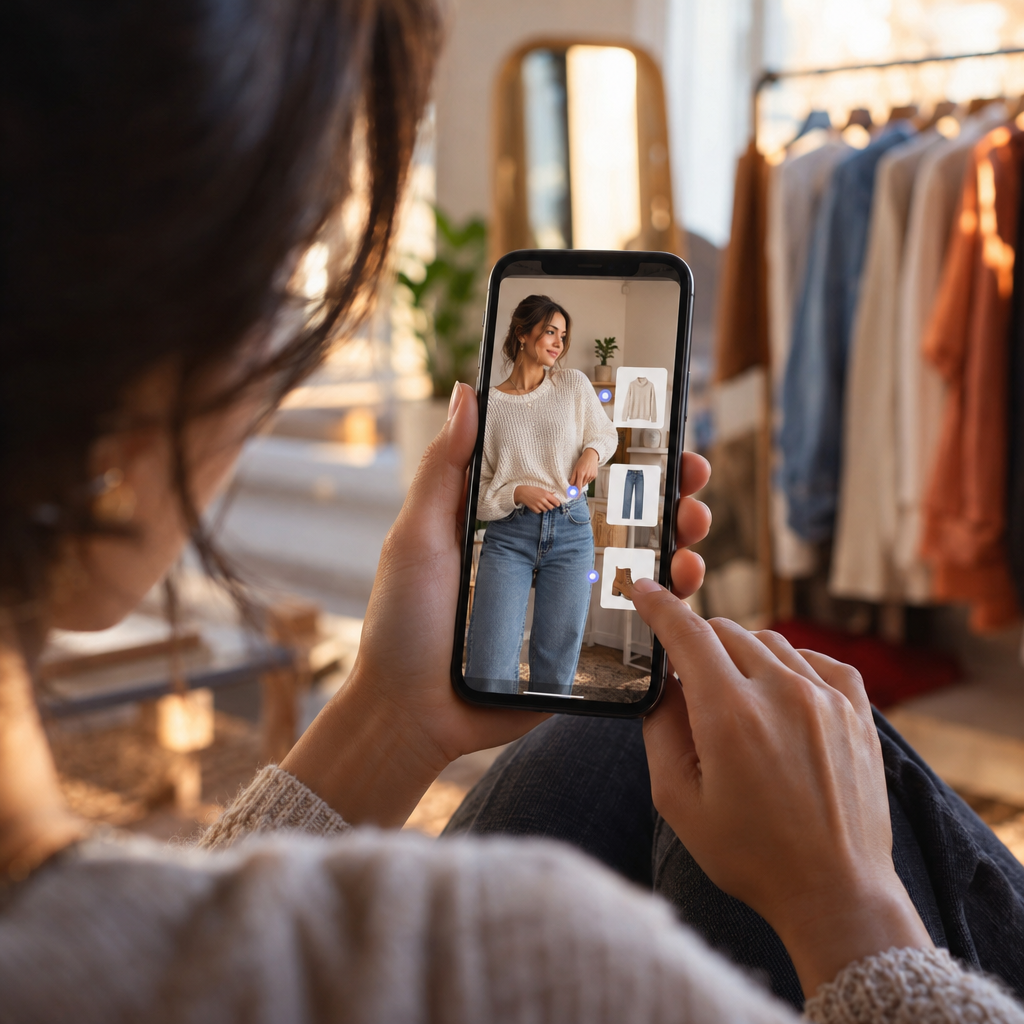
Seventy nine percent of TikTok users say they’ve purchased something after seeing it on the platform, yet most brands still make shoppers leave the video to buy it. That gap is where revenue goes to die. Shoppable vertical video closes it by letting viewers tap a product tag mid-scroll and check out without breaking stride, and in 2026 it’s becoming the baseline expectation for creator content, not a nice-to-have.
If your influencer program still treats video as a brand awareness play with a link in bio tacked on, you’re leaving conversion on the table. Let’s get into how interactive product tags actually work, where brands mess them up, and what a defensible shoppable video workflow looks like.
What Shoppable Vertical Video Actually Means
Shoppable vertical video is short-form, 9:16 content with embedded, tappable product tags that link directly to a purchase flow, often a native in-app checkout. Think TikTok Shop tags, Instagram Reels product stickers, or YouTube Shorts shopping tags. The viewer doesn’t click out to a browser tab and lose momentum. They tap, see a product card, and complete the purchase inside the same session.
This is different from a swipe-up link or a bio link aggregator. Those require a platform switch, a page load, and usually a few extra taps. Every one of those steps is a point of drop-off. Native shopping tags collapse that funnel into something closer to impulse buying at a physical checkout counter.
The brands winning with shoppable video aren’t the ones with the biggest creators. They’re the ones who’ve shortened the distance between “I want that” and “I bought that” to a single tap.
Why Brands Can’t Ignore This Anymore
Social commerce is projected to keep growing faster than overall ecommerce, and platforms know it. TikTok, Instagram, and YouTube have all invested heavily in native shopping infrastructure because transaction data keeps users and advertisers inside the walled garden longer. According to eMarketer, social commerce continues to outpace traditional ecommerce growth rates, and creator-driven content is the primary engine behind that.
For brand and agency teams, the business case is straightforward:
- Shorter funnels mean higher conversion. Fewer steps between discovery and purchase reduces abandonment at every stage.
- Attribution gets cleaner. Native shopping tags give you real purchase data tied to a specific creator, video, and tag, not a guess based on promo codes.
- Creators earn more, which improves retention. Affiliate commission structures baked into shoppable tags give creators a direct revenue incentive to keep performing for your brand.
- It’s cheaper than paid media at scale. Organic shoppable content with tags can outperform cost-per-click rates on traditional product ads, especially for impulse-category goods.
None of this works, though, if the tags feel bolted on. A product sticker slapped over a creator’s face mid-hook will tank watch time faster than a bad caption. Which brings us to the harder part: actually building this into creator content without wrecking the thing that made the content work in the first place.
Designing Tags That Don’t Kill Engagement
Here’s the tension nobody talks about enough. Platforms reward watch time and completion rate. Product tags, by nature, are a visual interruption. Every pixel of a shopping sticker competes with the creator’s face, the product demo, the on-screen text. Get this wrong and your algorithmic reach tanks even if the tag technically works.
A few operational rules that actually hold up:
- Tag after the hook, never during it. The first three seconds are sacred territory for retention. Our piece on engineering video hooks covers why that window can’t carry any visual friction, including shopping tags.
- Anchor tags to product reveal moments, not random timestamps. If the creator holds up the product at second eight, that’s when the tag should appear, not before.
- Keep tag count tight. One to three tags per video is the sweet spot. Cluttering a 30 second clip with six product cards reads as an ad, not a recommendation, and viewers tap away.
- Let the tag disappear. Most native tools auto-fade a sticker after a few seconds. Use that. A persistent overlay for the full video length is visual noise.
There’s also a sound design angle that gets overlooked. A lot of shoppable video still gets watched muted, especially in public or workplace scroll sessions. If your product reveal depends entirely on verbal cues (“and this is the one I use every day”), you need on-screen captions doing the same job the tag timing relies on. We’ve written about this in scripting captions for sound-off viewing, and the same logic applies when you’re layering tags on top of captioned content: don’t let the tag and the caption fight for the same screen real estate at the same moment.
The Brief Has to Change
Most creator briefs still treat shopping tags as a post-production afterthought, something the brand’s social team adds after the creator delivers the raw file. That’s backwards. If a creator doesn’t know a tag is landing at second twelve, they’ll film a hand gesture or a pan that covers exactly where the tag needs to sit.
Build tag placement into the brief itself. That means specifying:
- Which product(s) get tagged and in what order of priority.
- The approximate timestamp window for each tag based on the planned script beats.
- A note to the creator to leave lower-third screen space clear during product reveal moments (most native tag UI sits in that zone).
- Whether the creator is using platform-native tagging tools themselves or handing off a raw file for the brand team to tag.
This is exactly the kind of detail that belongs in a tight, structured brief rather than a loose creative ask. If your team is still sending five-page PDFs and getting confused deliverables back, the approach outlined in one-page creator briefs applies directly here: shorter, more specific briefs produce better tag placement because there’s less room for creators to miss the detail buried on page four.
Platform by Platform: Where the Tools Actually Stand
Shoppable video isn’t one feature, it’s a patchwork of tools with different levels of maturity.
TikTok Shop has the most mature creator-to-commerce pipeline right now. Creators can tag products directly from the TikTok Shop catalog, commissions are tracked automatically, and brands can run affiliate campaigns that recruit creators specifically to produce shoppable content. The TikTok for Business platform has steadily expanded catalog integration and live shopping tools alongside standard video tags.
Instagram product tags work well for brands with an existing Meta catalog connected through Commerce Manager, documented on Meta’s business platform. Reels tagging is solid, but the checkout experience varies by region and isn’t as frictionless as TikTok Shop in every market.
YouTube Shorts shopping tags are improving but still lag behind in creator adoption, largely because YouTube’s audience skews toward longer consideration cycles rather than impulse taps.
The practical takeaway: don’t force a single shoppable strategy across every platform. Match the tagging approach and the creative pacing to where the native commerce tooling is actually strong, and adapt your vertical-first creative brief accordingly rather than cutting one video down for three different checkout experiences.
Measuring What Actually Matters
Views and likes are vanity metrics for shoppable content. The numbers that matter sit further down the funnel:
- Tag tap-through rate: what percentage of viewers who saw the tag actually tapped it.
- Tap-to-purchase conversion: of those taps, how many completed checkout.
- Revenue per video, not per creator. Creator-level averages hide which specific content formats are driving sales.
- Return/refund rate on tagged products. A high tap-through with a high return rate usually means the creator oversold expectations, which is a brief problem, not a tag problem.
Most native platform dashboards (TikTok Shop’s seller center, Meta’s Commerce Manager) surface this data directly, so there’s little excuse for reporting on reach alone when your CFO is asking about ROI. Tools like Sprout Social and HubSpot can also help tie social commerce data back into broader attribution models if you’re running influencer spend alongside paid and owned channels.
Compliance: Don’t Skip This Part
Tagging a product doesn’t remove your disclosure obligations, it arguably increases them. The FTC’s endorsement guidelines still require clear and conspicuous disclosure of a material connection between a brand and a creator, regardless of whether the creator is tagging the product organically or as part of a paid partnership. In the UK, the ICO’s guidance on data handling also applies where tagging tools capture user purchase behavior tied to a specific creator’s content.
Build disclosure language into the same brief that covers tag placement. It’s one more line item, and it’s far cheaper than a regulatory inquiry.
Where This Is Headed
Expect tag placement to get smarter, not just more prevalent. AI-assisted editing tools are starting to suggest optimal tag timestamps based on where viewer attention peaks in a video’s watch-through curve, similar to how trend-jacking content gets optimized for fast turnaround. The brands that build tagging logic into their creative process now, rather than retrofitting it later, will have a meaningful head start once that automation becomes standard.
The Next Step
Pick one creator format you already run regularly, a GRWM, an unboxing, a demo, and test native shopping tags on three upcoming videos with tag placement specified in the brief, not added after the fact. Measure tap-through and revenue per video before you scale it across your whole roster.
Frequently Asked Questions
What is shoppable vertical video?
Shoppable vertical video is short-form, portrait-orientation content (9:16 format) with embedded product tags that let viewers purchase items directly within the app, without leaving the video or the platform.
Which platforms support native product tagging in creator videos?
TikTok Shop, Instagram Reels through Meta’s Commerce Manager, and YouTube Shorts all support native shopping tags, though the maturity of the checkout experience and creator tooling varies significantly by platform and region.
How many product tags should a video include?
One to three tags per video typically performs best. More than that tends to read as an advertisement rather than a recommendation, which can hurt both tap-through rate and viewer trust.
Do shopping tags hurt video reach or watch time?
Poorly timed tags can hurt retention, particularly if they appear during the opening hook or cover key visual information. Tags placed after the hook and timed to product reveal moments generally avoid this problem.
Does a creator still need to disclose a partnership if the product is tagged?
Yes. Tagging a product does not replace disclosure requirements. The FTC’s endorsement guidelines still apply whenever there is a material connection between the brand and the creator.
What metrics should brands track for shoppable video performance?
Tag tap-through rate, tap-to-purchase conversion, revenue per video, and return rate on tagged products matter far more than views or likes for evaluating shoppable content performance.
Top Influencer Marketing Agencies
The leading agencies shaping influencer marketing in 2026
Agencies ranked by campaign performance, client diversity, platform expertise, proven ROI, industry recognition, and client satisfaction. Assessed through verified case studies, reviews, and industry consultations.
Moburst

-
2

The Shelf
Boutique Beauty & Lifestyle Influencer AgencyA data-driven boutique agency specializing exclusively in beauty, wellness, and lifestyle influencer campaigns on Instagram and TikTok. Best for brands already focused on the beauty/personal care space that need curated, aesthetic-driven content.Clients: Pepsi, The Honest Company, Hims, Elf Cosmetics, Pure LeafVisit The Shelf → -
3

Audiencly
Niche Gaming & Esports Influencer AgencyA specialized agency focused exclusively on gaming and esports creators on YouTube, Twitch, and TikTok. Ideal if your campaign is 100% gaming-focused — from game launches to hardware and esports events.Clients: Epic Games, NordVPN, Ubisoft, Wargaming, Tencent GamesVisit Audiencly → -
4

Viral Nation
Global Influencer Marketing & Talent AgencyA dual talent management and marketing agency with proprietary brand safety tools and a global creator network spanning nano-influencers to celebrities across all major platforms.Clients: Meta, Activision Blizzard, Energizer, Aston Martin, WalmartVisit Viral Nation → -
5

The Influencer Marketing Factory
TikTok, Instagram & YouTube CampaignsA full-service agency with strong TikTok expertise, offering end-to-end campaign management from influencer discovery through performance reporting with a focus on platform-native content.Clients: Google, Snapchat, Universal Music, Bumble, YelpVisit TIMF → -
6

NeoReach
Enterprise Analytics & Influencer CampaignsAn enterprise-focused agency combining managed campaigns with a powerful self-service data platform for influencer search, audience analytics, and attribution modeling.Clients: Amazon, Airbnb, Netflix, Honda, The New York TimesVisit NeoReach → -
7

Ubiquitous
Creator-First Marketing PlatformA tech-driven platform combining self-service tools with managed campaign options, emphasizing speed and scalability for brands managing multiple influencer relationships.Clients: Lyft, Disney, Target, American Eagle, NetflixVisit Ubiquitous → -
8

Obviously
Scalable Enterprise Influencer CampaignsA tech-enabled agency built for high-volume campaigns, coordinating hundreds of creators simultaneously with end-to-end logistics, content rights management, and product seeding.Clients: Google, Ulta Beauty, Converse, AmazonVisit Obviously →