


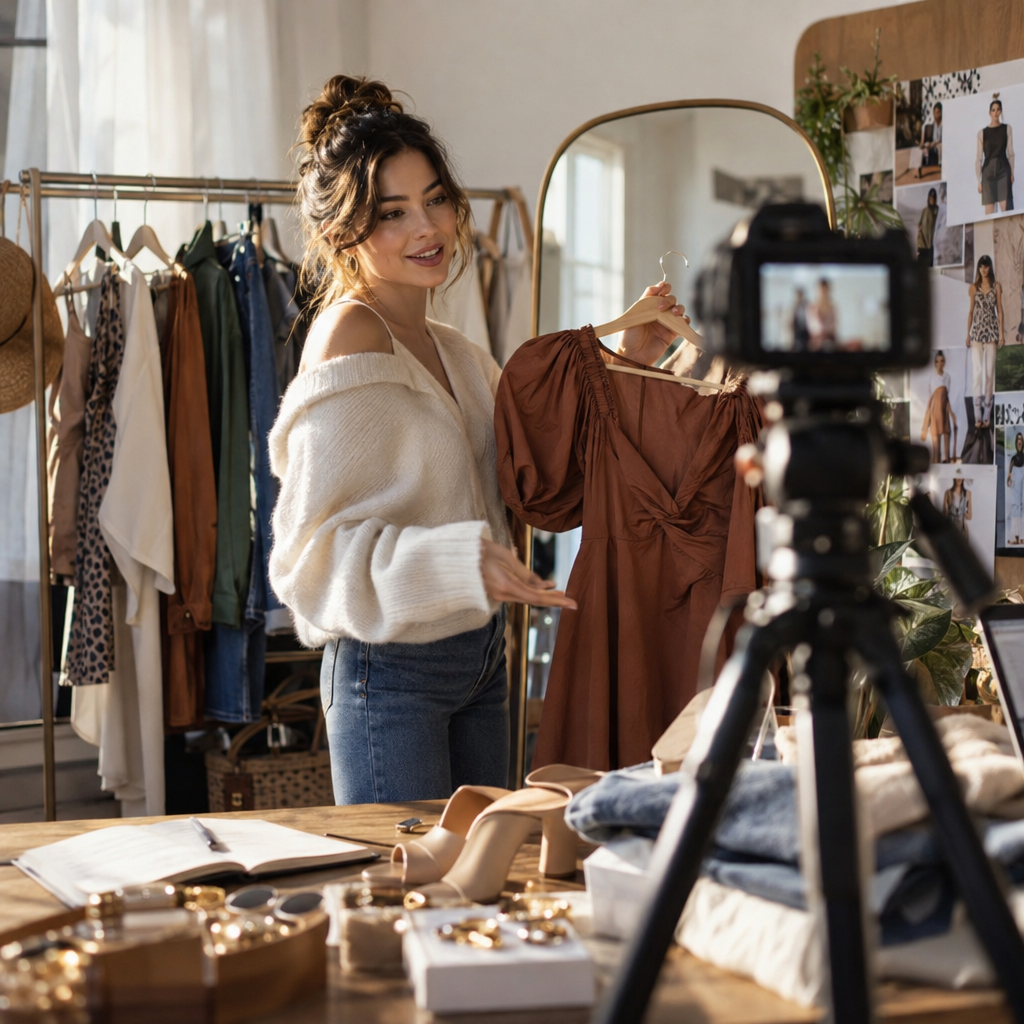
Shoppable video now drives an estimated $1 trillion in global commerce, according to Statista projections on live and short form commerce growth. Yet most fashion brands still treat “get the look” content like a lookbook instead of a storefront. If your style guide videos aren’t scripted to link directly to cart, you’re leaving margin on the editing room floor.
This isn’t about slapping a product tag on an outfit reel and calling it shoppable. It’s about structuring the script, the shot list, and the tagging sequence so viewers move from inspiration to checkout in under fifteen seconds. Get the look videos are one of the highest converting fashion formats on TikTok Shop and Instagram right now, but only when the production is built around the purchase path, not around aesthetics alone.
Why “Get the Look” Outperforms Standard Try On Hauls
Try on hauls are entertainment. Get the look videos are utility. The viewer already knows what they want (a specific vibe, an outfit for an event, a capsule they saw on a creator they trust) and the content delivers a direct solve. That intent gap matters enormously for conversion rate.
Brands running these formats consistently report higher add to cart rates than standard product demos, largely because the format answers a question the viewer is already asking: “where do I get this exact thing.” eMarketer data on social commerce behavior consistently shows that specificity, not production value, is the biggest lever on purchase intent.
A get the look video with five tagged products and a clean visual hierarchy will consistently outperform a beautifully shot fashion film with vague captioning and no clear path to cart.
The Five Beat Script Structure That Converts
Strip away the styling and every high performing get the look video follows a near identical script skeleton. Deviating from it is where most brands lose viewers mid scroll.
- The context hook (0 to 2 seconds): Name the occasion or vibe immediately. “Office to dinner outfit” or “cold weather date night look” does more work than any visual flourish.
- The reveal (2 to 5 seconds): Full outfit shown in motion, not static. Movement sells drape, fit, and texture better than a still pose ever will.
- The breakdown (5 to 10 seconds): Piece by piece callout, ideally synced to on screen tags appearing in real time as the creator names each item.
- The detail beat (10 to 13 seconds): One close up on the item most likely to drive impulse purchase, usually the accessory or shoe that’s hardest to find elsewhere.
- The cart cue (13 to 15 seconds): A direct verbal or text prompt (“linked everything below” or “tap to shop the set”) paired with the tag grid appearing on screen.
Notice what’s missing: no extended narrative, no backstory, no “get ready with me” filler. The format is efficient by design. If your creators are padding runtime past twenty seconds, you’re trading conversion for watch time, and watch time doesn’t pay the affiliate invoice.
Tagging Strategy: Sequence Matters More Than Volume
Here’s where most brand teams get it wrong. They tag every product in the frame simultaneously, overwhelming the viewer with six tap targets at once. The better approach mirrors the script: tags should appear in the same sequence the creator names items, not all at launch.
This requires coordination between the creative brief and the platform’s native shopping tools, whether that’s TikTok Shop’s product tagging feature or Instagram’s shopping tags synced to a Meta catalog. Build the tag timing into the edit, not as an afterthought bolted on by the social team after the video is approved.
For brands running this at scale across multiple creators, a shoppable video tagging framework keeps tap rates high without cluttering the frame. The principle is simple: fewer simultaneous tags, more sequential reveals, and always leave the final three seconds tag free so the viewer can actually tap without the UI shifting under their thumb.
What the Brief Needs to Specify
Vague briefs produce vague tagging. If you want creators to deliver cart ready content, the brief has to spell out the exact sequence, not just the vibe. Treat this the same way you’d treat a performance ad brief, because that’s functionally what it is now.
- Exact SKU list with product URLs or catalog IDs, not just product names
- Required tag timing cues written into the shot list
- A mandated “cart cue” line of dialogue or on screen text
- Specification of which item gets the close up detail beat
- Platform specific tagging instructions (TikTok Shop vs Instagram catalog sync behave differently)
Teams that have adopted one page creator briefs find this translates well to fashion specifically, since stylists and creators can scan the SKU list and tag sequence in under a minute instead of digging through a ten page deck.
Casting the Right Creator for the Look
Not every creator should be styling your product. This sounds obvious, but brand teams routinely cast based on follower count rather than aesthetic fit, and the mismatch tanks conversion even when the script is flawless.
Look for creators whose existing content already features a styling cadence similar to your brand’s positioning. A minimalist capsule wardrobe creator shouldn’t be scripted into a maximalist going out look, no matter how large their audience. The viewer’s trust in the creator’s taste is the entire mechanism that makes get the look content convert, and casting against type breaks that trust instantly.
It’s also worth building in flexibility for creator voice. Overly rigid scripts read as inauthentic, and fashion audiences are especially sensitive to that. The creator voice authenticity principles that apply to UGC generally apply doubly here: give the structure, not the exact words.
The brands winning with this format aren’t the ones with the biggest budgets. They’re the ones who’ve turned casting and tagging sequence into a repeatable operating system rather than a one off production.
Scaling Without Losing the Styling Edge
Once a get the look format proves out with conversion data, the next challenge is volume. Fashion brands need fresh looks weekly, sometimes daily during peak seasons, and reshooting a full production cycle every time isn’t financially sane.
The solve is modular: shoot multiple outfit variations in a single session using the same creator, same lighting setup, and same cart cue structure, then stagger releases across the following weeks. This mirrors the efficiency logic behind multi angle creative shoots, applied specifically to outfit rotation rather than single product angles.
For brands operating across regions, the tagging sequence and script skeleton travel well even when the specific products don’t. A localized UGC framework lets you swap SKUs and seasonal context without rebuilding the entire script from scratch, which matters enormously when a cold weather look in one market is a layering transition piece in another.
Measuring What Actually Matters
Views and likes are vanity metrics for this format. The numbers that matter are tap through rate on individual tags, add to cart rate per product featured, and time to purchase after video view. If a brand can’t pull per product tag performance, they’re flying blind on which pieces in the look actually drove the sale versus which were just along for the ride.
Run this data back into casting and SKU selection monthly. Some products will consistently outperform regardless of which creator features them (usually accessories or shoes with strong standalone appeal), and those should be prioritized for the detail close up beat in future scripts. Platforms like Sprout Social and native TikTok Shop analytics both surface this level of product specific performance if your team is actually pulling the reports rather than skimming top line engagement.
Compliance deserves a mention here too, since fashion influencer content gets FTC scrutiny as often as any category. Make sure disclosure language is baked into the script, not added as an afterthought caption, and that creators understand FTC endorsement guidance applies to shoppable tags just as much as to sponsored posts.
The Takeaway
Get the look videos convert when the script treats cart access as a core beat, not a bolt on. Build the five beat structure, sequence tags to match the breakdown, cast for aesthetic trust over follower count, and measure per product performance monthly so your next script is sharper than the last.
Frequently Asked Questions
How long should a get the look video be for maximum conversion?
Most high performing versions run twelve to fifteen seconds. Longer runtimes tend to dilute the cart cue and give viewers time to scroll away before the tagging sequence completes.
Should every item in the outfit be tagged?
Not necessarily. Tag the items that are purchasable and relevant to the brand’s catalog, but avoid tagging unrelated third party pieces unless there’s an affiliate arrangement in place, since that adds tap targets without adding revenue.
What’s the biggest mistake brands make with this format?
Tagging all products simultaneously instead of sequencing them with the script. It overwhelms the viewer and reduces tap through rate on the items that matter most.
Does this format work better on TikTok Shop or Instagram?
Both can convert well, but TikTok Shop’s native checkout tends to shorten the purchase path further since the viewer doesn’t leave the app. Instagram requires catalog sync and a cleaner handoff to the product page.
How often should brands refresh get the look content?
Weekly during peak fashion seasons, biweekly otherwise. Reusing the same script skeleton with new outfit combinations keeps production costs manageable while maintaining freshness.
Top Influencer Marketing Agencies
The leading agencies shaping influencer marketing in 2026
Agencies ranked by campaign performance, client diversity, platform expertise, proven ROI, industry recognition, and client satisfaction. Assessed through verified case studies, reviews, and industry consultations.
Moburst

-
2

The Shelf
Boutique Beauty & Lifestyle Influencer AgencyA data-driven boutique agency specializing exclusively in beauty, wellness, and lifestyle influencer campaigns on Instagram and TikTok. Best for brands already focused on the beauty/personal care space that need curated, aesthetic-driven content.Clients: Pepsi, The Honest Company, Hims, Elf Cosmetics, Pure LeafVisit The Shelf → -
3

Audiencly
Niche Gaming & Esports Influencer AgencyA specialized agency focused exclusively on gaming and esports creators on YouTube, Twitch, and TikTok. Ideal if your campaign is 100% gaming-focused — from game launches to hardware and esports events.Clients: Epic Games, NordVPN, Ubisoft, Wargaming, Tencent GamesVisit Audiencly → -
4

Viral Nation
Global Influencer Marketing & Talent AgencyA dual talent management and marketing agency with proprietary brand safety tools and a global creator network spanning nano-influencers to celebrities across all major platforms.Clients: Meta, Activision Blizzard, Energizer, Aston Martin, WalmartVisit Viral Nation → -
5

The Influencer Marketing Factory
TikTok, Instagram & YouTube CampaignsA full-service agency with strong TikTok expertise, offering end-to-end campaign management from influencer discovery through performance reporting with a focus on platform-native content.Clients: Google, Snapchat, Universal Music, Bumble, YelpVisit TIMF → -
6

NeoReach
Enterprise Analytics & Influencer CampaignsAn enterprise-focused agency combining managed campaigns with a powerful self-service data platform for influencer search, audience analytics, and attribution modeling.Clients: Amazon, Airbnb, Netflix, Honda, The New York TimesVisit NeoReach → -
7

Ubiquitous
Creator-First Marketing PlatformA tech-driven platform combining self-service tools with managed campaign options, emphasizing speed and scalability for brands managing multiple influencer relationships.Clients: Lyft, Disney, Target, American Eagle, NetflixVisit Ubiquitous → -
8

Obviously
Scalable Enterprise Influencer CampaignsA tech-enabled agency built for high-volume campaigns, coordinating hundreds of creators simultaneously with end-to-end logistics, content rights management, and product seeding.Clients: Google, Ulta Beauty, Converse, AmazonVisit Obviously →