


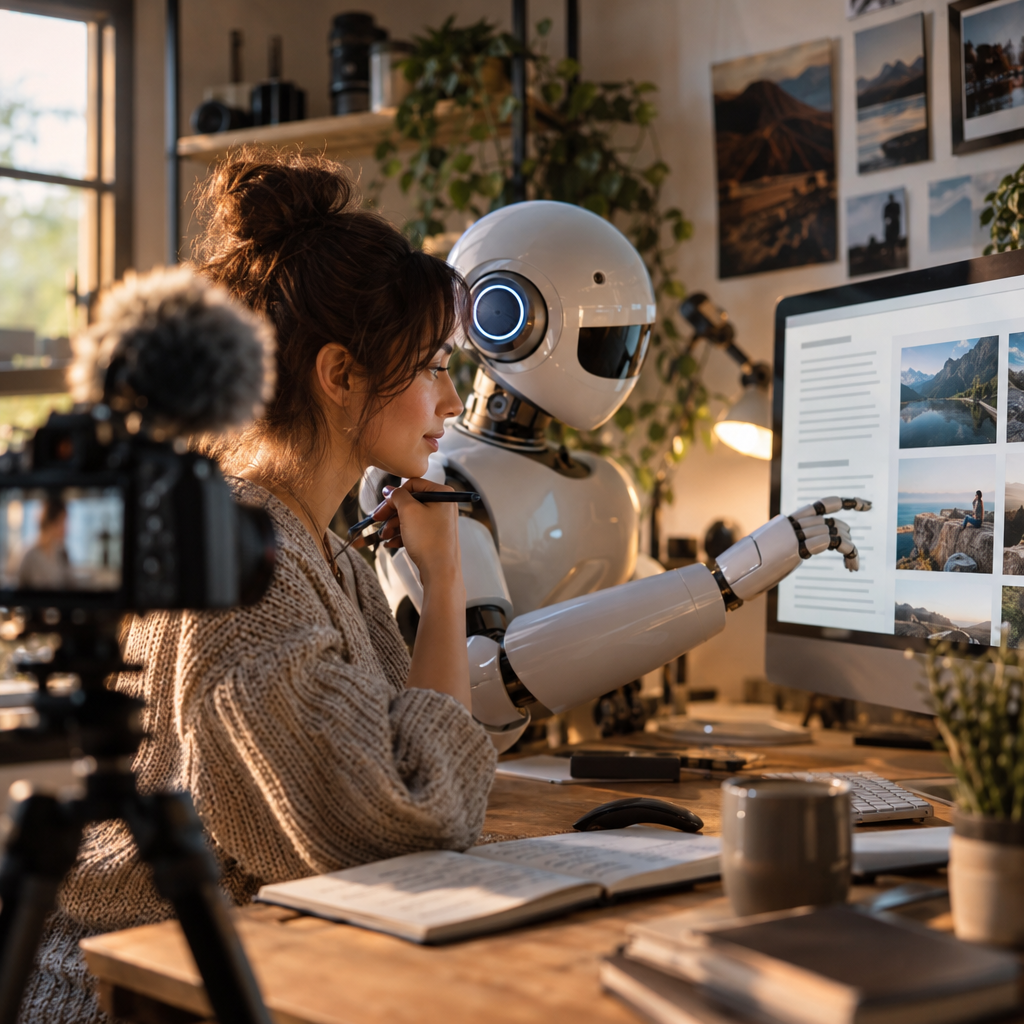
Google’s AI Overviews now answer roughly six in ten searches without a single click to a website, according to eMarketer estimates circulating through late this year. If your creator content isn’t structured to be the answer, it’s invisible. Answer Engine Optimization for creator content isn’t a nice-to-have anymore. It’s the difference between a brand mention surviving an AI summary or getting quietly erased.
What Changes When Search Becomes an Answer
Traditional SEO optimized for rankings. You picked a keyword, built a page, earned backlinks, and waited for a blue link to climb. Answer engines (think Google’s AI Overviews, Perplexity, ChatGPT search, Alexa+, and voice assistants baked into cars and smart speakers) skip the ranking step entirely. They extract, synthesize, and present a single answer. No scrolling. No comparing ten tabs.
That shift matters enormously for creator content, because influencer posts were never built like encyclopedia entries. They’re conversational, personality-driven, and often buried in video or caption format that large language models struggle to parse cleanly. A brilliant product review on TikTok might never surface in an AI answer if the spoken claims aren’t transcribed, structured, and reinforced with text that a crawler can actually read.
An answer engine doesn’t reward the best content. It rewards the most extractable content, and most creator posts weren’t built to be extracted.
We’ve already seen the attribution fallout. 43 percent of brand mentions vanish in AI summaries, meaning nearly half of the credit a creator earned for talking about your product never reaches the brand. That’s not a small leak. That’s a budget-sized hole.
Why Creator Content Has a Hidden AEO Advantage
Here’s the counterintuitive part: creators are actually well positioned to win answer engine visibility, if the content gets formatted correctly after the fact. Why? Because answer engines weight conversational relevance and first-person experience heavily. Google has been explicit for years about favoring content that demonstrates experience, not just expertise, which is the “E” that got added to its E-E-A-T framework. A creator who actually used a skincare product for six weeks and describes the texture, the breakout, the repurchase decision, is producing exactly the kind of experiential signal that answer engines are trained to surface for “does this product work” queries.
The gap isn’t the content quality. It’s the packaging. Most creator content lives natively on platforms that don’t feed clean text into crawlers, or lives in formats (Reels, Shorts, TikTok videos) that get indexed poorly without a transcript and supporting metadata. Brands that pair creator talent with structured publishing, think blog recaps, FAQ schema, and transcript-backed landing pages, are the ones showing up when someone asks an AI assistant “what’s the best budget-friendly foundation for oily skin.”
This is where tools matter. Platforms doing LLM creator matching are starting to score creators not just on engagement rate but on how well their content historically gets cited in AI answers. That’s a new axis of creator value, and most brand teams haven’t built it into their briefing process yet.
The Technical Layer: Structuring Creator Content for Extraction
You can’t optimize what doesn’t have text. That’s rule one. If a creator’s core claim lives only inside a 45-second video, an answer engine has nothing to extract unless someone transcribes it. Here’s the baseline workflow brands should be requiring:
- Full transcripts published alongside video content, ideally on an owned domain, not just platform captions.
- Direct-answer formatting: the first sentence after a question-style subhead should contain the actual answer, not a windup.
- FAQ schema markup on recap pages so crawlers can map question-answer pairs explicitly.
- Structured product claims (ingredient lists, price points, comparison tables) that mirror how people phrase voice queries.
- Consistent entity naming, so the creator and brand are referenced the same way across every asset, reducing ambiguity for the model.
None of this replaces the creator’s authentic voice. It just gives that voice a container an AI system can actually read. Think of it as subtitles for machines.
Brands already building machine readable brand codes have a head start here, since the same discipline (clean entity data, consistent claims, structured metadata) that keeps AI shopping agents on-brand also makes creator content more legible to answer engines.
Voice Search vs Direct Answer: Two Different Games
It’s tempting to lump “voice search” and “AI Overview visibility” into one bucket. They’re related but not identical, and treating them the same wastes effort.
Voice search (Alexa, Siri, Google Assistant) tends to pull a single, short answer read aloud, often sourced from a featured snippet or a tightly structured local listing. Queries skew conversational and local: “where can I get this near me,” “is this safe for sensitive skin.” Direct answer search on platforms like Perplexity or ChatGPT search, by contrast, synthesizes across multiple sources and often cites several creators or publications in one response, sometimes with links, sometimes without.
That means your AEO strategy needs two different content shapes. For voice, short, declarative sentences answering a specific question win. For synthesized AI answers, depth and corroboration matter more, since the model is comparing multiple sources to build a composite response. A single creator review rarely gets cited alone; a cluster of creators saying similar things, backed by structured text, gets cited as consensus.
Voice search rewards the single best answer. Synthesized AI search rewards the most corroborated answer. Brands need both.
Building an AEO Workflow Into Creator Programs
Most influencer programs still brief creators on hashtags, posting windows, and FTC disclosure language, and stop there. That’s no longer enough. An answer-engine-ready brief should include:
- A required claim structure: specific, quotable statements the creator can say naturally (not scripted, just anchored).
- A publishing requirement for a companion text asset, even a simple blog recap, with transcript and schema.
- Consistent product and brand naming across every piece of content in the campaign.
- A review checkpoint where legal and content teams confirm claims are accurate and extractable without distortion.
That last point matters more than people realize. Answer engines compress nuance. A creator’s careful, hedged opinion (“this worked for me, but I have dry skin, so results vary”) can get flattened into a blunt citation: “X brand’s product works for oily skin.” That’s a compliance risk, not just an SEO quirk. Teams already using AI risk scoring to vet creators before contracts should extend that same scrutiny to how claims might get paraphrased by AI summarizers after publication.
Agencies running agentic AI campaign workflows are starting to build AEO checkpoints directly into their production pipelines, flagging content that lacks transcripts or structured claims before it ships. That’s the direction the whole industry is heading: AEO as a pre-publish gate, not a post-publish audit.
Measurement: Proving ROI When Clicks Disappear
Here’s the uncomfortable truth nobody wants to say out loud: standard attribution breaks when the answer engine never sends a click. 80 percent of brands cannot validate AI search attribution right now, which means most teams are flying blind on whether their creator investment is even showing up in the answers that matter.
Practical measurement steps that actually work today:
- Run manual query audits weekly across Perplexity, ChatGPT search, and Google AI Overviews using your top ten buyer-intent questions.
- Track branded citation frequency, not just ranking position, since many answer engines don’t display a traditional rank at all.
- Build a first party data layer that captures post-visit behavior when an answer engine does send traffic, so you’re not relying on platform-reported numbers alone.
- Compare citation share against competitors monthly, since this is a relative game. Being cited 20 percent of the time means little if a rival gets cited 80 percent.
Tools like HubSpot and newer AI visibility platforms are adding citation tracking features, but the category is young. Expect false confidence from dashboards that aren’t fully validated yet. Cross-check anything a vendor shows you with manual spot-checks before you report it up the chain.
Where This Is Headed
Search behavior is consolidating around direct answers faster than most brand teams have adjusted their briefs, their measurement, or their creator contracts. Google’s own guidance on structured data and helpful content keeps pointing in the same direction: clarity, corroboration, and verifiable experience beat keyword density every time. Creator content, done right, is some of the richest experiential signal available. It just needs a text-based scaffolding to be legible to the machines deciding what counts as the answer.
Frequently Asked Questions
What is Answer Engine Optimization for creator content?
Answer Engine Optimization for creator content is the practice of structuring influencer posts, videos, and reviews so AI systems like Google AI Overviews, Perplexity, and voice assistants can extract and cite them directly as answers, rather than relying on traditional search rankings to drive clicks.
How is AEO different from traditional SEO?
Traditional SEO optimizes for ranking position on a results page that users click through. AEO optimizes for being the extracted, synthesized answer itself, often with no click involved, which changes how content should be formatted, structured, and measured.
Do creators need to change how they talk on camera for AEO?
Not significantly. The bigger gap is usually the missing text layer: transcripts, structured recap pages, and schema markup that let AI crawlers read and cite what the creator actually said on video.
Can brands measure ROI from AI answer citations?
Partially. Manual query audits and citation frequency tracking give directional insight, but most brands still lack reliable attribution tools for AI search traffic, so measurement should combine platform data, manual checks, and first party tracking.
Does voice search optimization require different content than AI Overview optimization?
Yes. Voice search favors short, single, declarative answers to specific questions, while synthesized AI answers favor depth and corroboration across multiple sources, so brands often need two distinct content formats to cover both.
Is FAQ schema still useful for creator content pages?
Yes, FAQ schema remains one of the clearest signals brands can give answer engines about which questions a piece of content addresses and what the direct answer is, making it a low-effort, high-value addition to any creator recap page.
Start with one pilot campaign: require transcripts and FAQ-schema recap pages for your next three creator partnerships, then run a weekly citation audit against your top buyer-intent queries. If you’re not showing up in the answer, your competitor already is.
Top Influencer Marketing Agencies
The leading agencies shaping influencer marketing in 2026
Agencies ranked by campaign performance, client diversity, platform expertise, proven ROI, industry recognition, and client satisfaction. Assessed through verified case studies, reviews, and industry consultations.
Moburst

-
2

The Shelf
Boutique Beauty & Lifestyle Influencer AgencyA data-driven boutique agency specializing exclusively in beauty, wellness, and lifestyle influencer campaigns on Instagram and TikTok. Best for brands already focused on the beauty/personal care space that need curated, aesthetic-driven content.Clients: Pepsi, The Honest Company, Hims, Elf Cosmetics, Pure LeafVisit The Shelf → -
3

Audiencly
Niche Gaming & Esports Influencer AgencyA specialized agency focused exclusively on gaming and esports creators on YouTube, Twitch, and TikTok. Ideal if your campaign is 100% gaming-focused — from game launches to hardware and esports events.Clients: Epic Games, NordVPN, Ubisoft, Wargaming, Tencent GamesVisit Audiencly → -
4

Viral Nation
Global Influencer Marketing & Talent AgencyA dual talent management and marketing agency with proprietary brand safety tools and a global creator network spanning nano-influencers to celebrities across all major platforms.Clients: Meta, Activision Blizzard, Energizer, Aston Martin, WalmartVisit Viral Nation → -
5

The Influencer Marketing Factory
TikTok, Instagram & YouTube CampaignsA full-service agency with strong TikTok expertise, offering end-to-end campaign management from influencer discovery through performance reporting with a focus on platform-native content.Clients: Google, Snapchat, Universal Music, Bumble, YelpVisit TIMF → -
6

NeoReach
Enterprise Analytics & Influencer CampaignsAn enterprise-focused agency combining managed campaigns with a powerful self-service data platform for influencer search, audience analytics, and attribution modeling.Clients: Amazon, Airbnb, Netflix, Honda, The New York TimesVisit NeoReach → -
7

Ubiquitous
Creator-First Marketing PlatformA tech-driven platform combining self-service tools with managed campaign options, emphasizing speed and scalability for brands managing multiple influencer relationships.Clients: Lyft, Disney, Target, American Eagle, NetflixVisit Ubiquitous → -
8

Obviously
Scalable Enterprise Influencer CampaignsA tech-enabled agency built for high-volume campaigns, coordinating hundreds of creators simultaneously with end-to-end logistics, content rights management, and product seeding.Clients: Google, Ulta Beauty, Converse, AmazonVisit Obviously →