


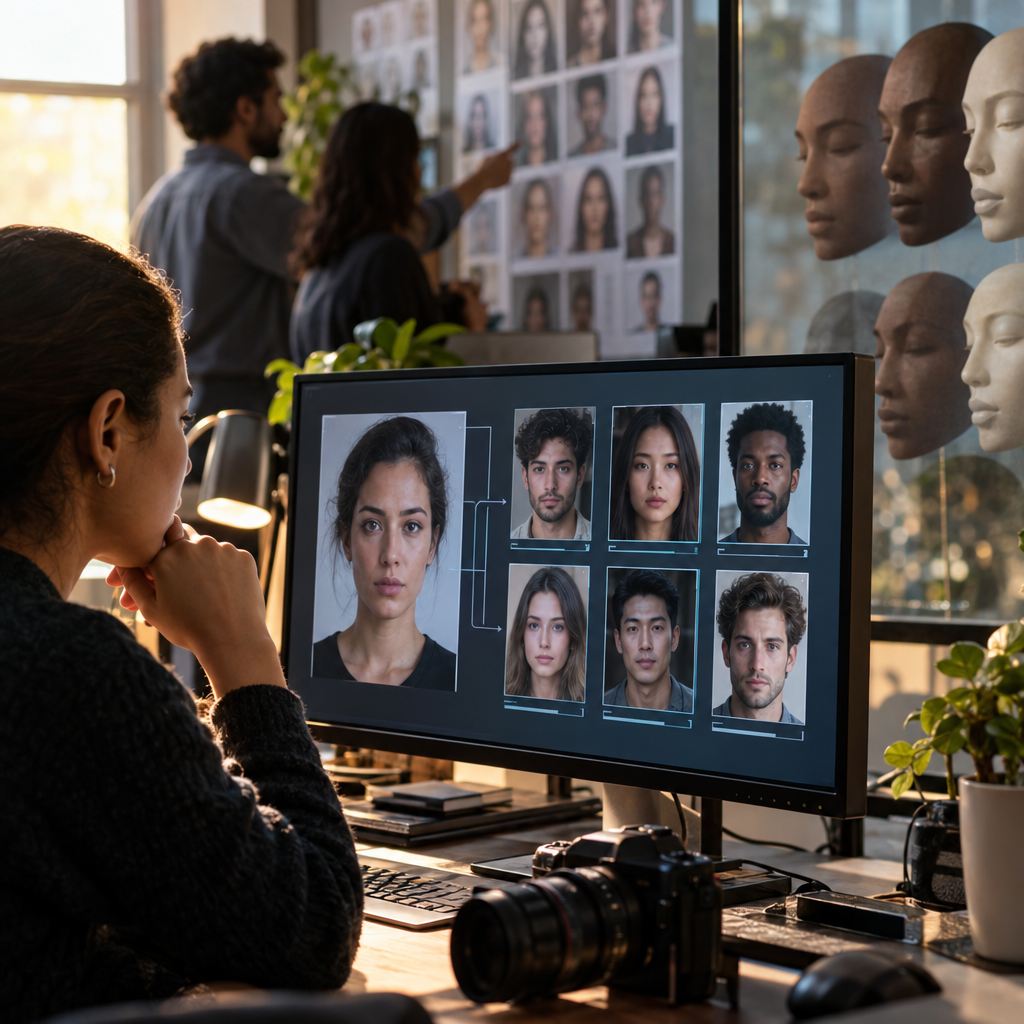
Here’s an uncomfortable number for anyone still vetting creators by gut feel: brands using data-matched creator discovery report conversion lifts of 20 to 30 percent over manually sourced rosters, according to platform benchmarks from HubSpot and major creator marketplaces. AI-powered creator lookalike modeling takes that logic further. Instead of guessing which new partner might perform, you feed the algorithm your proven winners and let it find more.
What Creator Lookalike Modeling Actually Means
Borrow the concept from paid social. Meta and Google have let advertisers build “lookalike audiences” from converting customers for over a decade. Creator lookalike modeling applies the same math to influencer discovery. You select your top three, five, or ten performing creators, the ones driving real conversions, not just impressions, and an AI model identifies the specific traits that made them work.
Then it scans the broader creator landscape for others who share those traits. Not similar follower counts. Not similar niches, at least not only that. The model looks at audience composition, posting cadence, engagement velocity, content structure, even linguistic patterns in captions, and ranks prospects by similarity to your proven winners.
This isn’t theoretical. Platforms like CreatorIQ, Grin, and Upfluence have all rolled out matching features that go well beyond keyword search. Tools built on large language models now parse creator content the way a human strategist would, just faster and at scale. If you want the mechanics of that shift, we covered how LLM creator matching replaces brittle keyword filters with semantic understanding of what a creator actually produces.
How the Matching Engine Actually Works
Strip away the vendor marketing language and the process breaks into three stages.
- Feature extraction: The system pulls dozens to hundreds of data points from your top performers, audience demographics, engagement rate by content format, historical brand lift, comment sentiment, posting frequency, and even visual style cues from thumbnails and video frames.
- Similarity scoring: New creator profiles get scored against that feature set using vector embeddings or clustering models, the same underlying math that powers recommendation engines on Netflix or Spotify.
- Performance weighting: The best systems don’t treat every trait equally. They weight features based on which ones actually correlated with conversion in your historical campaigns, not just engagement.
That last point matters more than most brands realize. A creator who looks similar on paper (similar niche, similar follower tier) can underperform badly if the underlying audience intent doesn’t match. Lookalike modeling done well accounts for that gap. Lookalike modeling done poorly just clusters creators who post about the same topics and calls it a day.
A creator with half the followers but twice the purchase-intent audience overlap will almost always outperform a bigger name chosen on vanity metrics alone.
Why Follower Count Was Always the Wrong Starting Point
Marketers have spent a decade sorting creators into tiers by audience size. It was never a great proxy for performance, and the data backs that up. Sprout Social research on creator partnerships consistently shows mid-tier and micro creators outperforming mega influencers on engagement-to-reach ratio. Lookalike modeling doesn’t care about tier at all. It cares about pattern match.
Think about what actually drove results for your best creator partnership last quarter. Was it reach? Probably not entirely. It was more likely a combination of audience trust, content authenticity, timing, and a format that suited your product. An AI model can isolate which of those variables carried the most weight, something a human media buyer scanning a spreadsheet of follower counts simply cannot do at scale.
This is also why lookalike modeling pairs so naturally with the broader shift toward conversion-based creator testing. Once you know which creators actually move product, not just impressions, the lookalike engine has real signal to work from instead of vanity metrics.
The Bias Problem Nobody Puts in the Case Study
Here’s the catch. Lookalike models amplify whatever pattern you feed them, including the bad ones. If your top performers happen to skew toward a narrow demographic or a single content style because of who your team historically reached out to, the model will dutifully find you more of the same. It won’t flag that you’re missing entire audience segments. It just optimizes for similarity.
This creates real operational risk. A model trained exclusively on past winners can trap a brand in a feedback loop, same creator archetype, same audience, shrinking returns over time as that segment saturates. It also raises fairness questions that regulators are starting to pay attention to. The Federal Trade Commission has made clear it expects brands to maintain oversight of algorithmic decisions that affect marketing practices, and creator selection is no exception.
The fix isn’t to abandon lookalike modeling. It’s to build in deliberate diversity constraints, forcing the model to surface a percentage of candidates outside its top similarity cluster, and to review outputs on a cadence rather than letting the system run unattended. For a broader look at where automated campaign tools still need human judgment, see our coverage of agentic AI running campaigns with human risk checkpoints intact.
Building a Program That Doesn’t Waste the Budget
Rolling out lookalike modeling isn’t a plug-and-play exercise. A few operational realities determine whether it saves money or just adds a layer of automated noise.
- Start with clean performance data. If your attribution is fuzzy, garbage in means garbage out. Brands still struggling with this should read up on how a first party data moat protects creator attribution now that third party cookies are unreliable.
- Define “top performer” by business outcome, not platform metric. Revenue per post, cost per acquisition, repeat purchase rate attributable to a creator’s audience. Engagement rate alone is a weak training signal.
- Pressure test the vendor’s model logic. Ask how similarity scores are weighted and whether the system allows manual override. Vendors making bold efficiency claims deserve scrutiny, and we’ve seen plenty of agent-driven savings claims that don’t survive the math once you check the fine print.
- Build the contract and rights review into the workflow early. New creator matches still need the same usage rights and compliance checks as any partnership. Automating discovery doesn’t automate due diligence, a point we unpack in our piece on AI contract review cutting deal timelines without cutting corners.
- Re-train on a schedule, not an event. Audience behavior shifts. A model trained on last quarter’s winners goes stale fast, especially on platforms where trends move weekly.
Vendors in this space range from established creator marketing platforms adding lookalike features to purpose-built matching tools. Either way, ask for a pilot against a held-out set of creators before committing budget. If the model can’t beat a human strategist’s shortlist in a blind test, it’s not ready for your program.
Does This Replace the Talent Manager Relationship?
No, and vendors overselling that pitch deserve pushback. Lookalike modeling is a sourcing accelerant. It narrows a universe of thousands of potential partners down to a shortlist worth a human’s time. The negotiation, the creative brief, the relationship management, that’s still a people job, and probably will be for a long while. Industry data from eMarketer continues to show that creator marketing ROI correlates strongly with relationship longevity, something no matching algorithm can manufacture on its own.
Where the technology earns its keep is speed and scale. A mid-size brand team that used to spend a week manually scouting new creators for a campaign extension can now get a ranked shortlist in hours, freeing that time for the parts of the job that actually require a human brain.
FAQs
Frequently Asked Questions
What is AI-powered creator lookalike modeling?
It is a discovery method that uses machine learning to identify new influencer partners who share the key performance traits of a brand’s existing top-performing creators, rather than relying on follower count or niche keywords alone.
How is this different from standard influencer discovery tools?
Standard tools typically filter by category, location, or audience size. Lookalike modeling starts from proven conversion data and searches for statistical similarity to winners, weighting traits based on what actually drove results historically.
What data does a brand need before starting a lookalike program?
Clean, outcome-based performance data from past creator partnerships is essential, things like revenue per post, cost per acquisition, and audience overlap. Engagement metrics alone are a weak foundation for training an accurate model.
Can lookalike modeling introduce bias into creator selection?
Yes. If the training data skews toward a narrow creator archetype or audience, the model will amplify that pattern rather than correct it. Brands should build in diversity constraints and review outputs regularly rather than letting the system run unsupervised.
Does lookalike modeling eliminate the need for human vetting?
No. It narrows a large creator pool down to a strong shortlist, but contract review, brand fit judgment, and relationship management still require human oversight and remain critical to program success.
The brands getting the most out of this approach treat lookalike modeling as a sourcing filter, not a final decision maker. Start with one proven cohort of top performers, run a pilot shortlist against a human-curated one, and measure the gap before scaling spend behind it.
Top Influencer Marketing Agencies
The leading agencies shaping influencer marketing in 2026
Agencies ranked by campaign performance, client diversity, platform expertise, proven ROI, industry recognition, and client satisfaction. Assessed through verified case studies, reviews, and industry consultations.
Moburst

-
2

The Shelf
Boutique Beauty & Lifestyle Influencer AgencyA data-driven boutique agency specializing exclusively in beauty, wellness, and lifestyle influencer campaigns on Instagram and TikTok. Best for brands already focused on the beauty/personal care space that need curated, aesthetic-driven content.Clients: Pepsi, The Honest Company, Hims, Elf Cosmetics, Pure LeafVisit The Shelf → -
3

Audiencly
Niche Gaming & Esports Influencer AgencyA specialized agency focused exclusively on gaming and esports creators on YouTube, Twitch, and TikTok. Ideal if your campaign is 100% gaming-focused — from game launches to hardware and esports events.Clients: Epic Games, NordVPN, Ubisoft, Wargaming, Tencent GamesVisit Audiencly → -
4

Viral Nation
Global Influencer Marketing & Talent AgencyA dual talent management and marketing agency with proprietary brand safety tools and a global creator network spanning nano-influencers to celebrities across all major platforms.Clients: Meta, Activision Blizzard, Energizer, Aston Martin, WalmartVisit Viral Nation → -
5

The Influencer Marketing Factory
TikTok, Instagram & YouTube CampaignsA full-service agency with strong TikTok expertise, offering end-to-end campaign management from influencer discovery through performance reporting with a focus on platform-native content.Clients: Google, Snapchat, Universal Music, Bumble, YelpVisit TIMF → -
6

NeoReach
Enterprise Analytics & Influencer CampaignsAn enterprise-focused agency combining managed campaigns with a powerful self-service data platform for influencer search, audience analytics, and attribution modeling.Clients: Amazon, Airbnb, Netflix, Honda, The New York TimesVisit NeoReach → -
7

Ubiquitous
Creator-First Marketing PlatformA tech-driven platform combining self-service tools with managed campaign options, emphasizing speed and scalability for brands managing multiple influencer relationships.Clients: Lyft, Disney, Target, American Eagle, NetflixVisit Ubiquitous → -
8

Obviously
Scalable Enterprise Influencer CampaignsA tech-enabled agency built for high-volume campaigns, coordinating hundreds of creators simultaneously with end-to-end logistics, content rights management, and product seeding.Clients: Google, Ulta Beauty, Converse, AmazonVisit Obviously →