


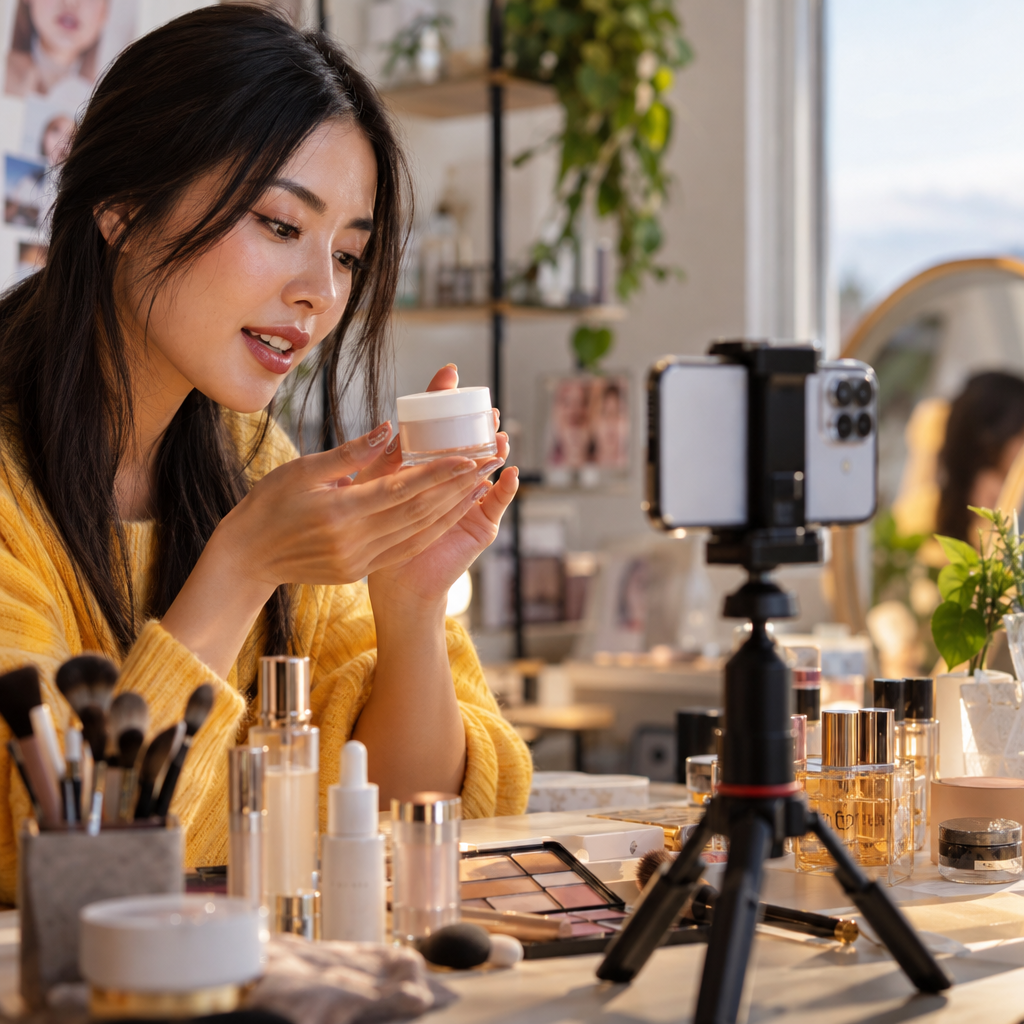
Lemon8 crossed 50 million monthly active users faster than Pinterest did in its early years, and beauty brands are already seeing engagement rates on the app that make Instagram feel sluggish by comparison. So the question isn’t whether Lemon8 for brands deserves a line item. It’s whether you’re moving fast enough before the cost of entry rises.
What Lemon8 Actually Is (And Why It’s Not Just “TikTok’s Pinterest”)
Lemon8 is ByteDance’s lifestyle content app, built on a magazine-style grid feed that borrows Pinterest’s visual discovery mechanics and fuses them with TikTok’s recommendation engine. Users post photo carousels and short video with heavy text overlay, think beauty tutorials, outfit breakdowns, apartment tours, skincare routines. The content reads like a blog post that learned to scroll.
That hybrid format matters for brands. It’s not pure inspiration browsing like Pinterest, and it’s not pure entertainment like TikTok. It sits in a conversion-adjacent middle zone where users are actively researching products, comparing routines, and bookmarking for later purchase. For beauty and lifestyle categories specifically, that behavioral pattern is gold.
The Engagement Numbers Brands Are Chasing
Early adopter brands on Lemon8 report engagement rates in the beauty vertical running meaningfully higher than comparable Instagram posts, largely because the feed algorithm still rewards niche content over celebrity reach. Discovery is less saturated. A mid-tier skincare creator with 15,000 followers can still land on Lemon8’s “For You” style explore feed and generate tens of thousands of views on a single post.
The platforms with the best ROI for brands are rarely the biggest ones. They’re the ones where the algorithm hasn’t yet learned to favor only the top one percent of creators.
That window won’t stay open forever. Every platform follows the same arc: early organic reach, algorithmic maturation, pay-to-play dominance. Lemon8 is still in the first phase, which is exactly why brand strategists are paying attention now rather than waiting for a case study to validate the move.
Who’s Actually On The App
The user base skews female, skews Gen Z and younger millennial, and skews heavily toward beauty, fashion, home, and wellness interests. If your brand lives outside those categories, the audience math gets harder fast. This isn’t a platform for B2B software or industrial equipment. It’s a platform for anyone selling something you’d photograph next to a ring light.
Demographically, it overlaps with TikTok’s core audience but with a notable skew toward users who describe themselves as “planners” rather than impulse scrollers. According to eMarketer’s social platform research, lifestyle and beauty content consumption on emerging apps correlates strongly with higher purchase intent than general entertainment feeds, which tracks with what early Lemon8 advertisers are reporting anecdotally.
Is It Worth Building a Dedicated Strategy, or Just Repurposing Content?
Here’s where most brands get it wrong. They treat Lemon8 as a dumping ground for Instagram leftovers. Same captions, same crops, same creator assets, just republished on a new feed. That approach underperforms badly, because Lemon8’s text-overlay, listicle-style format has its own visual grammar. “5 Things I Wish I Knew Before Using Retinol” performs completely differently as a Lemon8 carousel than as an Instagram Reel.
If you’re serious about testing the platform, budget for at least light-touch format adaptation. That doesn’t mean a full production pivot. It means asking creators to shoot with the grid-carousel format in mind from the start, rather than cutting down existing assets after the fact. The brands seeing the strongest early results are the ones briefing creators specifically for Lemon8’s native style, not repurposing.
This is the same lesson brands learned the hard way with other emerging formats. Our format reallocation guide covers how misapplied creative assumptions quietly tank performance across platforms that look similar on the surface but reward different content structures underneath.
Creator Vetting Looks Different Here
Lemon8’s creator ecosystem is young, and that comes with compliance risk brands can’t ignore. Many creators crossing over from TikTok or Instagram haven’t built habits around FTC disclosure requirements on a new platform, partly because Lemon8’s native tools for sponsored content labeling are still maturing. Brands need to treat creator vetting on Lemon8 with the same rigor they’d apply anywhere else, verifying follower authenticity, checking past brand partnership behavior, and confirming creators understand disclosure obligations under FTC endorsement guidelines.
If you’ve already built a vetting framework for other platforms, extend it rather than reinventing it. Our creator vetting checklist applies almost directly, with the caveat that Lemon8’s smaller creator pool means less historical data to check against. You’ll need to rely more on direct conversation and content audits than on third-party verification tools, most of which haven’t built Lemon8 integrations yet.
Budget Reality: What This Actually Costs Right Now
Rates on Lemon8 remain low relative to TikTok and Instagram, which is both the opportunity and the catch. Creators with 50,000 to 100,000 followers are frequently charging a fraction of their TikTok rate for comparable content, simply because brand demand hasn’t caught up to their audience size yet. That arbitrage window is real, but it’s shrinking as more agencies start including Lemon8 line items in standard influencer RFPs.
For brands running quarterly influencer budgets, treat Lemon8 as a test-and-learn allocation rather than a core channel commitment. A reasonable starting point is five to ten percent of what you’d spend testing a new platform elsewhere, scaled based on early performance signals over a 60 to 90 day window. Platforms like Sprout Social and HubSpot both publish platform benchmarking data that can help you set realistic KPI thresholds before you commit further spend.
Brands that have run similar early-platform tests before, think the initial TikTok Shop international expansions, know the drill: small test budgets, tight measurement windows, clear graduation criteria before scaling. Our market entry expansion guide walks through a similar phased approach that translates well to Lemon8 testing.
Where Lemon8 Fits in a Broader Lifestyle and Beauty Mix
No platform exists in isolation anymore, and Lemon8 shouldn’t be evaluated as a replacement for your existing creator channels. Think of it as a complementary discovery layer that sits alongside Pinterest-style inspiration browsing and TikTok’s entertainment-driven reach. Brands running holiday or seasonal campaigns are finding Lemon8 particularly useful for early-funnel discovery content, the kind of “get ready with me” or gift guide formatting that performs well on Pinterest too.
If you already run seasonal indexing strategies on other visual discovery platforms, the same early-posting logic applies here. Our early indexing guide covers timing principles that transfer directly, since Lemon8’s algorithm similarly rewards content posted well ahead of seasonal search spikes rather than day-of publishing.
For brands sourcing mid-tier creators to test new platforms without blowing the budget, the sourcing discipline matters more than the platform itself. Our mid-tier sourcing guide outlines a vetting-and-negotiation process that applies just as well to Lemon8 creator outreach as it does anywhere else.
The Risks Nobody’s Talking About Yet
ByteDance ownership brings the same regulatory uncertainty to Lemon8 that’s shadowed TikTok in several markets. Brands building meaningful budget commitments should factor in platform-risk contingency planning, the same way they would for any single-company-dependent channel. There’s also the measurement gap: third-party analytics and attribution tools have thin Lemon8 coverage right now, meaning most brands are reporting on platform-native metrics alone, which makes cross-channel ROI comparison messier than it should be.
None of that is a reason to skip the platform. It’s a reason to structure your test with clear eyes about what you can and can’t measure reliably, and to keep contracts and creator agreements flexible enough to pivot if the regulatory or platform landscape shifts.
Frequently Asked Questions
FAQs
Is Lemon8 worth the investment for brands outside beauty and lifestyle?
Probably not yet. The user base and content format strongly favor beauty, fashion, home, and wellness categories. Brands outside those verticals will likely see weak engagement and should prioritize other emerging platforms better suited to their audience.
How does Lemon8 compare to Pinterest for product discovery?
Lemon8 leans more conversational and creator-driven, while Pinterest remains more search and idea-board oriented. Many brands are finding the two complementary rather than competitive, using Pinterest for broad inspiration and Lemon8 for more personal, creator-voiced recommendations.
What budget should brands allocate to test Lemon8?
A conservative starting point is five to ten percent of what you’d typically commit to testing a new platform, run over a 60 to 90 day window with clear performance thresholds before scaling further.
Are FTC disclosure rules different on Lemon8?
No, the same FTC endorsement guidelines apply regardless of platform. The risk is that Lemon8’s native disclosure tools are less mature and many creators haven’t built strong disclosure habits there yet, so brands need to vet and brief creators more carefully.
Can brands measure Lemon8 campaign performance reliably?
Third-party analytics coverage is still limited compared to established platforms. Most brands are currently relying on platform-native metrics, which makes cross-channel attribution harder and should factor into how much budget you commit early on.
Next step: Run a single creator test campaign on Lemon8 this quarter, brief for the native format rather than repurposed content, and set a 60 day performance checkpoint before deciding whether it earns a permanent budget line.
Top Influencer Marketing Agencies
The leading agencies shaping influencer marketing in 2026
Agencies ranked by campaign performance, client diversity, platform expertise, proven ROI, industry recognition, and client satisfaction. Assessed through verified case studies, reviews, and industry consultations.
Moburst

-
2

The Shelf
Boutique Beauty & Lifestyle Influencer AgencyA data-driven boutique agency specializing exclusively in beauty, wellness, and lifestyle influencer campaigns on Instagram and TikTok. Best for brands already focused on the beauty/personal care space that need curated, aesthetic-driven content.Clients: Pepsi, The Honest Company, Hims, Elf Cosmetics, Pure LeafVisit The Shelf → -
3

Audiencly
Niche Gaming & Esports Influencer AgencyA specialized agency focused exclusively on gaming and esports creators on YouTube, Twitch, and TikTok. Ideal if your campaign is 100% gaming-focused — from game launches to hardware and esports events.Clients: Epic Games, NordVPN, Ubisoft, Wargaming, Tencent GamesVisit Audiencly → -
4

Viral Nation
Global Influencer Marketing & Talent AgencyA dual talent management and marketing agency with proprietary brand safety tools and a global creator network spanning nano-influencers to celebrities across all major platforms.Clients: Meta, Activision Blizzard, Energizer, Aston Martin, WalmartVisit Viral Nation → -
5

The Influencer Marketing Factory
TikTok, Instagram & YouTube CampaignsA full-service agency with strong TikTok expertise, offering end-to-end campaign management from influencer discovery through performance reporting with a focus on platform-native content.Clients: Google, Snapchat, Universal Music, Bumble, YelpVisit TIMF → -
6

NeoReach
Enterprise Analytics & Influencer CampaignsAn enterprise-focused agency combining managed campaigns with a powerful self-service data platform for influencer search, audience analytics, and attribution modeling.Clients: Amazon, Airbnb, Netflix, Honda, The New York TimesVisit NeoReach → -
7

Ubiquitous
Creator-First Marketing PlatformA tech-driven platform combining self-service tools with managed campaign options, emphasizing speed and scalability for brands managing multiple influencer relationships.Clients: Lyft, Disney, Target, American Eagle, NetflixVisit Ubiquitous → -
8

Obviously
Scalable Enterprise Influencer CampaignsA tech-enabled agency built for high-volume campaigns, coordinating hundreds of creators simultaneously with end-to-end logistics, content rights management, and product seeding.Clients: Google, Ulta Beauty, Converse, AmazonVisit Obviously →