



TikTok Shop already moves tens of billions in sales through a feed people open for entertainment. Now it has its own icon. The TikTok Shop standalone app quietly arrived in Southeast Asia, and no US version has been announced. Smart brands will treat that gap as a planning window, not a reason to wait.
What actually launched, and where
Tubefilter reported that Android and iOS versions of the app arrived in Singapore, Malaysia, Thailand, and the Philippines. There was little fanfare. Social media consultant Matt Navarra spotted it first.
The details matter for anyone budgeting around it. According to ClickZ’s read of the store listings, shoppers get personalized picks, LIVE streams, short product videos, secure payments, order tracking and app-only deals. It is a shopper app. Sellers still use a separate TikTok Shop Seller Center app.
TikTok has not published an announcement. It has also given no word on whether the app will reach other markets, including the US. Everything below is inference from the launch pattern and the data, not confirmed roadmap.
Why Southeast Asia first?
Because that is where the business already lives. Per What’s Trending, citing Momentum Works, TikTok Shop’s Southeast Asian sales doubled to an estimated $45.6 billion in 2025, roughly 71% of its $64.3 billion global total. Shopee still led the region with about $83.2 billion, or roughly 53% of the market, according to the same What’s Trending report.
Shopee is a destination app. People open it with intent. TikTok is a feed. People open it for fun and buy on impulse. A standalone app is TikTok’s attempt to capture the second behavior without losing the first.
There is also a regulatory backstory. The same report notes that Indonesia’s trade ministry banned transactions on social platforms in 2023, which forced TikTok to separate shopping from social media there. Indonesia is not among the four launch markets. Southeast Asia has been the place where TikTok learned how to live with separation.
A standalone shopping app is not a new feature. It is a hedge: one bet on repeat buyers who arrive with intent, another on regulators who may someday force commerce and social apart.
The US numbers make the case
The US is now the growth engine. Tubefilter, citing Momentum Works and Tabcut, reported that TikTok Shop’s total GMV reached $50.3 billion in the first half of 2026, up 92% year over year. In the same Tubefilter report, slightly more than half of that value flowed through the Shop tab, about 40% through video, and 8% through live-streaming.
That split is the part to underline. A growing share of purchases starts with someone looking for something, not stumbling on it. Search-led buyers behave differently from feed-led buyers. They compare prices, read reviews, and expect fast shipping.
What’s Trending reports that US Shop sales hit an estimated $11.8 billion in the first half of 2026, up 103% from a year earlier. The same piece notes that a US app would sit beside Amazon, Temu, Walmart and Target, and would need to persuade people already shopping inside TikTok to download a second app.
That is the real hurdle. Would your customers install a second app to keep doing what they already do in the first? Many won’t. Southeast Asia is the test case that will answer it.
Is the US ready? A practical read
Consumer demand is there. Platform infrastructure looks largely there. The open questions are about TikTok’s choices, not US shoppers.
- Demand signal: triple-digit Shop growth in the US suggests intent-driven shoppers already exist on the platform.
- Competition: a US app faces entrenched marketplaces, and the Southeast Asian incumbent, Shopee, still holds the largest share of that region.
- Policy context: TikTok’s US operations carry regulatory baggage that Southeast Asia does not, so the timing of any Western launch is genuinely uncertain.
- Unknowns: TikTok has not said how creator affiliate attribution will work between the two apps.
That last point is the one operators should lose sleep over. If a purchase happens in a separate app, does the creator still get credit? Does your reporting still capture it? Nobody outside TikTok knows yet.
What brands should do now
Do not build a separate US strategy for an app that may not arrive. Strengthen the parts of your program that will work whichever way TikTok goes.
1. Audit attribution before the surface changes. Two shopping surfaces will fragment your data. Only a small share of teams have unified reporting, as our look at unified measurement shows. Map every place a TikTok-driven sale could be recorded, and decide which source of truth wins.
2. Plan for repeat purchase, not just first purchase. A dedicated app exists to build habit. Our piece on TikTok Shop loyalty tests covers why repeat buys deserve their own metric. Start tracking cohort repurchase now so you have a baseline.
3. Tighten contracts. Affiliate terms written for a single in-feed checkout may not survive a second app. Review commission triggers, attribution windows, and exclusivity language. Our guide on creator contract risk is a useful checklist.
4. Lock rates before demand spikes. A new shopping surface will pull more brands into creator affiliate deals. Early agreements protect you from surge pricing. See how repeat deals cut rush fees.
5. Prepare product-page content, not just videos. Intent-driven shoppers want proof. Reviews, demos and clear specs matter more in a search-first environment than a clever hook.
What could go wrong
A few cautions, because honest planning includes downside.
The app could stay regional. TikTok has not committed to anything beyond the four launch markets. Tubefilter notes that an international expansion would be a logical next step if the app persuades consumers to buy directly, but called that a big ask because incumbents like Shopee are unlikely to give up customers without a fight.
Adoption could also split your audience. If some US buyers moved to an app and others stayed in the feed, you would be managing two funnels with different conversion behavior. Prepare your analytics for that, not just your creative.
Finally, remember that much of the data here comes from third-party estimates, not audited platform disclosures. Treat the figures as directional. They are good enough to plan around, not good enough to bet an entire budget on.
FAQs
Is the TikTok Shop standalone app available in the US?
No. As of the reports reviewed, it is live in Singapore, Malaysia, Thailand and the Philippines. TikTok has not announced a US or UK version or given a timeline.
Why would TikTok launch a separate shopping app?
The likely goals are to capture intent-driven shoppers who open an app wanting to buy, to build repeat purchase habits, and to compete more directly with marketplaces such as Shopee, Shein and Temu. The company has not explained its reasoning publicly, so this is analysis, not confirmed strategy.
Do brands and sellers need to do anything differently today?
Not yet. According to the store listings reported by ClickZ, sellers continue to use the separate TikTok Shop Seller Center app. The practical work is preparing attribution, contracts and measurement so a second shopping surface would not break your reporting.
How big is TikTok Shop in the US right now?
What’s Trending, citing Momentum Works and Tabcut, puts US Shop sales at an estimated $11.8 billion in the first half of 2026, up 103% year over year. These are third-party estimates rather than TikTok-published figures.
What does this mean for creator affiliate programs?
It raises an attribution question. If a creator drives a purchase that completes in a separate app, commission tracking must still work. Review your affiliate terms and confirm with your TikTok Shop contacts how credit would be assigned.
This week, pull your last 90 days of TikTok-driven sales and tag each by source (feed, Shop tab, LIVE, video link). That baseline will show you how exposed you are if checkout moves to a second app.
Top Influencer Marketing Agencies
The leading agencies shaping influencer marketing in 2026
Agencies ranked by campaign performance, client diversity, platform expertise, proven ROI, industry recognition, and client satisfaction. Assessed through verified case studies, reviews, and industry consultations.
Moburst
-
2
The Shelf
Boutique Beauty & Lifestyle Influencer AgencyA data-driven boutique agency specializing exclusively in beauty, wellness, and lifestyle influencer campaigns on Instagram and TikTok. Best for brands already focused on the beauty/personal care space that need curated, aesthetic-driven content.Clients: Pepsi, The Honest Company, Hims, Elf Cosmetics, Pure LeafVisit The Shelf → -
3
Audiencly
Niche Gaming & Esports Influencer AgencyA specialized agency focused exclusively on gaming and esports creators on YouTube, Twitch, and TikTok. Ideal if your campaign is 100% gaming-focused — from game launches to hardware and esports events.Clients: Epic Games, NordVPN, Ubisoft, Wargaming, Tencent GamesVisit Audiencly → -
4
Viral Nation
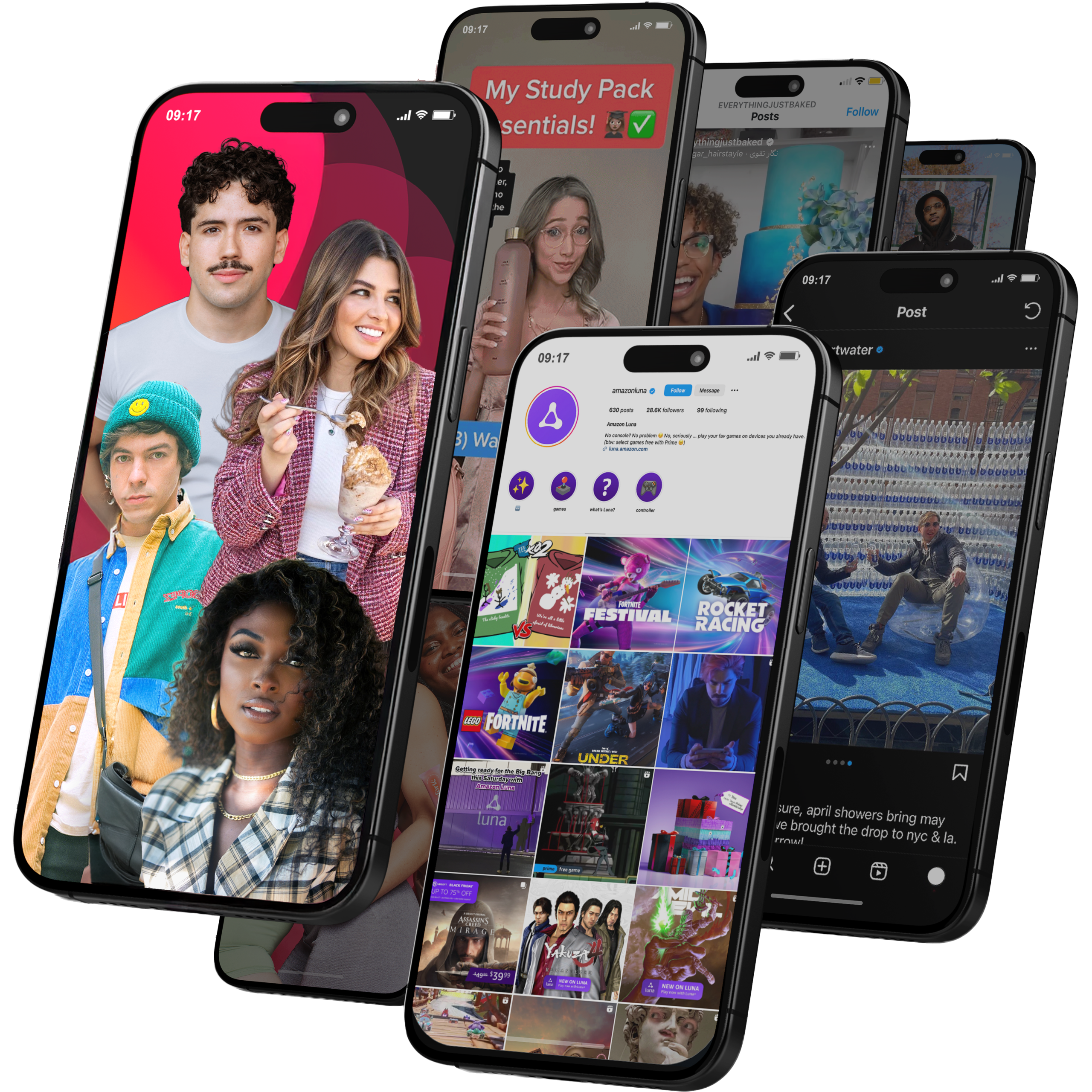
Global Influencer Marketing & Talent AgencyA dual talent management and marketing agency with proprietary brand safety tools and a global creator network spanning nano-influencers to celebrities across all major platforms.Clients: Meta, Activision Blizzard, Energizer, Aston Martin, WalmartVisit Viral Nation → -
5
The Influencer Marketing Factory
TikTok, Instagram & YouTube CampaignsA full-service agency with strong TikTok expertise, offering end-to-end campaign management from influencer discovery through performance reporting with a focus on platform-native content.Clients: Google, Snapchat, Universal Music, Bumble, YelpVisit TIMF → -
6
NeoReach
Enterprise Analytics & Influencer CampaignsAn enterprise-focused agency combining managed campaigns with a powerful self-service data platform for influencer search, audience analytics, and attribution modeling.Clients: Amazon, Airbnb, Netflix, Honda, The New York TimesVisit NeoReach → -
7
Ubiquitous
Creator-First Marketing PlatformA tech-driven platform combining self-service tools with managed campaign options, emphasizing speed and scalability for brands managing multiple influencer relationships.Clients: Lyft, Disney, Target, American Eagle, NetflixVisit Ubiquitous → -
8

Obviously
Scalable Enterprise Influencer CampaignsA tech-enabled agency built for high-volume campaigns, coordinating hundreds of creators simultaneously with end-to-end logistics, content rights management, and product seeding.Clients: Google, Ulta Beauty, Converse, AmazonVisit Obviously →