


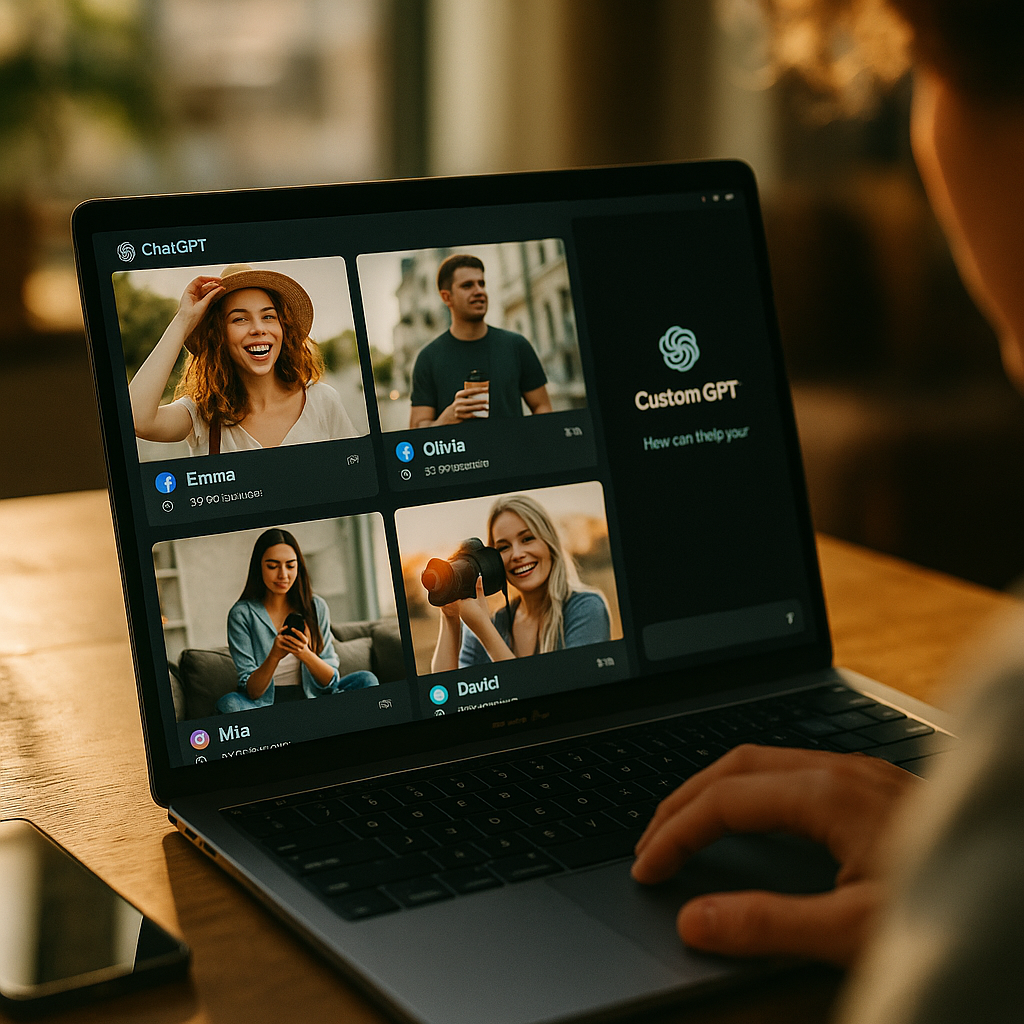
Training a custom GPT to manage your brand’s influencer discovery workflow can transform how you identify, vet, and collaborate with creators. Leveraging this advanced AI both streamlines research and personalizes outreach strategies. Ready to discover step-by-step how a purpose-built GPT can revolutionize your influencer marketing in 2025? Let’s dive into the hands-on potential for your brand.
Why Custom GPTs Are the Future of Influencer Discovery
The influencer landscape is evolving rapidly. Traditional search tools put facts at your fingertips, but they rarely adapt to your brand’s DNA or strategic goals. In 2025, custom GPT models for influencer marketing are gaining traction because they handle nuanced workflows better. A custom GPT understands brand values, aesthetic preferences, campaign objectives, and can process real-time social data—making your influencer discovery much more targeted and efficient.
Unlike generic AI assistants, a brand-trained GPT acts as a tireless team member. It learns your campaign history and adjusts over time, picking up on your likes and dislikes. According to a recent Martech survey, 38% of marketers now utilize custom AI models for campaign workflows, with influencer discovery as a core use case.
Key Advantages of Using a Tailored GPT for Influencer Identification
Training a GPT to recognize influencer qualities specific to your brand pays off quickly. The top advantages include:
- Precision Targeting: AI sifts through millions of profiles using your criteria—engagement rates, brand fit, location, and even tone of voice.
- Speed: Complex searches that once took days now deliver curated shortlists within minutes.
- Reduced Human Bias: AI can rank candidates objectively, surfacing emerging creators you might otherwise overlook.
- Ongoing Learning: Models learn from each campaign and adjust recommendations for future projects, compounding quality over time.
Imagine a workflow where your team uploads a campaign brief, and your custom GPT instantly returns high-potential influencers with suggested outreach messages—no more spreadsheets or manual cross-checking.
Essential Steps to Train a GPT for Your Brand’s Influencer Discovery Workflow
To maximize accuracy, your custom GPT must be properly trained. Follow these critical steps:
- Define Your Influencer Criteria: List must-have and nice-to-have traits—such as audience demographics, niche expertise, average views, or alignment with ESG values.
- Gather Quality Data: Compile past campaign materials, top-performing influencer profiles, DMs, and successful outreach templates. The richer the data, the better the results.
- Set Workflow Parameters: Map out your ideal discovery process. What questions should the GPT ask to recommend a fit? Do you need it to flag risky accounts or score historical engagement?
- Iterative Training & Testing: Collaborate with AI specialists to train your GPT, test its outputs, and fine-tune for nuance, especially on brand tone and sensitive markets.
Remember: EEAT (Experience, Expertise, Authoritativeness, Trustworthiness) is at the core of a reliable workflow. Involve experienced marketers and data privacy experts during setup to ensure your GPT meets Google’s standards for safety and helpfulness.
Integrating a Custom AI Model Into Your Team’s Daily Workflow
A well-trained GPT should not be a siloed tool—it must harmonize with your team’s way of working. Integration can happen via:
- Direct Chat Interfaces: Let campaign managers chat directly with your GPT to ask for influencer suggestions, produce summary reports, or analyze live campaign data.
- Workflow Automation: Plug your model into project management platforms (like Asana or Monday.com) so discovery tasks are initialized automatically.
- Integration With Social Discovery APIs: Equip your GPT to pull the latest influencer data (on TikTok, Instagram, or YouTube) for real-time recommendations.
The goal: let your AI model take busywork off your plate, freeing up marketers for creative, high-level strategy. Brands with successful AI integration report time savings of up to 60% and a measurable boost in influencer engagement rates, based on data shared by Influencer Marketing Hub in early 2025.
Ethical and Privacy Considerations in AI-Driven Influencer Discovery
AI transformation brings risks as well as rewards. With a wealth of sensitive data at stake, responsible handling is paramount. Your GPT should:
- Comply with privacy standards (such as GDPR or US state laws) when handling influencer data.
- Ask for explicit consent if it stores or reuses influencer conversations.
- Be transparent about AI involvement in outreach communications to avoid “uncanny” messages or legal gray areas.
- Flag any potential for algorithmic bias—such as amplifying only large accounts or overlooking minority creators.
Embedding these ethical guardrails ensures your GPT fosters trust not only within your team, but also with influencers and regulators. A 2025 Nielsen study found that 72% of brands cite AI transparency as a major differentiator in partner relationships.
Getting Started: Building, Training, and Scaling Your Custom GPT
Ready to bring AI-powered discovery into your brand? Start by assembling a cross-functional team of marketers, technologists, and legal advisors. Whether you work with an AI vendor or develop in-house, clarity on your discovery workflow and training data is essential. After initial training, set up regular review sessions to keep your model’s recommendations sharp and on-brand.
Scaling comes next: use the GPT for multiple campaigns and feed it ongoing results to refine performance. As your data grows, so does your competitive edge—turning discovery from a guessing game into a science.
FAQs
-
How does a custom GPT differ from standard influencer discovery tools?
Unlike generic tools, a custom GPT is trained specifically on your brand’s historical data, goals, and tone. It can understand detailed preferences and adapt recommendations in real time rather than relying solely on surface-level metrics.
-
Can a GPT identify micro-influencers as well as macro-influencers?
Yes, a custom-trained GPT can search for any tier of influence—macro, micro, or even nano—by analyzing follower count, engagement rates, and niche relevance according to your criteria.
-
Is it possible to automate influencer outreach with a custom GPT?
Absolutely. Once trained, your GPT can generate outreach drafts, personalize them for each influencer, and even automate preliminary communications—all while upholding your brand’s voice.
-
How do I ensure my GPT’s recommendations are unbiased?
Auditing your training data for diversity and including bias-detection routines during training are key. Regularly review GPT suggestions with human oversight to catch and correct any emerging patterns of bias.
-
What technical expertise is needed to create a brand-trained GPT?
You’ll benefit from working with AI developers or solution providers experienced in natural language processing, data privacy, and influencer marketing. Marketers should partner closely to supply campaign context and training data.
Training a custom GPT to manage your brand’s influencer discovery workflow streamlines candidate research, enriches outreach, and helps teams work at the cutting edge. By combining thoughtful AI training, ethical integration, and performance review, your brand will stand out in the influencer marketing landscape of 2025 and beyond.
Top Influencer Marketing Agencies
The leading agencies shaping influencer marketing in 2026
Agencies ranked by campaign performance, client diversity, platform expertise, proven ROI, industry recognition, and client satisfaction. Assessed through verified case studies, reviews, and industry consultations.
Moburst

-
2

The Shelf
Boutique Beauty & Lifestyle Influencer AgencyA data-driven boutique agency specializing exclusively in beauty, wellness, and lifestyle influencer campaigns on Instagram and TikTok. Best for brands already focused on the beauty/personal care space that need curated, aesthetic-driven content.Clients: Pepsi, The Honest Company, Hims, Elf Cosmetics, Pure LeafVisit The Shelf → -
3

Audiencly
Niche Gaming & Esports Influencer AgencyA specialized agency focused exclusively on gaming and esports creators on YouTube, Twitch, and TikTok. Ideal if your campaign is 100% gaming-focused — from game launches to hardware and esports events.Clients: Epic Games, NordVPN, Ubisoft, Wargaming, Tencent GamesVisit Audiencly → -
4

Viral Nation
Global Influencer Marketing & Talent AgencyA dual talent management and marketing agency with proprietary brand safety tools and a global creator network spanning nano-influencers to celebrities across all major platforms.Clients: Meta, Activision Blizzard, Energizer, Aston Martin, WalmartVisit Viral Nation → -
5

The Influencer Marketing Factory
TikTok, Instagram & YouTube CampaignsA full-service agency with strong TikTok expertise, offering end-to-end campaign management from influencer discovery through performance reporting with a focus on platform-native content.Clients: Google, Snapchat, Universal Music, Bumble, YelpVisit TIMF → -
6

NeoReach
Enterprise Analytics & Influencer CampaignsAn enterprise-focused agency combining managed campaigns with a powerful self-service data platform for influencer search, audience analytics, and attribution modeling.Clients: Amazon, Airbnb, Netflix, Honda, The New York TimesVisit NeoReach → -
7

Ubiquitous
Creator-First Marketing PlatformA tech-driven platform combining self-service tools with managed campaign options, emphasizing speed and scalability for brands managing multiple influencer relationships.Clients: Lyft, Disney, Target, American Eagle, NetflixVisit Ubiquitous → -
8

Obviously
Scalable Enterprise Influencer CampaignsA tech-enabled agency built for high-volume campaigns, coordinating hundreds of creators simultaneously with end-to-end logistics, content rights management, and product seeding.Clients: Google, Ulta Beauty, Converse, AmazonVisit Obviously →