


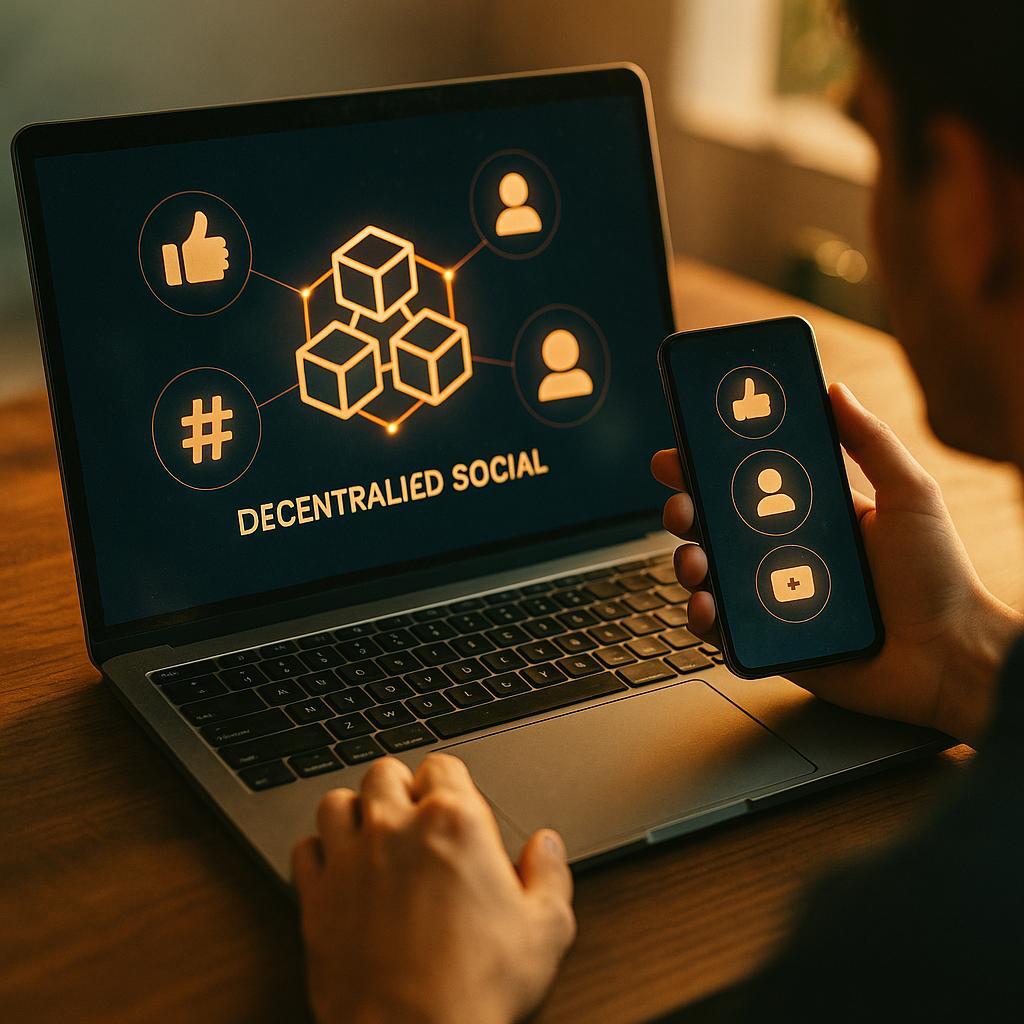
Decentralized social media platforms like Farcaster and Lens are quickly gaining traction in 2025, promising users new levels of control and security. As these networks expand, brands face unique challenges and unprecedented opportunities. The future of decentralized social media could reshape how businesses connect with consumers—are you ready for the next wave of digital engagement?
The Rise of Decentralized Social Networks: Shaping the Digital Landscape
Decentralized social networks such as Farcaster and Lens are leading a seismic shift away from centralized platforms like Facebook and X (formerly Twitter). By granting users self-sovereignty over their data, these networks give individuals greater privacy and autonomy. Unlike traditional models, no single company owns the network or harvests vast troves of personal information for profit.
Instead, decentralized platforms use blockchain technology or peer-to-peer protocols, ensuring content is not subject to arbitrary censorship or monetization schemes. According to a late-2024 DappRadar report, decentralized social applications saw a 70% increase in user engagement this past year. Early adopters cite values such as transparency, censorship resistance, and the ability to control how their content is shared and monetized.
This paradigm shift not only transforms user experience but also introduces new horizons for brands, creators, and advertisers seeking authentic digital relationships.
Brand Opportunity on Decentralized Social Media: Expanding Your Digital Footprint
For brands, the evolution of platforms like Farcaster and Lens opens a fresh landscape where community-focused marketing takes priority. In contrast to traditional social networks—often driven by opaque algorithms—the decentralized model prioritizes authenticity, transparency, and direct audience engagement.
Brands benefit in several key ways:
- Increased Trust: Decentralized systems foster trust since users control their data and opt-in to brand interactions.
- Authentic Communities: Niche and passionate communities emerge, allowing brands to target and nurture dedicated audiences.
- New Monetization Models: Smart contracts and on-chain rewards let brands experiment with creative incentives, giveaways, and token-gated access.
- Reduced Intermediaries: Direct interactions minimize reliance on centralized ad networks, lowering costs and boosting ROI.
Forward-thinking businesses are exploring decentralized social media pilots, including exclusive NFT drops, branded tokens, and open-content collaborations. As these platforms mature, the brands embracing them early are likely to see the highest rewards—especially among digitally native, privacy-conscious consumers.
User Privacy and Data Ownership: A New Era for Digital Engagement
The call for stronger digital privacy has never been louder. In decentralized social media, identity and data are typically managed through cryptographically secure wallets, giving users granular control over what they share and with whom.
This new standard of consent-based data sharing appeals to increasingly savvy consumers. According to a CoinGecko survey in February 2025, 81% of web3 users cite ownership of their online identity as a decisive factor for platform choice. Brands that respect these boundaries—by providing value without intrusive tracking—will build lasting loyalty.
Moreover, brands can tap into opt-in data for personalization, ensuring compliance with emerging data regulations. Projects on Lens, for example, allow users to license their data in exchange for rewards, establishing transparent value exchanges instead of covert surveillance.
Challenges for Brands on Farcaster, Lens, and Beyond: Navigating Uncharted Territory
Despite the promise of decentralized social media, brands must navigate several hurdles:
- Platform Fragmentation: With no dominant player, users are scattered across different protocols and apps, challenging cohesive campaign execution.
- Technical Barriers: Decentralized platforms often have steeper learning curves for both marketers and users unfamiliar with wallets or tokens.
- Measuring Success: Analytics and attribution tools are still evolving, requiring new metrics and KPIs to assess campaign performance.
- Authenticity Scrutiny: Audiences on these platforms are highly sensitive to insincere or disruptive brand behaviors. Genuine contribution is a must.
Brands that adapt by investing in education, creative experimentation, and partnership with platform-native influencers will overcome these challenges. Such investments can lay the groundwork for first-mover advantages as decentralized networks grow in both scale and sophistication.
Decentralized Social Media Marketing: Strategies for 2025
Staying competitive in decentralized social media requires a nuanced approach. Successful brands in 2025 focus on:
- Community Building: Engaging directly with creators and community moderators, supporting organic discussions, and sponsoring user-generated initiatives.
- Token-Gated Experiences: Offering exclusive content, access, or perks to members who hold branded tokens or NFTs, reinforcing loyalty and participation.
- Collaborative Content: Launching co-creation campaigns, metaverse events, and interactive digital happenings with community involvement at the core.
- Transparency & Utility: Sharing intent, listening to feedback, and consistently delivering real value—whether educational, entertaining, or practical.
Case studies from Farcaster show that sustainable impact comes from patient, value-driven engagement, not quick-hit ads. On Lens, brands host live AMAs (Ask Me Anything), sponsor creative bounties, or fund community skillshares. The future belongs to brands prepared to “join the conversation” instead of simply broadcasting messages.
Preparing for the Web3 Social Future: Actionable Steps for Brands
As the decentralized social media landscape matures, brands must take proactive steps to future-proof their digital strategies:
- Educate Internal Teams: Invest time in understanding web3 terminology, processes, and best practices. Host workshops to onboard marketers and decision-makers to wallet-based platforms.
- Pilot Small-Scale Campaigns: Run limited tests on platforms like Farcaster or Lens to gauge community response and gather insights.
- Partner with Web3 Creators: Collaborate with established users and influencers who possess deep network credibility and can facilitate authentic engagement.
- Develop Responsible Data Practices: Design customer experiences that are privacy-first and foster trust through transparency and opt-in participation.
- Monitor Regulatory Shifts: Stay informed about global data and advertising regulations as new legal frameworks emerge for decentralized platforms.
Brands poised to lead are those that see decentralized social media not as a trend, but as an evolving infrastructure for next-generation digital relationships.
Frequently Asked Questions (FAQs) about Decentralized Social Media and Brand Opportunity
-
What are decentralized social media platforms?
Decentralized social media platforms use blockchain or peer-to-peer technology to give users control over their data, privacy, and digital interactions. Farcaster and Lens are leading examples, offering transparency and resistance to central censorship.
-
How can brands benefit from decentralized social media?
Brands can directly engage with audiences, foster trust, access niche communities, and experiment with token-based rewards without relying on traditional ad networks or surveillance-driven data models.
-
What challenges do brands face on these platforms?
Major challenges include platform fragmentation, technical learning curves, evolving analytics tools, and the need for genuine community engagement rather than broadcast advertising.
-
Is audience size a limitation for decentralized networks?
While user counts are smaller than mainstream social platforms, engagement rates and audience passion can be much higher, especially within niche or innovator communities.
-
How should brands start with decentralized social media?
Begin with education, pilot campaigns, and collaboration with community influencers. Prioritize privacy, transparency, and value-led content to build credibility and long-term relationships.
The future of decentralized social media offers transformative brand opportunities with a focus on privacy, authenticity, and community. Early adoption, education, and a commitment to meaningful engagement will define digital leaders in this new era—now is the time for brands to stake their claim and build genuine relationships in web3-powered networks.
Top Influencer Marketing Agencies
The leading agencies shaping influencer marketing in 2026
Agencies ranked by campaign performance, client diversity, platform expertise, proven ROI, industry recognition, and client satisfaction. Assessed through verified case studies, reviews, and industry consultations.
Moburst

-
2

The Shelf
Boutique Beauty & Lifestyle Influencer AgencyA data-driven boutique agency specializing exclusively in beauty, wellness, and lifestyle influencer campaigns on Instagram and TikTok. Best for brands already focused on the beauty/personal care space that need curated, aesthetic-driven content.Clients: Pepsi, The Honest Company, Hims, Elf Cosmetics, Pure LeafVisit The Shelf → -
3

Audiencly
Niche Gaming & Esports Influencer AgencyA specialized agency focused exclusively on gaming and esports creators on YouTube, Twitch, and TikTok. Ideal if your campaign is 100% gaming-focused — from game launches to hardware and esports events.Clients: Epic Games, NordVPN, Ubisoft, Wargaming, Tencent GamesVisit Audiencly → -
4

Viral Nation
Global Influencer Marketing & Talent AgencyA dual talent management and marketing agency with proprietary brand safety tools and a global creator network spanning nano-influencers to celebrities across all major platforms.Clients: Meta, Activision Blizzard, Energizer, Aston Martin, WalmartVisit Viral Nation → -
5

The Influencer Marketing Factory
TikTok, Instagram & YouTube CampaignsA full-service agency with strong TikTok expertise, offering end-to-end campaign management from influencer discovery through performance reporting with a focus on platform-native content.Clients: Google, Snapchat, Universal Music, Bumble, YelpVisit TIMF → -
6

NeoReach
Enterprise Analytics & Influencer CampaignsAn enterprise-focused agency combining managed campaigns with a powerful self-service data platform for influencer search, audience analytics, and attribution modeling.Clients: Amazon, Airbnb, Netflix, Honda, The New York TimesVisit NeoReach → -
7

Ubiquitous
Creator-First Marketing PlatformA tech-driven platform combining self-service tools with managed campaign options, emphasizing speed and scalability for brands managing multiple influencer relationships.Clients: Lyft, Disney, Target, American Eagle, NetflixVisit Ubiquitous → -
8

Obviously
Scalable Enterprise Influencer CampaignsA tech-enabled agency built for high-volume campaigns, coordinating hundreds of creators simultaneously with end-to-end logistics, content rights management, and product seeding.Clients: Google, Ulta Beauty, Converse, AmazonVisit Obviously →