


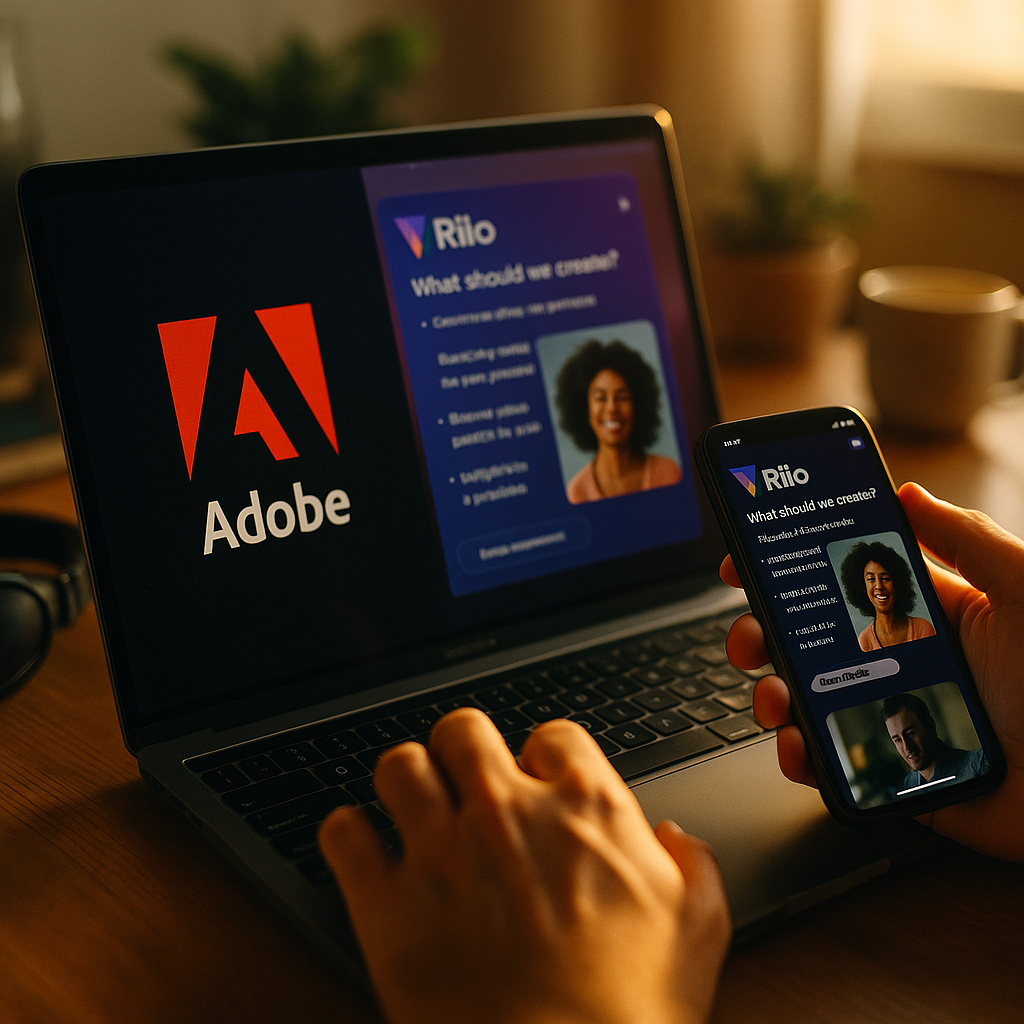
Adobe just spent real money to automate a task most marketers still do in a spreadsheet. Its acquisition of Rilo, a startup built around agentic AI creator briefing, tells you exactly where the influencer marketing stack is headed: fewer humans writing briefs, more agents negotiating them. For in-house teams still manually chasing creators for deliverables, that shift is either a massive efficiency unlock or a compliance nightmare waiting to happen.
What Adobe Actually Bought
Rilo built software that lets brands describe a campaign objective in plain language and have an AI agent generate, refine, and send creator briefs automatically, pulling brand guidelines, past performance data, and legal disclosure requirements into a single output. That’s not a chatbot writing copy. It’s an agent that talks to your DAM, your CRM, and increasingly, the creator’s own inbox.
Adobe folding this into Creative Cloud and Experience Manager signals it wants agentic AI creator briefing embedded in the same workflow where brands already store assets and approve campaigns. That’s a strategic bet: if briefing becomes a native feature of the tools marketers already pay for, third-party influencer platforms lose a chunk of their value proposition overnight.
The real story isn’t that Adobe automated brief writing. It’s that briefing, historically the messiest, most human-dependent step in influencer marketing, just became a feature line item in enterprise software.
Why the Briefing Bottleneck Actually Costs You Money
Ask any in-house social lead how many hours a week go into writing, revising, and re-sending creator briefs. It’s rarely less than a full workday, and that’s before you account for the back-and-forth when a creator misreads a claim or skips a required disclosure. Research from HubSpot has repeatedly flagged content approval cycles as one of the top time drains in marketing operations, and briefing sits right at the front of that cycle.
Agentic briefing tools promise to compress that timeline from days to minutes. The pitch is simple: describe the campaign, and the agent drafts a brief that already accounts for FTC disclosure language, brand tone, and past creator performance. If it works as advertised, that’s hours back per campaign, multiplied across every creator on your roster.
But speed without accuracy just moves the bottleneck downstream. A brief generated in seconds still needs to be factually correct about product claims, pricing, and legal requirements, or you’re just automating errors faster. That’s the exact failure mode covered in work on hallucinated product claims in AI-generated briefs, and it’s the first question any in-house team should ask before adopting this category.
The Governance Gap Nobody’s Pricing In
Here’s the uncomfortable part. Most brands evaluating agentic briefing tools are asking “how fast” and “how cheap,” not “who’s accountable when the agent gets it wrong.” If an AI agent sends a creator a brief with an inflated efficacy claim, and that creator posts it, the FTC doesn’t care that a bot wrote the copy. The brand is still on the hook. Guidance from the Federal Trade Commission on endorsement disclosures applies regardless of whether a human or an agent drafted the instructions.
That’s why governance frameworks matter more than feature lists right now. Teams adopting agentic tools without a review layer are essentially outsourcing legal risk to a language model. The same logic that applies to governance checklists for agentic media buying applies here: define what the agent can approve autonomously, what needs human sign-off, and what gets logged for audit purposes.
Agencies Are Already Running This Playbook
In-house teams aren’t the only ones wrestling with this. Agencies that manage influencer programs at scale have spent years building the exact workflows that agentic briefing tools are now trying to automate: vetting creators, repurposing content into paid assets, and tying campaign output back to hard KPIs. Moburst, a global growth agency founded in 2013 that works with brands including Google, Uber, and Samsung, runs its influencer practice around that full loop, from creator recruitment and vetting through content production and reporting, then feeds high-performing organic posts into influencer marketing teams‘ paid media plans rather than letting them expire. That’s a useful benchmark for what “good” briefing and content operations look like before you hand the process to an agent.
Questions to Ask Before You Buy In
Adobe’s move will accelerate a wave of vendor pitches promising agentic briefing as a bolt-on feature. Before signing anything, in-house teams should be asking:
- What data source does the agent pull from when it drafts a brief, and how current is it?
- Can the agent cite where a claim or requirement came from, or does it just generate confident-sounding text?
- Who reviews the brief before it reaches a creator, and is that step mandatory or optional?
- What happens when the agent and a human reviewer disagree on a claim?
- Does the vendor log every agent action for audit purposes, or is that an add-on?
These aren’t hypothetical concerns. Research on agentic AI marketing projects found that a huge share fail not because the model is weak, but because the underlying data feeding it is incomplete or outdated. A briefing agent trained on last quarter’s product catalog will confidently generate briefs referencing discontinued SKUs. That’s not a hypothetical, it’s the default failure mode of the category, and it’s covered in more depth in analysis of why AI marketing agents fail on bad data.
Budgets, Headcount, and What Actually Changes
If agentic briefing tools deliver even half of what they promise, the immediate impact on in-house teams is headcount reallocation, not headcount reduction. The junior coordinator who used to spend a day drafting briefs now spends that time reviewing agent output and vetting creators, work that’s arguably higher value. That mirrors the shift already underway in AI-assisted creator discovery workflows, where automation handles volume and humans handle judgment calls.
Procurement teams should also expect vendor pricing to shift toward usage-based models tied to agent actions rather than flat seat licenses, a pattern already showing up in adjacent categories like agentic media buying. Evaluating the risk of agentic campaign managers before rollout, rather than after a compliance incident, is the difference between capturing the efficiency gain and absorbing an expensive correction.
Industry data from eMarketer and Sprout Social both point to accelerating AI adoption in creator marketing workflows over the past year, but adoption speed and governance maturity are two very different curves. Adobe buying Rilo just made the gap between them a boardroom conversation instead of a niche operations debate.
What to Do This Quarter
Don’t wait for your current martech vendor to bolt on an agentic briefing feature and call it done. Audit your existing creator brief process now, map where hallucination or disclosure risk could enter an automated version of it, and pilot any agentic tool against a small, low-stakes campaign before it touches your top-tier creator relationships.
Frequently Asked Questions
What is agentic AI creator briefing?
It refers to AI agents that autonomously generate, refine, and send campaign briefs to influencers, pulling from brand guidelines, product data, and compliance requirements rather than requiring a marketer to draft each brief manually.
Why did Adobe acquire Rilo?
Adobe acquired Rilo to bring agentic briefing capability directly into its Creative Cloud and Experience Manager ecosystem, positioning briefing as a native workflow feature rather than a task handled by separate influencer marketing platforms.
Does agentic briefing increase compliance risk?
It can, if brands skip human review. An agent that generates a brief with an inaccurate product claim or missing disclosure language still leaves the brand legally responsible for what the creator ultimately posts.
Will agentic briefing tools replace in-house social and influencer teams?
Unlikely in the near term. Most teams are reallocating staff time from manual brief writing toward creator vetting, agent output review, and performance analysis rather than eliminating roles outright.
How should in-house teams evaluate agentic briefing vendors?
Ask about data freshness, whether claims are sourced and auditable, what human review checkpoints exist, and how the vendor prices usage, since many are shifting from flat licenses to action-based billing.
Top Influencer Marketing Agencies
The leading agencies shaping influencer marketing in 2026
Agencies ranked by campaign performance, client diversity, platform expertise, proven ROI, industry recognition, and client satisfaction. Assessed through verified case studies, reviews, and industry consultations.
Moburst

-
2

The Shelf
Boutique Beauty & Lifestyle Influencer AgencyA data-driven boutique agency specializing exclusively in beauty, wellness, and lifestyle influencer campaigns on Instagram and TikTok. Best for brands already focused on the beauty/personal care space that need curated, aesthetic-driven content.Clients: Pepsi, The Honest Company, Hims, Elf Cosmetics, Pure LeafVisit The Shelf → -
3

Audiencly
Niche Gaming & Esports Influencer AgencyA specialized agency focused exclusively on gaming and esports creators on YouTube, Twitch, and TikTok. Ideal if your campaign is 100% gaming-focused — from game launches to hardware and esports events.Clients: Epic Games, NordVPN, Ubisoft, Wargaming, Tencent GamesVisit Audiencly → -
4

Viral Nation
Global Influencer Marketing & Talent AgencyA dual talent management and marketing agency with proprietary brand safety tools and a global creator network spanning nano-influencers to celebrities across all major platforms.Clients: Meta, Activision Blizzard, Energizer, Aston Martin, WalmartVisit Viral Nation → -
5

The Influencer Marketing Factory
TikTok, Instagram & YouTube CampaignsA full-service agency with strong TikTok expertise, offering end-to-end campaign management from influencer discovery through performance reporting with a focus on platform-native content.Clients: Google, Snapchat, Universal Music, Bumble, YelpVisit TIMF → -
6

NeoReach
Enterprise Analytics & Influencer CampaignsAn enterprise-focused agency combining managed campaigns with a powerful self-service data platform for influencer search, audience analytics, and attribution modeling.Clients: Amazon, Airbnb, Netflix, Honda, The New York TimesVisit NeoReach → -
7

Ubiquitous
Creator-First Marketing PlatformA tech-driven platform combining self-service tools with managed campaign options, emphasizing speed and scalability for brands managing multiple influencer relationships.Clients: Lyft, Disney, Target, American Eagle, NetflixVisit Ubiquitous → -
8

Obviously
Scalable Enterprise Influencer CampaignsA tech-enabled agency built for high-volume campaigns, coordinating hundreds of creators simultaneously with end-to-end logistics, content rights management, and product seeding.Clients: Google, Ulta Beauty, Converse, AmazonVisit Obviously →